Touring Toyota —
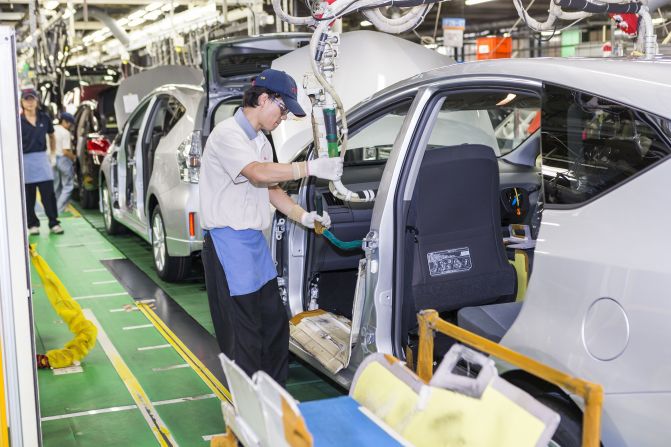
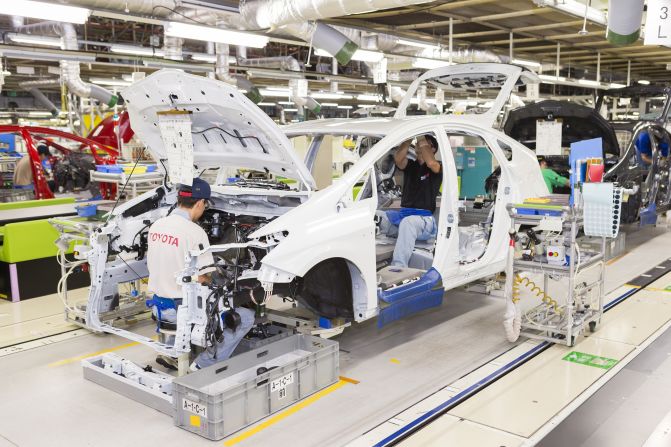
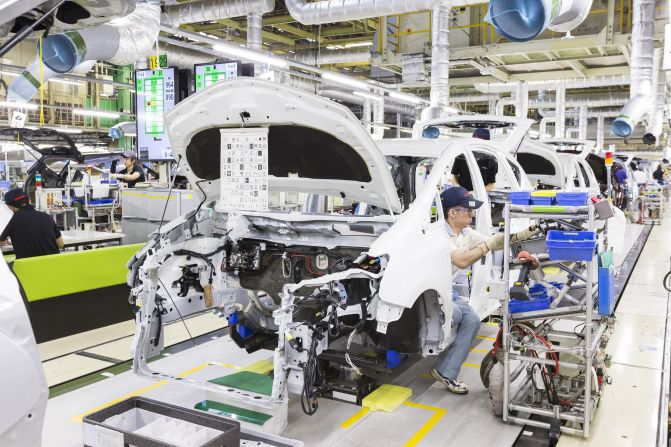
The Toyota Kaikan plant at the company's headquarters in Japan allows visitors to walk through welding and assembly areas where the world's best selling cars are made (although visitors aren't allowed to get this close).

World champion —
"Toyota became a corporate icon because it achieved and sustained record-setting operational performance measured in terms of productivity, product reliability, and time to market in an incredibly competitive industry," MIT professor Steven Spear tells CNN.

Motomachi plant —
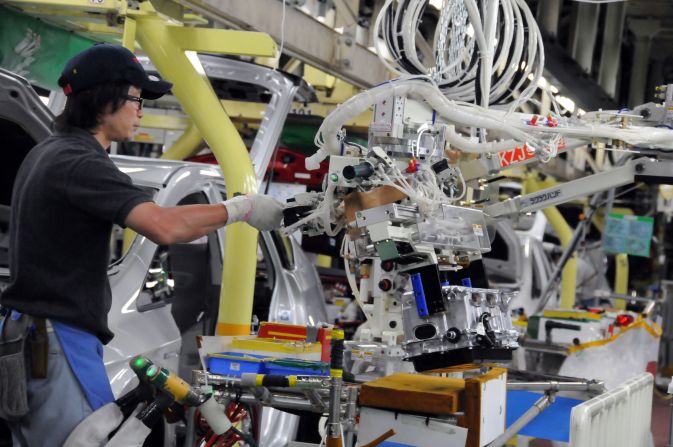
"Just In Time" pull systems allow workers to alert supervisors to any problems or possible delays.

Mama —
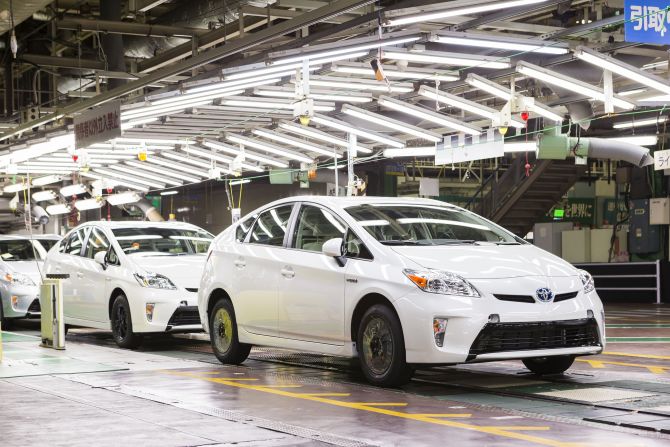
Inside Toyota, the Motomachi factory is referred to as "the mother plant." Engineers are sent from here to train workers in other company manufacturing bases in Japan, such as the Tsutsumi plant in this photo, and overseas.

Stat line —
The plant produces 70,000 cars per year; that breaks down to one car completed every 135 seconds. More than 30,000 parts go into each car and 760 robots are used at the Motomachi facility. Countless emulators have tried to decipher the secrets of the Toyota system.

Different models on the line —
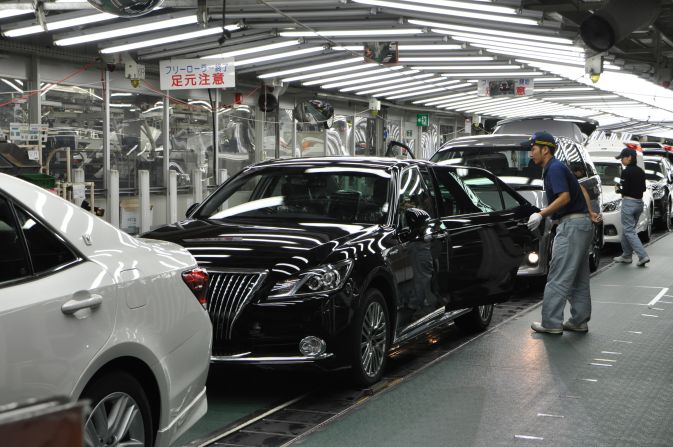
You'd think one of the world's most efficient systems would have production lines dedicated to single models, but Toyota says it isn't so. The company mixes models on the line to keep workers engaged and alert.

Kaikan Museum —
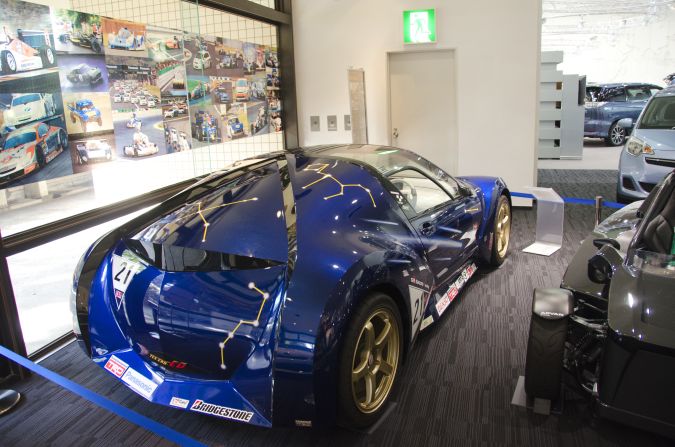
The factory tour starts at the Toyota Kaikan Museum, which displays latest models from Toyota and Lexus, Formula 1 cars, vehicles of the future and safety simulation games. Admission is free.

Soul music? —
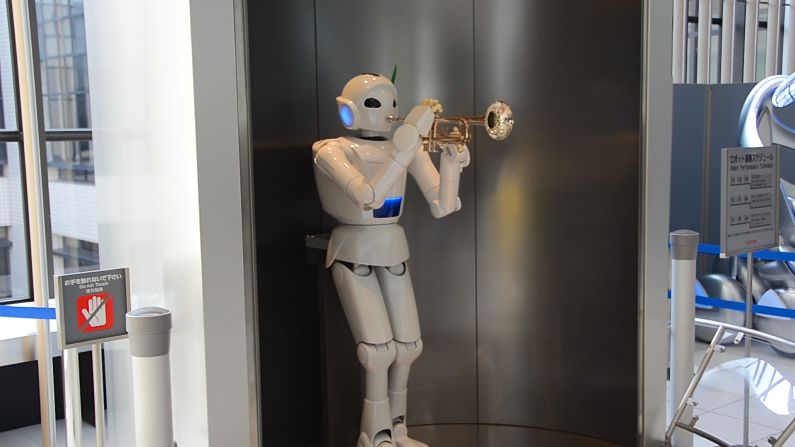
Visitors stop in their tracks at the Kaikan Museum whenever this robot starts playing the trumpet. It produces its beautiful music via piston-powered lungs and rubber lips.

"We need to talk about your TPS reports." —
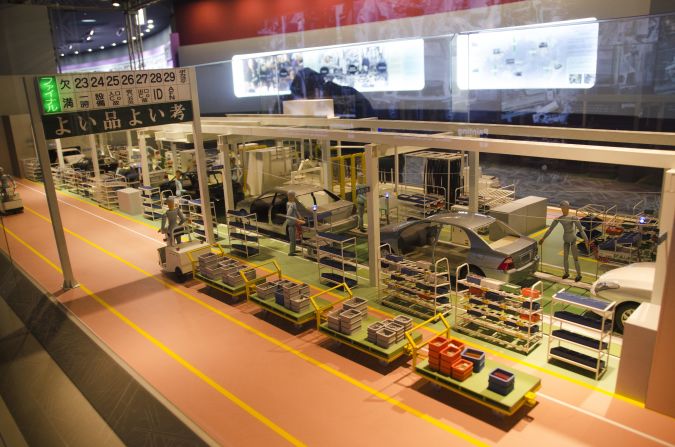
"The capacity for deriving far more value from fewer resources in less time has caught the attention of managers in other sectors, not just automotive, since they are are also under pressure to do much more for their stakeholders while burning less time and other resources," says MIT professor Steven Spear of the Toyota Production System (TPS). The system is depicted here in miniature at the Kaikan Museum.
Can't wait —
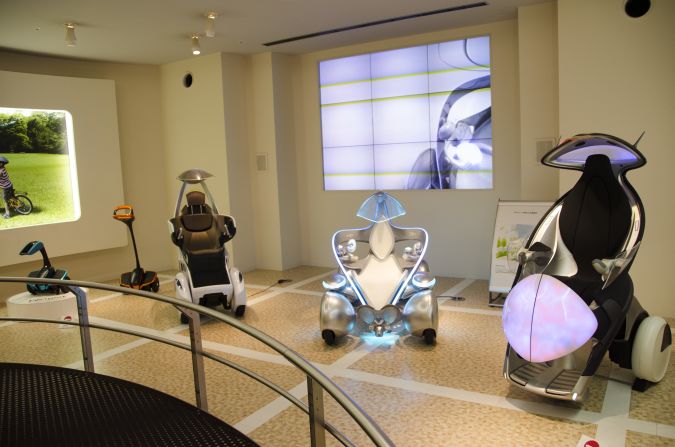
If Toyota's vision becomes reality, in a few years we may all be traveling in these vehicles.

Totally makes sense —
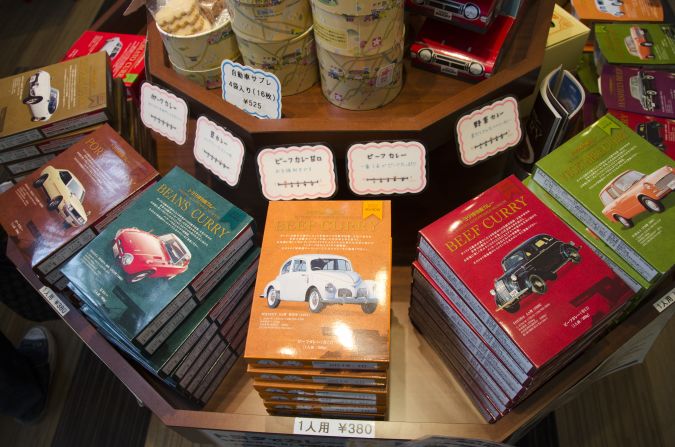
Because company-branded curry is obviously what you'd sell at the gift shop in a car factory.