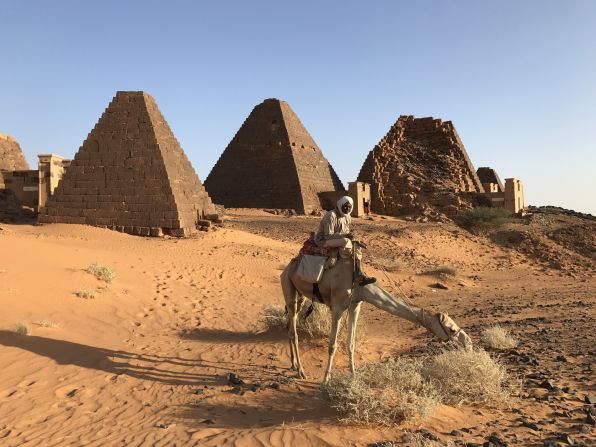
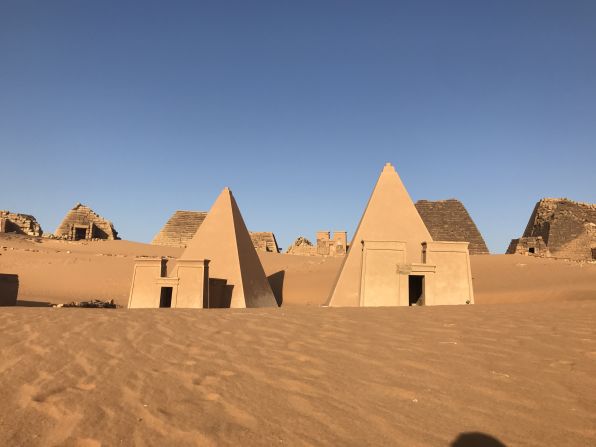
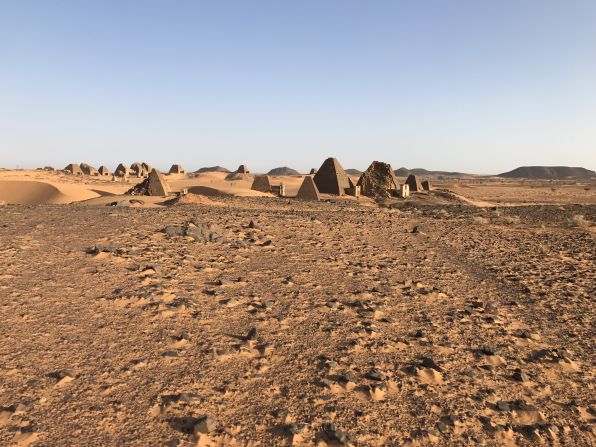
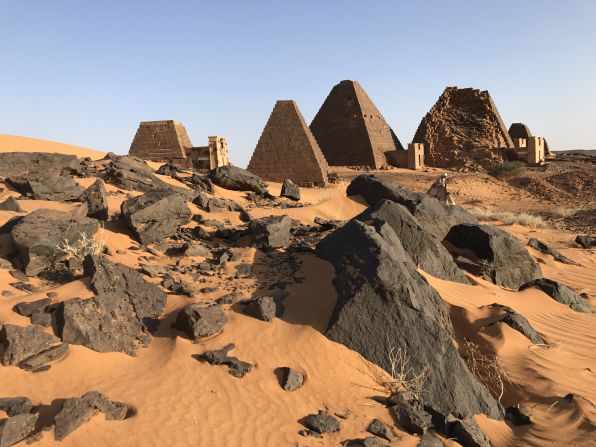
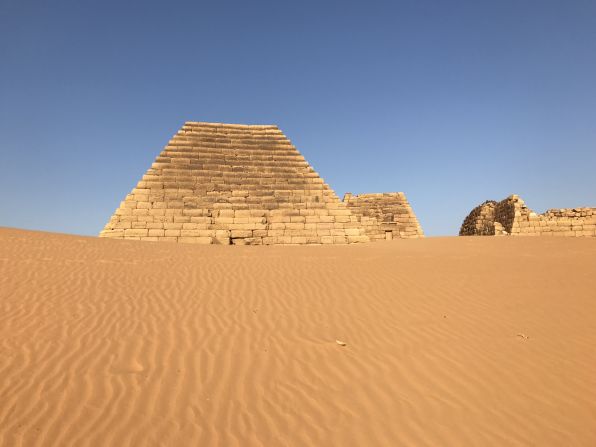
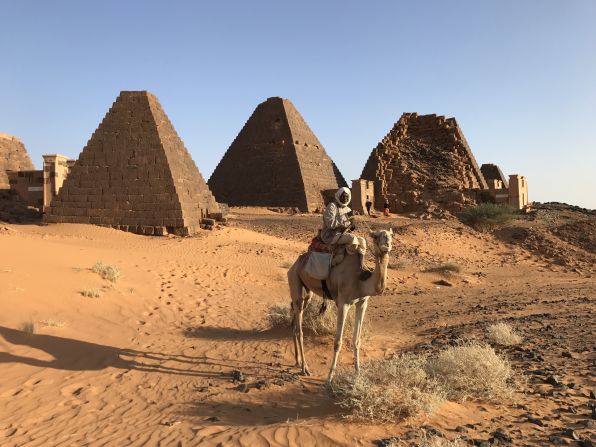
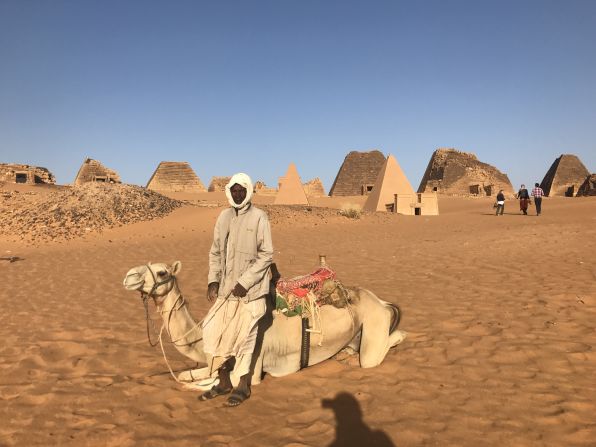
In Sudan's Nile Valley there is a series of ancient tombs and pyramids that are rarely visited by tourists.
Michael Lawson
Sudan's forgotten pyramids —
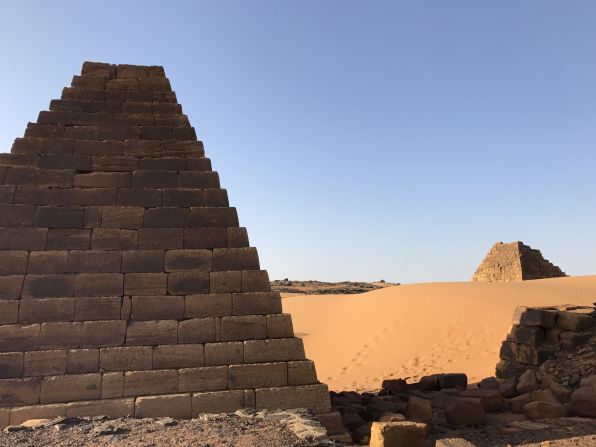
These pyramids date back to the Kingdom of Kush, a major power between the 8th century B.C. and the 4th century A.D.
Michael Lawson
Sudan's forgotten pyramids —
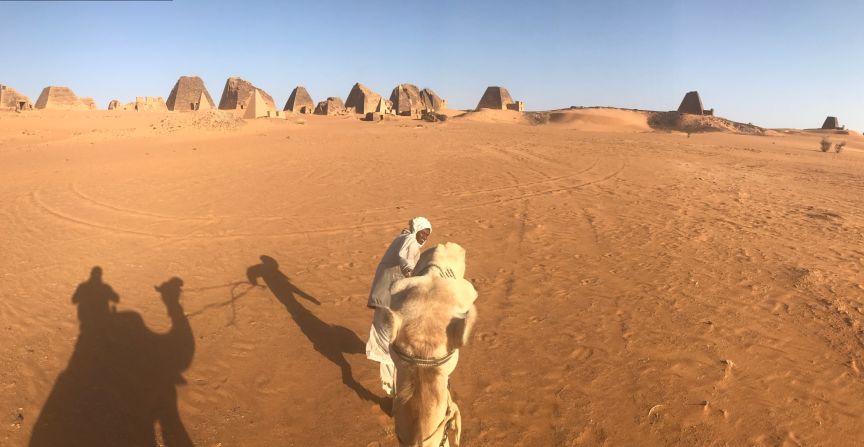
Tourists wishing to see the pyramids must travel in a jeep and then by camel or on foot to access the remote sites.
Michael Lawson
Sudan's forgotten pyramids —
According to UNESCO, the wide range of architectural forms found at the Island of Meroe -- a semi-desert landscape between the Nile and Atbara rivers -- is proof of contact between Sub-Saharan Africa and the Mediterranean and Middle Eastern worlds in this period.
Michael Lawson
Sudan's forgotten pyramids —
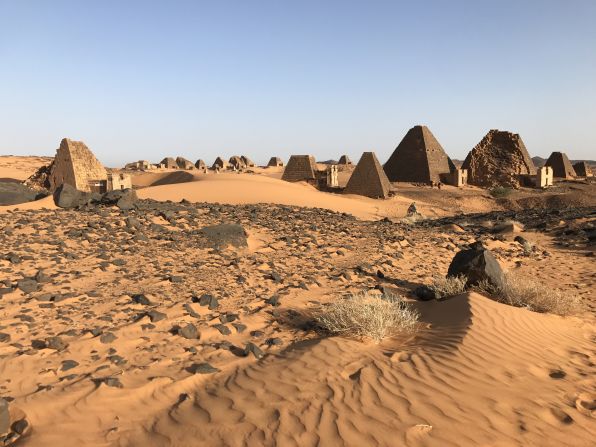
Meroe is an ancient city that was the capital of the Kingdom of Kush for several centuries. The pyramids here house the remains of the deceased Kushite rulers.
Michael Lawson
Sudan's forgotten pyramids —
More than 200 pyramids are believe to be located in Sudan. About 177 are located in the Island of Meroe, while the other 74 are in the Nuri region.
Michael Lawson
Sudan's forgotten pyramids —
The Sudan pyramids are smaller than those in Egypt. They are also far less busy, typically receiving about 10 visitors per day.
Michael Lawson
Sudan's forgotten pyramids —
Visitors are able to camp at the footsteps of the pyramids overnight. And sometimes they have to: there are no hotels or restaurants nearby.
Michael Lawson
Sudan's forgotten pyramids —
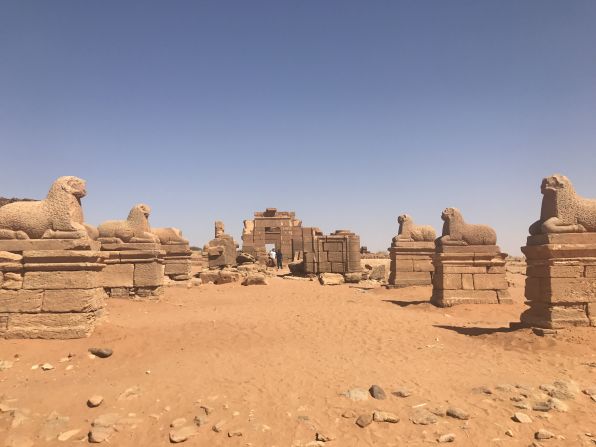
Stone rams line the entrance to the Amun Temple in Naga.
Michael Lawson
Sudan's forgotten pyramids —
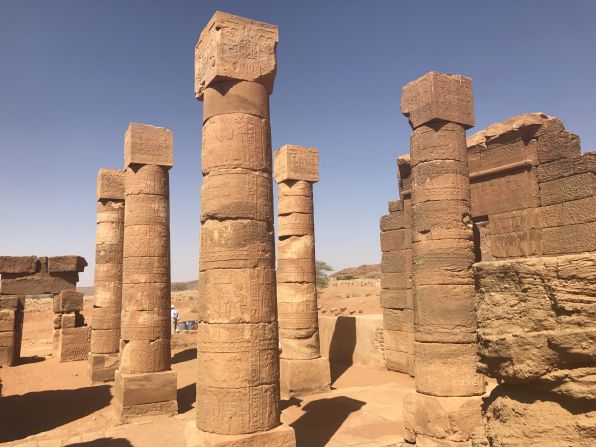
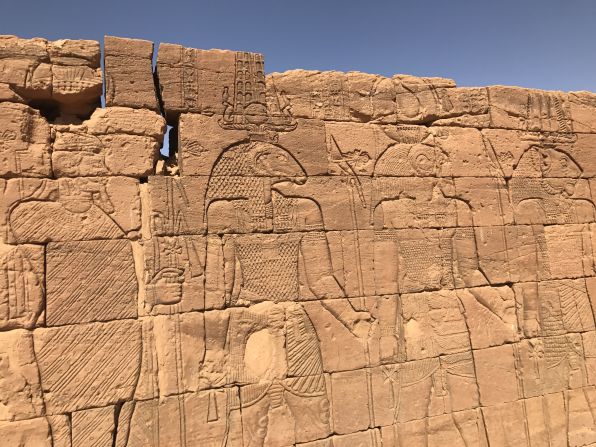
Some of the wall carvings on the Sudanese temples are reminiscent of Egyptian art.
Michael Lawson
Sudan's forgotten pyramids —
The rulers of the Kushite Kingdom were known as the Black Pharaohs. They were a major political power until the 4th century, according to UNESCO.
Michael Lawson
Sudan's forgotten pyramids —
The landscape leading up the UNESCO World Heritage Site is dramatic, with sweeping sand dunes and clear skies.
Michael Lawson
Sudan's forgotten pyramids —
Local tour guides are available to take visitors to the sites, but due to the lack of a tourism industry in Sudan they often do not know much of the local history.