Soviet bus shelters | CNN

CNN values your feedback

1. How relevant is this ad to you?
2. Did you encounter any technical issues?
Thank You!
Your effort and contribution in providing this feedback is much appreciated.
Close
Ad Feedback
Destinations
Food & Drink
News
Stay
Video
More
Destinations Food & Drink News Stay Video
Watch Listen Live TV
My Account
  • Settings
  • Newsletters
  • Topics you follow
  • Sign out
Your CNN account Sign in to your CNN account

My Account
  • Settings
  • Newsletters
  • Topics you follow
  • Sign out
Your CNN account Sign in to your CNN account

Live TV Listen Watch
Edition
US
International
Arabic
Español
Edition
  • US
  • International
  • Arabic
  • Español

Destinations
Food & Drink
News
Stay
Video

Follow CNN Travel
Download the CNN App

  • World
    • Africa
    • Americas
    • Asia
    • Australia
    • China
    • Europe
    • India
    • Middle East
    • United Kingdom
  • US Politics
    • Elections 2026
    • Trump
    • Facts First
    • CNN Polls
    • Redistricting Tracker
    • Epstein Files
  • Business
    • Tech
    • Media
    • Calculators
    • Videos
  • Markets
    • Pre-markets
    • After-Hours
    • Fear & Greed
    • Investing
    • Markets Now
    • Nightcap
  • Health
    • Life, But Better
    • Fitness
    • Food
    • Sleep
    • Mindfulness
    • Relationships
  • Entertainment
    • Movies
    • Television
    • Celebrity
  • Tech
    • Innovate
  • Style
    • Arts
    • Design
    • Fashion
    • Architecture
    • Luxury
    • Beauty
    • Video
  • Travel
    • Destinations
    • Food & Drink
    • Stay
    • News
    • Videos
  • Sports
    • Football
    • Tennis
    • Golf
    • Motorsport
    • US Sports
    • Olympics
  • Science
    • Space
    • Life
    • Unearthed
  • Climate
    • Solutions
    • Weather
  • Weather
    • Video
    • Climate
  • World Cup 2026
  • Ukraine-Russia War
  • Israel-Hamas War
  • Features
    • As Equals
    • Call to Earth
    • Freedom Project
    • Impact Your World
    • Inside Africa
    • CNN Heroes
  • Watch
    • Live TV
    • Featured
    • CNN Fast
    • Shows A-Z
    • CNN 10
    • CNN TV Schedule
  • Listen
    • All There Is with Anderson Cooper
    • Chasing Life with Dr. Sanjay Gupta
    • The Assignment with Audie Cornish
    • Terms of Service with Clare Duffy
    • CNN 5 Things
    • All CNN Podcasts
  • Games
    • Daily Crossword
    • Jumble Crossword
    • Photo Shuffle
    • Sudoblock
    • Sudoku
    • 5 Things Quiz
  • About CNN
    • Photos
    • Investigations
    • CNN Profiles
    • CNN Leadership
    • CNN Newsletters
    • Work for CNN

Download the CNN App
Travel

Soviet bus shelters

By Barry Neild, CNN
Updated 1:18 AM EDT, Thu September 17, 2015
Link Copied!
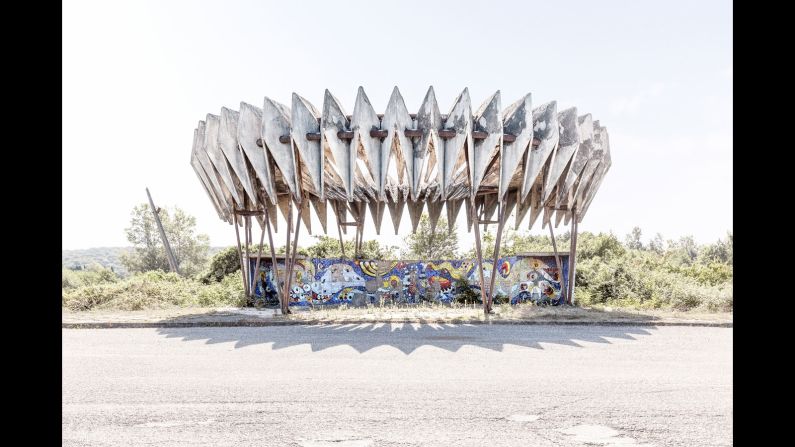
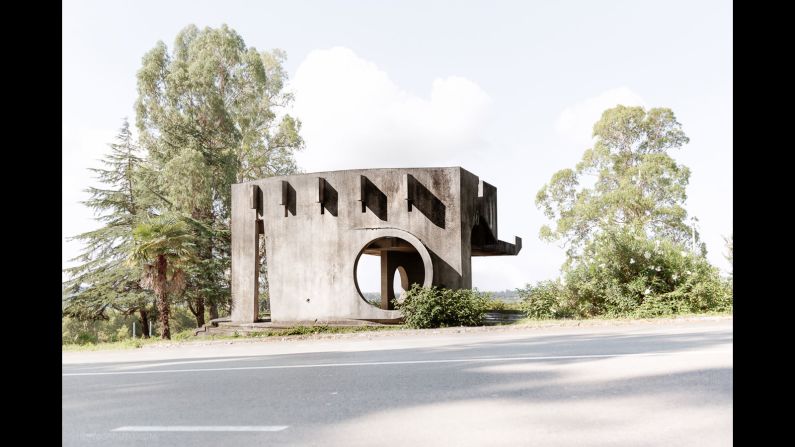
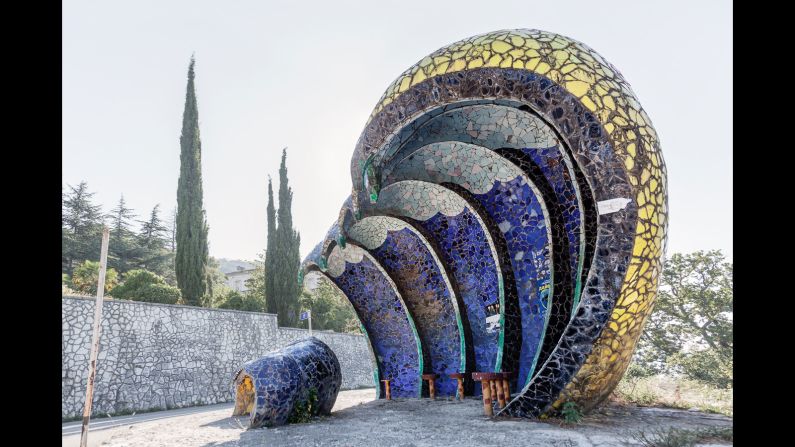
Canadian photographer Christopher Herwig has spent nearly 15 years documenting the extraordinary bus shelters of the old Soviet Union. This, in the disputed region of Abkhazia, is one of a number of wild creations by Zurab Tsereteli, an artist who went on to become president  of the Russian Academy of Arts.
Gagra (Disputed region of Abkhazia) —
Canadian photographer Christopher Herwig has spent nearly 15 years documenting the extraordinary bus shelters of the old Soviet Union. This, in the disputed region of Abkhazia, is one of a number of wild creations by Zurab Tsereteli, an artist who went on to become president of the Russian Academy of Arts.
Christopher Herwig
Another Tsereteli creation. Herwig contacted the artist to ask him about his shelters -- particularly why they tended away from functional elements such as roofs. "He was like 'a roof! I don't care if there's a roof! I'm an artist.'"<br />
Pitsunda (Disputed region of Abkhazia) —
Another Tsereteli creation. Herwig contacted the artist to ask him about his shelters -- particularly why they tended away from functional elements such as roofs. "He was like 'a roof! I don't care if there's a roof! I'm an artist.'"
Christopher Herwig
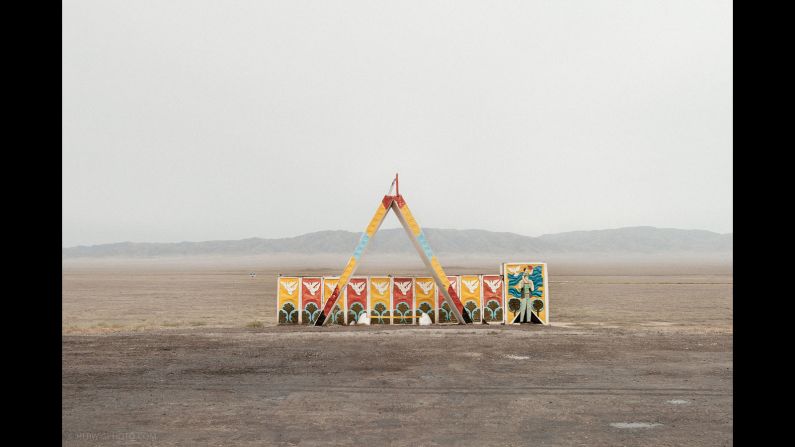
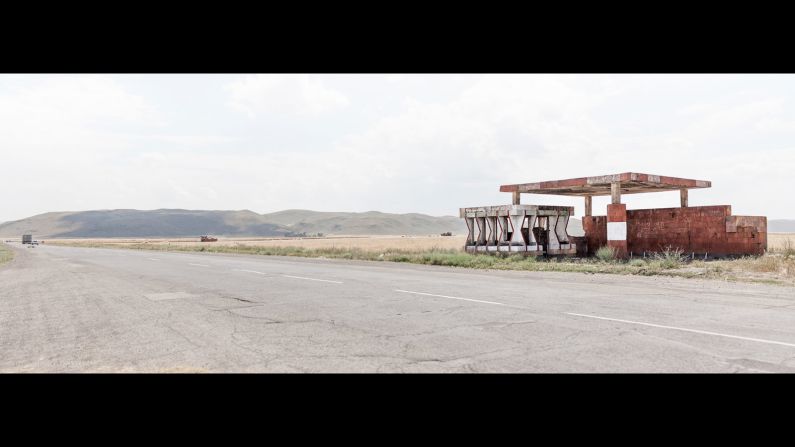
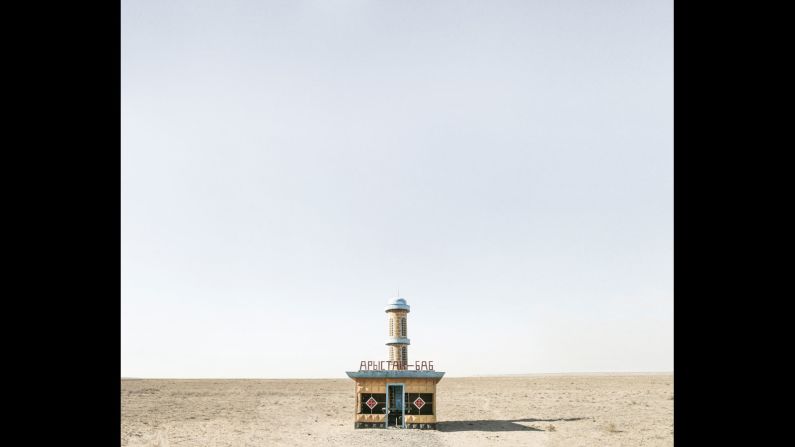
"Typically the ones I really like are often in the middle of nowhere that make you think why is there even a bus stop here," says Herwig. "Some times there's just a dirt road, but no other roads or houses for a very long time."
Charyn (Kazakhstan) —
"Typically the ones I really like are often in the middle of nowhere that make you think why is there even a bus stop here," says Herwig. "Some times there's just a dirt road, but no other roads or houses for a very long time."
Christopher Herwig
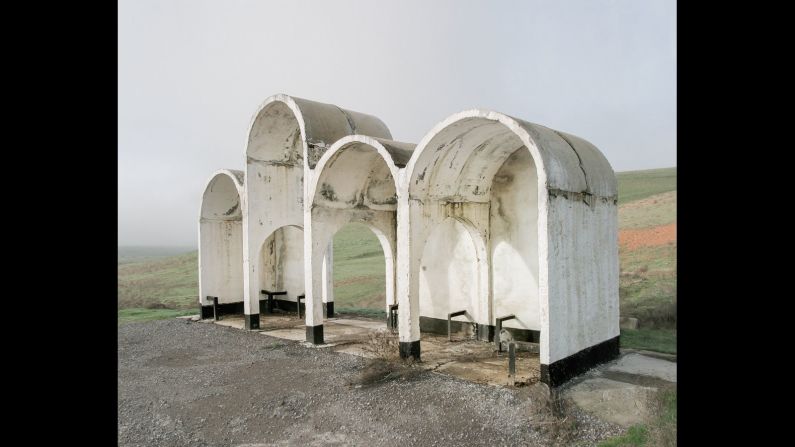
"In Kazakhstan there was one that didn't have anything else close by apart from another bus stop," says Herwig. "Both of them had been relatively freshly repainted, so someone had cared for them."
Karakol (Kazakhstan) —
"In Kazakhstan there was one that didn't have anything else close by apart from another bus stop," says Herwig. "Both of them had been relatively freshly repainted, so someone had cared for them."
Christopher Herwig
The same remote stops of Kazakhstan seem to have a social function too, adds Herwig. He says he spotted beer bottles around one. "Someone from somewhere has been visiting it and having a drink, which is intriguing. It's not like anyone's walking there, so maybe they were driving along and it's a nice place for a break. "
Taraz (Kazakhstan) —
The same remote stops of Kazakhstan seem to have a social function too, adds Herwig. He says he spotted beer bottles around one. "Someone from somewhere has been visiting it and having a drink, which is intriguing. It's not like anyone's walking there, so maybe they were driving along and it's a nice place for a break. "
Christopher Herwig
Herwig says many of the locals he encountered didn't understand his project, sometimes accusing him of making fun of their shelters.
Saratak (Armenia) —
Herwig says many of the locals he encountered didn't understand his project, sometimes accusing him of making fun of their shelters.
Christopher Herwig
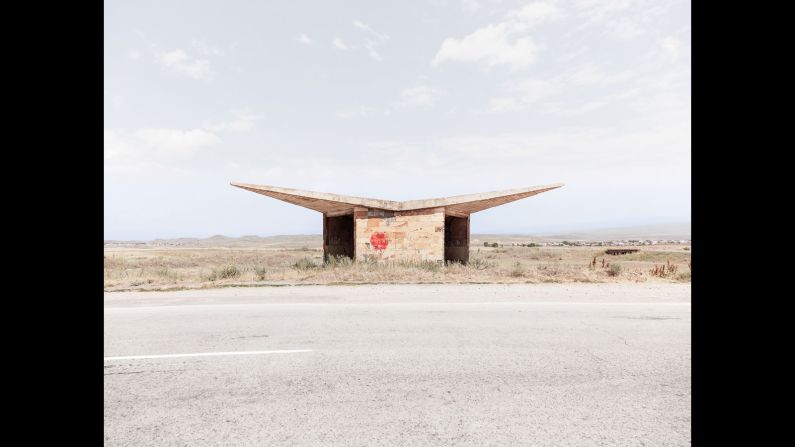
"A lot of people thought the bus stops were kind of disgusting because some were used just to dump garbage or go to the bathroom, and most of them are in quite rough condition," Herwig says. "I would try to explain that my motives were actually quite genuine and that I thought this was a fairly positive part of history and quite fun, and quite beautiful and quite creative."
Saratak (Armenia) —
"A lot of people thought the bus stops were kind of disgusting because some were used just to dump garbage or go to the bathroom, and most of them are in quite rough condition," Herwig says. "I would try to explain that my motives were actually quite genuine and that I thought this was a fairly positive part of history and quite fun, and quite beautiful and quite creative."
Christopher Herwig
When I traveled in central Asia to look specifically for these bus stops -- Armenia, Moldova, Ukraine -- I would often take a bus to an area where I had reason to believe there were a lot of nice bus stops," says Herwig. "Then I would hire a taxi for the day or several days. The taxi drivers would have the same kind of reaction: 'What do you want to do that for?'"<br />
Shklov (Ukraine) —
When I traveled in central Asia to look specifically for these bus stops -- Armenia, Moldova, Ukraine -- I would often take a bus to an area where I had reason to believe there were a lot of nice bus stops," says Herwig. "Then I would hire a taxi for the day or several days. The taxi drivers would have the same kind of reaction: 'What do you want to do that for?'"
Christopher Herwig
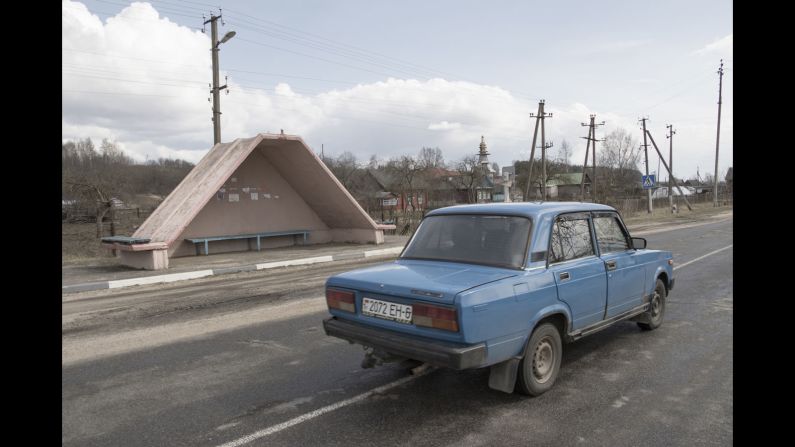
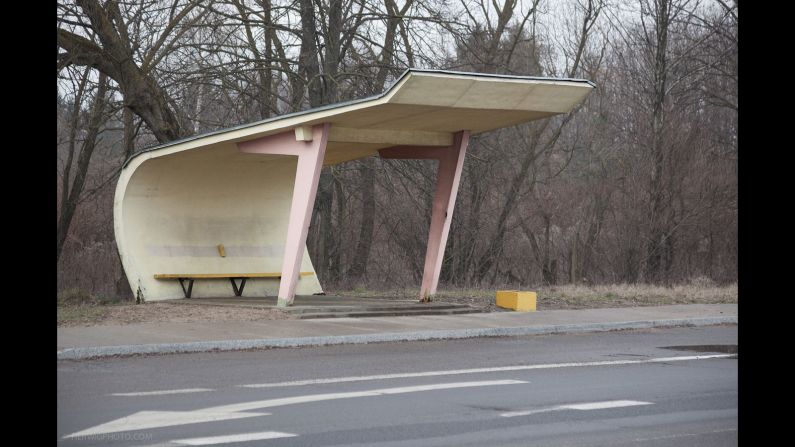
While the heyday of Soviet bus stops seems to have vanished along with the old political structures, Herwig says there's at least one designer, Armen Sardarov, still at work in Belarus after a career producing hundreds of shelters through the 1970s and 80s.
Haradok (Belarus) —
While the heyday of Soviet bus stops seems to have vanished along with the old political structures, Herwig says there's at least one designer, Armen Sardarov, still at work in Belarus after a career producing hundreds of shelters through the 1970s and 80s.
Christopher Herwig
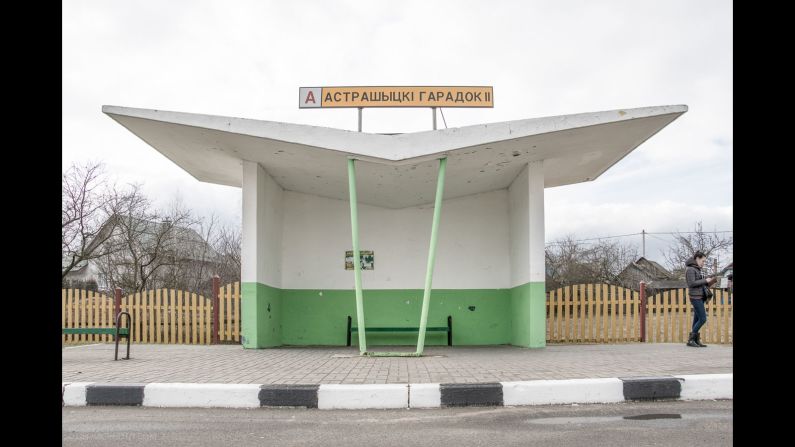
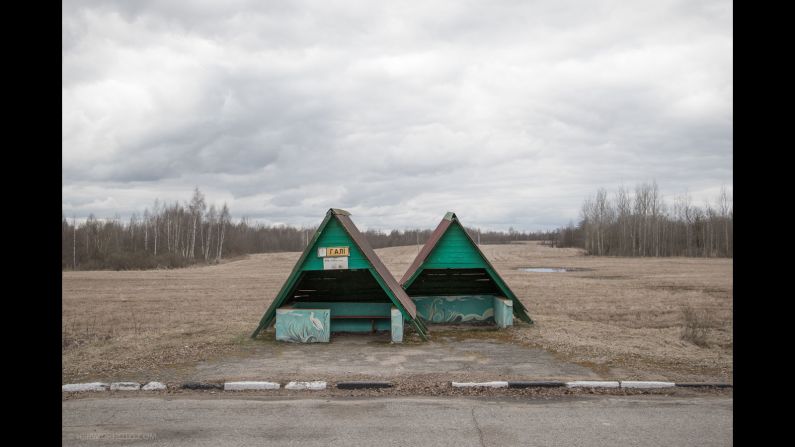
"I met him in May and he's still working," says Herwig of Belarus's enduring stop designer Armen Sardarov. "I've seen some of his newer ones and they're still fun, although they don't have the time or the money to make them all individually -- they've got schoolchildren to paint them, which is kinda nice."
Gali (Belarus) —
"I met him in May and he's still working," says Herwig of Belarus's enduring stop designer Armen Sardarov. "I've seen some of his newer ones and they're still fun, although they don't have the time or the money to make them all individually -- they've got schoolchildren to paint them, which is kinda nice."
Christopher Herwig
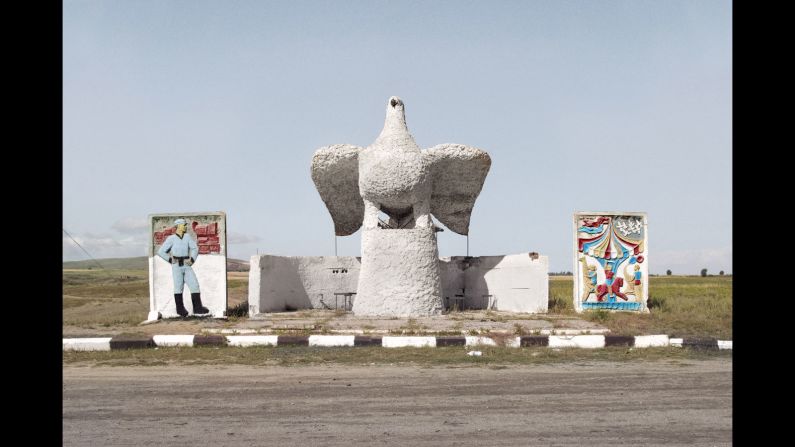
Herwig says his favorite shelters are the designs which tend towards the more bizarre.  Many of the most striking designs he found are in the disputed region of Abkhazia.
Disputed region of Abkhazia —
Herwig says his favorite shelters are the designs which tend towards the more bizarre. Many of the most striking designs he found are in the disputed region of Abkhazia.
Christopher Herwig
"The nicest thing about the bus stops is they are seemingly random, but there are definitely some themes," Herwig says.
Yerevan (Armenia) —
"The nicest thing about the bus stops is they are seemingly random, but there are definitely some themes," Herwig says.
Christopher Herwig
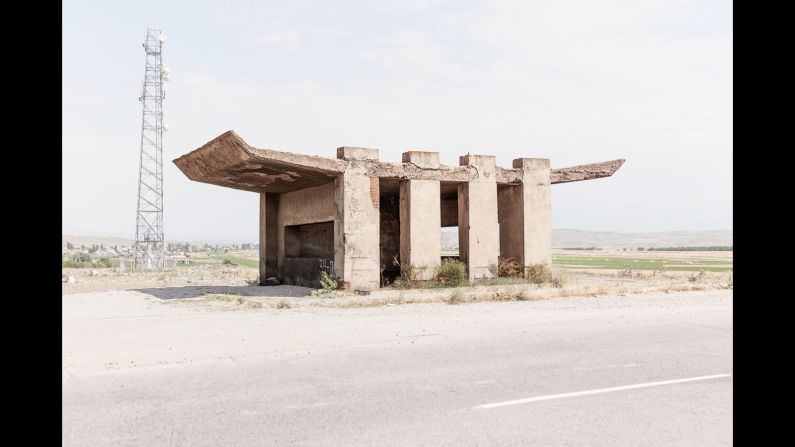
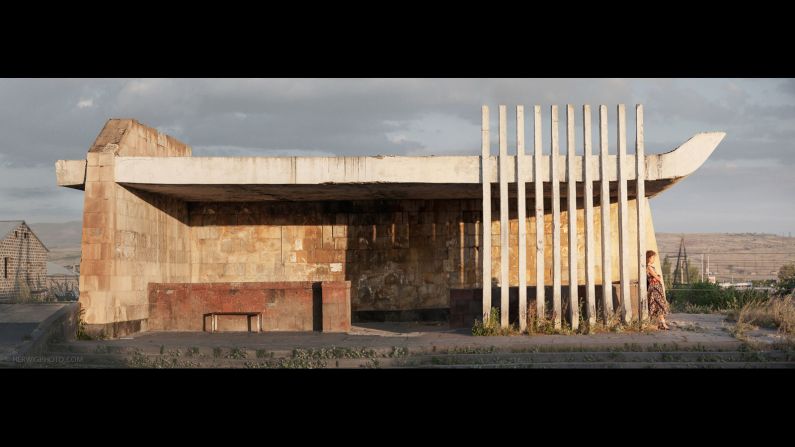
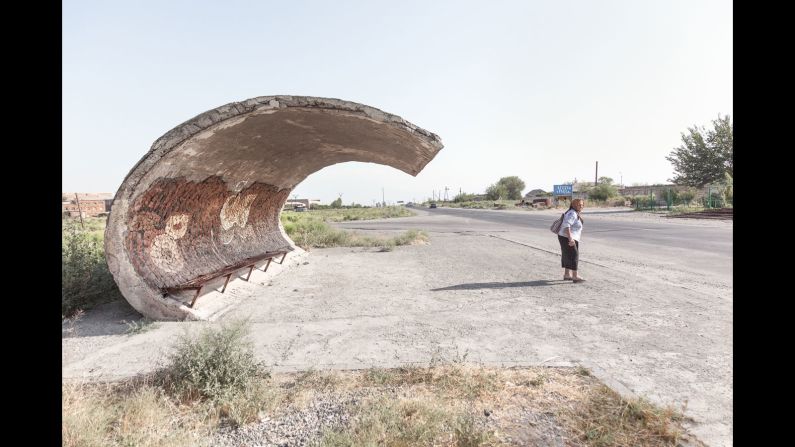
"For example, in Armenia a lot of the bus stops are raw, heavy concrete -- like a brutalist style of architecture," Herwig adds. "But at the same time they're light, with a lot of things protruding from them. They tried to be creative."
Saratak (Armenia) —
"For example, in Armenia a lot of the bus stops are raw, heavy concrete -- like a brutalist style of architecture," Herwig adds. "But at the same time they're light, with a lot of things protruding from them. They tried to be creative."
Christopher Herwig
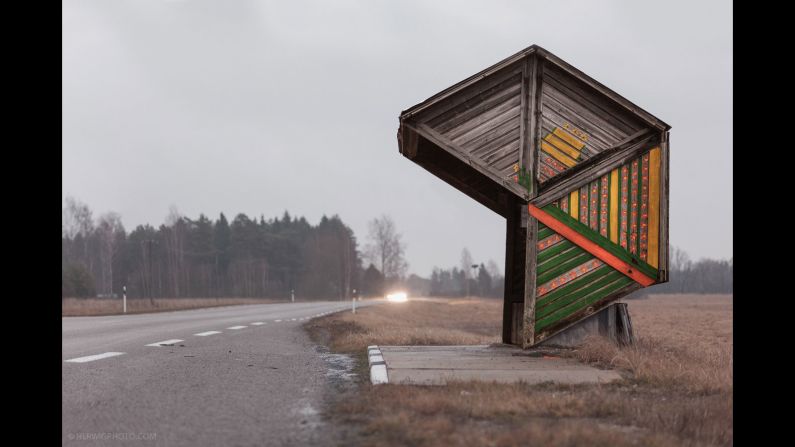
"In Estonia there are a lot made from wood, much more simple," says Herwig. "It does vary from country to country. In Ukraine the differences were in the way they were decorated rather than the shape." <br />
Kootsi (Estonia) —
"In Estonia there are a lot made from wood, much more simple," says Herwig. "It does vary from country to country. In Ukraine the differences were in the way they were decorated rather than the shape."
Christopher Herwig
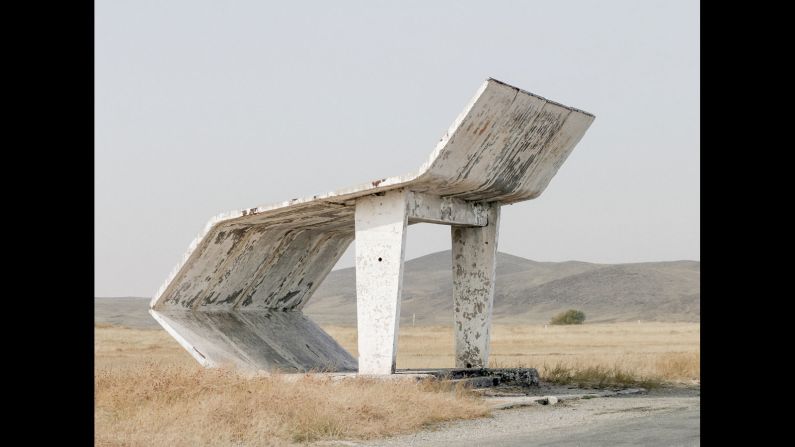
Herwig says the Soviet bus stops often provided artists and architects with rare opportunities to express themselves and try new things without upsetting political regimes. "They wanted to have fun and brighten people's lives and have an outlet to experiment with. It's very difficult to fail at the bus stop."<br />
Aral (Kazakhstan) —
Herwig says the Soviet bus stops often provided artists and architects with rare opportunities to express themselves and try new things without upsetting political regimes. "They wanted to have fun and brighten people's lives and have an outlet to experiment with. It's very difficult to fail at the bus stop."
Christopher Herwig
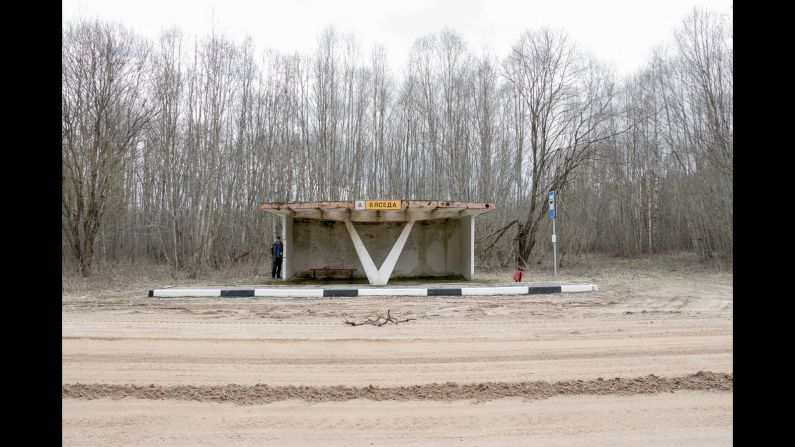
Herwig has traveled through 14 countries or territories and amassed more than 8,000 photographs of at least 1,000 shelters during his project. These included Kazakhstan, Turkmenistan, Uzbekistan, Kyrgyzstan, Tajikistan, Ukraine, Moldova, Armenia, Georgia, Lithuania, Latvia, Estonia, Belarus and the disputed region of Abkhazia.
Beseda (Belarus) —
Herwig has traveled through 14 countries or territories and amassed more than 8,000 photographs of at least 1,000 shelters during his project. These included Kazakhstan, Turkmenistan, Uzbekistan, Kyrgyzstan, Tajikistan, Ukraine, Moldova, Armenia, Georgia, Lithuania, Latvia, Estonia, Belarus and the disputed region of Abkhazia.
Christopher Herwig
Herwig began his project in 2002 during a cycle ride from London to St. Petersburg, Russia. "I decided to make some rules to force myself to appreciate the scenery differently, to look at more everyday items instead of just photographing the things I'd expect to see in National Geographic."
Niitsiku (Estonia) —
Herwig began his project in 2002 during a cycle ride from London to St. Petersburg, Russia. "I decided to make some rules to force myself to appreciate the scenery differently, to look at more everyday items instead of just photographing the things I'd expect to see in National Geographic."
Christopher Herwig
"I was getting off my bike to photograph things I normally wouldn't photograph -- things like clothes lines, power lines, mail boxes and bus stops," Herwig says. "And then as I got into the former Soviet Union, I saw these bus stops were actually worthy of me taking photographs."
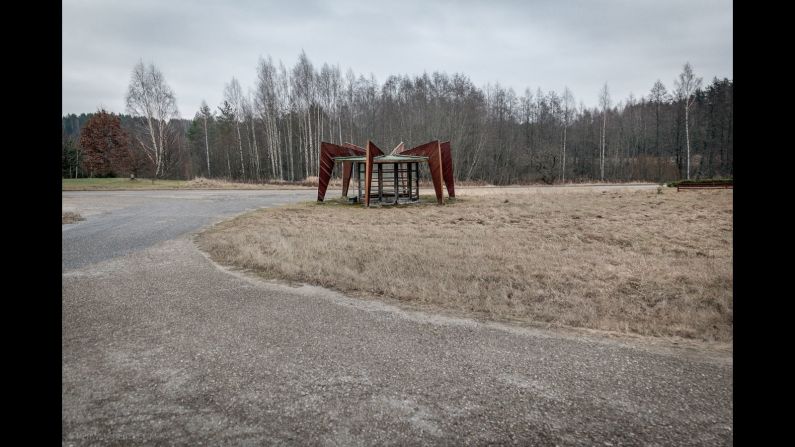
Kaunas (Lithuania) —
"I was getting off my bike to photograph things I normally wouldn't photograph -- things like clothes lines, power lines, mail boxes and bus stops," Herwig says. "And then as I got into the former Soviet Union, I saw these bus stops were actually worthy of me taking photographs."
Christopher Herwig
In 2003, Herwig moved to Kazakhstan with his girlfriend (now his wife), who had a UN job. He was based there for three years. "I was traveling around Central Asia, working on different photo projects about the region, not specifically for bus stops. There was always some other job. I ended up driving a lot of the major roads in Central Asia."<br />
Shymkent (Kazakhstan) —
In 2003, Herwig moved to Kazakhstan with his girlfriend (now his wife), who had a UN job. He was based there for three years. "I was traveling around Central Asia, working on different photo projects about the region, not specifically for bus stops. There was always some other job. I ended up driving a lot of the major roads in Central Asia."
Christopher Herwig
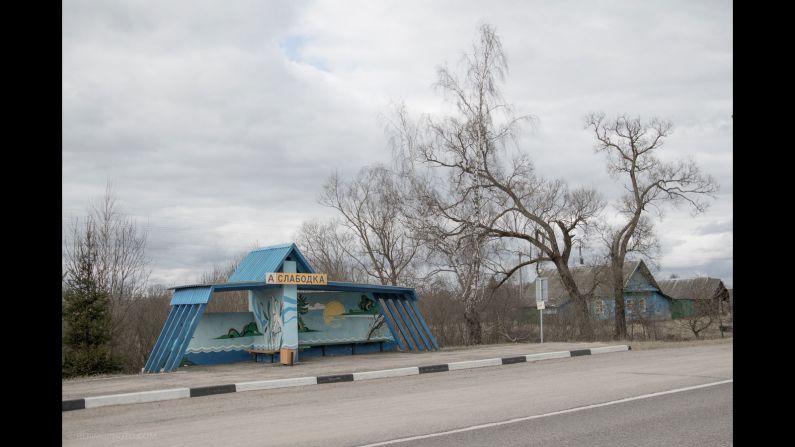
Herwig began shooting bus shelters using a film SLR camera. Later in Kazakhstan he carried a 6 megapixel digital camera. On later travels he used a Canon 5D.
Slobodka (Belarus) —
Herwig began shooting bus shelters using a film SLR camera. Later in Kazakhstan he carried a 6 megapixel digital camera. On later travels he used a Canon 5D.
Christopher Herwig
Herwig says his near-obsessive quest for Soviet bus stops took him places he wouldn't otherwise have traveled. "I probably wouldn't have gone to Armenia, or Belarus or Ukraine or Moldova or the region of Abkhazia," he says. <br />
Echmiadzin (Armenia) —
Herwig says his near-obsessive quest for Soviet bus stops took him places he wouldn't otherwise have traveled. "I probably wouldn't have gone to Armenia, or Belarus or Ukraine or Moldova or the region of Abkhazia," he says.
Christopher Herwig

My Account
  • Settings
  • Newsletters
  • Topics you follow
  • Sign out
Your CNN account Sign in to your CNN account

Live TV Listen Watch
  • World
    • Africa
    • Americas
    • Asia
    • Australia
    • China
    • Europe
    • India
    • Middle East
    • United Kingdom
  • US Politics
    • Trump
    • Facts First
    • CNN Polls
    • Elections 2026
    • Redistricting Tracker
    • Epstein Files
  • Business
    • Tech
    • Media
    • Calculators
    • Videos
  • Markets
    • Pre-markets
    • After-Hours
    • Fear & Greed
    • Investing
    • Markets Now
    • Nightcap
  • Health
    • Life, But Better
    • Fitness
    • Food
    • Sleep
    • Mindfulness
    • Relationships
  • Entertainment
    • Movies
    • Television
    • Celebrity
  • Tech
    • Innovate
  • Style
    • Arts
    • Design
    • Fashion
    • Architecture
    • Luxury
    • Beauty
    • Video
  • Travel
    • Destinations
    • Food & Drink
    • Stay
    • News
    • Videos
  • Sports
    • Football
    • Tennis
    • Golf
    • Motorsport
    • US Sports
    • Olympics
  • Science
    • Space
    • Life
    • Unearthed
  • Climate
    • Solutions
    • Weather
  • Weather
    • Video
    • Climate
  • World Cup 2026
  • Ukraine-Russia War
  • Israel-Hamas War
  • Features
    • As Equals
    • Call to Earth
    • Freedom Project
    • Impact Your World
    • Inside Africa
    • CNN Heroes
  • Watch
    • Live TV
    • Featured
    • CNN Headlines
    • Shows A-Z
    • CNN 10
    • CNN TV Schedule
  • Listen
    • All There Is with Anderson Cooper
    • Chasing Life with Dr. Sanjay Gupta
    • The Assignment with Audie Cornish
    • Terms of Service with Clare Duffy
    • CNN 5 Things
    • All CNN Podcasts
  • Games
    • Daily Crossword
    • Jumble Crossword
    • Photo Shuffle
    • Sudoblock
    • Sudoku
    • 5 Things Quiz
  • About CNN
    • Photos
    • Investigations
    • CNN Profiles
    • CNN Leadership
    • CNN Newsletters
    • Work for CNN

Watch Listen Live TV
My Account
  • Settings
  • Newsletters
  • Topics you follow
  • Sign out
Your CNN account Sign in to your CNN account
Follow CNN Travel

Download the CNN app

Terms of Use Privacy Policy Ad Choices Accessibility & CC About Newsletters Transcripts

© 2026 Cable News Network. A Warner Bros. Discovery Company. All Rights Reserved.
CNN Sans ™ & © 2016 Cable News Network.

Download the CNN app

Scan the QR code to download the CNN app on Google Play.

Scan the QR code to download the CNN app from Google Play.

Download the CNN app

Scan the QR code to download the CNN app from the Apple Store.

Scan the QR code to download the CNN app from the Apple Store.