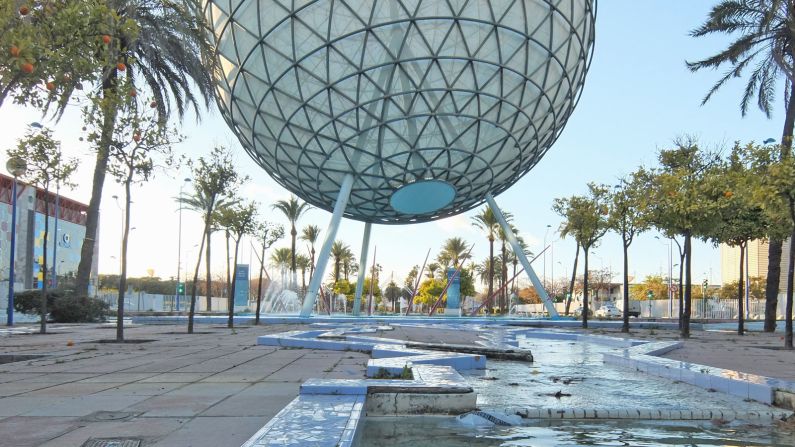
This large structure at the heart of the Seville Expo 92 acted as a symbol for the event, but also served a practical purpose, spraying visitors with cooling mist in the height of summer.
Barry Neild/CNN
Avenue of Europe —
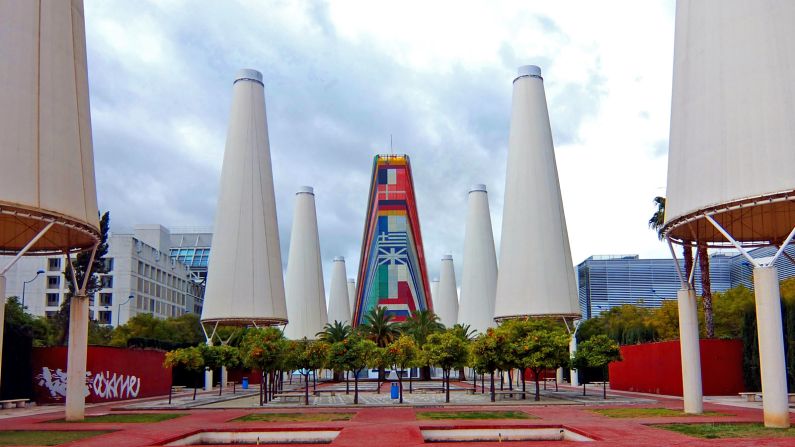
The Avenue of Europe was the most prestigious part of the park, dominated by the Pavilion of Spain at one end and featuring the pavilions of the 12 founding members of the soon-to-be-inaugurated European Union.
Barry Neild
Cooling towers —
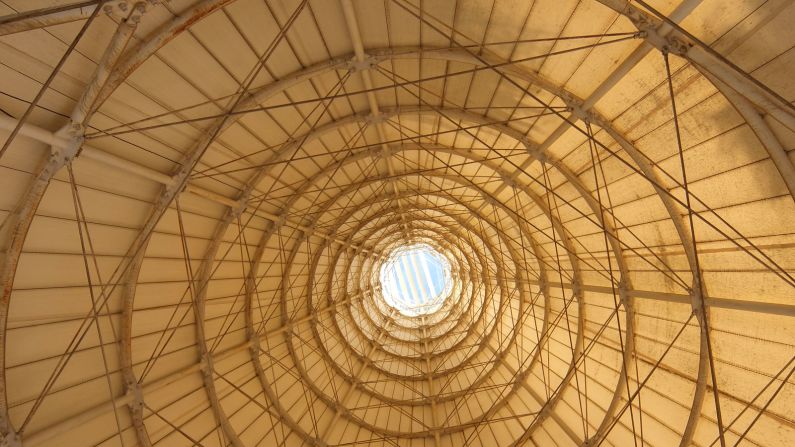
The cooling towers in the Avenue of Europe also used mist sprays to lower the temperature.
Barry Neild/CNN
Tower of Europe —
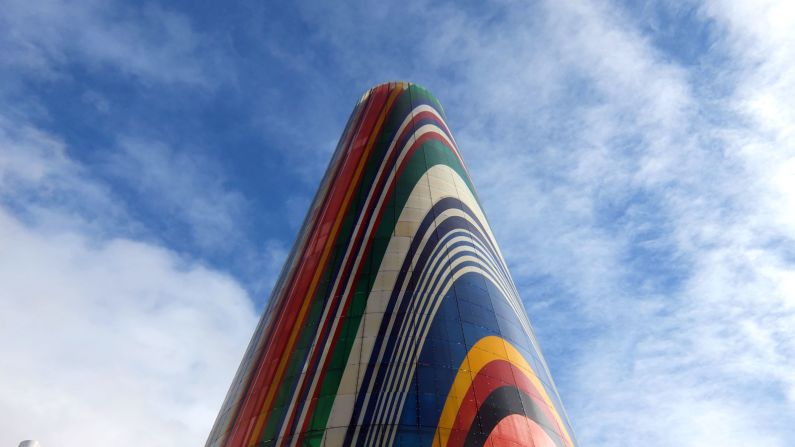
The Tower of Europe bears the flags and colors of the 12 European Union founders.
Barry Neild/CNN
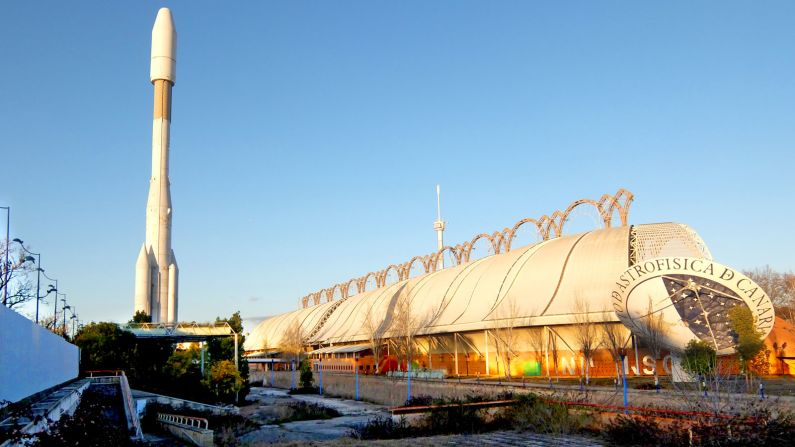
Pavilion of the Future —
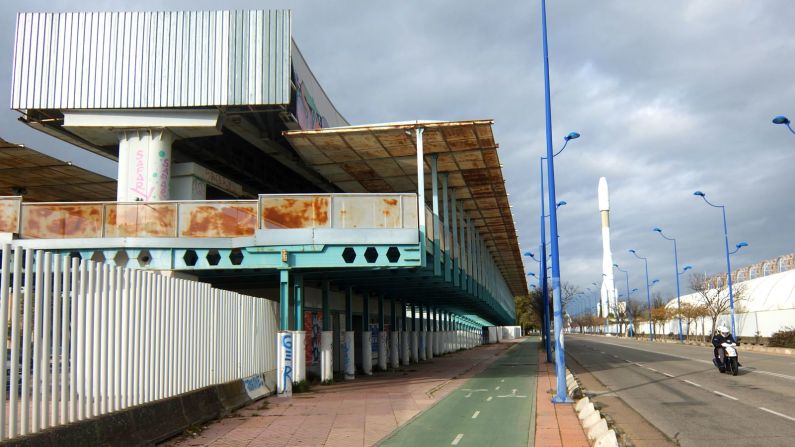
Overshadowed by a replica of the Ariane Four space launch system, the Expo's Pavilion of the Future now serves as a venue hosting major entertainment events.
Barry Neild/CNN
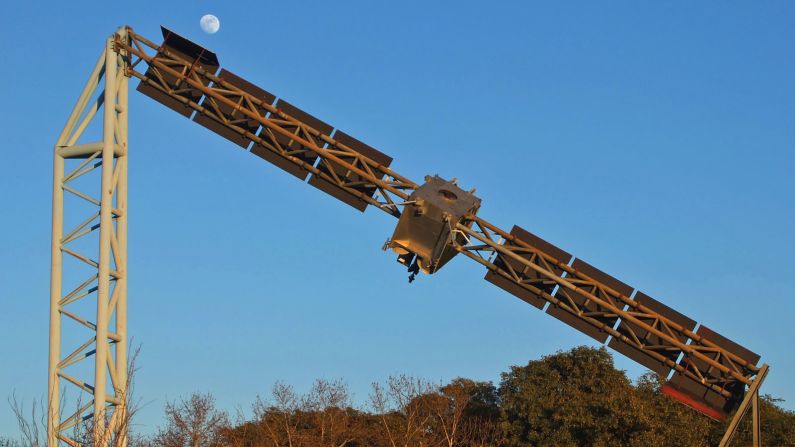
Satellite —
Hovering over the Pavilion of the Future, a model of a satellite conveys a sense of the space age.
Barry Neild/CNN
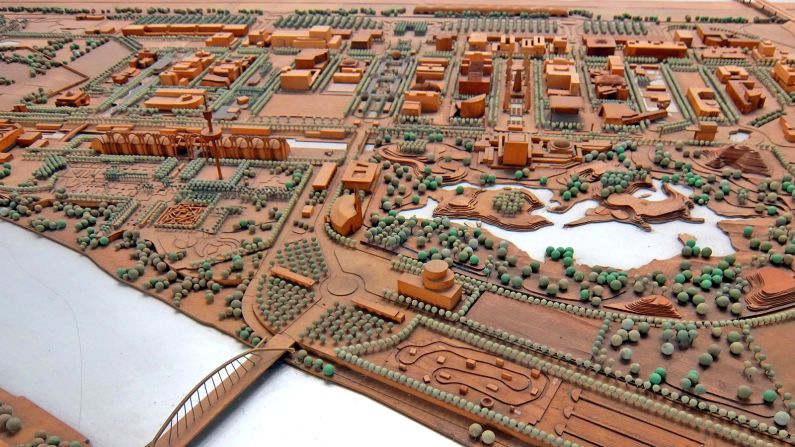
Site model —
Inside the Italian pavilion, which still stands on the Avenue of Europe, a 3D scale model of the Seville Expo site shows the position of old and new buildings.
Barry Neild/CNN
Science fiction landscape —
Today the site is a thriving science and education park, but it's deserted on weekends and evenings, lending it a post-apocalyptic science fiction atmosphere.
Barry Neild/CNN
Hungarian pavilion —
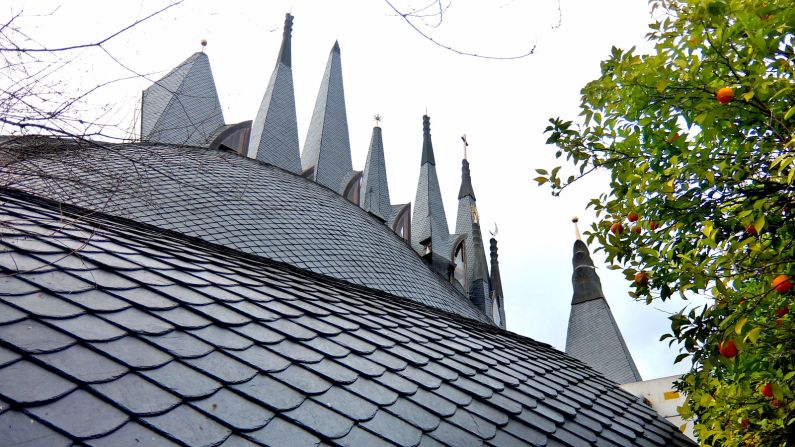
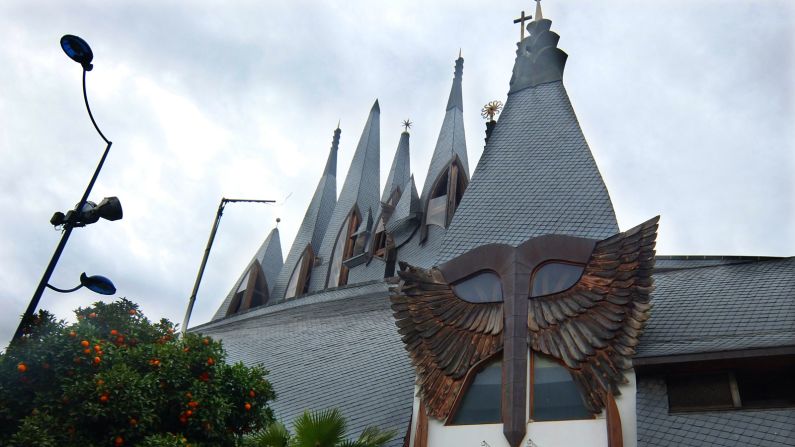
Hungary's pavilion at the Expo 92 site in Seville is considered one of Hungarian architect Imre Makovecz's masterpieces. It's topped with spires representing every major religion.
Barry Neild/CNN
Shamanistic symbols —
The Hungarian pavilion features Shamanistic symbols and, according to Expo 92 expert Angel Aramburu, sent political messages to neighboring pavilions.
Barry Neild/CNN
French pavilion —
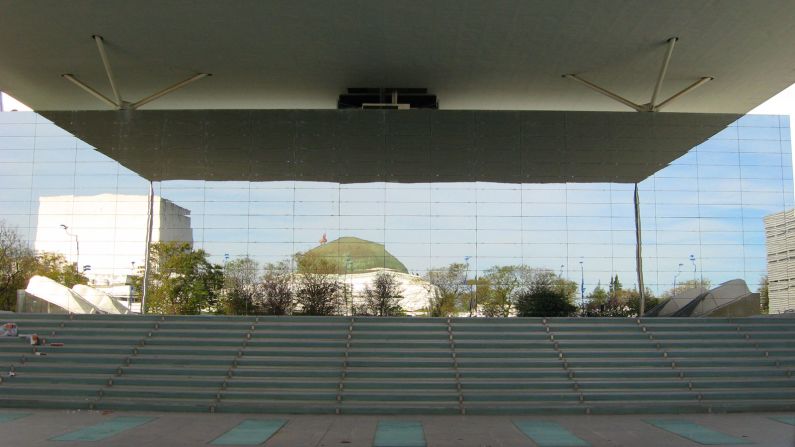
According to Aramburu, the mirrored glass of the Hungarian pavilion was meant to reflect the glory of the Spanish pavilion -- symbolizing the envy with which many European countries viewed Spain at the time.
Angel Aramburu
Chilean pavilion —
The Chilean pavilion housed an iceberg that had been cut up and transported from Chile's freezing shores to the searing heat of Spain, then reassembled.
Barry Neild/CNN
The Alamillo Bridge —
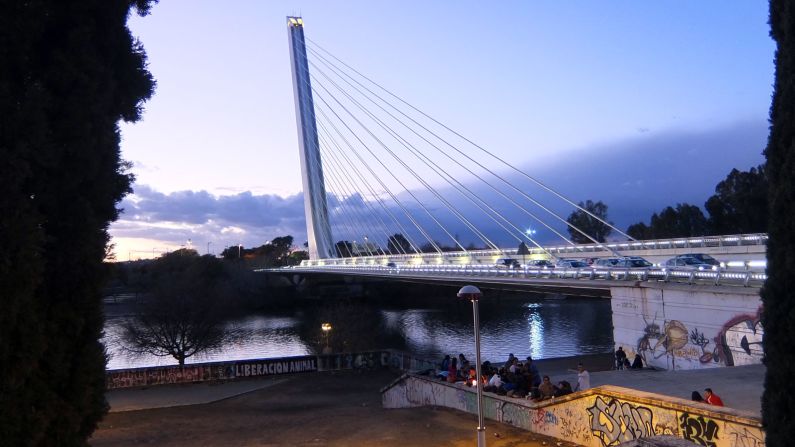
Designed by Spanish architect Santiago Calatrava, the spectacular Alamillo Bridge was completed in 1992 to connect the Expo site on the Isla de la Cartuja to the city of Seville.
Barry Neild/CNN
Pavilion of Kuwait —
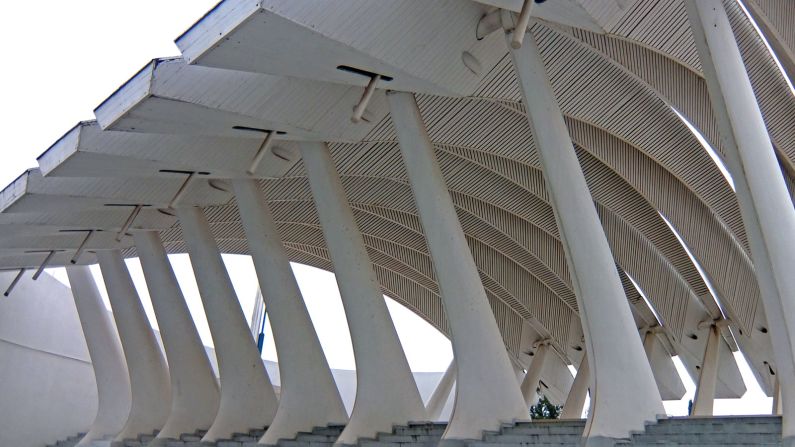
Kuwait's pavilion featured a roof made of cantilevered struts that unfurled like the fingers of a clasped pair of hands.
Barry Neild/CNN
Andalusia Contemporary Art Center —
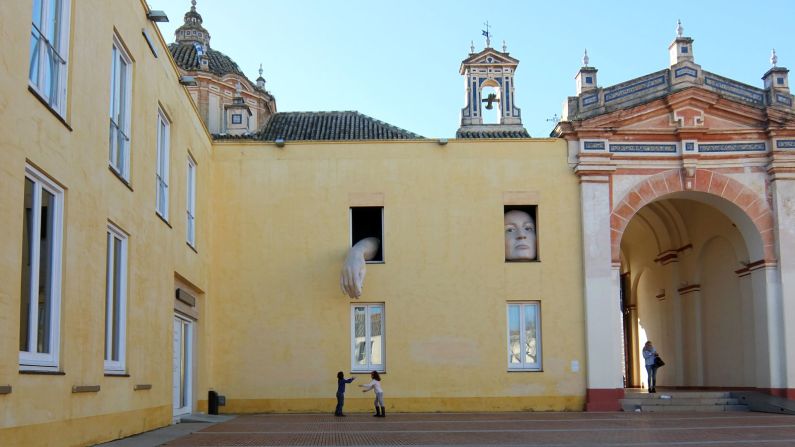
The Cartiuja Monastery complex, where Christopher Columbus visited before embarking on his voyage to the New World, played a symbolic role during the Expo. Today it houses the Andalusia Contemporary Art Center.
Barry Neild/CNN
Mexican pavilion —
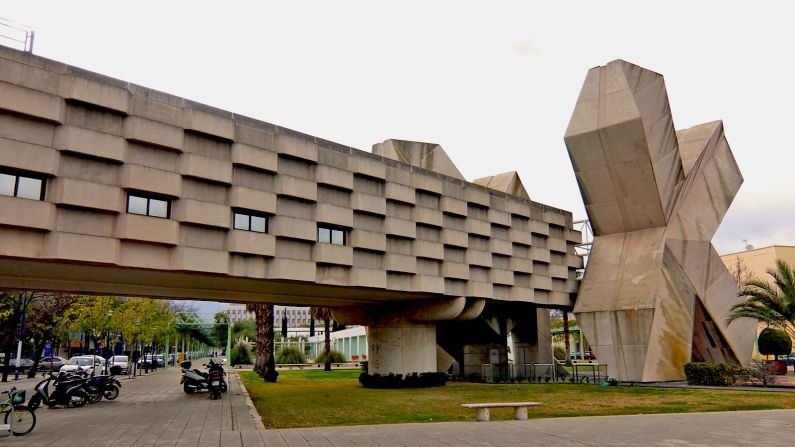
Designed as a visual pun, the Mexican pavilion featured a giant X to symbolize a crossroads of cultures and to remind people that despite its silent pronunciation, Mexico contains the letter "X."
Barry Neild/CNN
Monaco's pavilion —
Monaco's pavilion featured a facade designed to resemble the tiny state's lavish casino. It housed giant aquariums that are today used by Seville's river authorities.
Barry Neild/CNN
Cable car station —
An abandoned cable car station. Expo 92 was served by cable cars and a monorail. There was also a purpose-built railway station and a helicopter park.
Barry Neild/CNN
Vast parking lot —
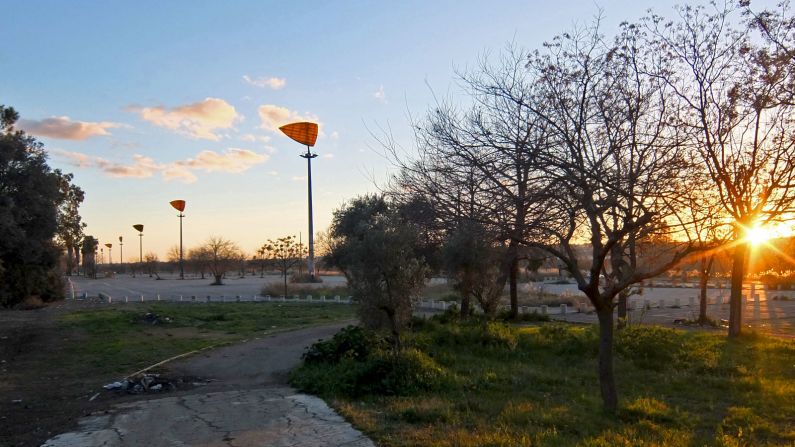
Many of the site's 40 million-plus visitors arrived by car. Today, a huge empty parking lot runs alongside the site, mostly disused.
Barry Neild
Moroccan pavilion —
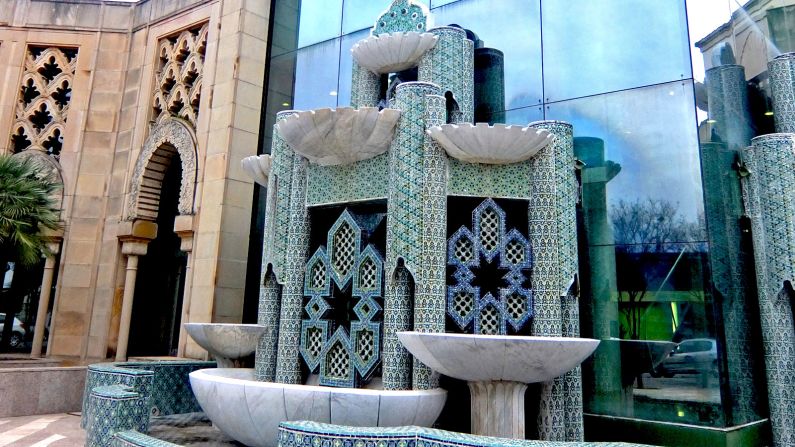
Now a cultural center, Morocco's pavilion features elaborate Islamic designs. It was still under construction as the Expo opened, giving visitors a chance to see traditional craftsmen in action.
Barry Neild/CNN
Canadian pavilion graffiti —
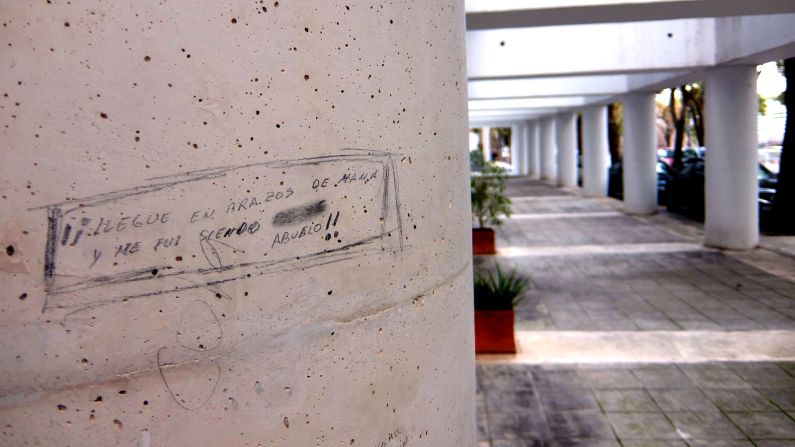
Such were the queues for the Canadian pavilion that one wag carved a complaint in a column outside: "I came in the arms of my mother, I left as a granny!!"
Barry Neild/CNN
Discovery Pavilion fire —
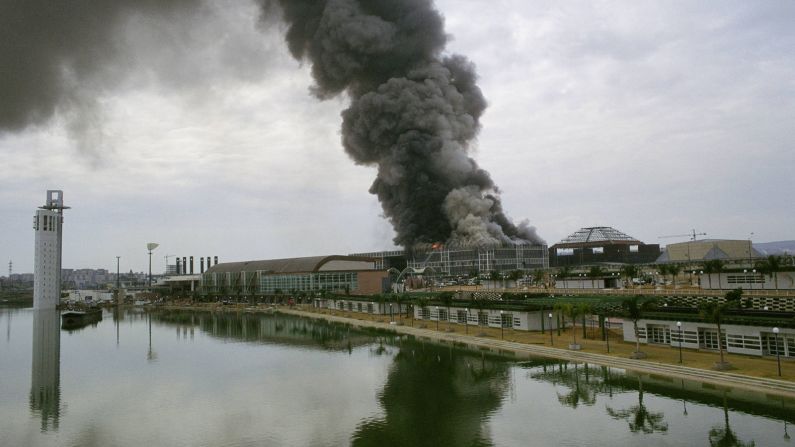
Before Expo 92 opened, a fire (here in a file photo) destroyed the event's Discoveries Pavilion. An attached Omnimax screen survived the blaze. The loss of the pavilion was a blow to the Expo, which took an "age of discovery" theme.
Cover/Getty Image
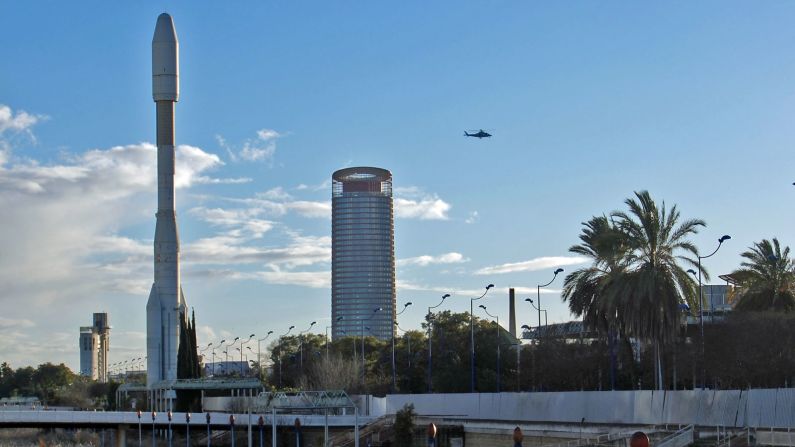
Cajasol Tower —
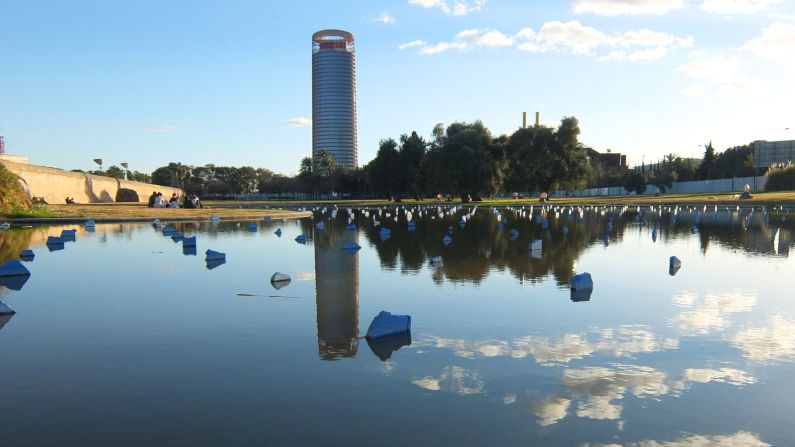
The Omnimax theater was torn down and, some years later, a 38-story building -- the tallest in Seville -- was built on the site of the Pavilion of Discovery.