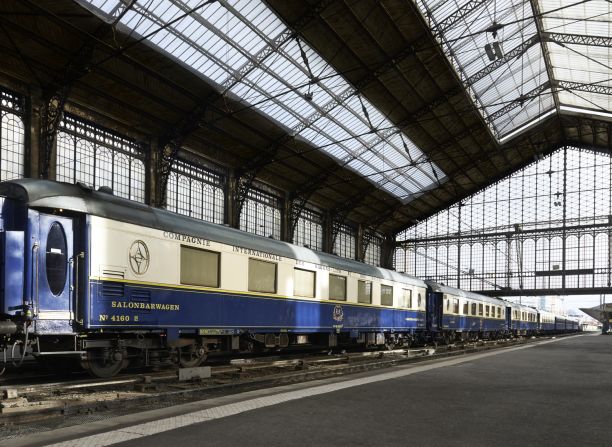
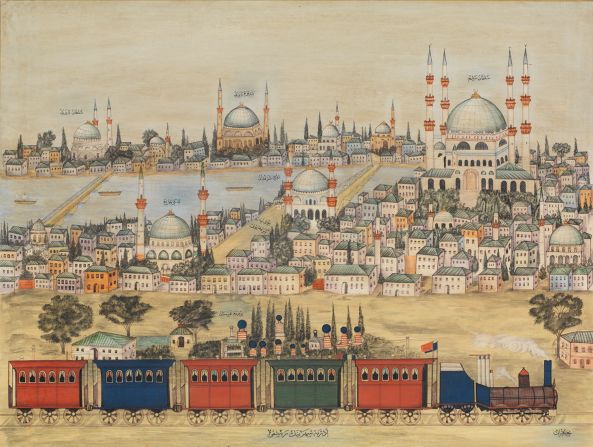
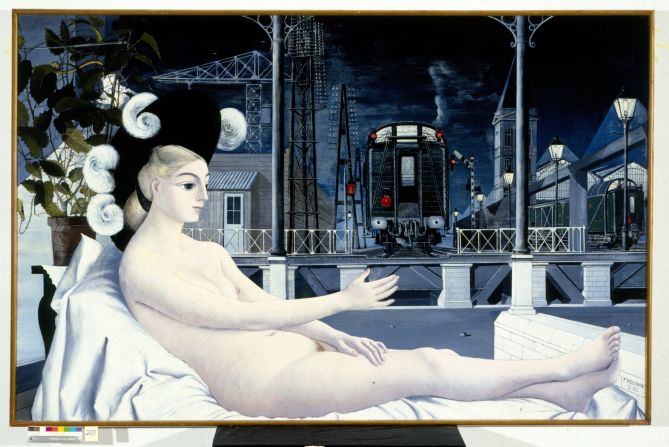
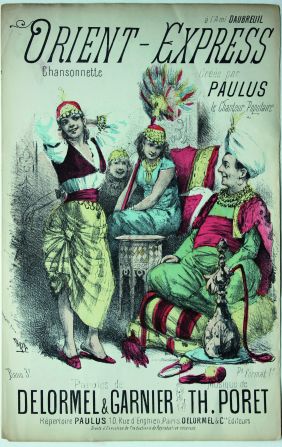
A new exhibition in Paris, Once Upon a time on the Orient Express, aims to restore the glory of the world's most legendary train. Here, the original Flèche d'Or carriage sits inside a station.
Courtesy Arab World Institute
Relaxing in style —
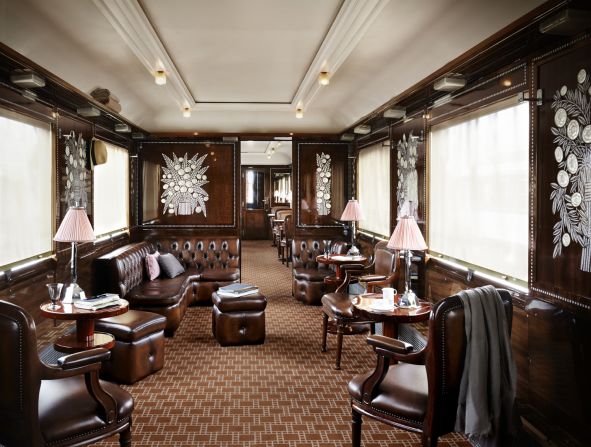
Organized by the World Arab Institute and the French national rail company SNCF, the exhibition highlights the luxury that travelers experienced on board this icon of transport. The Train Bleu offers a view of a sumptuous salon, with books and newspapers strewn across its mahogany tables, and a coat left nonchalantly on a chair.
Courtesy Arab World Institute
Home comforts —
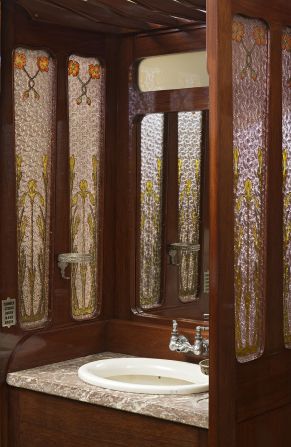
Many of the the carriages on display date from 1929, the golden era of Art Deco. Each compartment has wall panels made of precious wood and door handles in gilded brass, as well as a matching washbasin and a built-in toiletries cabinet.
Courtesy Sidoli/Rambaud, Association patrimoine Compagnies des wagons-lits
New horizons —
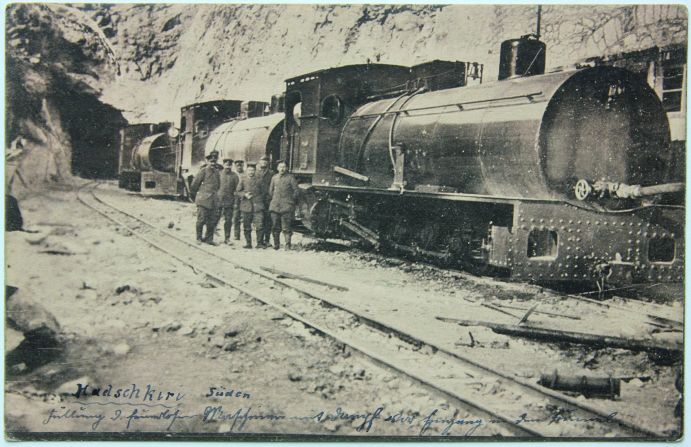
The train was the creation of Belgian entrepreneur George Nagelmackers, with its maiden journey in 1883. It crossed Europe with a final stop in Istanbul, or Constantinople as it was known at the time, opening up the Levant for a new generation of travelers. Here, the train is pictured on its way through Turkey.
Courtesy Kallimages, collection Pierre de Gigord
Refinement on board —
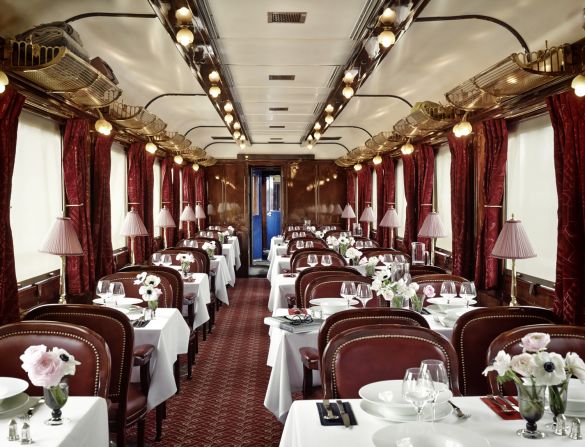
Inside its walls, the dining car is impeccably set for service, as if expecting to welcome well-heeled guests in just a few moments.
Courtesy Arab World Institute
Detailed design —
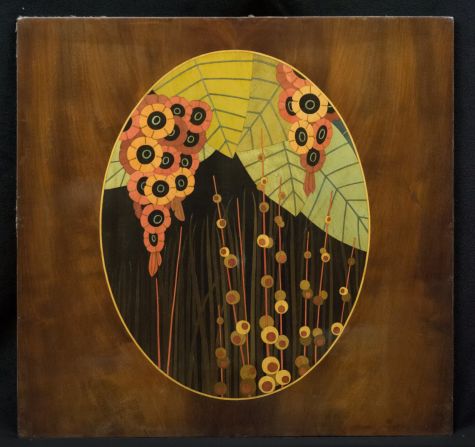
The train's interior was decorated by the celebrated French glass designer René Lalique, who created exquisite ornaments such as this floral motif made of molten glass, and set into wooden paneling.
Courtesy Sidoli/Rambaud, Meudon, collection Michel Cozic
Stepping into history —
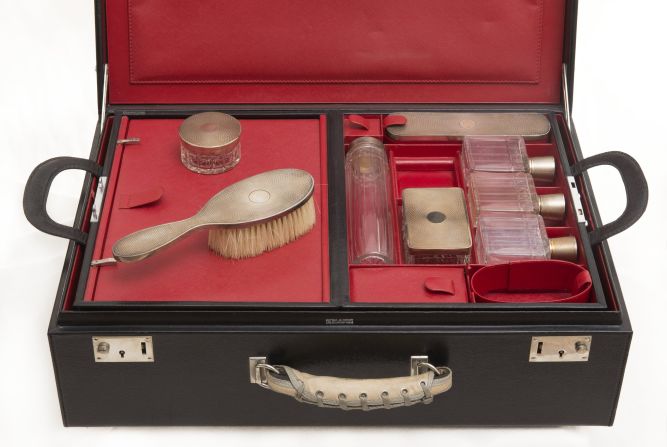
Exhibition curator Claude Mollard says that he wants visitors to imagine that the train has stopped at a station, and the passengers have stepped out leaving their possessions, such as this elegant toiletry case, inside.
Courtesy Sidoli/Rambaud, collection Moynat, Paris
Cultural icon —
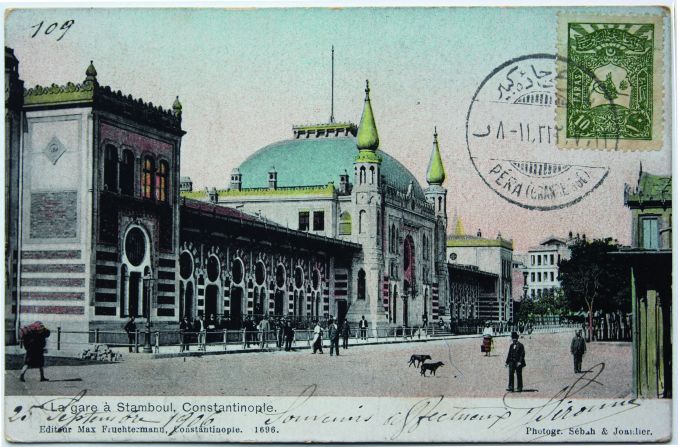
Travelers would often send postcards from exotic locations, such as this one which shows the Sirkeci Station, the terminus of the Orient Express on the western shore of Istanbul. The train inspired some of the most illustrious artists of the era -- Agatha Christie was a regular and set her famous 1934 novel "Murder on the Orient Express" almost entirely inside its carriages.
Courtesy Kallimages, collection Pierre de Gigord
Lofty standards —
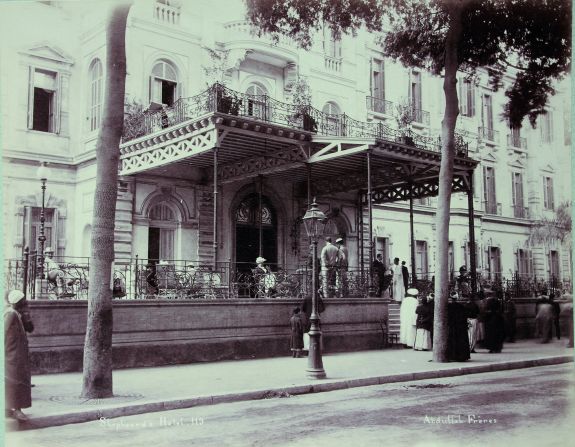
It also attracted royalty, aristocracy diplomats, and the bourgeoisie with its luxurious decor, excellent cuisine, and superb service which matched Europe's most exclusive establishments. This image shows the Shepherd's Hotel in Cairo, where many Orient Express passengers would stay.
Courtesy Kallimages, collection Pierre de Gigord
Luxury on the go —
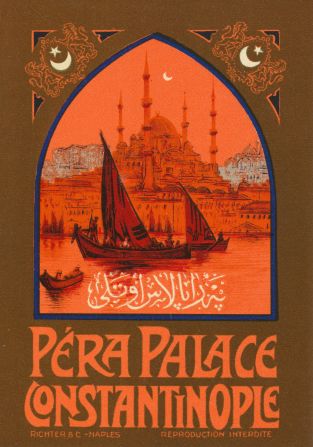
In order to give travelers the same level of comfort as on board, the Orient Express operator Compagnie Internationale des Wagons-Lits opened hotels in many cities along the train's route. The poster above is for the Pera Palace in Istanbul, which opened doors in 1895.
Courtesy Sidoli/Rambaud, Meudon, collection Michel Cozic
A Levantine dream —
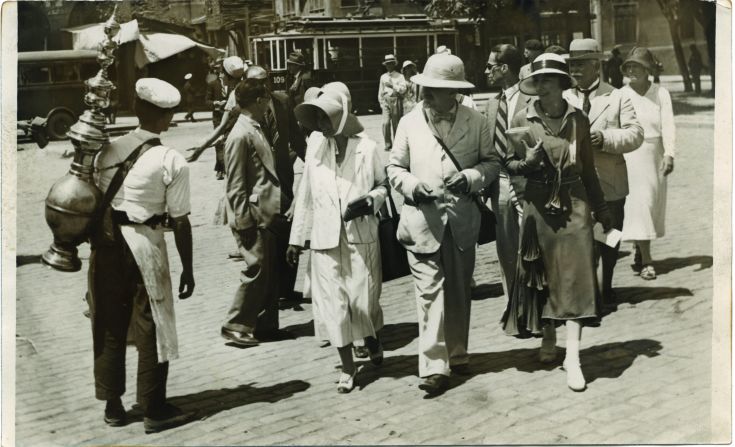
Most westerners had a romanticized view of the Middle East in the 19th and the start of the 20th century. However curator Claude Mollard says that the exhibition organizers were careful to avoid hints of colonial nostalgia by putting it into historical and political context.
Courtesy Kallimages, collection Pierre de Gigord
Expanding horizons —
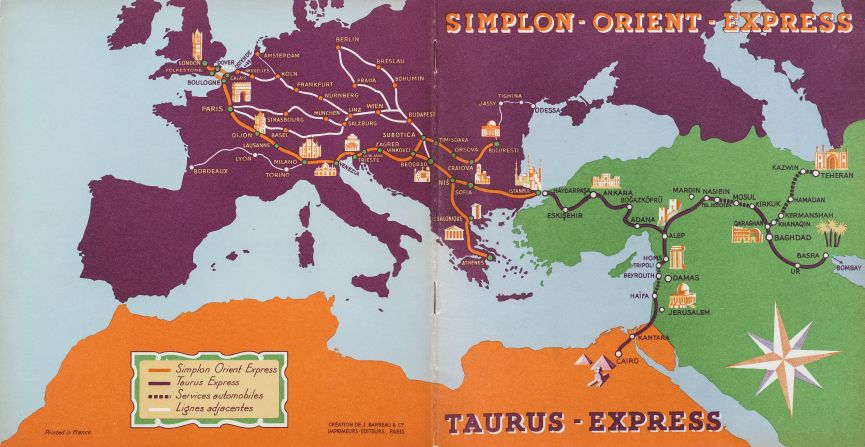
The Orient Express was more than just a service connecting two opposite sides of Europe. It was also a gateway to the Middle East, and from Istanbul travelers could catch connecting services to places like Aleppo, Damascus, Beirut, Baghdad, and Cairo. This map from 1931 shows the Orient-Express network, as well as its connection to Taurus Express which opened up new routes in the Middle East.