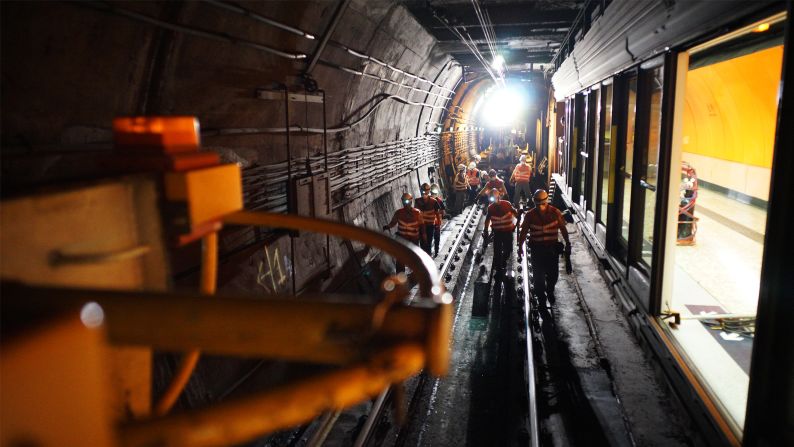
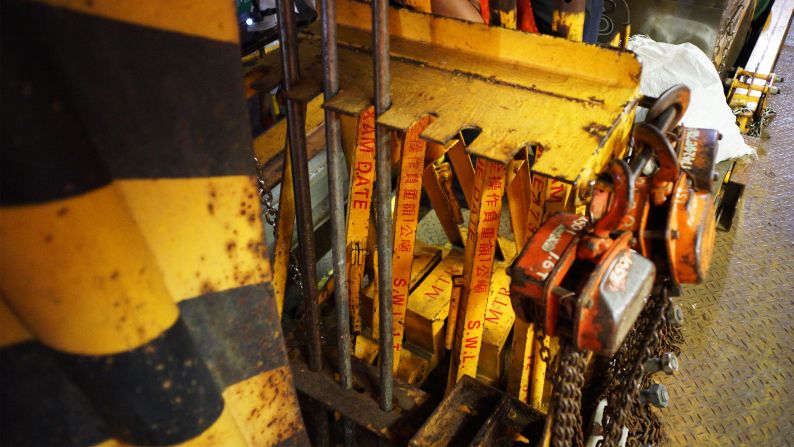
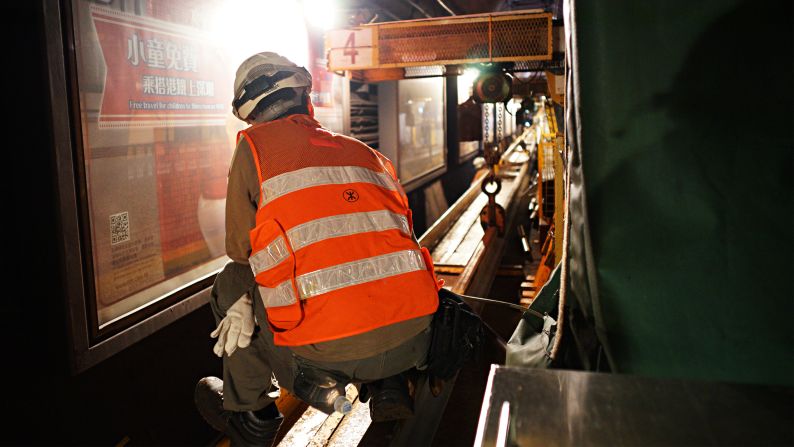
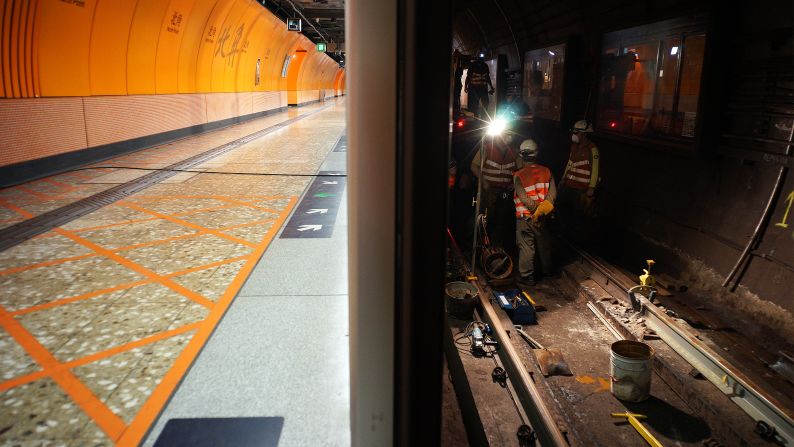
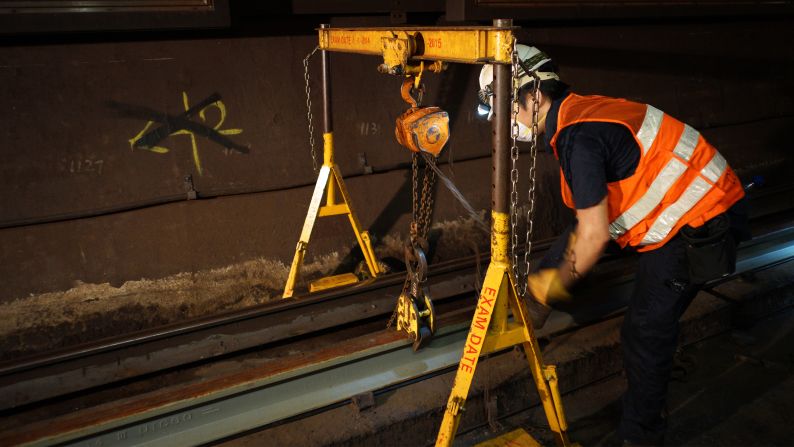
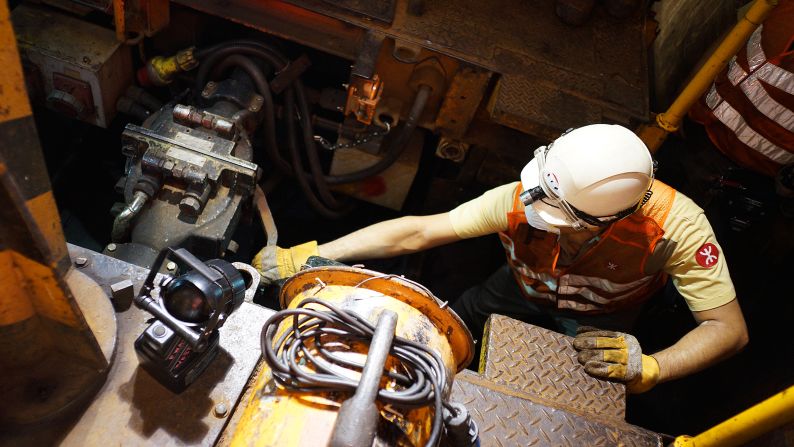
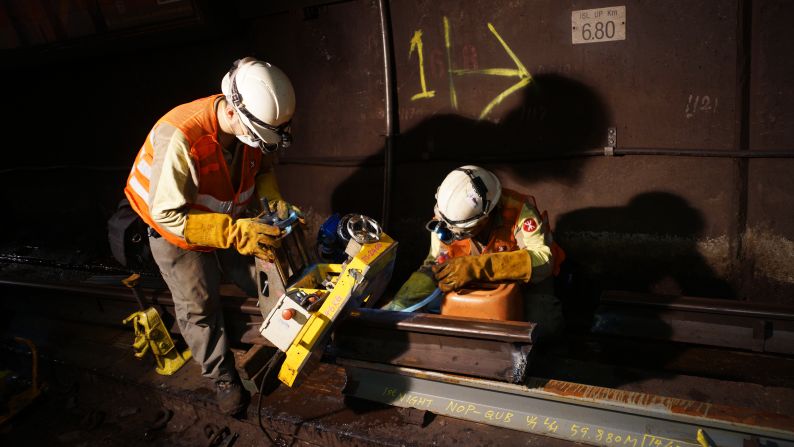
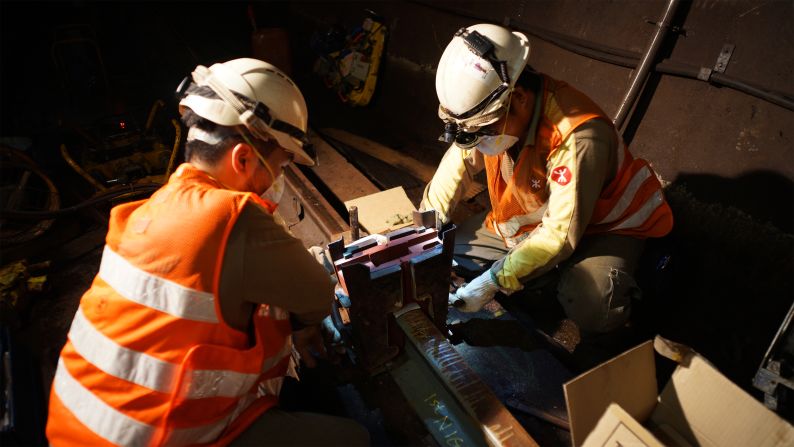
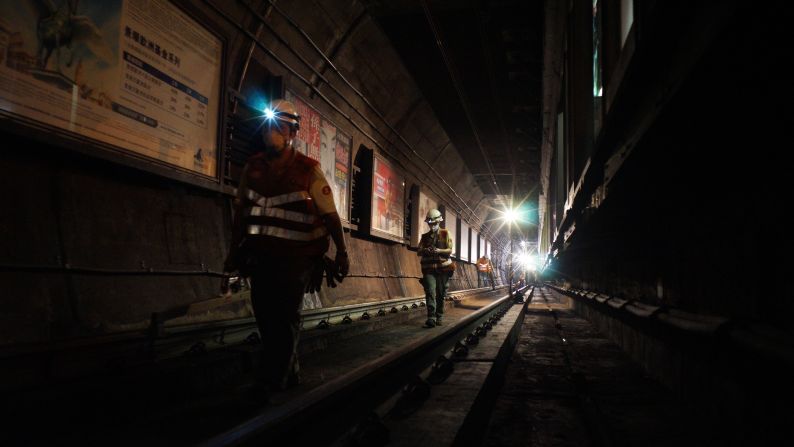
At 1:30 a.m., a few minutes after Hong Kong's MTR metro system shut down public operations for the night, CNN joined a team of workers at North Point Station entering an eerily quiet metro tunnel to begin work. Each day at this time, thousands of MTR workers enter the dark tunnels to inspect, maintain and replace tracks before the system returns to service at dawn.
jason kwok/cnn
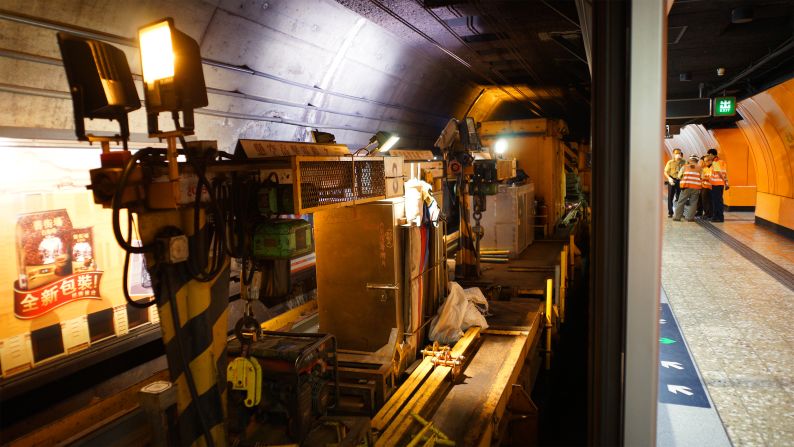
Meeting the re-railing wagon —
Tonight's task, replace a section of rail. On the track, a re-railing wagon delivers materials.
jason kwok/cnn
Work begins —
"Once the wagon sets off, it means work has begun," says Stanley Hon, an MTR renewal inspector. "Supervisors patrolled here a few weeks ago and marked down the position and segment of track that needs changing."
jason kwok/cnn
Proper readings —
New track is measured and cut at a depot before being transported to the tunnel. "It's important to get the readings here right or the new tracks won't fit," says Wong Chi-fai, a renewal engineer.
jason kwok/cnn
High-tech patrol team —
More than a thousand workers patrol the tracks daily using tools such as infrared scanners to detect cracks too fine for human eyes to see and an artificial intelligence system that determines which sections of track require tending.
jason kwok/cnn
Fix before it's broken —
Multiple factors determine whether a track needs replacing or repair. Tracks need to be replaced before wear reaches its maximum limit.
jason kwok/cnn
Teamwork —
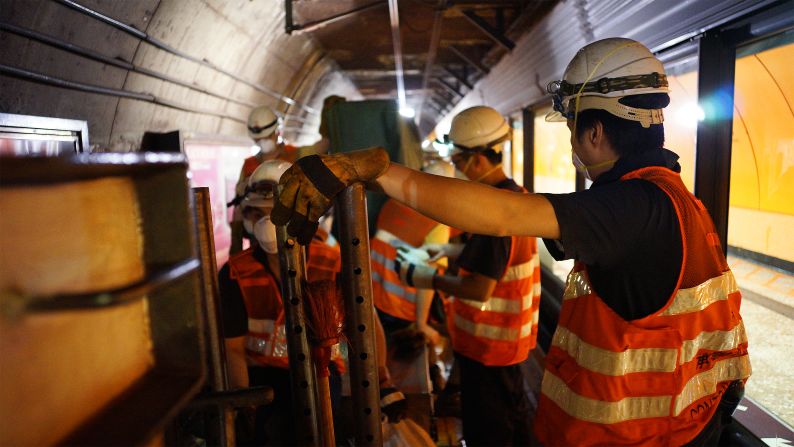
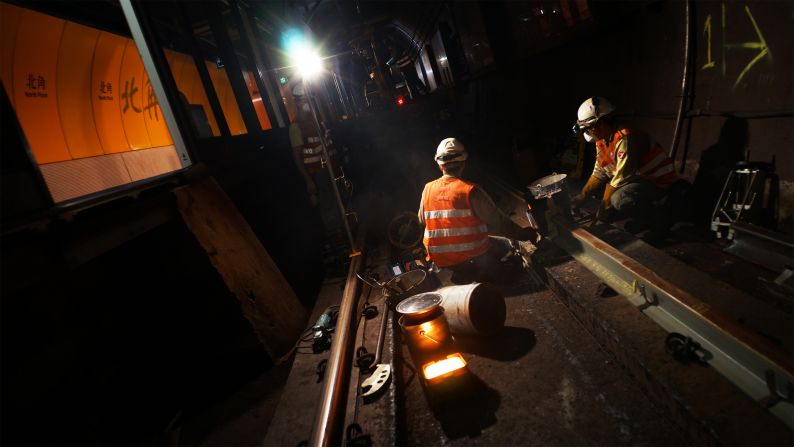
Workers split into teams. While one team is cutting locks to access old track on the railway, a tailing team swiftly sweeps the tunnel.
jason kwok/cnn
Barack stand —
New sections of track must be perfectly aligned.
jason kwok/cnn
Challenging environment —
Most workers don't mind laboring inside of tunnels after midnight. But some aren't as pleasant as others. "The tunnel in Kwun Tong Station is so narrow that workers have to work with their shoulders rubbing the wall of the tunnel," says renewal engineer Joyce Chan.
jason kwok/cnn
Cutting the right length —
Fitters cut the ends of new and old tracks so they can be seamlessly joined.
jason kwok/cnn
"They threw a bottle at us." —
Not all work is carried out inside of tunnels. Parts of the MTR run above ground. "Working outdoors is more difficult sometimes -- you'll be affected by rain and it's easier to receive complaints about noise," says Chan. "One person even threw a bottle at us once."
jason kwok/cnn
Welding two into one —
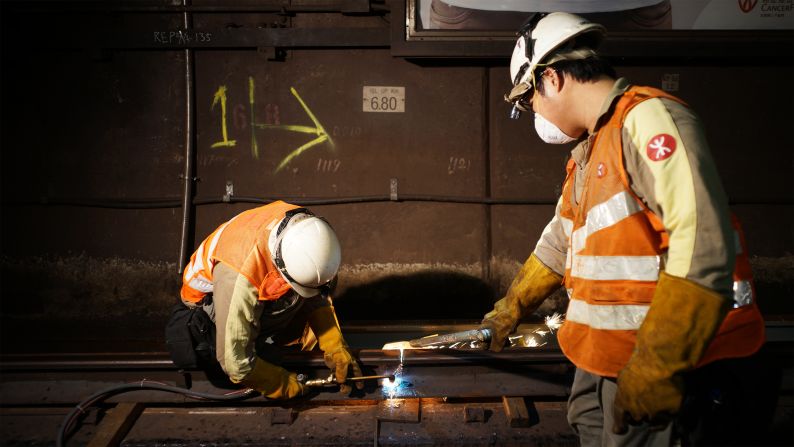
How much track can a team replace in one night? Usually just less than 71 meters, largely because that's the most the wagon can transport.
jason kwok/cnn
Hot job —
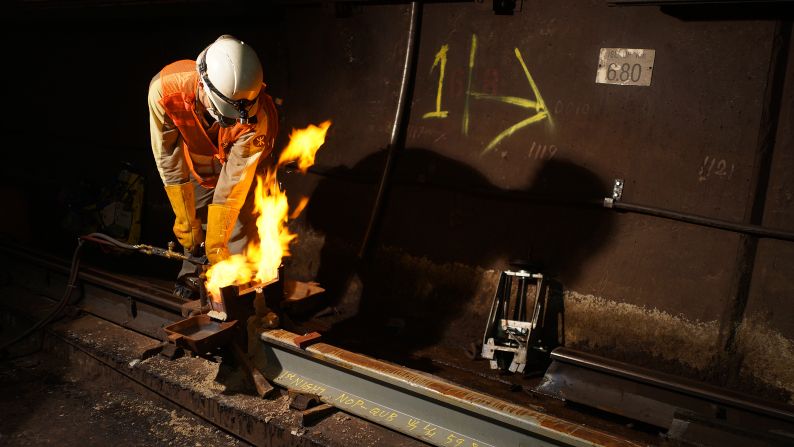
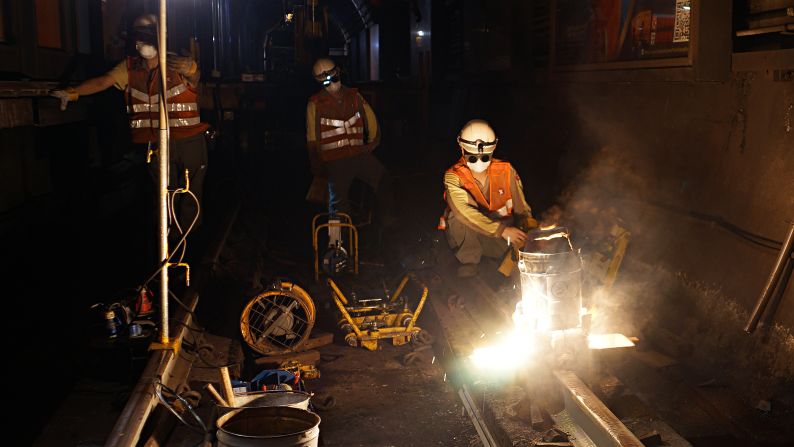
"Welding is the most critical process during the night shift," says Wong. "The timing has to be very accurate -- six minutes, no more, no less -- and the temperature has to be really high, around 2,000 to 2,200 C."
jason kwok/cnn
Contamination may ruin a night's work —
"If welding isn't done right -- for instance, if there's any contamination in the metal powder mixture when it cools -- it may create defects in the new rails," says Wong.
jason kwok/cnn
Invisible team —
The team we followed finished most its work by 4 a.m. All that was left was to clean up and wait for a newly fabricated joint to cool, be polished and ready for the first train to enter the station at dawn, without riders ever noticing a difference in their daily commute.