Your effort and contribution in providing this feedback is much
appreciated.
Close
Ad Feedback
Longevity noodles: What are they and when are they eaten?
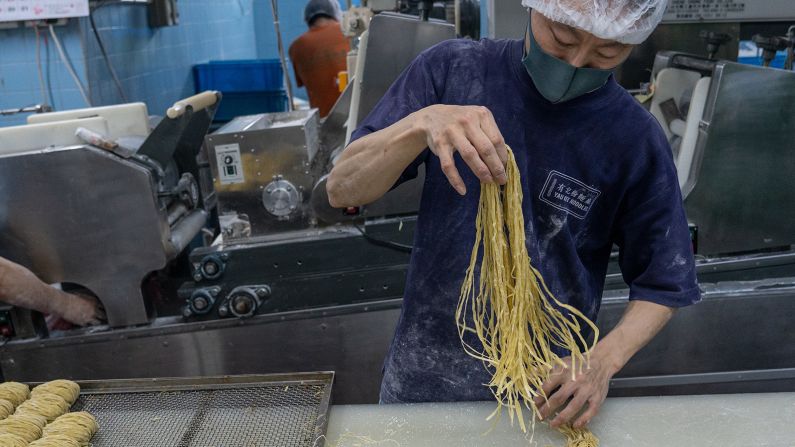
Longevity noodles: Hong Kong's Aberdeen Yau Kee Noodles Factory, founded in the 1950s, is busy producing noodles ahead of the Spring Festival (Lunar New Year). Long noodles are a symbol of longevity in Chinese culture, making them a popular dish during festivals and special occasions.
Noemi Cassanelli/CNN
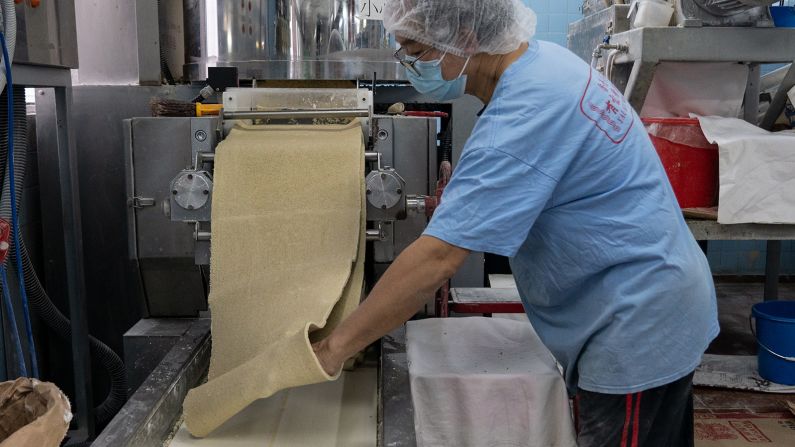
High season: A worker prepares the dough before the noodles are cut. Thefactory's second-generation owner, Tang Pui-sum, says demand for noodles increases by 20% to 30% during the Spring Festival.
Noemi Cassanelli/CNN
Yi mein noodles: A worker prepares the yi mein noodles at the Aberdeen Yau Kee Noodles Factory. The chewy and spongy Cantonese egg wheat noodles are then dried and deep-fried.
Noemi Cassanelli/CNN
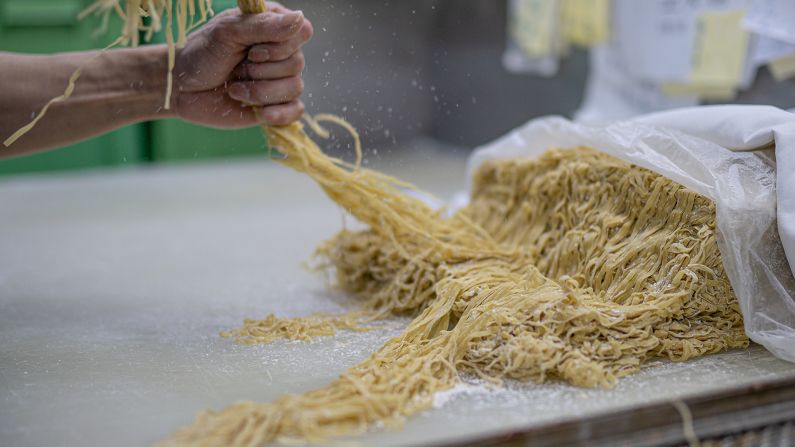
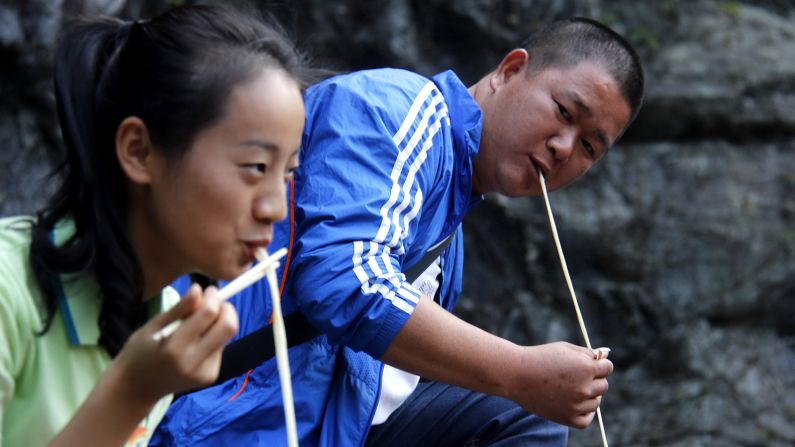
Sorting the noodles: In the past, diners would pick up some noodles from the bowl, pull them up over their head theatrically with a pair of chopsticks, before slurping the noodles in one go. That's why a good longevity noodle should have the length and tenacity to survive a strong chopstick pull.
Noemi Cassanelli/CNN
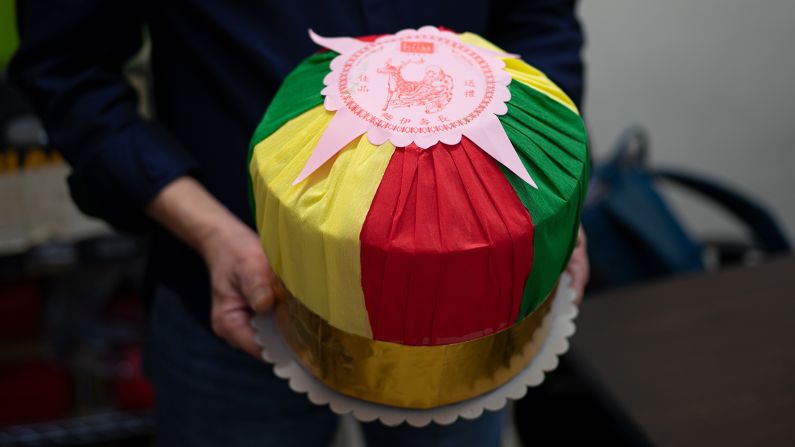
A Cantonese tradition: "In the Guangdong region, people use e-fu (yi mein) noodles to treat their family and friends on special occasions because they are considered better -- it takes more steps to make, the ingredients are better," says Tang. His family-run factory is one of the few places that still makes traditional, rainbow-colored noodle boxes.
Noemi Cassanelli/CNN
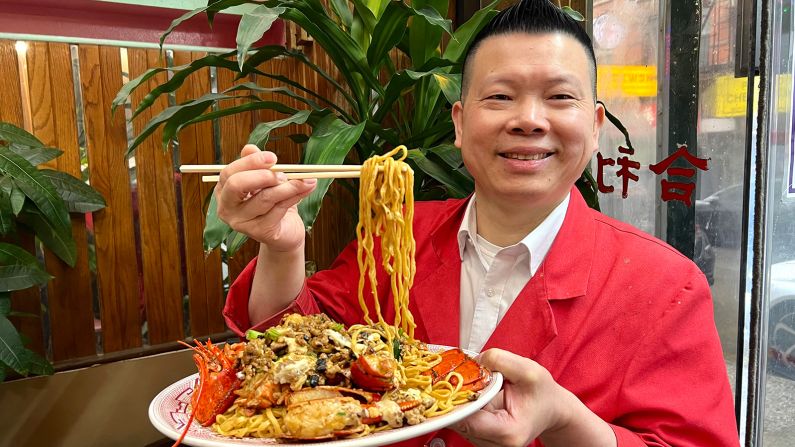
Lobster longevity noodles: New York City restaurant Hop Lee's longevity noodles feature yi mein and lobsters, which are stir-fried with fermented salted black beans, eggs, minced meats, ginger and scallions."It's so delicious," says owner Johnny Mui, pictured.
Grace Young
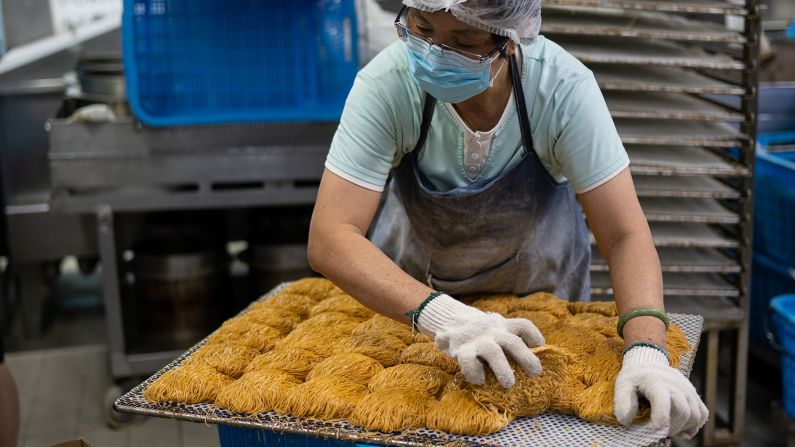
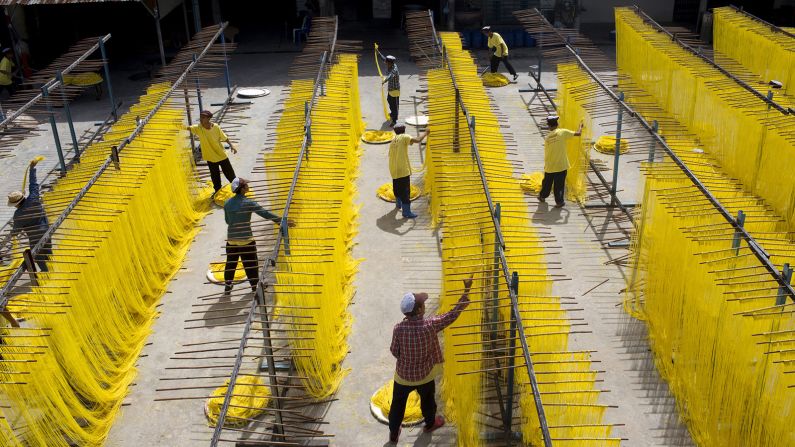
Sun-dried noodles: Early Chinese immigrants in the United States were predominantly Cantonese, which explains why many Chinese Americans eat yi mein during Lunar New Year. Other types of longevity noodles include vermicelli, seen here drying on racks at a factory in Thailand.
Brent Lewin/Bloomberg/Getty Images
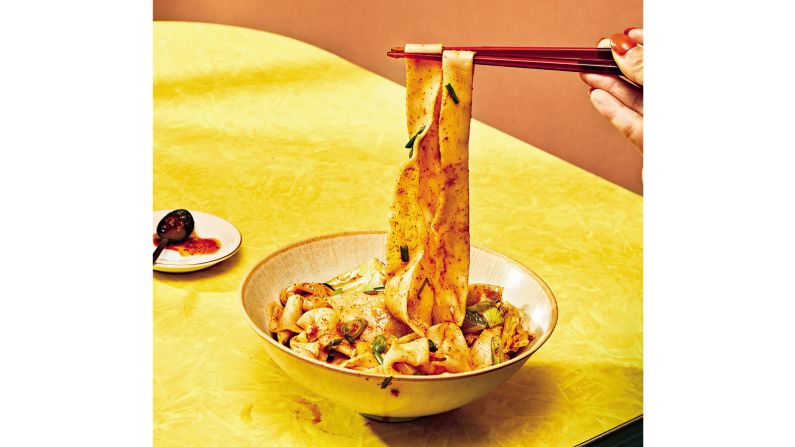
Biang biang noodles: Xi'an Famous Foods -- a New York City restaurant -- is known for its super long biang biang longevity noodles. The restaurant's Spicy Hot-Oil Seared Hand-Ripped Noodles, pictured, are a popular item.
Jenny Huang
Long noodle, long life: According to tradition, the noodle strands can't be cut by the chef and each strand needs to be eaten whole -- no breaking it before you eat it.
Visual China Group/Getty Images
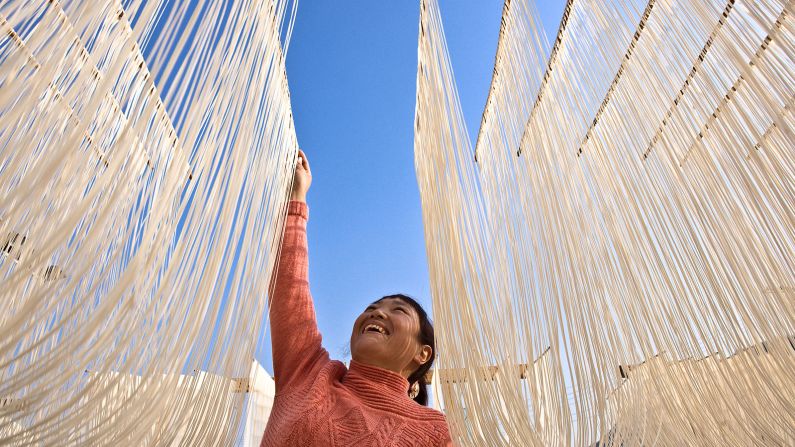
Preparing for the feast: A woman dries noodles in Majian, China.
Guo Bin/Xinhua/ZUMAPRESS.com
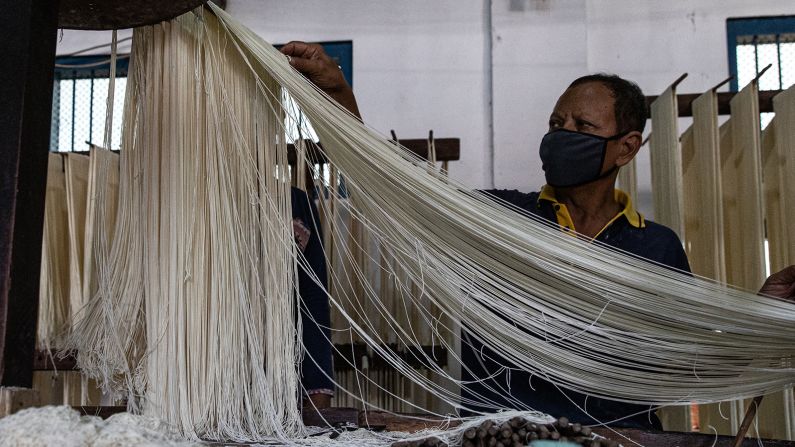
A global treat: A worker takes noodles out from slicing machines at an Indonesian factory. Longevity noodles are eaten in other Asian countries that celebrate Lunar New Year, including Vietnam, South Korea, Singapore and Malaysia.