Kyoto’s kissaten cafes offer the ultimate time warp
Kyoto kissaten culture —
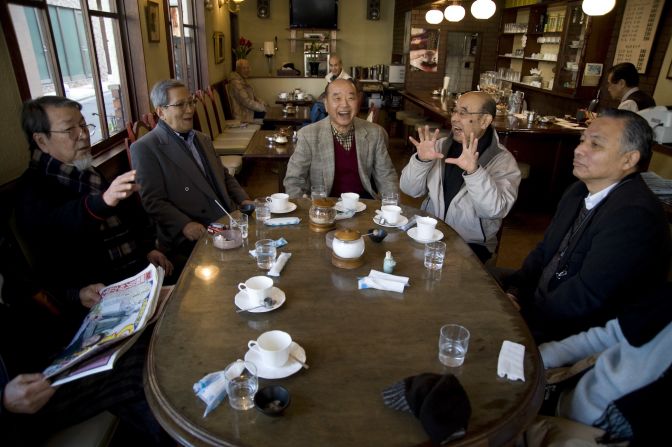
According to locals, the kissaten functions a lot like a neighborhood bar. "It's the quirky, eclectic nature of Kyoto's old kissatens, and their individuality, that makes them interesting," says Eric Johnston, a Japan Times reporter.
Paulo Fridman/Corbis Historical
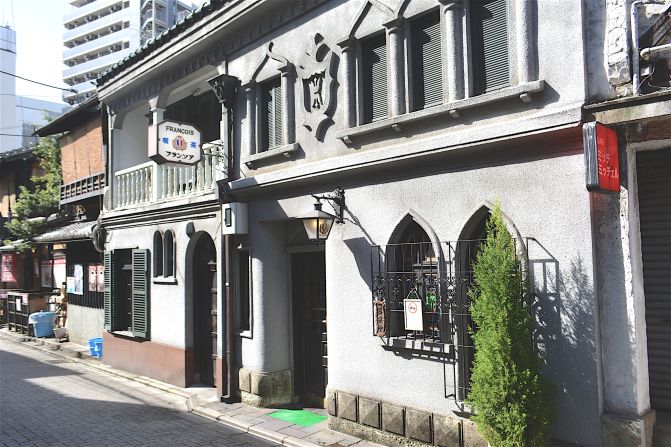
Salon de The Francois —
Faux European-style kissaten coffee houses like Salon de The Francois, opened in 1934, are the birthplace of Kyoto's thriving cafe culture.
JJ O'Donoghue/CNN
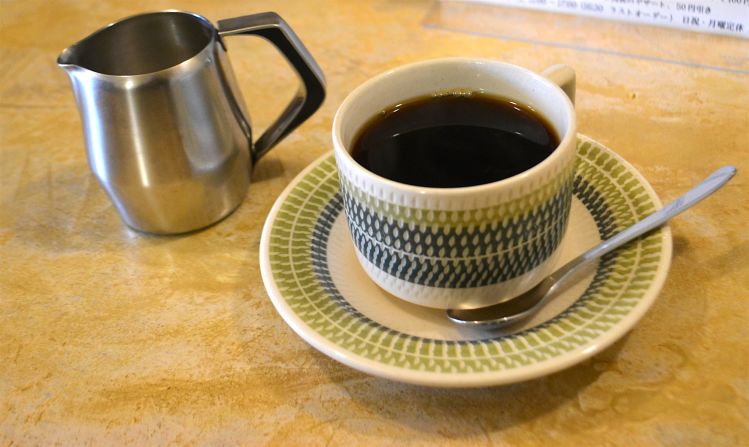
No foam art here —
The house blend at Kyoto's Uzaru kissaten. Most kissaten masters use the siphon technique, a theatrical method of brewing coffee that dates back to the 1830s. Water and coffee grounds are mixed together and heated over a flame. The 'vacuum' effect produces a delicate coffee.
CNN
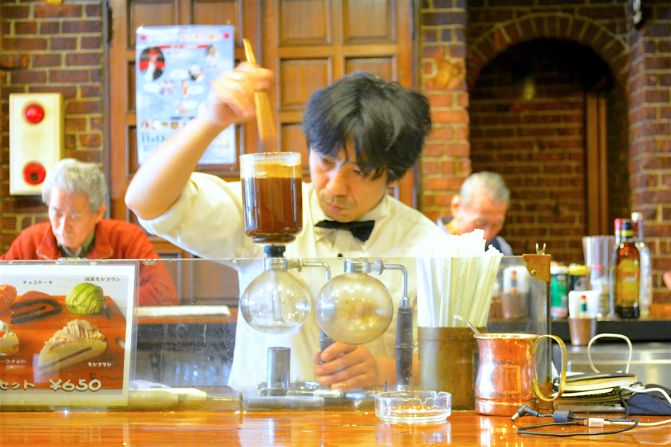
The master —
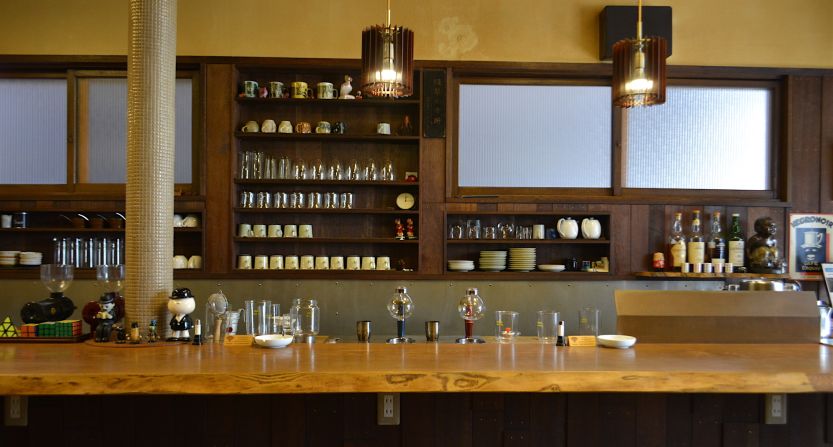
Presiding over the kissaten is a master, usually outfitted in a white shirt, sometimes with a bow tie. The techniques for brewing coffee used by the older masters, especially siphon and pour-over coffee, are embraced by the younger generation as well.
JJ O'Donoghue/CNN
Retro cool —
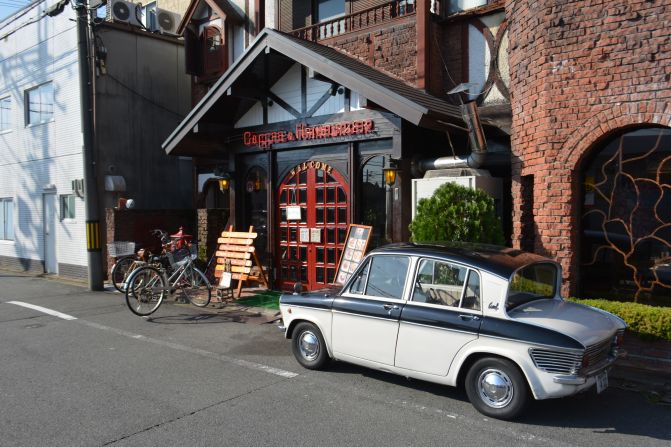
Coffee, hamburgers and classic cars. Kissatens are the antithesis of Kyoto's refined tea culture.
JJ O'Donoghue/CNN
Smart Coffee —
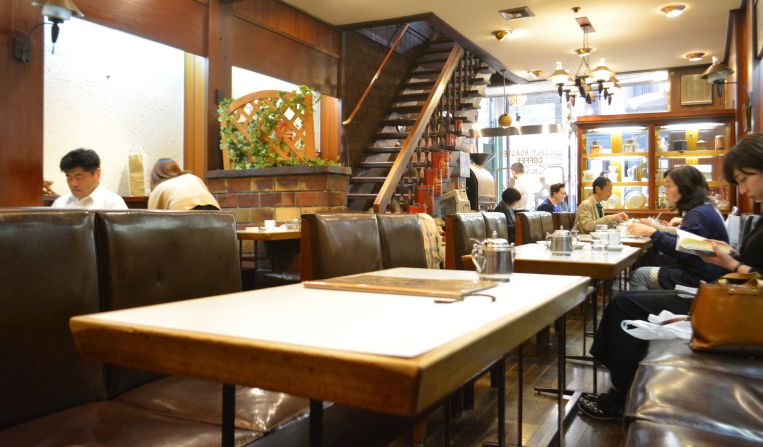
Classic kissaten furniture has a charming miniature quality to it -- often it feels like a few inches have been shaved off the legs of the sofas and chairs.
JJ O'Donoghue/CNN
Togenkyo —
The long-established kissatens nearly always play classical music --- more often than not German -- while younger kissatens might have jazz, blues or Japanese ballads from the 1970s.