Jellyfish gallery | CNN

CNN values your feedback

1. How relevant is this ad to you?
2. Did you encounter any technical issues?
Thank You!
Your effort and contribution in providing this feedback is much appreciated.
Close
Ad Feedback
Destinations
Food & Drink
News
Stay
Video
Destinations Food & Drink News Stay Video
Watch Listen Live TV
My Account
  • Settings
  • Newsletters
  • Topics you follow
  • Sign out
Your CNN account Sign in to your CNN account

My Account
  • Settings
  • Newsletters
  • Topics you follow
  • Sign out
Your CNN account Sign in to your CNN account

Live TV Listen Watch
Edition
US
International
Arabic
Español
Edition
  • US
  • International
  • Arabic
  • Español

Destinations
Food & Drink
News
Stay
Video

Follow CNN Travel
Download the CNN App

  • World
    • Africa
    • Americas
    • Asia
    • Australia
    • China
    • Europe
    • India
    • Middle East
    • United Kingdom
  • US Politics
    • Elections 2026
    • Trump
    • Facts First
    • CNN Polls
    • Redistricting Tracker
    • Epstein Files
  • Business
    • Tech
    • Media
    • Calculators
    • Videos
  • Markets
    • Pre-markets
    • After-Hours
    • Fear & Greed
    • Investing
  • Health
    • Life, But Better
    • Fitness
    • Food
    • Sleep
    • Mindfulness
    • Relationships
  • Entertainment
    • Movies
    • Television
    • Celebrity
  • Tech
    • Innovate
  • Style
    • Arts
    • Design
    • Fashion
    • Architecture
    • Luxury
    • Beauty
    • Video
  • Travel
    • Destinations
    • Food & Drink
    • Stay
    • News
    • Videos
  • Sports
    • Football
    • Tennis
    • Golf
    • Motorsport
    • US Sports
    • Olympics
  • Science
    • Space
    • Life
    • Unearthed
  • Climate
    • Solutions
    • Weather
  • Weather
    • Video
    • Climate
  • Ukraine-Russia War
  • Israel-Hamas War
  • Features
    • As Equals
    • Call to Earth
    • Freedom Project
    • Impact Your World
    • Inside Africa
    • CNN Heroes
  • Watch
    • Live TV
    • Featured
    • CNN Headlines
    • CNN 10
    • CNN TV Schedule
  • Listen
    • All There Is with Anderson Cooper
    • Chasing Life with Dr. Sanjay Gupta
    • The Assignment with Audie Cornish
    • Terms of Service with Clare Duffy
    • CNN 5 Things
    • All CNN Podcasts
  • Games
    • Daily Crossword
    • Jumble Crossword
    • Photo Shuffle
    • Sudoblock
    • Sudoku
    • 5 Things Quiz
  • About CNN
    • Subscribe
    • Photos
    • Investigations
    • CNN Profiles
    • CNN Leadership
    • CNN Newsletters
    • Advertise With Us
    • Work for CNN

Download the CNN App
Travel

Beach alarm: Jellyfish taking over the oceans, say experts

Updated 10:37 AM EST, Fri February 7, 2014
Link Copied!
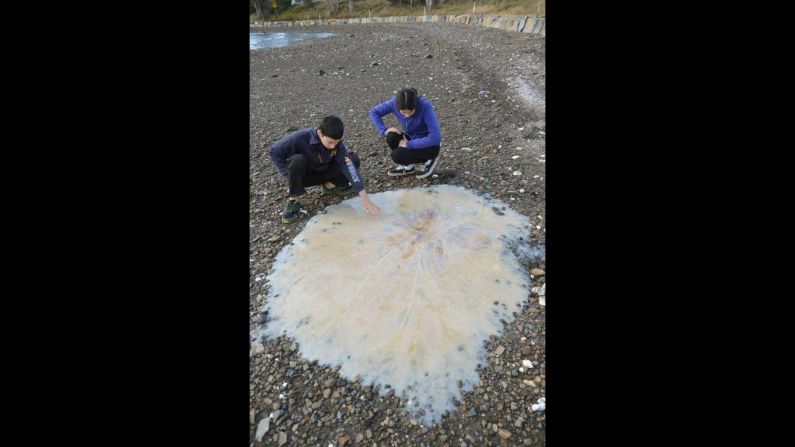
A 5-foot giant jellyfish recently washed up on a beach in Tasmania, an island off the southeast coast of Australia. Scientists are working to classify the new species. Click through the gallery to see more photos of jellyfish around the world.
A new species —
A 5-foot giant jellyfish recently washed up on a beach in Tasmania, an island off the southeast coast of Australia. Scientists are working to classify the new species. Click through the gallery to see more photos of jellyfish around the world.
JOSIE LIM/AFP/Getty Images
A West Coast sea nettle swims in the Aquarium of the Pacific complex in Long Beach, California. Sea Nettles are most common during fall and winter months on California and Oregon shores, and may be found from Mexico to British Columbia. They're known for having a distinctive golden brown bell, up to 30 centimeters in diameter. Contact with the tentacles can produce a painful sting.
West Coast sea nettle —
A West Coast sea nettle swims in the Aquarium of the Pacific complex in Long Beach, California. Sea Nettles are most common during fall and winter months on California and Oregon shores, and may be found from Mexico to British Columbia. They're known for having a distinctive golden brown bell, up to 30 centimeters in diameter. Contact with the tentacles can produce a painful sting.
GABRIEL BOUYS/AFP/Getty Images
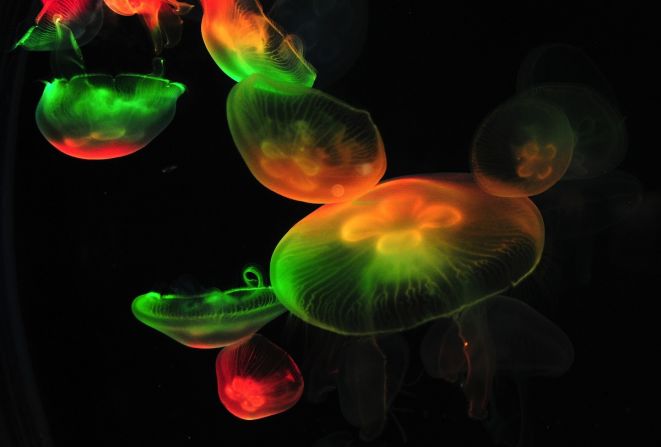
These psychedelic jellyfish are part of a display at Beijing's Blue Zoo Aquarium. "Jellyfish occur in all marine waters from pole to pole and at all depths," says Dr. Lisa-Ann Gershwin, author of "Stung! On Jellyfish Blooms and the Future of the Ocean." Life threatening varieties are found from about 40 degrees north to 40 degrees south latitude.
Not their natural color —
These psychedelic jellyfish are part of a display at Beijing's Blue Zoo Aquarium. "Jellyfish occur in all marine waters from pole to pole and at all depths," says Dr. Lisa-Ann Gershwin, author of "Stung! On Jellyfish Blooms and the Future of the Ocean." Life threatening varieties are found from about 40 degrees north to 40 degrees south latitude.
FREDERIC J. BROWN/AFP/Getty Images
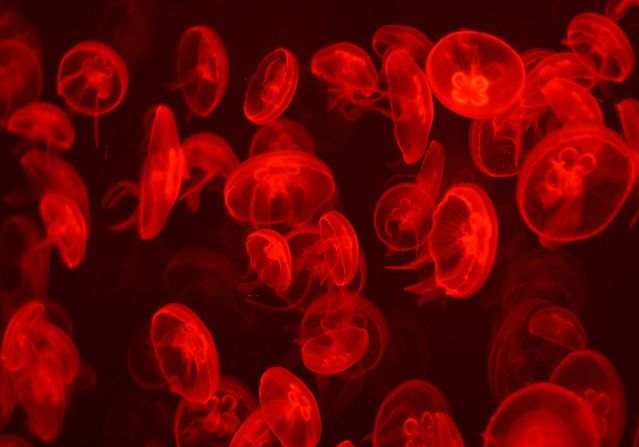
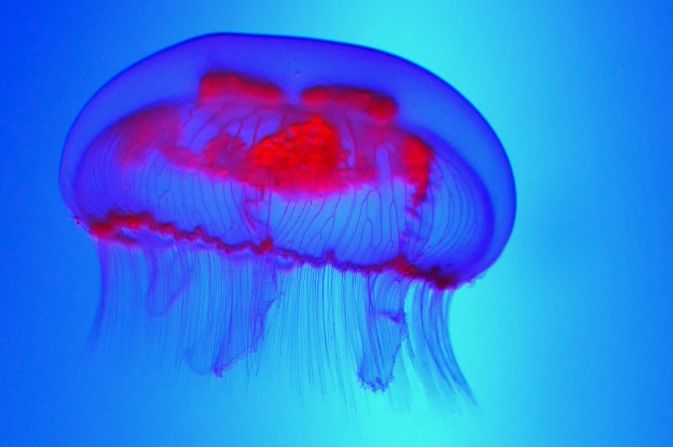
These moon jellyfish are illuminated by colored lights at the Beijing Aquarium, the largest in China. They also call these "common" jellyfish. They're found in all the world's oceans, making them a popular choice for aquariums.
"Turn off the lights, and we'll glow." —
These moon jellyfish are illuminated by colored lights at the Beijing Aquarium, the largest in China. They also call these "common" jellyfish. They're found in all the world's oceans, making them a popular choice for aquariums.
MARK RALSTON/AFP/GettyImages
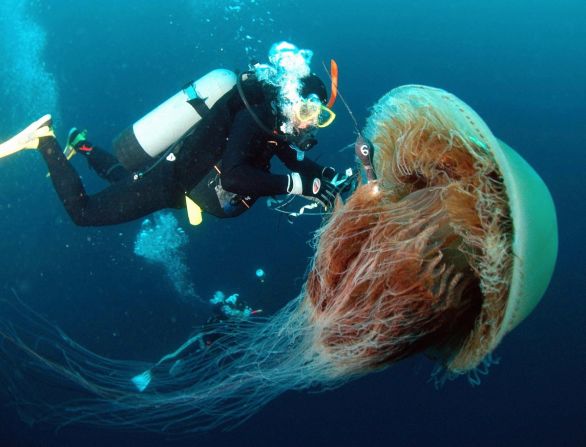
 A diver attaches a sensor to a large Nomura's jellyfish off the coast of Komatsu in Ishikawa prefecture, northern Japan. Large schools of these giant jellyfish, which have bodies ranging one to 1.5 meters in diameter, drift into Japanese waters in autumn and damage coastal fisheries.
"Am I getting hazard pay for this?" —
A diver attaches a sensor to a large Nomura's jellyfish off the coast of Komatsu in Ishikawa prefecture, northern Japan. Large schools of these giant jellyfish, which have bodies ranging one to 1.5 meters in diameter, drift into Japanese waters in autumn and damage coastal fisheries.
YOMIURI SHIMBUN/AFP/Getty Images
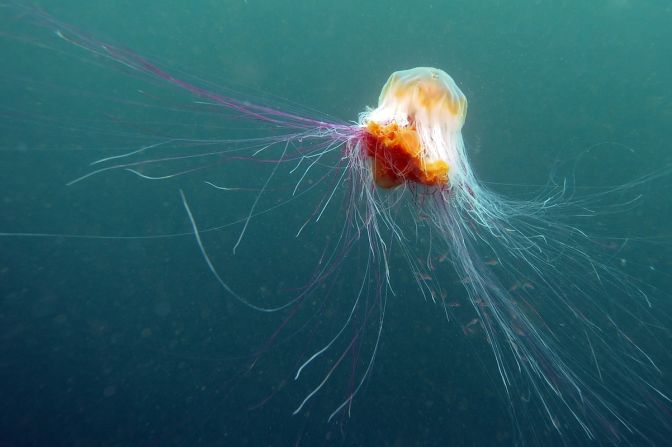
A lion's mane jellyfish swims near England's Farne Islands. This species is the largest of all jellyfish, and also one of the most dangerous, <a href="index.php?page=&url=http%3A%2F%2Faquarium.org%2Fexhibits%2Foregon-coast%2Fanimals%2Flion-s-mane-jellyfish" target="_blank" target="_blank">say scientists</a>. Lion's manes have thick masses of dangling tentacles covered with stinging cells called nematocytes.
Lion's mane —
A lion's mane jellyfish swims near England's Farne Islands. This species is the largest of all jellyfish, and also one of the most dangerous, say scientists. Lion's manes have thick masses of dangling tentacles covered with stinging cells called nematocytes.
Dan Kitwood/Getty Images
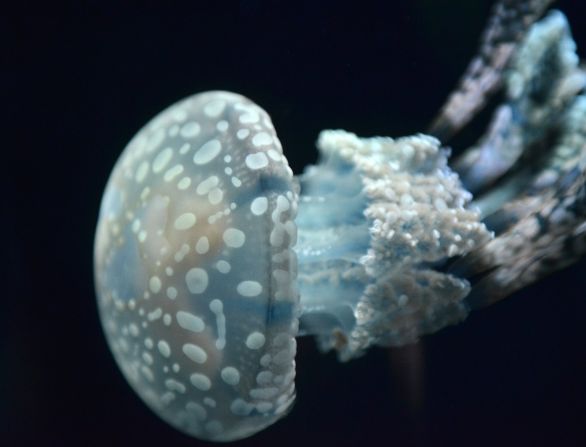
A Papuan -- or spotted -- jellyfish swims in a tank at the Sunshine Aquarium in Tokyo. According to <a href="index.php?page=&url=http%3A%2F%2Feducation.nationalgeographic.com%2Feducation%2Fmedia%2Fwhite-spotted-jellies%2F%3Far_a%3D1" target="_blank" target="_blank">National Geographic</a>, their venom is mild and doesn't pose a threat to human beings.
Papuan jellyfish —
A Papuan -- or spotted -- jellyfish swims in a tank at the Sunshine Aquarium in Tokyo. According to National Geographic, their venom is mild and doesn't pose a threat to human beings.
YOSHIKAZU TSUNO/AFP/Getty Images
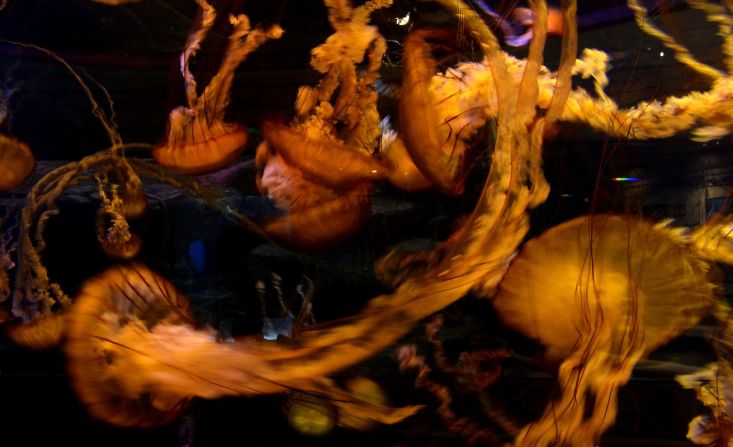
Though most of us try to avoid jellyfish in the ocean, few dispute how cool they look at in a well-lit tank. These Pacific Sea nettle jellyfish are part of a display at the Shark Reef Aquarium at the Las Vegas Mandalay Bay Resort and Casino.
Pacific sea nettle —
Though most of us try to avoid jellyfish in the ocean, few dispute how cool they look at in a well-lit tank. These Pacific Sea nettle jellyfish are part of a display at the Shark Reef Aquarium at the Las Vegas Mandalay Bay Resort and Casino.
Ethan Miller/Getty Images
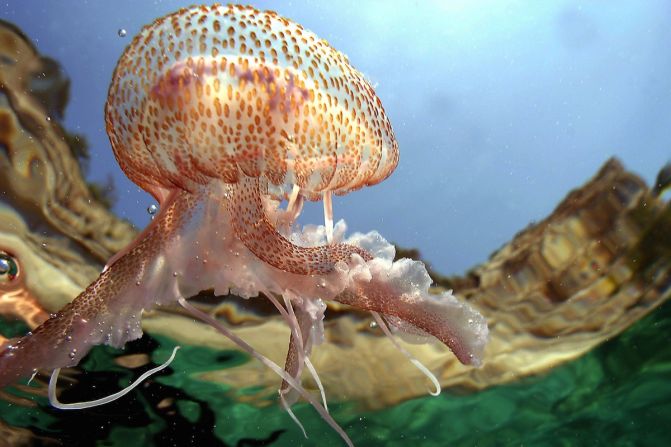
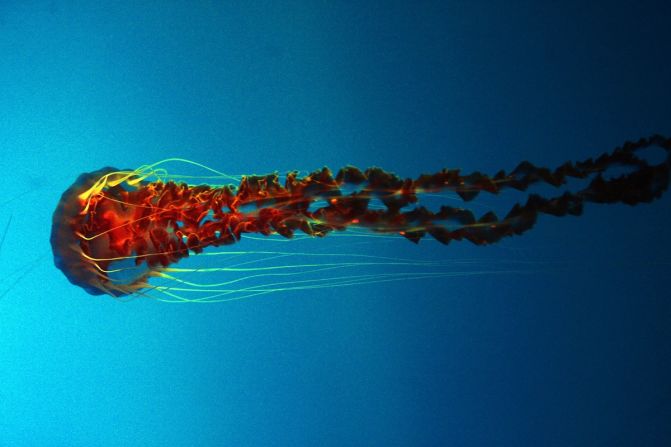
Driven by overfishing and climate change, the dramatic proliferation of jellyfish in oceans around the world is a sign of ecosystems out of kilter, warn experts. Venomous mauve stingers (pictured), or Pelagia noctiluca, were found in high numbers along the coast of Catalonia and Valencia in summer 2013.
Summer invadors —
Driven by overfishing and climate change, the dramatic proliferation of jellyfish in oceans around the world is a sign of ecosystems out of kilter, warn experts. Venomous mauve stingers (pictured), or Pelagia noctiluca, were found in high numbers along the coast of Catalonia and Valencia in summer 2013.
TARIK TINAZAY/AFP/Getty Images
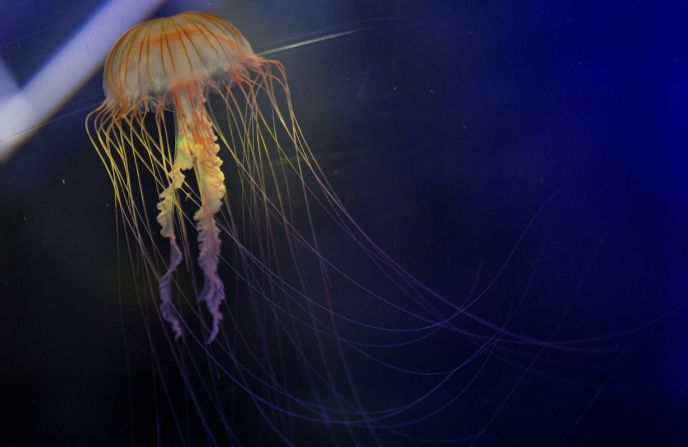
This northern sea nettle is part of the jellyfish exhibition added to the SeaLife aquarium in Timmendorfer, Germany, earlier this year. Northern sea nettles, or chrysaora melanaster, are commonly found in the waters of the North Pacific.
Painful but pretty —
This northern sea nettle is part of the jellyfish exhibition added to the SeaLife aquarium in Timmendorfer, Germany, earlier this year. Northern sea nettles, or chrysaora melanaster, are commonly found in the waters of the North Pacific.
JENS BUTTNER/AFP/Getty Images
"Quite simply, most of us just don't like the thought of being stung by something slimy," says Dr. Gershwin. "There's the slime. There's the pain. So, more and more, places around the world that are suffering from jellyfish problems are developing prediction systems so that tourists can know when it is safe to swim."
Jellyfish and tourism —
"Quite simply, most of us just don't like the thought of being stung by something slimy," says Dr. Gershwin. "There's the slime. There's the pain. So, more and more, places around the world that are suffering from jellyfish problems are developing prediction systems so that tourists can know when it is safe to swim."
FRED TANNEAU/AFP/Getty Images
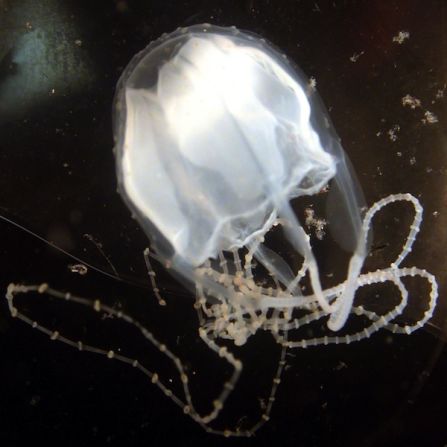
Despite being smaller than a pinky nail, the irukandji packs a bigger punch than most species of jellyfish. "How toxic they are is just phenomenally frightening and equally fascinating," says jellyfish expert Dr. Gershwin. "Just the lightest brush -- you don't even feel it -- and then whammo, you're in more pain than you ever could have imagined, you are struggling to breathe, you can't move your limbs, you can't stop vomiting and your blood pressure just keeps going up and up."
The Irukandji —
Despite being smaller than a pinky nail, the irukandji packs a bigger punch than most species of jellyfish. "How toxic they are is just phenomenally frightening and equally fascinating," says jellyfish expert Dr. Gershwin. "Just the lightest brush -- you don't even feel it -- and then whammo, you're in more pain than you ever could have imagined, you are struggling to breathe, you can't move your limbs, you can't stop vomiting and your blood pressure just keeps going up and up."
courtesy Mike Leahy

My Account
  • Settings
  • Newsletters
  • Topics you follow
  • Sign out
Your CNN account Sign in to your CNN account

Live TV Listen Watch
  • World
    • Africa
    • Americas
    • Asia
    • Australia
    • China
    • Europe
    • India
    • Middle East
    • United Kingdom
  • US Politics
    • Trump
    • Facts First
    • CNN Polls
    • Elections 2026
    • Redistricting Tracker
    • Epstein Files
  • Business
    • Tech
    • Media
    • Calculators
    • Videos
  • Markets
    • Pre-markets
    • After-Hours
    • Fear & Greed
    • Investing
  • Health
    • Life, But Better
    • Fitness
    • Food
    • Sleep
    • Mindfulness
    • Relationships
  • Entertainment
    • Movies
    • Television
    • Celebrity
  • Tech
    • Innovate
  • Style
    • Arts
    • Design
    • Fashion
    • Architecture
    • Luxury
    • Beauty
    • Video
  • Travel
    • Destinations
    • Food & Drink
    • Stay
    • News
    • Videos
  • Sports
    • Football
    • Tennis
    • Golf
    • Motorsport
    • US Sports
    • Olympics
  • Science
    • Space
    • Life
    • Unearthed
  • Climate
    • Solutions
    • Weather
  • Weather
    • Video
    • Climate
  • Ukraine-Russia War
  • Israel-Hamas War
  • Features
    • As Equals
    • Call to Earth
    • Freedom Project
    • Impact Your World
    • Inside Africa
    • CNN Heroes
  • Watch
    • Live TV
    • Featured
    • CNN Headlines
    • CNN 10
    • CNN TV Schedule
  • Listen
    • All There Is with Anderson Cooper
    • Chasing Life with Dr. Sanjay Gupta
    • The Assignment with Audie Cornish
    • Terms of Service with Clare Duffy
    • CNN 5 Things
    • All CNN Podcasts
  • Games
    • Daily Crossword
    • Jumble Crossword
    • Photo Shuffle
    • Sudoblock
    • Sudoku
    • 5 Things Quiz
  • About CNN
    • Subscribe
    • Photos
    • Investigations
    • CNN Profiles
    • CNN Leadership
    • CNN Newsletters
    • Advertise With Us
    • Work for CNN

Watch Listen Live TV
My Account
  • Settings
  • Newsletters
  • Topics you follow
  • Sign out
Your CNN account Sign in to your CNN account
Follow CNN Travel

Download the CNN app

Terms of Use Privacy Policy Ad Choices Advertise With Us Accessibility & CC About Newsletters Transcripts Sitemap

© 2026 Cable News Network. All Rights Reserved.
CNN Sans ™ & © 2016 Cable News Network.

Download the CNN app

Scan the QR code to download the CNN app on Google Play.

Scan the QR code to download the CNN app from Google Play.

Download the CNN app

Scan the QR code to download the CNN app from the Apple Store.

Scan the QR code to download the CNN app from the Apple Store.