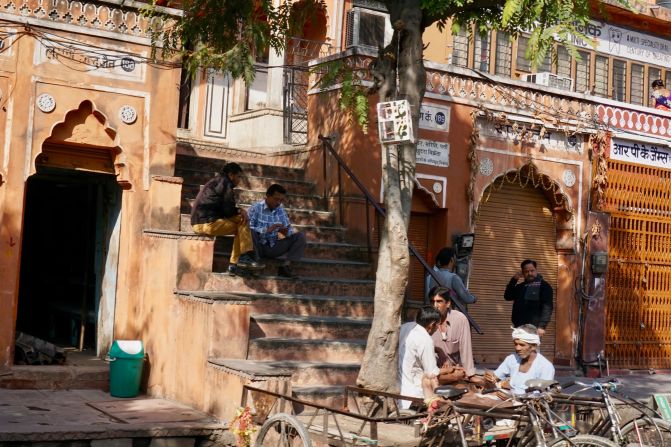
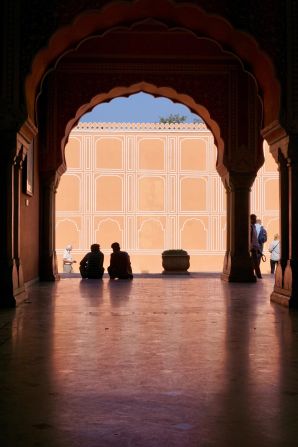
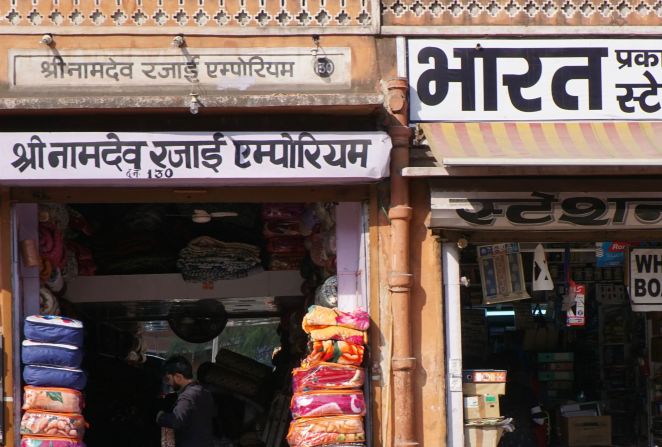
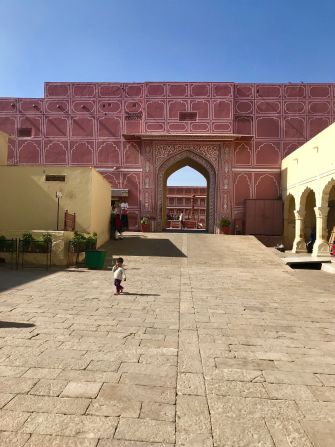
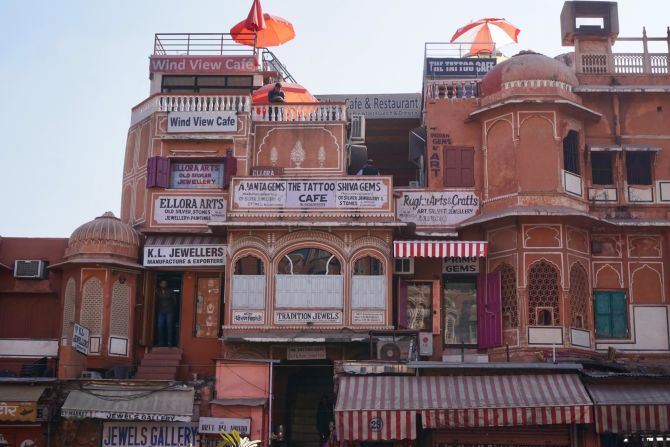
A new order: Established in 1727 as the capital of Rajasthan, Jaipur was the first "planned" city in India. Every tiny detail was considered before laying the first foundation stone, from the length of the blocks to the orientation of gates and the manuscript scrawled above each shop.
ROBERTO SCHMIDT/AFP/AFP/Getty Images
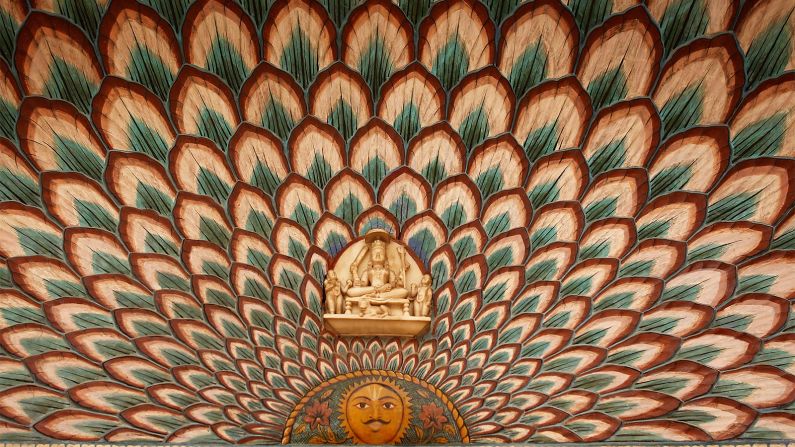
Astronomer prince: The precision can be traced to the city's founder Maharaja Sawai Jai Singh II, a scholarly prince who was passionate about astronomy, mathematics and science. (Pictured: the City Palace).
Robert Cianflone/Getty Images
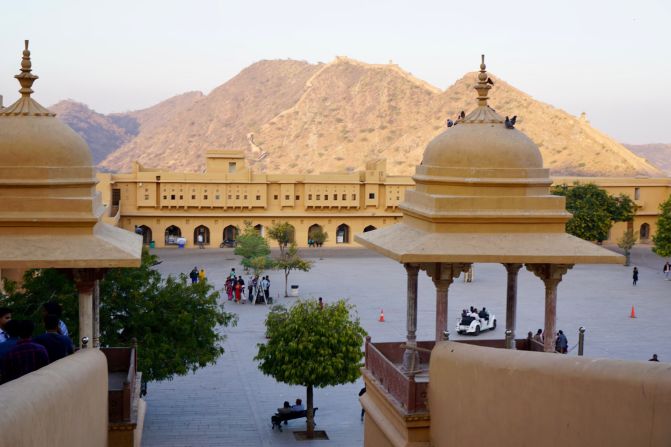
Breaking new ground: Back in the 1700s, during the Mughal Empire, Amber City -- set in the mountains near Jaipur -- served as the capital and royal residence. But Amber's ongoing droughts led the rulers to scout for a new plot of land where they could build a new capital.
Kate Springer
Master plan: But before lifting a single stone, Jai Singh studied European cities, collected maps from all over the world and enlisted esteemed Indian architect Vidyadhar Bhattacharya to become the chief planner. The pair developed a strict blueprint for Jaipur and based the city's grid-like design on Vastu Shastra -- an ancient Hindu architectural doctrine.
Kate Springer
On the grid: Meaning "science of architecture" the principles aim to meld architecture and nature, as well as incorporate ancient patterns, sunlight and symmetry. While there are no rigid codes to adhere to, the concept usually calls for sites to be divided into square grids, called "mandalas," for organization.
Kate Springer
Symbols and systems: Jai Singh divided the city into nine squares -- symbolizing nine planets. He reserved two squares in the north for the palace, while the other seven were used for organized clusters of government buildings, homes, shops and temples.
Kate Springer
Celestial setting: There are seven gates, most of which are named after a celestial body -- the "Sun" gate faces East, while the "Moon" gate faces west. The most important gate faces the ancestral capital of Amber City.
Kate Springer
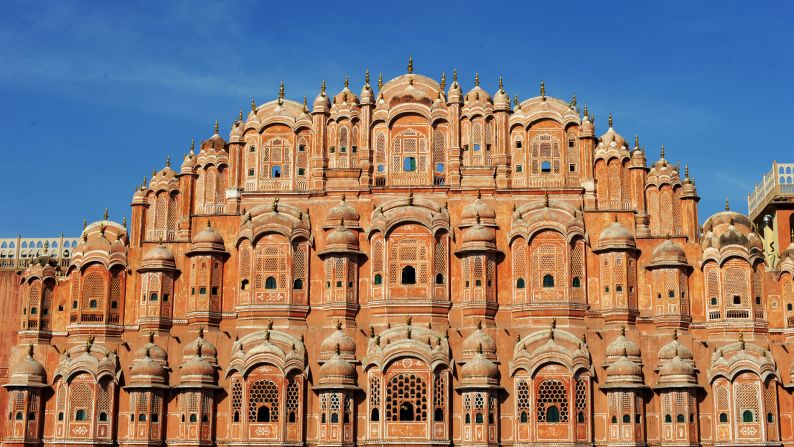
A rosy welcome: As for the salmon-pink paint? That came a bit later. The original buildings were constructed using white or off-white-colored stone. Looking to welcome the Prince of Wales in 1876, the government painted the entire city terracotta pink. The color is meant to symbolize hospitality and also alleviate the glaring sunlight.
Kate Springer
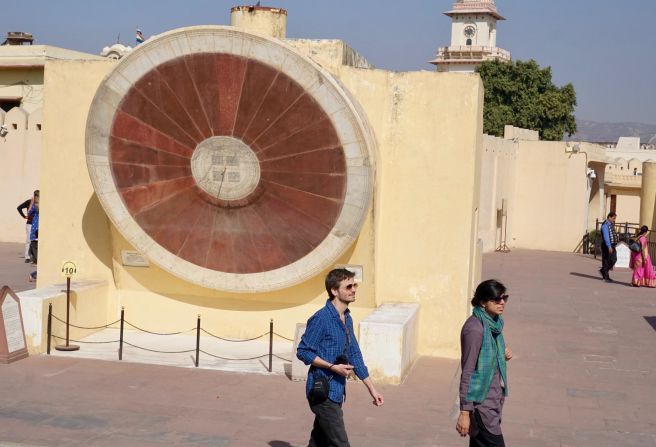
Astronomical experience: Travelers can also witness Jai Singh's attention to detail and passion for science at one of the city's most popular landmarks: Jantar Mantar. One of five observatories across India built by the astronomer prince, this UNESCO-listed site was established in the early 18th century.
Kate Springer
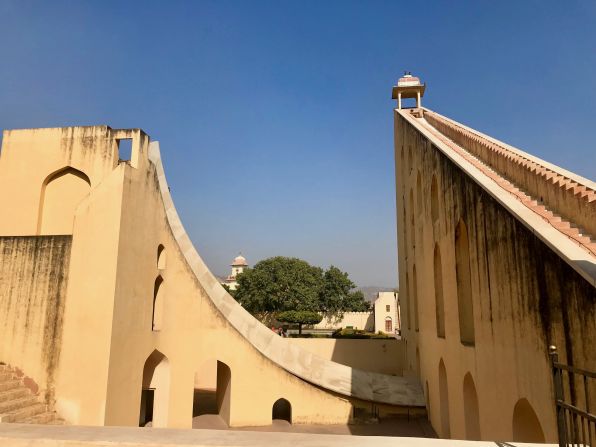
The Supreme Instrument: Impossible to miss is the towering Samrat Yantra. Also known as "The Supreme Instrument", the beautiful white marble structure features a 90-foot stairwell that seems to climb toward the heavens. It's one of the world's largest sundials.
Kate Springer
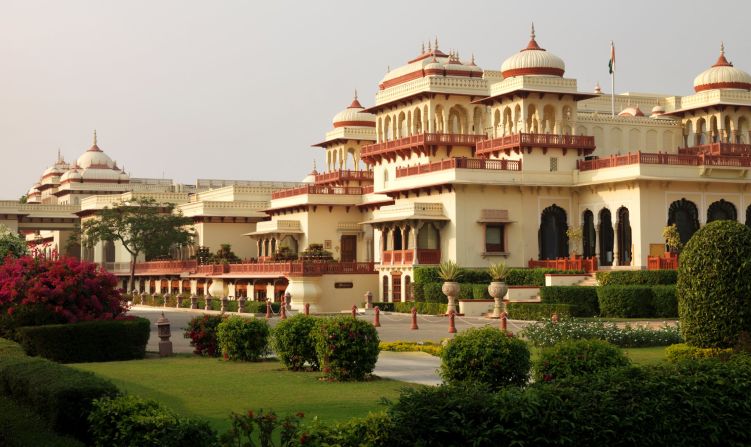
Royal residences: Also in Jaipur, travelers can experience the royal treatment at renovated palace hotels. The Rambagh Palace, for example, is the former residence of the Maharajah of Jaipur.