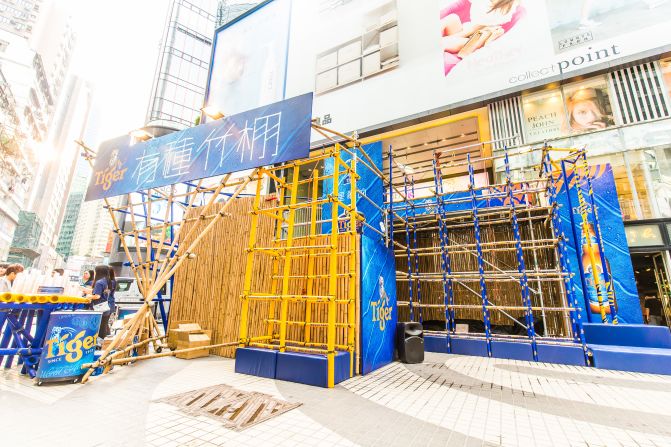
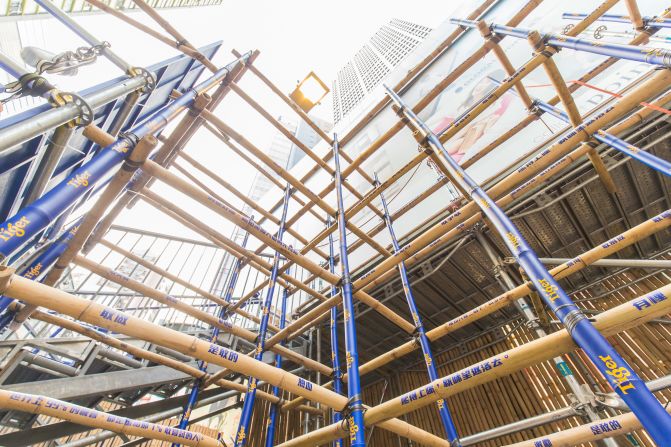
Tiger Beer's Labor Day weekend pop-up bar rewards those who climb one of its two mock scaffolding set-ups with free beer.
Courtesy Strategic Communications Consultants Limited for Tiger Beer
Is it authentic? —
The two structures are 1.7 meters and 3.1 meters in height. Master Hong Kong scaffolder Ping-tak Ho said the Tiger facsimile is a gimmick that doesn't compare to the real thing.
Courtesy Strategic Communications Consultants Limited for Tiger Beer
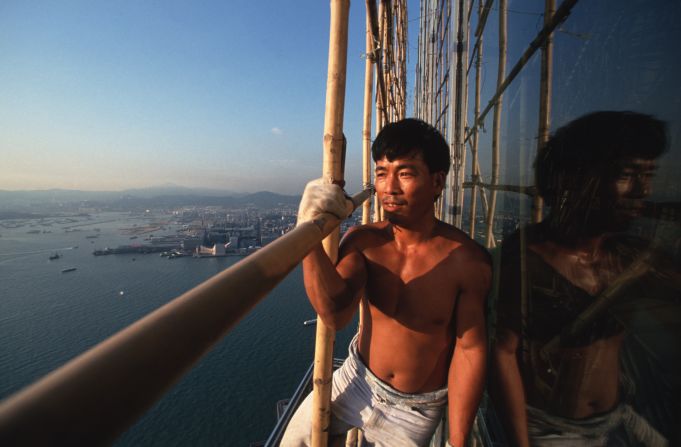
Heart-stopping heights —
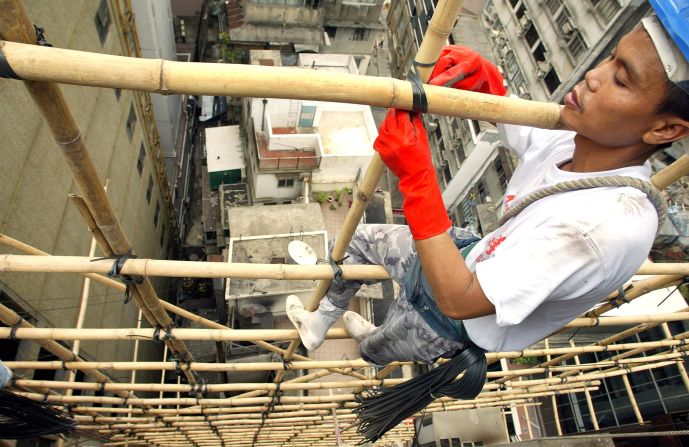
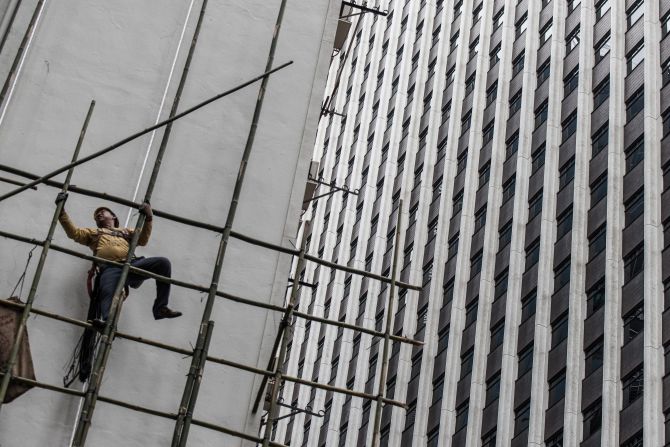
Bamboo scaffolders, perched precariously on bits of bamboo suspended in mid-air while attached to a small harness, are a common sight on Hong Kong's streets.
PETER PARKS/AFP/Getty Images
Bamboo latticework —
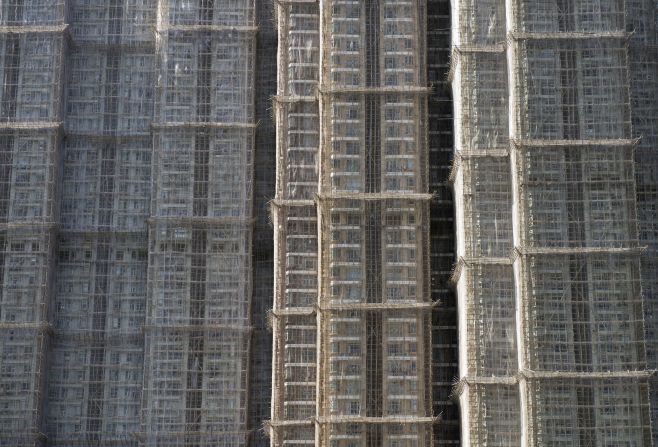
The poles are joined together with simple knots and nylon strips.
Alex Ogle/AFP/Getty Images
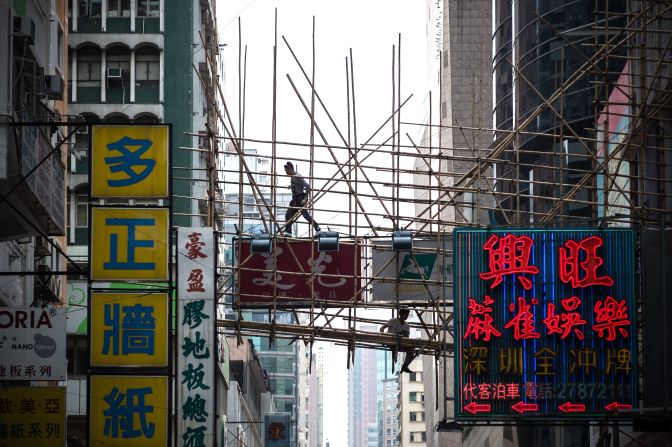
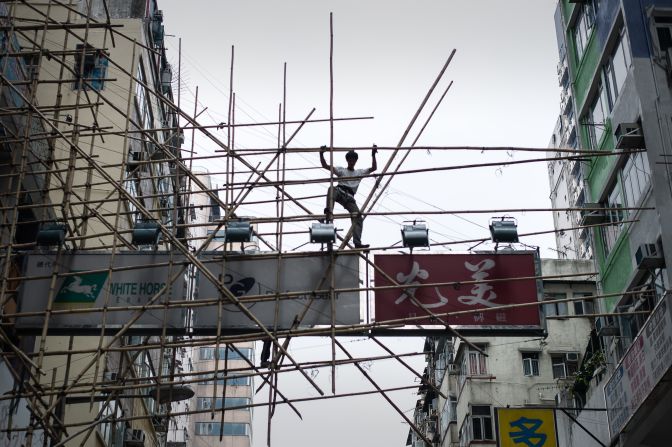
The biggest challenge —
Neon lights and signs hanging over streets are among the hardest places to scaffold, says Ho.
PHILIPPE LOPEZ/AFP/Getty Images
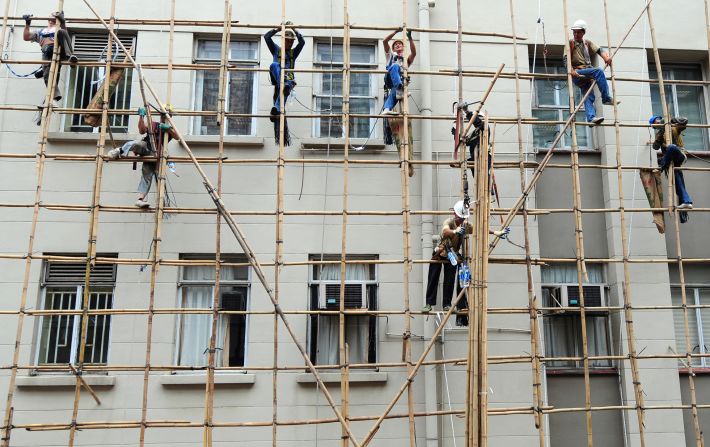
Bamboo spidermen —
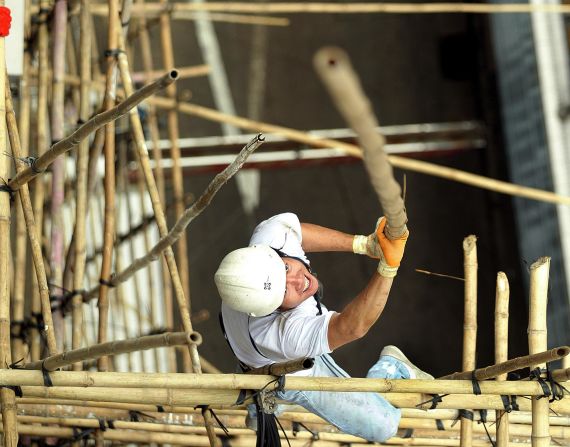
Workers need their hands to be free during the bamboo building process, so they must learn to straddle the poles firmly.
FREDERIC J. BROWN/AFP/AFP/Getty Images
Salary —
A master scaffolder earns around 1,700 HKD (about $220) a day.
PHILIPPE LOPEZ/AFP/AFP/Getty Images
Hours —
A scaffolder works an average of six to eight hours a day.
ED Jones/AFP/Getty Images
Male-dominated, with exceptions —
There are women working in this industry, but not many, Ho tells CNN.
PHILIPPE LOPEZ/AFP/AFP/Getty Images
Bamboo riding —
A technique known as "riding the bamboo" involves keeping an ankle wrapped around the pole at all times, allowing workers to keep their hands free while remaining secure.
PETER PARKS/AFP/Getty Images
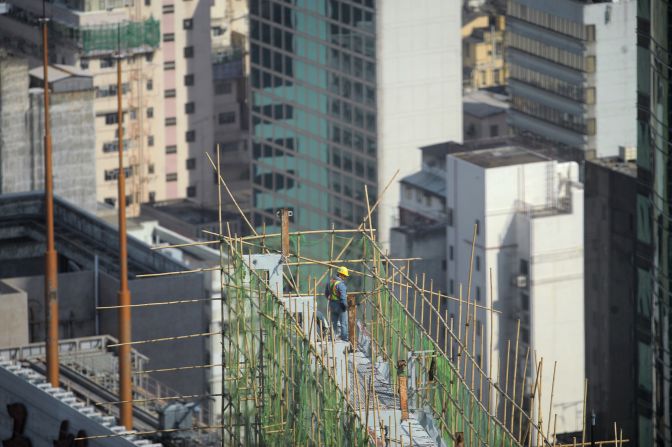
Training —
The job requires several years of training. Hong Kong even has a bamboo scaffolding school, run by the city's Construction Industry Council.
Gerhard Joren/LightRocket/Getty
Keeping it in the family —
Ho, pictured, has worked in the field for two decades, inheriting the trade from his grandfather and father.