River monsters: The murky world of giant freshwater fish | CNN

CNN values your feedback

1. How relevant is this ad to you?
2. Did you encounter any technical issues?
Thank You!
Your effort and contribution in providing this feedback is much appreciated.
Close
Ad Feedback
Destinations
Food & Drink
News
Stay
Video
Destinations Food & Drink News Stay Video
Watch Listen Live TV
My Account
  • Settings
  • Newsletters
  • Topics you follow
  • Sign out
Your CNN account Sign in to your CNN account

My Account
  • Settings
  • Newsletters
  • Topics you follow
  • Sign out
Your CNN account Sign in to your CNN account

Live TV Listen Watch
Edition
US
International
Arabic
Español
Edition
  • US
  • International
  • Arabic
  • Español

Destinations
Food & Drink
News
Stay
Video

Follow CNN Travel
Download the CNN App

  • World
    • Africa
    • Americas
    • Asia
    • Australia
    • China
    • Europe
    • India
    • Middle East
    • United Kingdom
  • US Politics
    • Elections 2026
    • Trump
    • Facts First
    • CNN Polls
    • Redistricting Tracker
    • Epstein Files
  • Business
    • Tech
    • Media
    • Calculators
    • Videos
  • Markets
    • Pre-markets
    • After-Hours
    • Fear & Greed
    • Investing
  • Health
    • Life, But Better
    • Fitness
    • Food
    • Sleep
    • Mindfulness
    • Relationships
  • Entertainment
    • Movies
    • Television
    • Celebrity
  • Tech
    • Innovate
  • Style
    • Arts
    • Design
    • Fashion
    • Architecture
    • Luxury
    • Beauty
    • Video
  • Travel
    • Destinations
    • Food & Drink
    • Stay
    • News
    • Videos
  • Sports
    • Football
    • Tennis
    • Golf
    • Motorsport
    • US Sports
    • Olympics
  • Science
    • Space
    • Life
    • Unearthed
  • Climate
    • Solutions
    • Weather
  • Weather
    • Video
    • Climate
  • Ukraine-Russia War
  • Israel-Hamas War
  • Features
    • As Equals
    • Call to Earth
    • Freedom Project
    • Impact Your World
    • Inside Africa
    • CNN Heroes
  • Watch
    • Live TV
    • Featured
    • CNN Fast
    • Shows A-Z
    • CNN 10
    • CNN TV Schedule
  • Listen
    • All There Is with Anderson Cooper
    • Chasing Life with Dr. Sanjay Gupta
    • The Assignment with Audie Cornish
    • Terms of Service with Clare Duffy
    • CNN 5 Things
    • All CNN Podcasts
  • Games
    • Daily Crossword
    • Jumble Crossword
    • Photo Shuffle
    • Sudoblock
    • Sudoku
    • 5 Things Quiz
  • About CNN
    • Photos
    • Investigations
    • CNN Profiles
    • CNN Leadership
    • CNN Newsletters
    • Work for CNN

Download the CNN App
Call to Earth
Ad Feedback
Travel

River monsters: The murky world of giant freshwater fish

Updated 3:25 PM EST, Wed November 18, 2020
Link Copied!
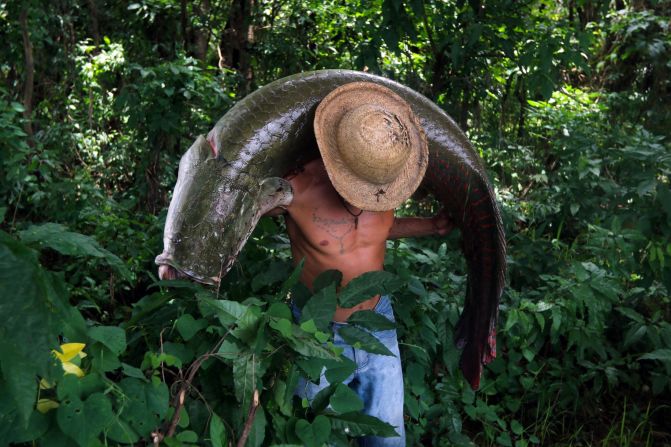
A native to Amazonia's rivers and lakes, the <strong>arapaima gigas</strong> is one of the biggest freshwater fish in the world, measuring an impressive <a href="index.php?page=&url=https%3A%2F%2Fwww.britannica.com%2Fanimal%2Fpirarucu" target="_blank" target="_blank">10 feet</a> long and weighing a whopping 485 pounds. Known to locals as the pirarucu, the air-breathing giant preys on plants and animals, destroying its catch with its sharp tongue. Pirarucu has been historically overfished, but conservation efforts are restoring numbers. <strong>Scroll through to see more of the world's biggest freshwater fish. </strong>
A native to Amazonia's rivers and lakes, the arapaima gigas is one of the biggest freshwater fish in the world, measuring an impressive 10 feet long and weighing a whopping 485 pounds. Known to locals as the pirarucu, the air-breathing giant preys on plants and animals, destroying its catch with its sharp tongue. Pirarucu has been historically overfished, but conservation efforts are restoring numbers. Scroll through to see more of the world's biggest freshwater fish.
RICARDO OLIVEIRA/AFP/AFP via Getty Images
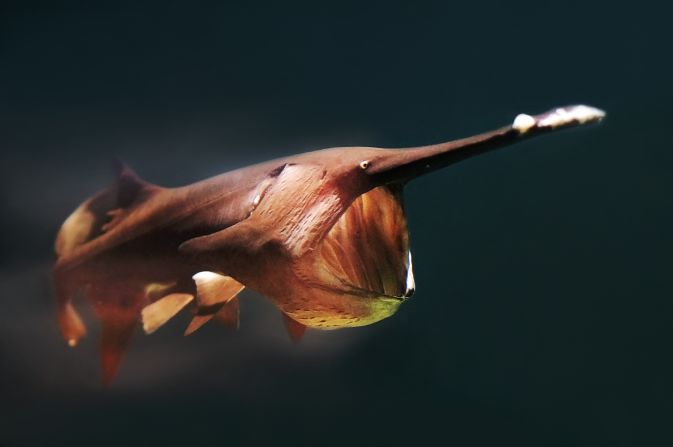
The greenish, grayish <strong>paddlefish</strong> is classified as <a href="index.php?page=&url=https%3A%2F%2Fwww.britannica.com%2Fanimal%2Fpaddlefish" target="_blank" target="_blank">vulnerable</a> and resides in the waters of the Mississippi River basin, Lake Huron, which straddles the US/Canadian border, and areas of southern Canada. An American relative of the sturgeon, it is named after its paddle-like snout and can grow up to seven feet and weigh 200 pounds.
Paddlefish —
The greenish, grayish paddlefish is classified as vulnerable and resides in the waters of the Mississippi River basin, Lake Huron, which straddles the US/Canadian border, and areas of southern Canada. An American relative of the sturgeon, it is named after its paddle-like snout and can grow up to seven feet and weigh 200 pounds.
Marina Vedernikova/Shutterstock
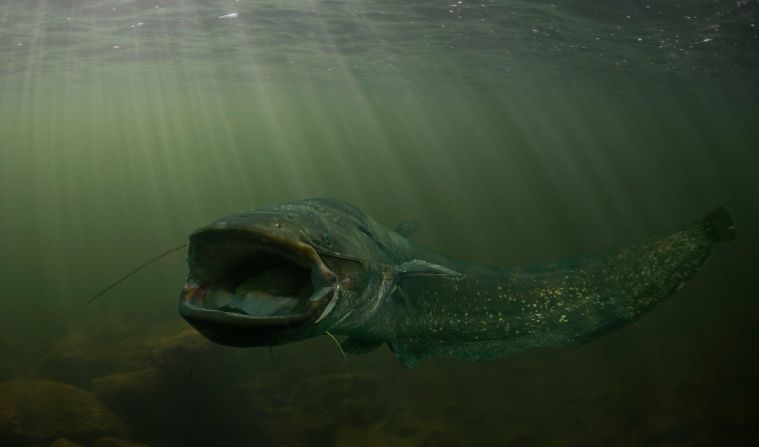
The <strong>wels catfish</strong> is a nocturnal predator native to rivers and lakes of central Europe and western Asia. It is <a href="index.php?page=&url=https%3A%2F%2Fwww.britannica.com%2Fanimal%2Fwels-fish" target="_blank" target="_blank">one of the world's largest catfish</a> and among the largest of Europe's freshwater fish species. The long-bodied, scaleless creature can reach 15 feet in length and a weight of 660 pounds. The species is easily identified by its light-colored undercarriage, dark fins and its six, whisker-like mouth barbels.
Wels catfish —
The wels catfish is a nocturnal predator native to the rivers and lakes of central Europe and western Asia. It is one of the world's largest catfish and among the largest of Europe's freshwater fish species. The long-bodied, scaleless creature can reach 15 feet in length and a weight of 660 pounds. The species is easily identified by its light-colored undercarriage, dark fins and its six, whisker-like mouth barbels.
Paulo Oliveira/Alamy Stock Photo
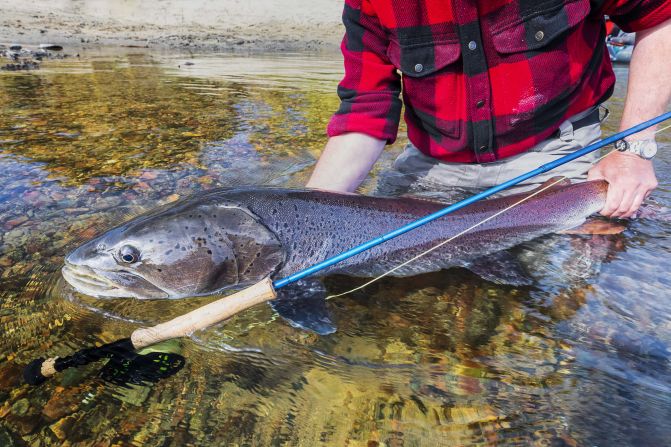
A fisherman holds a large, speckled <strong>Siberian taimen </strong>before releasing it. Dubbed the<a href="index.php?page=&url=https%3A%2F%2Fwww.iucn.org%2Fcontent%2Flargest-salmon-world-edges-toward-extinction" target="_blank" target="_blank">"river wolf,"</a> this predatory species - which can weigh as much as <a href="index.php?page=&url=https%3A%2F%2Fwww.iucn.org%2Fcontent%2Fnew-nature-reserve-provides-sanctuary-threatened-siberian-taimen" target="_blank" target="_blank">230 pounds</a> and grow seven feet long - dominates its habitats in Europe and Asia, feeding on everything from waterfowl and salmon to bats and small land mammals. Despite its status at the top of the aquatic food chain, the Siberian taimen is classified as <a href="index.php?page=&url=https%3A%2F%2Fwww.iucnredlist.org%2Fspecies%2F188631%2F22605180" target="_blank" target="_blank">vulnerable</a> and is targeted by recreational anglers.
Siberian taimen —
A fisherman holds a large, speckled Siberian taimen before releasing it. Dubbed the "river wolf," this predatory species — which can weigh as much as 230 pounds and grow seven feet long —dominates its habitats in Europe and Asia, feeding on everything from waterfowl and salmon to bats and small land mammals. Despite its status at the top of the aquatic food chain, the Siberian taimen is classified as vulnerable and is targeted by recreational anglers.
DieterMeyrl/iStockphoto/Getty Images
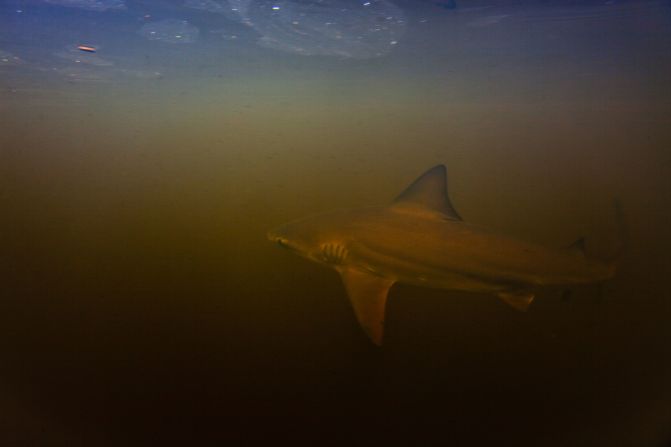
A <strong>bull shark</strong> photographed in the clouded Rio Sirena, Brazil. The bull shark can grow up to <a href="index.php?page=&url=https%3A%2F%2Fwww.britannica.com%2Fanimal%2Fcarcharhinid" target="_blank" target="_blank">11.5 feet</a> and can be found around the world. Though it primarily resides in coastal waters, it can swim up to 160 miles up rivers, <a href="index.php?page=&url=https%3A%2F%2Fwww.iucnredlist.org%2Fspecies%2F39372%2F10187195" target="_blank" target="_blank">giving birth in estuaries or freshwater</a>. With its blade-shaped teeth it can pose a threat to humans.
Bull shark —
A bull shark photographed in the clouded Rio Sirena, Brazil. The bull shark can grow up to 11.5 feet and can be found around the world. Though it primarily resides in coastal waters, it can swim up to 160 miles up rivers, giving birth in estuaries or freshwater. With its blade-shaped teeth it can pose a threat to humans.
National Geographic Image Collection/Alamy Stock Photo
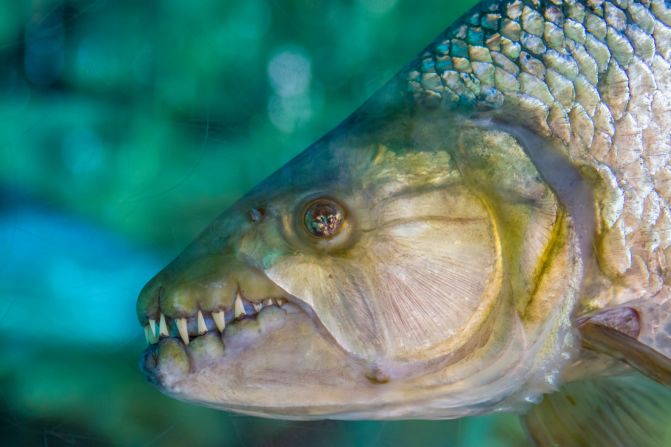
A <strong>giant tigerfish</strong> bares its dagger-like teeth. The tigerfish is among the <a href="index.php?page=&url=https%3A%2F%2Fwww.britannica.com%2Flist%2F10-of-the-worlds-most-dangerous-fish" target="_blank" target="_blank">most dangerous fish</a> in the world and aptly named, given its sharp teeth and vicious disposition. The rapacious species predominantly inhabits freshwaters of the <a href="index.php?page=&url=https%3A%2F%2Fwww.iucnredlist.org%2Fspecies%2F182833%2F7980766" target="_blank" target="_blank">Congo River basin</a> and is a prized game fish, reaching up to six feet long and weighing over 125 pounds.
Giant tigerfish —
A giant tigerfish bares its dagger-like teeth. The tigerfish is among the most dangerous fish in the world and aptly named, given its sharp teeth and vicious disposition. The rapacious species predominantly inhabits freshwaters of the Congo River basin and is a prized game fish, reaching up to six feet long and weighing over 125 pounds.
Danny Ye/Shutterstock
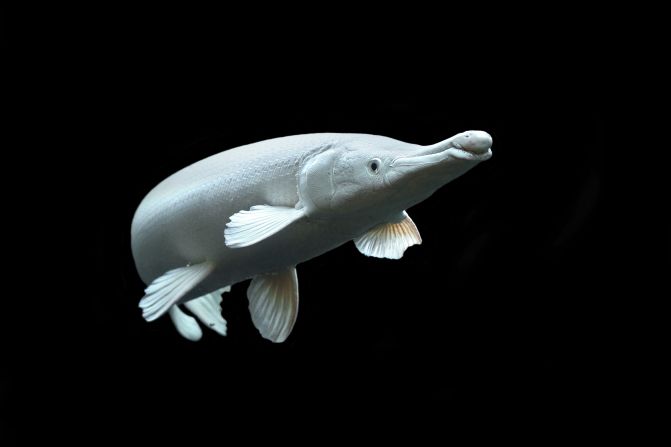
A dart-shaped, <strong>platinum alligator gar</strong>. The alligator gar is found only in the southern waters of the United States. A large freshwater fish measuring up to <a href="index.php?page=&url=https%3A%2F%2Fwww.britannica.com%2Fanimal%2Fgar%23ref176770" target="_blank" target="_blank">10 feet</a> in length, its relatively stout beak resembles the snout of its namesake, the alligator. While the fish are rarely consumed outside the southern United States, gars are sometimes caught for their diamond-shaped scales for crafting jewelry.
Alligator gar —
A dart-shaped, platinum alligator gar. The alligator gar is found only in the southern waters of the United States. A large freshwater fish measuring up to 10 feet in length, its relatively stout beak resembles the snout of its namesake, the alligator. While the fish are rarely consumed outside the southern United States, gars are sometimes caught for their diamond-shaped scales which are used for crafting jewelry.
Shutterstock
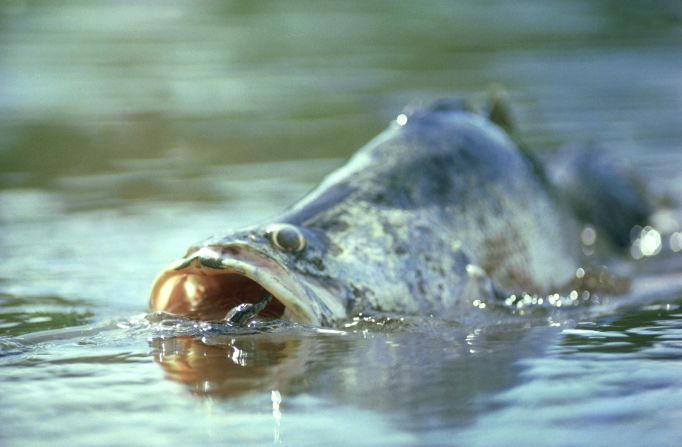
A <strong>Nile perch</strong> photographed preying on a baby crocodile in Uganda. Residing predominantly in the Nile and other African rivers and lakes, the Nile perch can grow to <a href="index.php?page=&url=https%3A%2F%2Fwww.britannica.com%2Fanimal%2FNile-perch" target="_blank" target="_blank">six feet</a> long and weigh 300 pounds and is identifiable by its the green or brown scales decorating its long body and rounded tail. It's a prized game fish, as well as an important food source. The wide-mouthed perch has been found <a href="index.php?page=&url=https%3A%2F%2Fwww.britannica.com%2Fanimal%2Fperciform%23ref525944" target="_blank" target="_blank">mummified</a> in ancient tombs in Egypt.
Nile perch —
A Nile perch photographed preying on a baby crocodile in Uganda. Residing predominantly in the Nile and other African rivers and lakes, the Nile perch can grow to six feet long and weigh 300 pounds and is identifiable by its the green or brown scales decorating its long body and rounded tail. It's a prized game fish, as well as an important food source. The wide-mouthed perch has been found mummified in ancient tombs in Egypt.
Mark Deeble and Victoria Stone/Oxford Scientific RM/Getty Images
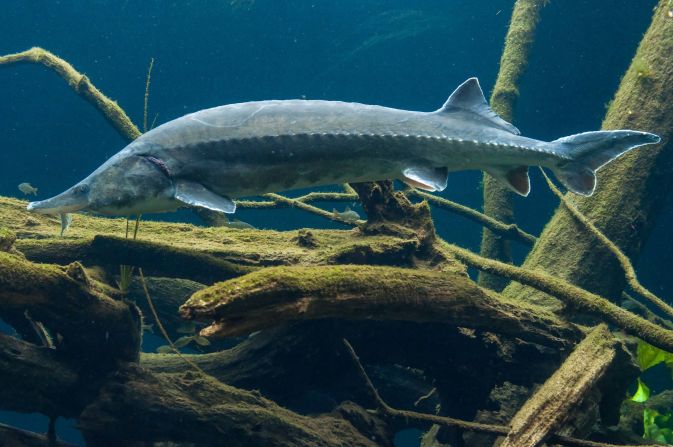
The <strong>beluga sturgeon</strong> can grow up to <a href="index.php?page=&url=https%3A%2F%2Fwww.britannica.com%2Fanimal%2Fsturgeon-fish" target="_blank" target="_blank">26 feet</a> long and weigh up to 3.5 tons. It inhabits the Caspian Sea and Black Sea, in Eastern Europe/Central Asia, traveling upriver to spawn in the spring or summer. Listed as <a href="index.php?page=&url=https%3A%2F%2Fwww.iucnredlist.org%2Fspecies%2F10269%2F3187455" target="_blank" target="_blank">critically endangered</a>, the International Union for Conservation of Nature (IUCN) says its population has diminished as a result of the pursuit of the sturgeon's meat and unfertilized eggs, which are touted as one of the world's finest caviars.
Beluga sturgeon —
The beluga sturgeon can grow up to 26 feet long and weigh up to 3.5 tons. It inhabits the Caspian and Black Seas, in Eastern Europe/Central Asia, traveling upriver to spawn in the spring or summer. Listed as critically endangered, the International Union for Conservation of Nature (IUCN) says its population has diminished as a result of the pursuit of the sturgeon's meat and unfertilized eggs, which are touted as one of the world's finest caviars.
Mick Rush/Shutterstock
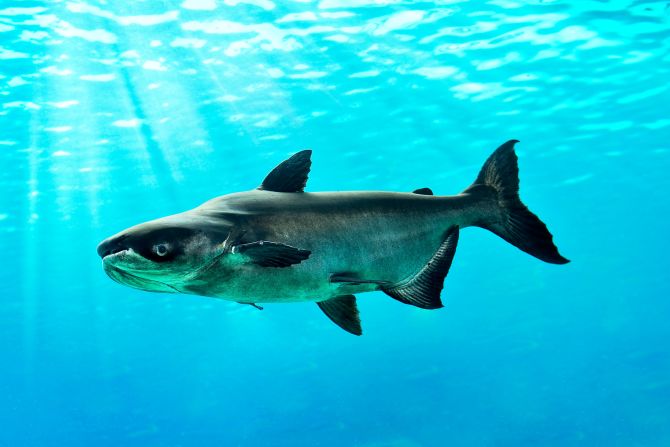
Growing up to <a href="index.php?page=&url=https%3A%2F%2Fwwf.panda.org%2Four_work%2Four_focus%2Fwildlife_practice%2Fprofiles%2Ffish_marine%2Fgiant_catfish%2F%23%3A%7E%3Atext%3DThe%2520Mekong%2520giant%2520catfish%2520is%2Cand%2520the%2520absence%2520of%2520teeth.%26text%3DThe%2520Mekong%2520giant%2520catfish%2520is%2520the%2520largest%2520freshwater%2520fish%2520and%2Cmigrates%2520huge%2520distances%2520to%2520spawn." target="_blank" target="_blank">10 feet</a> long and 660 pounds, the <strong>Mekong giant catfish</strong> is critically endangered, largely due to infrastructure development, such as the building of dams, along the Mekong river, which hinder catfish migration and threaten their ability to reproduce, according to the WWF.
Mekong giant catfish —
Growing up to 10 feet long and 660 pounds, the Mekong giant catfish is critically endangered, largely due to infrastructure development, such as the building of dams, along the Mekong river, which hinder catfish migration and threaten their ability to reproduce, according to the WWF.
Tristan Tan/Shutterstock
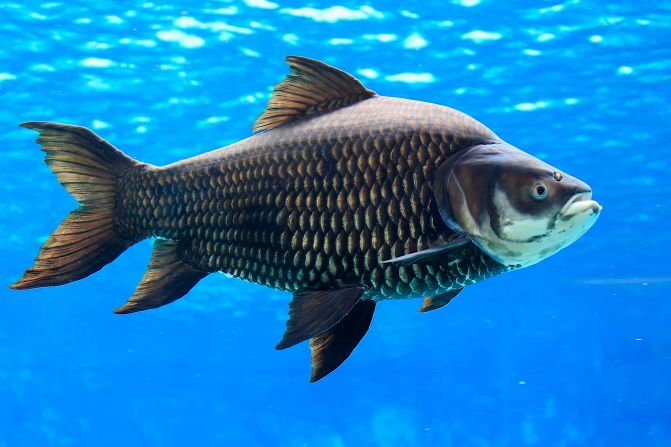
<a href="index.php?page=&url=https%3A%2F%2Fwww.mekongfishnetwork.org%2Ffish-release-giant-barbs-cambodian-identity%2F" target="_blank" target="_blank">Cambodia's national fish</a>, the <strong>giant barb</strong> (also known as the giant carp) resides in rivers and floodplain areas in the Maeklong, Mekong and Chao Phraya river basins of Cambodia, Thailand, Laos and Vietnam. The freshwater species is worthy of its name, growing up to <a href="index.php?page=&url=https%3A%2F%2Fwww.fws.gov%2Ffisheries%2FANS%2Ferss%2Funcertainrisk%2FERSS-Catlocarpio-siamensis-FINAL-September2018.pdf" target="_blank" target="_blank">three meters (9.8 feet)</a> and an astonishing 661 pounds.
Giant barb —
Cambodia's national fish, the giant barb (also known as the giant carp) resides in rivers and floodplain areas in the Maeklong, Mekong and Chao Phraya river basins of Cambodia, Thailand, Laos and Vietnam. The freshwater species is worthy of its name, growing up to three meters (9.8 feet) and an astonishing 661 pounds.
Jurgen & Christine Sohns/image BROKER RF/Getty Images
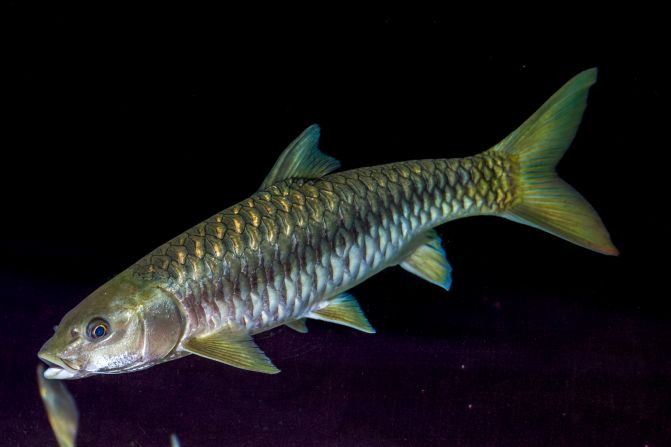
The <strong>golden mahseer</strong>, a game fish of the carp family, inhabits lakes and rivers of India and Southeast Asia. Nicknamed <a href="index.php?page=&url=https%3A%2F%2Fwww.wwf.org.uk%2Fwhat-we-do%2Fprojects%2Ftiger-among-fish" target="_blank" target="_blank">"the tiger of the river,</a>" mahseer are known for their strong jaws, large scales and enormity, growing as long as 6.5 feet and weighing 200 pounds. The mahseer has faced drastic declines in population as it is <a href="index.php?page=&url=https%3A%2F%2Fwww.wwfindia.org%2Fabout_wwf%2Fpriority_species%2Fthreatened_species%2Fgolden_mahseer%2F%23%3A%7E%3Atext%3DConservation%2520Issues%26text%3DThere%2520is%2520dearth%2520of%2520information%2Ctolerate%2520a%2520modified%2520water%2520environment." target="_blank" target="_blank">threatened</a> by habitat degradation from pollution, and overfishing, says the WWF.
Golden mahseer —
The golden mahseer, a game fish of the carp family, inhabits lakes and rivers of India and Southeast Asia. Nicknamed "the tiger of the river," mahseer are known for their strong jaws, large scales and enormity, growing as long as 6.5 feet and weighing 200 pounds. The mahseer has faced drastic declines in population as it is threatened by habitat degradation from pollution, and overfishing, says the WWF.
Danny Ye/Shutterstock
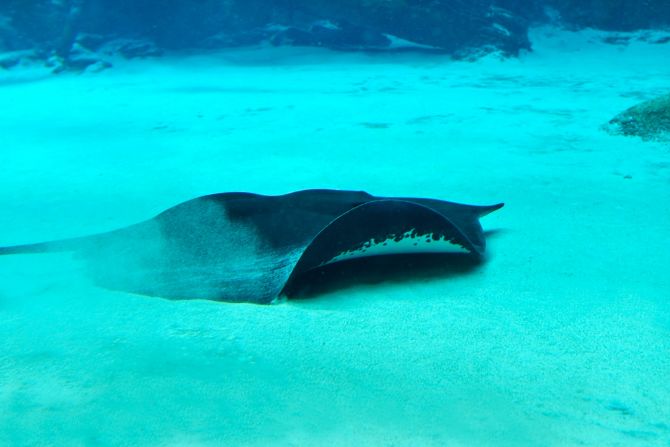
A <strong>Mekong giant freshwater stingray</strong> is pictured sliding along the bottom of sandy, blue waters. Giant freshwater stingrays can be found throughout East Asia, Southeast Asia and Australia, and some species grow up to half the length of a bus and weigh half a ton according to the <a href="index.php?page=&url=https%3A%2F%2Fwwf.panda.org%2Four_work%2Four_focus%2Fwildlife_practice%2Fprofiles%2Ffish_marine%2Fstingray%2F" target="_blank" target="_blank">WWF</a>. In the Mekong basin the freshwater stingray can grow to 16 feet and buries itself in sandy river bottom, detecting its prey -- fish and crustaceans -- by sensing other animals' electrical fields. The ray has a potentially lethal barb on its tail, up to 15 inches long and capable of piercing human flesh and bone.

Giant stingray —
A Mekong giant freshwater stingray is pictured sliding along the bottom of sandy, blue waters. Giant freshwater stingrays can be found throughout East Asia, Southeast Asia and Australia, and some species grow up to half the length of a bus and weigh half a ton according to the WWF. In the Mekong basin the freshwater stingray can grow to 16 feet and buries itself in the sandy river bottom, detecting its prey — fish and crustaceans — by sensing other animals' electrical fields. The ray has a potentially lethal barb on its tail, up to 15 inches long and capable of piercing human flesh and bone.

slpu9945/iStockphoto/Getty Images

My Account
  • Settings
  • Newsletters
  • Topics you follow
  • Sign out
Your CNN account Sign in to your CNN account

Live TV Listen Watch
  • World
    • Africa
    • Americas
    • Asia
    • Australia
    • China
    • Europe
    • India
    • Middle East
    • United Kingdom
  • US Politics
    • Trump
    • Facts First
    • CNN Polls
    • Elections 2026
    • Redistricting Tracker
    • Epstein Files
  • Business
    • Tech
    • Media
    • Calculators
    • Videos
  • Markets
    • Pre-markets
    • After-Hours
    • Fear & Greed
    • Investing
  • Health
    • Life, But Better
    • Fitness
    • Food
    • Sleep
    • Mindfulness
    • Relationships
  • Entertainment
    • Movies
    • Television
    • Celebrity
  • Tech
    • Innovate
  • Style
    • Arts
    • Design
    • Fashion
    • Architecture
    • Luxury
    • Beauty
    • Video
  • Travel
    • Destinations
    • Food & Drink
    • Stay
    • News
    • Videos
  • Sports
    • Football
    • Tennis
    • Golf
    • Motorsport
    • US Sports
    • Olympics
  • Science
    • Space
    • Life
    • Unearthed
  • Climate
    • Solutions
    • Weather
  • Weather
    • Video
    • Climate
  • Ukraine-Russia War
  • Israel-Hamas War
  • Features
    • As Equals
    • Call to Earth
    • Freedom Project
    • Impact Your World
    • Inside Africa
    • CNN Heroes
  • Watch
    • Live TV
    • Featured
    • CNN Headlines
    • Shows A-Z
    • CNN 10
    • CNN TV Schedule
  • Listen
    • All There Is with Anderson Cooper
    • Chasing Life with Dr. Sanjay Gupta
    • The Assignment with Audie Cornish
    • Terms of Service with Clare Duffy
    • CNN 5 Things
    • All CNN Podcasts
  • Games
    • Daily Crossword
    • Jumble Crossword
    • Photo Shuffle
    • Sudoblock
    • Sudoku
    • 5 Things Quiz
  • About CNN
    • Photos
    • Investigations
    • CNN Profiles
    • CNN Leadership
    • CNN Newsletters
    • Work for CNN

Watch Listen Live TV
My Account
  • Settings
  • Newsletters
  • Topics you follow
  • Sign out
Your CNN account Sign in to your CNN account
Follow CNN Travel

Download the CNN app

Terms of Use Privacy Policy Ad Choices Accessibility & CC About Newsletters Transcripts Sitemap

© 2026 Cable News Network. A Warner Bros. Discovery Company. All Rights Reserved.
CNN Sans ™ & © 2016 Cable News Network.

Download the CNN app

Scan the QR code to download the CNN app on Google Play.

Scan the QR code to download the CNN app from Google Play.

Download the CNN app

Scan the QR code to download the CNN app from the Apple Store.

Scan the QR code to download the CNN app from the Apple Store.