Photographer creates unbelievable landscapes out of food
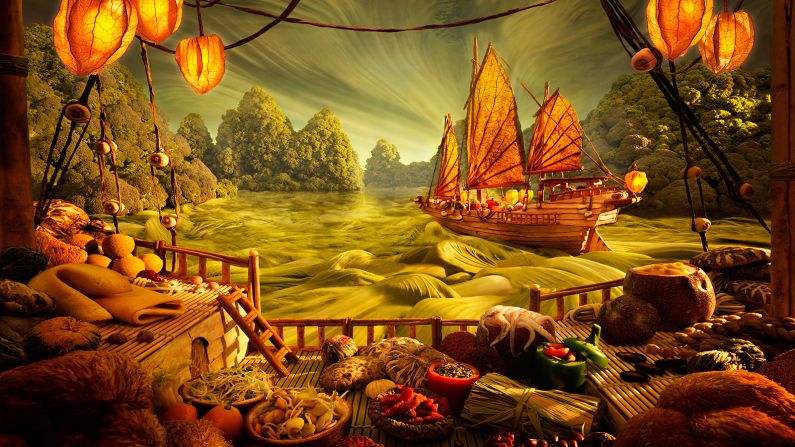
Chinese Junk Boat —
Photographer Carl Warner creates edible landscapes by using food as an art material. The advantages? There's a vast choice of ingredients in terms of shapes, textures and colors, he says. The disadvantage is that the items perish easily, especially under hot studio lights.
Courtesy Carl Warner
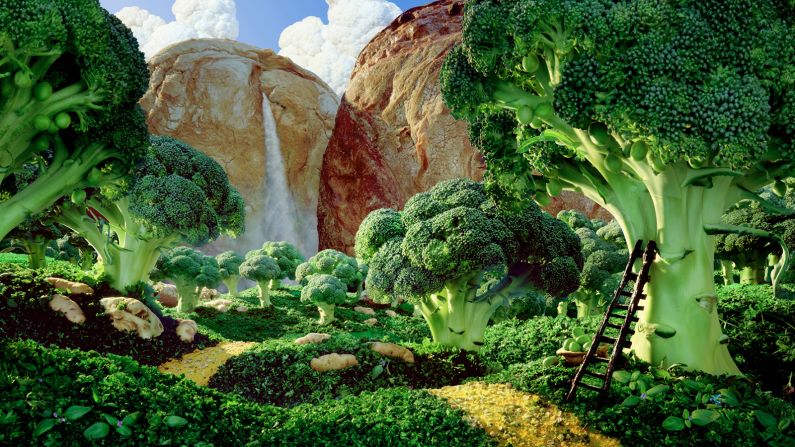
Broccoli Forest —
Warner says he finds food as a source of inspiration because it's similar to larger aspects of the natural world and it's something people have a natural affinity with.
Courtesy Carl Warner
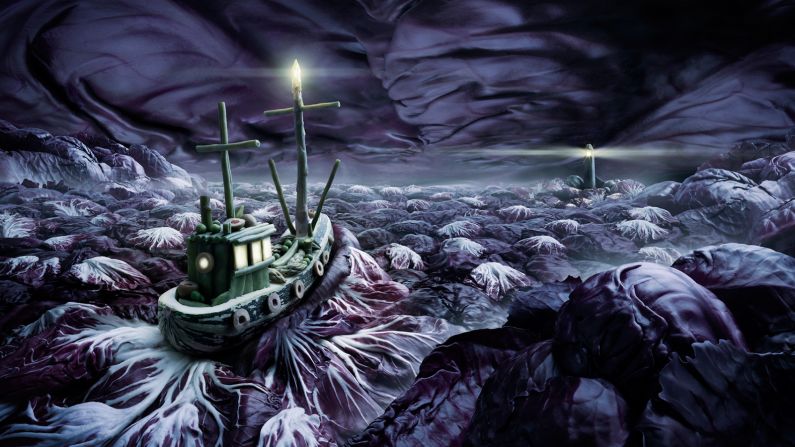
Cabbage Sea —
"My work is being used as a vehicle to promote healthy eating, nutritional education and a good diet," says Warner.
Courtesy Carl Warner
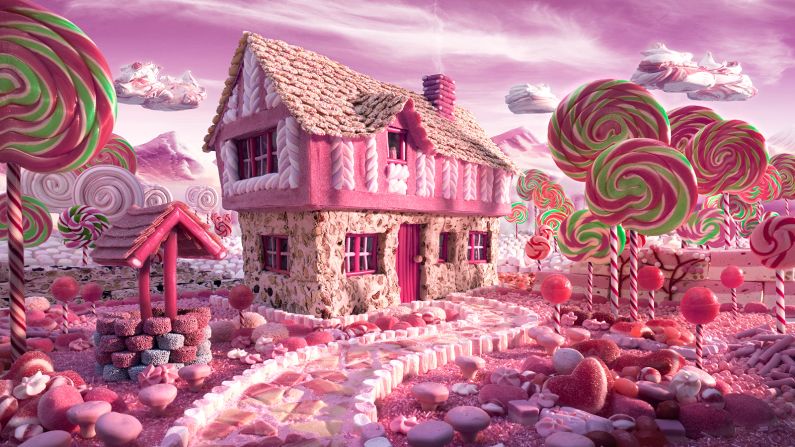
Candy Cottage —
Photographing, drawing and designing makes Warner feel the same escape as when he drew spaceships as a child, he says. This sweet image is the cover of his children's book, "A world of food," which is now being translated into Japanese.
Courtesy Carl Warner
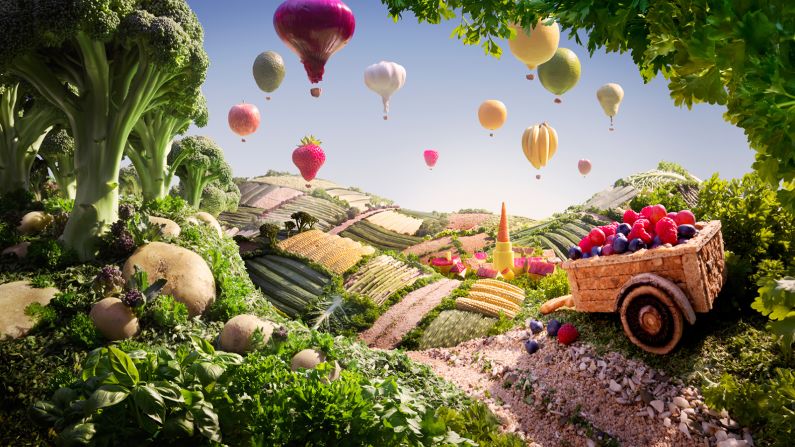
Fruit & Veggie Balloons —
Warner says his "foodscapes" begin as a sketch. From there, he decides which ingredients will be used. A food stylist and model maker then help build the scene. It can take several days and the scenes are sometimes shot in layers in order to work quickly with fresh produce, he says.
Courtesy Carl Warner
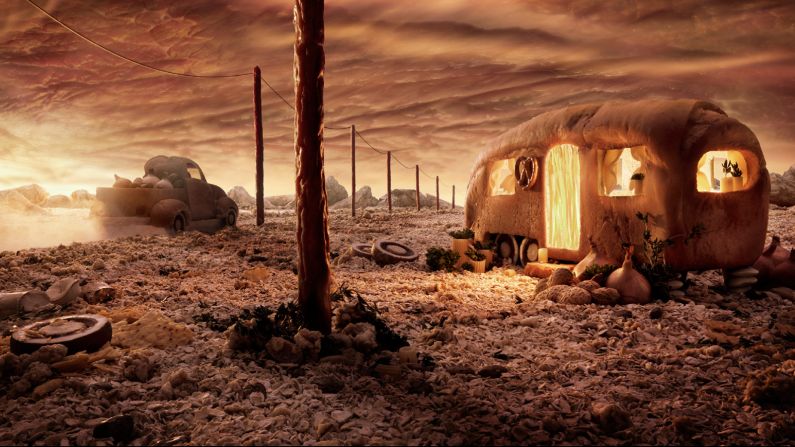
Cereal Dust Bowl —
To Warner, making foodscapes connects nature's beauty with nature's bounty. "The simple pleasures of growing food, cooking a meal, and sharing with friends is what unites us in our humanity," he says.
Courtesy Carl Warner
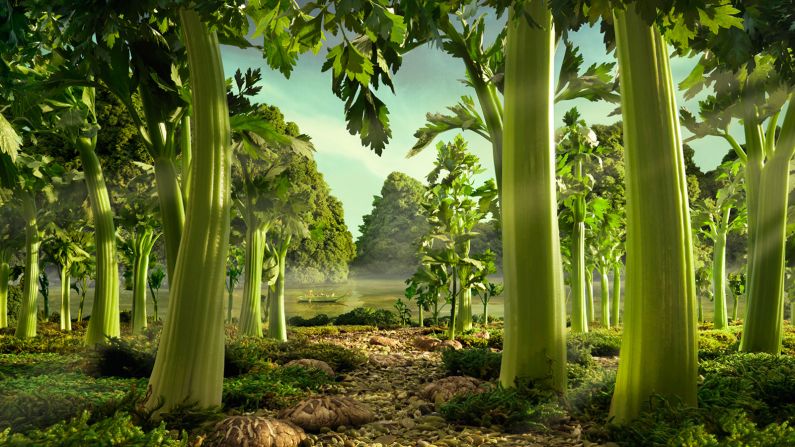
Celery Forest —
If anything's going to convince a picky kid to eat his celery, this is it. "I like to make people smile," says Warner. "The work is whimsical and fun. I call it 'the pleasant deception'."
Courtesy Carl Warner
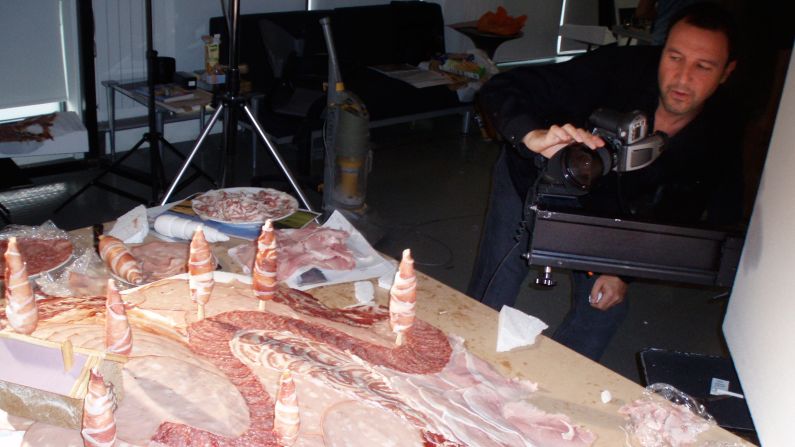
Carl Warner —
Warner, seen here shooting one of his foodscapes, describes himself as a photographic artist who makes landscapes out of food, although he does create scenes out of other materials like clothes and stationary.
Courtesy Carl Warner
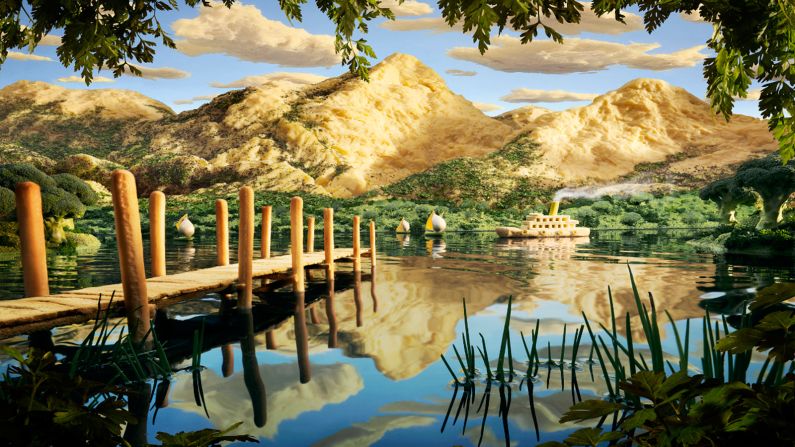
Tuscany Landscape —
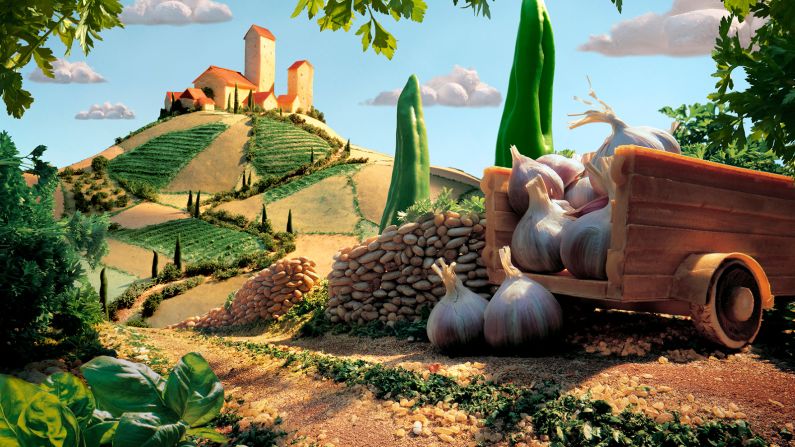
Simplicity and fresh ingredients are key to Warner's creations. He says he's a big fan of Italian cooking.
Courtesy Carl Warner
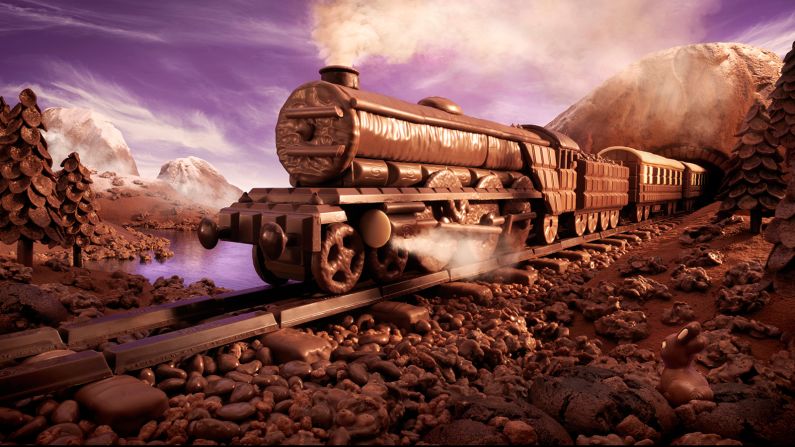
Chocolate Express —
Before pursuing this type of photography, Warner says he lacked the inspiration and confidence he has now.
Courtesy Carl Warner
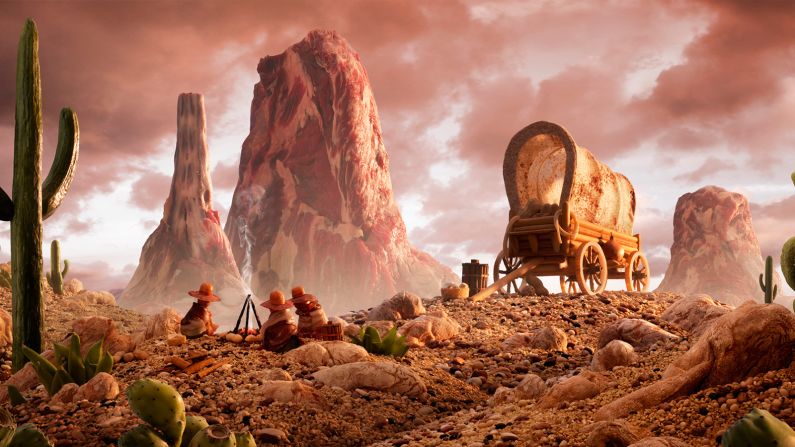
Cowboy Valley —
When looking for new inspiration, Warner travels to places he's never been to seek out new imagery and ingredients.
Courtesy Carl Warner
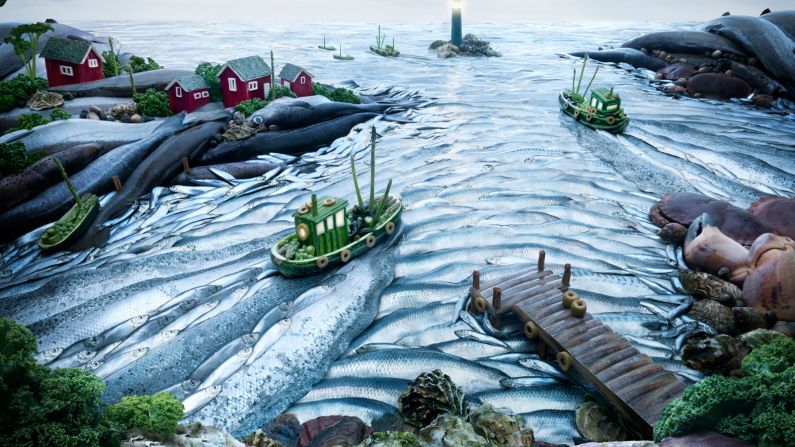
Fishscape —
Warner says his early influences were surrealist painters. As an only child he often created other worlds to escape the boredom of being alone. Fishscape is Warner's favorite image, but was one of the most difficult and smelliest scenes to build.
Courtesy Carl Warner
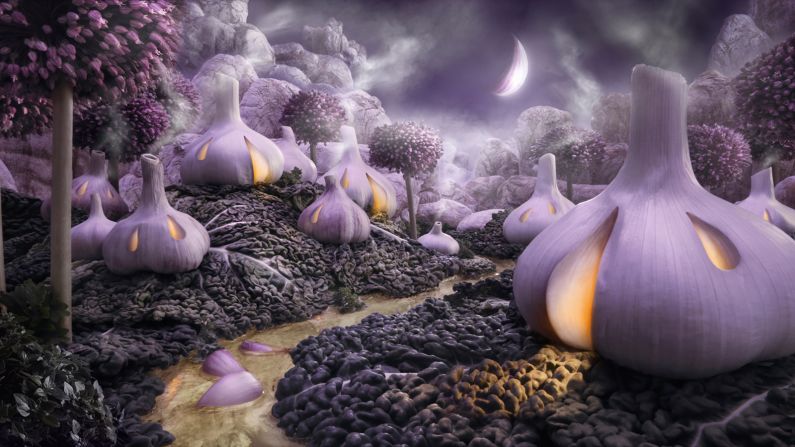
Garlicshire —
Making foodscapes has inspired Warner to be more creative in the kitchen, he says. The visual presentation of his work inspires him to make corresponding taste combinations.
Courtesy Carl Warner
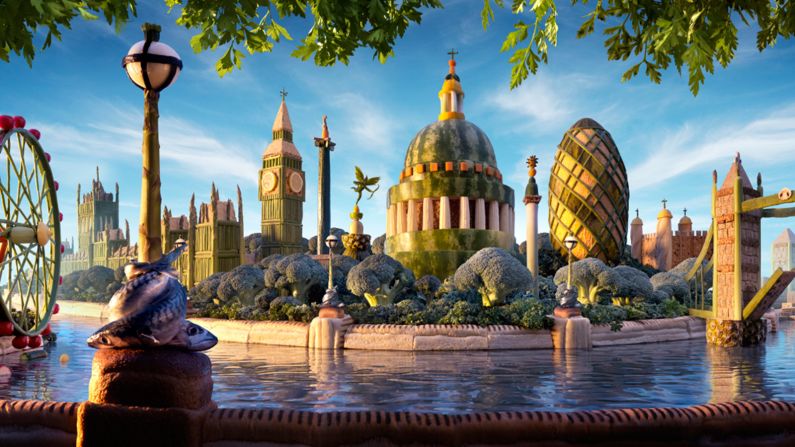
London Skyline —
Warner says London's Borough Market offers inspiration in the form of seasonal produce. He also loves discovering new things in the Asian markets of Brick Lane and China Town in London's West End.
Courtesy Carl Warner
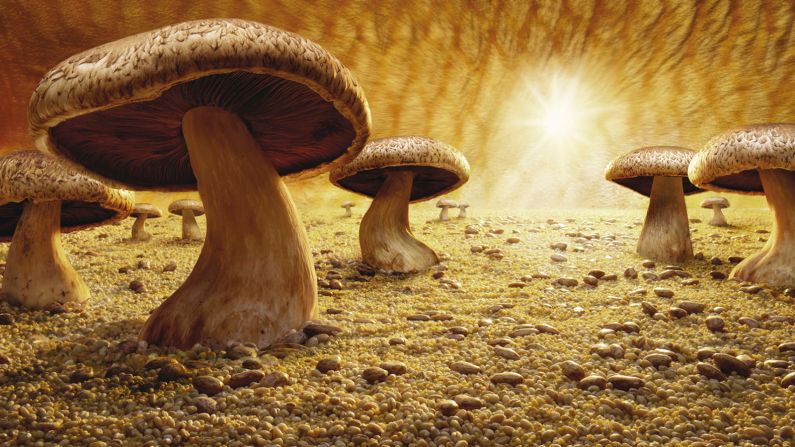
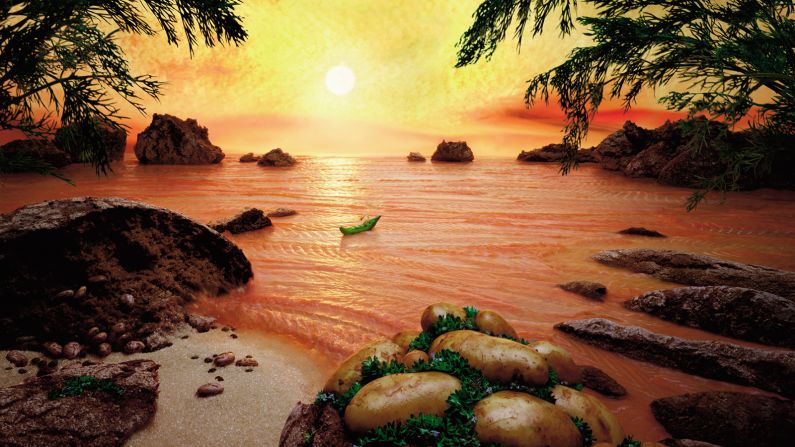
Mushroom Savanna —
This photo, created with portobello mushrooms, was Warner's very first foodscape.
Courtesy Carl Warner
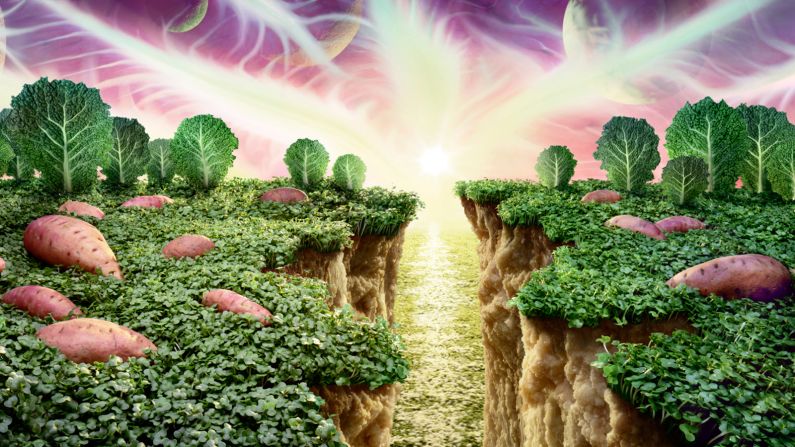
Parmesan Cliffs —
Because coriander and flat leaf parsley last for only a few minutes, they go into a shot right before the photo is taken, says Warner. Alternatively, he uses a lot of curly kale as it looks good for hours.
Courtesy Carl Warner
Salmon Sea —
When it comes to photography versus food, Warner's interests lie more with the former. "If I was as good a cook as I am a photographer then I would probably be a chef," he says.
Courtesy Carl Warner
Cheesescape —
The average cost to create a single foodscape is a few hundred dollars but varies depending on the size of the scene and how expensive or exotic the ingredients are.
Courtesy Carl Warner
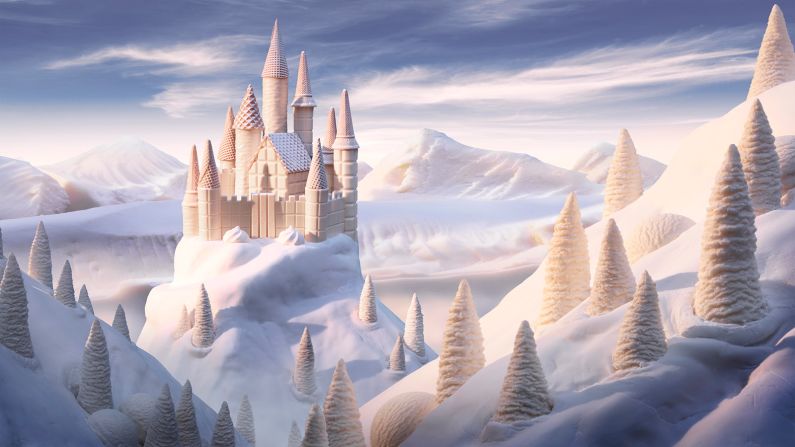
White Castle —
The leftover food from shoots is shared with the team or given to local homeless shelters. Warner exhibits his work around the world and now has two books on the market. For more info, visit his website: Carlwarner.com.