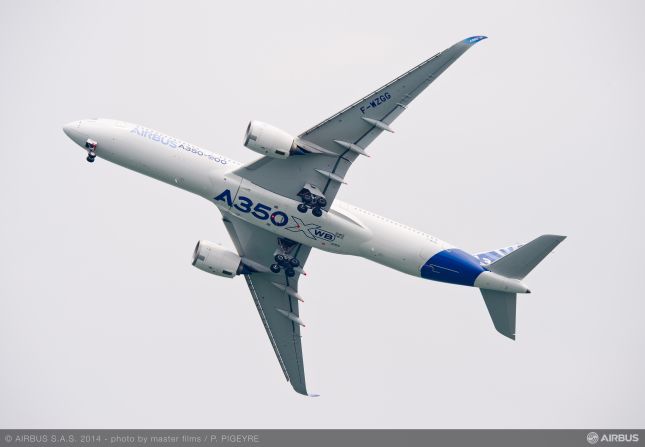
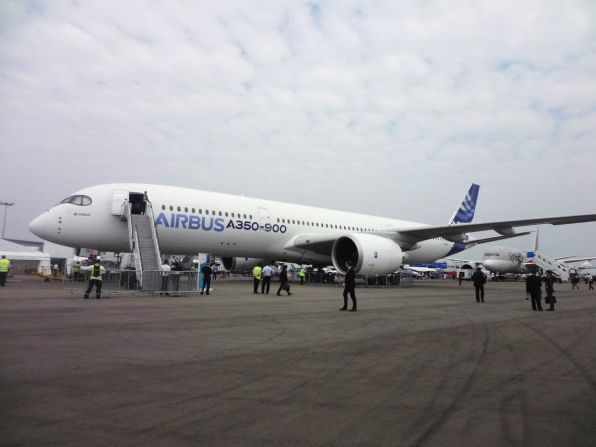
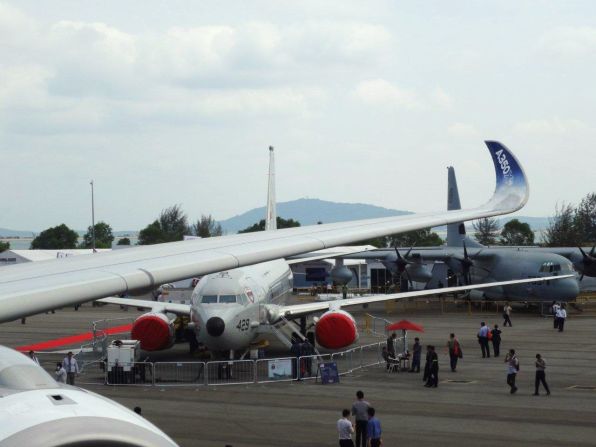
Airbus put one of its A350 test planes on display at the Singapore Airshow this week, giving journalists and officials a look inside the new fuel-efficient, extra wide bodied passenger jet. For now, only crew and mechanics are allowed aboard while the plane is in flight.
Courtesy Airbus
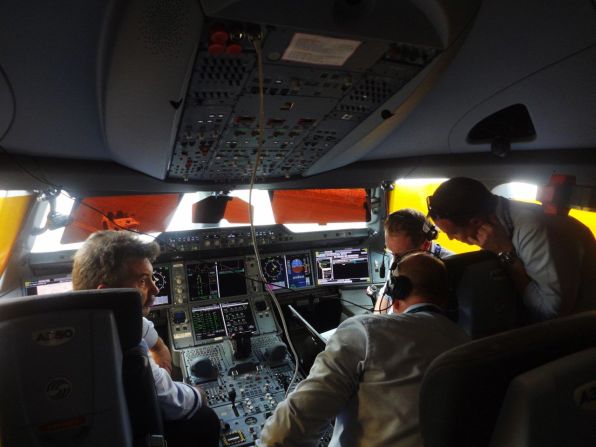
Flight deck —
The A350 features a flight deck with near-identical features to those of the A320, A330, A340 and A380 airplanes. Airbus says this will give airlines significant savings by being able to share pilots and reduce training.
Charlotte Glennie/CNN
The next generation of passenger jet —
Airbus touts its A350 XWB as the "new-generation wide body jetliner shaping efficiency for the future of air travel."
Charlotte Glennie/CNN
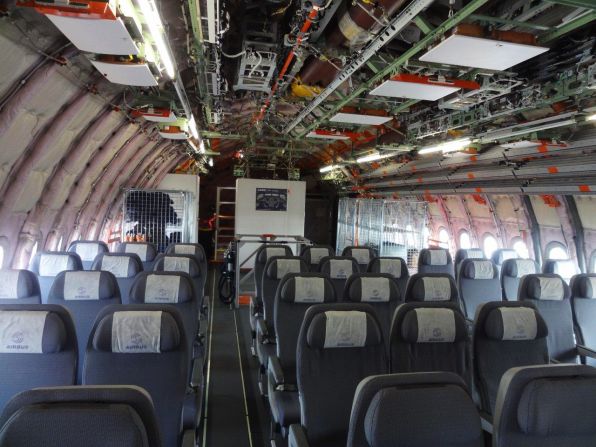
Flight crew class —
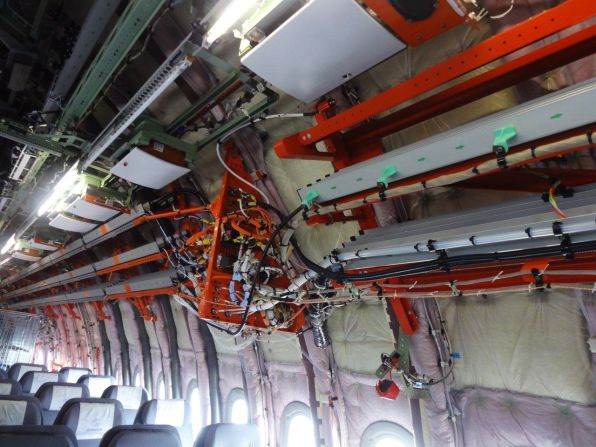
The A350's extra wide body is designed to allow passengers maximum space and comfort. Economy class has been designed to carry 18-inch seats nine abreast, but can be configured to seat passengers from eight to 10 abreast. These worn gray seats are reserved for crew and mechanics and will be replaced as soon as flight testing is complete later this year.
Charlotte Glennie/CNN
Curled wingtips —
The A350 curled wingtips reduce drag, saving fuel.
Charlotte Glennie/CNN
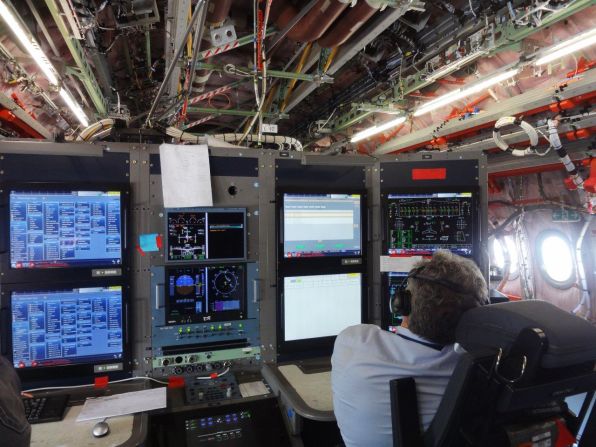
Collecting the data —
Flight control instruments on board the test A350 can transmit live data back to Airbus headquarters in Toulouse, France.
Charlotte Glennie/CNN
Tests, tests and more tests —
The A350 has already clocked 1,000 of its required 2,500 hours of flying time. Tests have been carried out in cold northern Canada and in the high altitude of La Paz in Bolivia. In the next few weeks it will also conduct tests in the stifling heat of the Middle East.
Charlotte Glennie/CNN
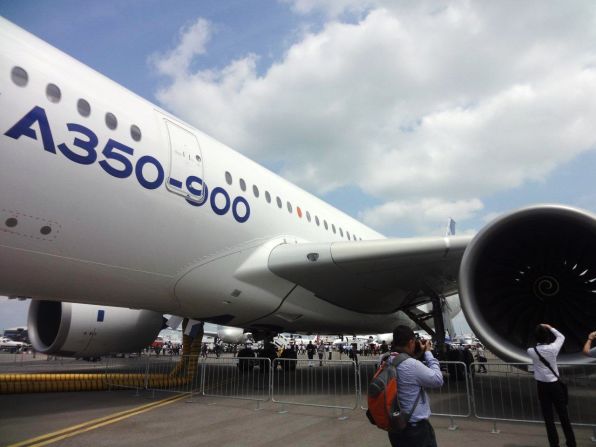
Powered by Rolls —
Airbus says its custom Rolls Royce engine is unrivaled in terms of fuel efficiency. The noise-reduced engine has led some to nickname the jet "the Hushliner."
Charlotte Glennie/CNN
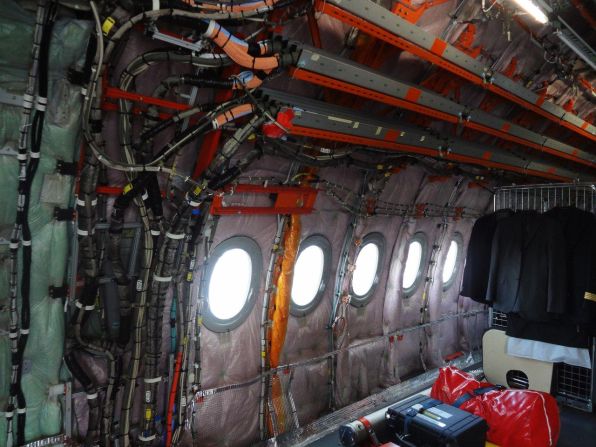
400 kilometers of cable —
Large water tanks under the floor are filled to the exact weight the aircraft will carry when it's full of passengers and baggage.
Charlotte Glennie/CNN
Excess baggage —
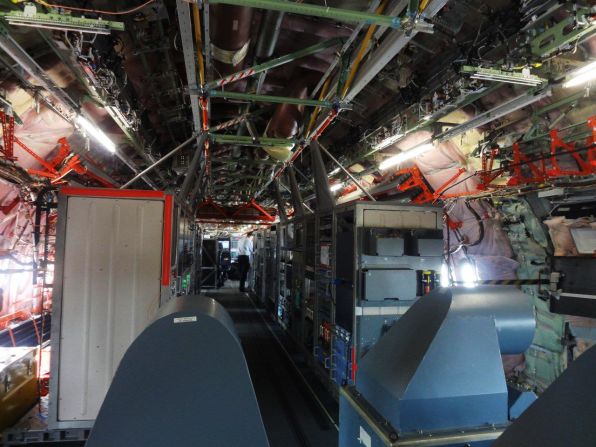
Instead of passenger seats, this aircraft is filled with flight testing instruments including the equivalent of 400 kilometers of testing cables. Everything color-coded orange is linked to flight testing and will eventually be removed from the plane.