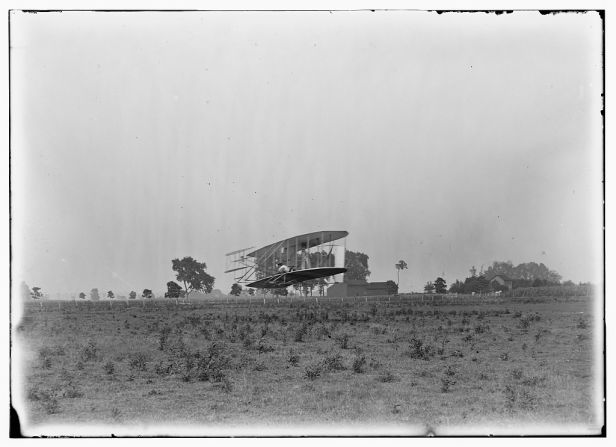
In this photo from around 1904, Orville Wright pilots an aircraft across Ohio's Huffman Prairie Flying Field, covering a distance of 356 feet. After making history at Kitty Hawk, North Carolina, the Wrights developed "a practical and usable machine" in this pasture, said U.S. Park Ranger Robert Petersen. "This is the Holy Grail. This is literally where aviation gets its start." The landowner asked the Wrights to move any horses and cows out of the way before doing any flying, Petersen said. "Sometimes there were issues."
US LIBRARY OF CONGRESS
Ohio cow pasture where 'it all began' —
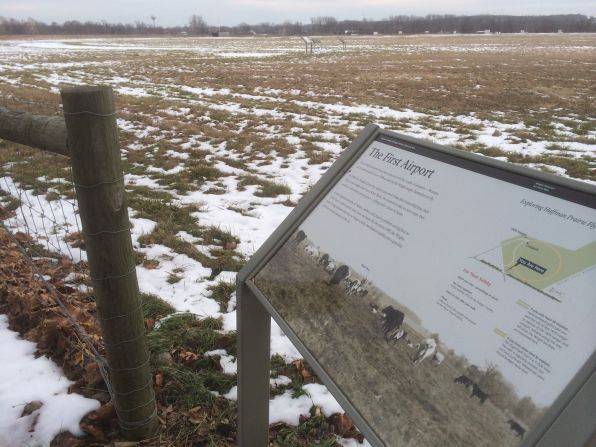
The National Park Service touts Huffman Prairie as "the first airport." Others dispute that claim because different experts have various definitions of the term "airport."
Thom Patterson/CNN
Ohio cow pasture where 'it all began' —
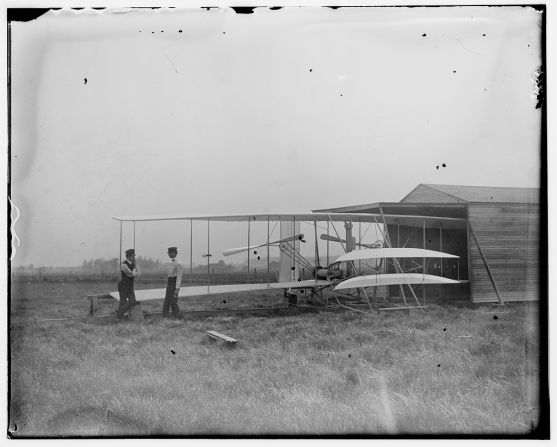
Wilbur and Orville Wright gained permission from the landowner to use the field as a flight test facility and flying school. Aircraft were stored in a small wooden hangar.
US LIBRARY OF CONGRESS
Ohio cow pasture where 'it all began' —
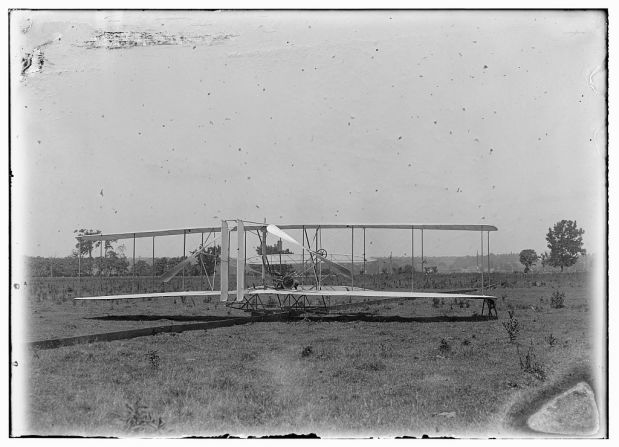
The Wright brothers' flying machine got airborne over the field via a launching track, left, that was attached to a catapult system.
US LIBRARY OF CONGRESS
College Park Airport, Maryland —
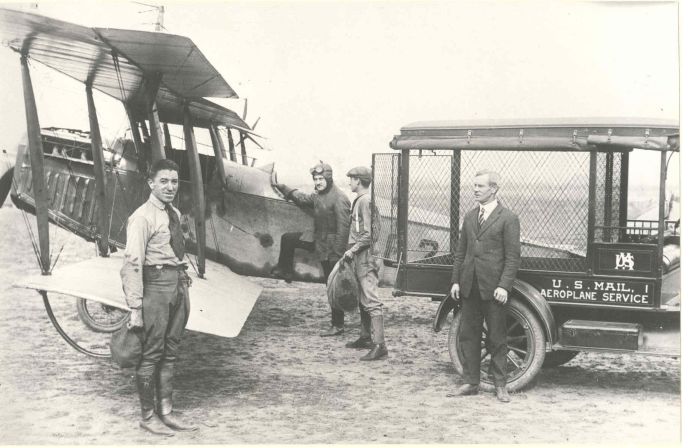
Another historic aviation site, College Park Airport, outside Washington, D.C., calls itself the "oldest continually operating airport in the world." It's been in business since 1909, spurred by the growing popularity of U.S. Air Mail service.
Courtesy College Park Aviation Museum: Airmail Collection
Orville Wright teaches Americans to fly —
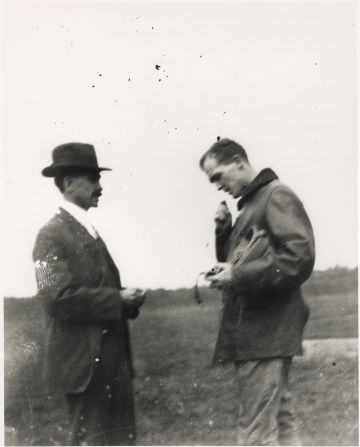
Orville Wright, left, taught a young soldier named Henry "Hap" Arnold, right, to fly at College Park and at Huffman Prairie. Arnold would later go on to become the only five-star general in the history of the U.S. Air Force.
Courtesy College Park Aviation Museum: MacCartee Collect
Pearson Air Field, Vancouver, Washington —
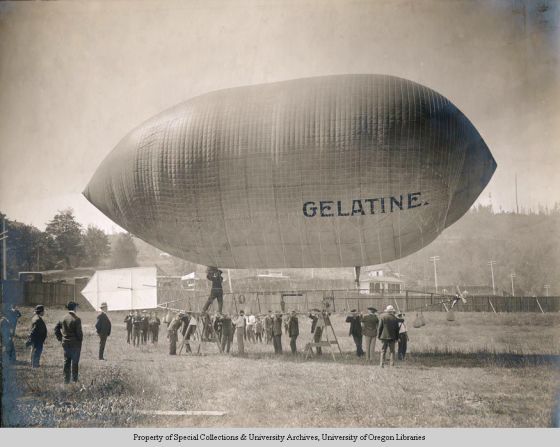
Another of the world's oldest airports, Pearson Air Field in Vancouver, Washington, dates back to 1905, when it welcomed the arrival of a blimp named Gelatine.
University of Oregon Archives
First air traffic control tower —
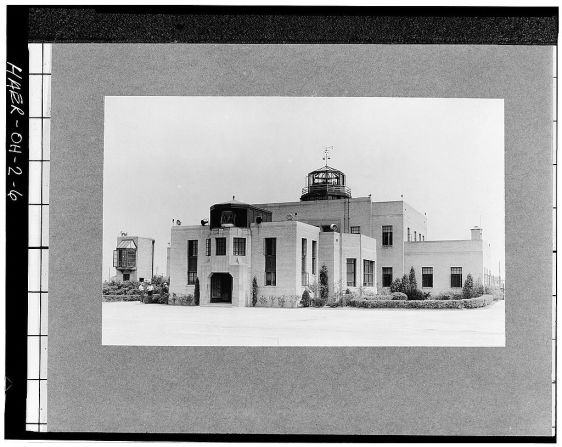
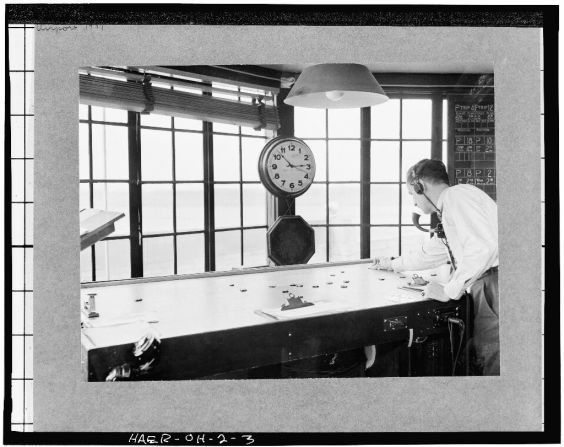
Cleveland's airport website boasts that, in 1930, it was the first airport in the world with an air traffic control tower.
US Library of Congress
First air traffic control tower —
Cleveland's tower included "360-degree line of sight, two-way radio communication and regular updates, including weather reports that revolutionized airport traffic systems worldwide," according to the airport's website.