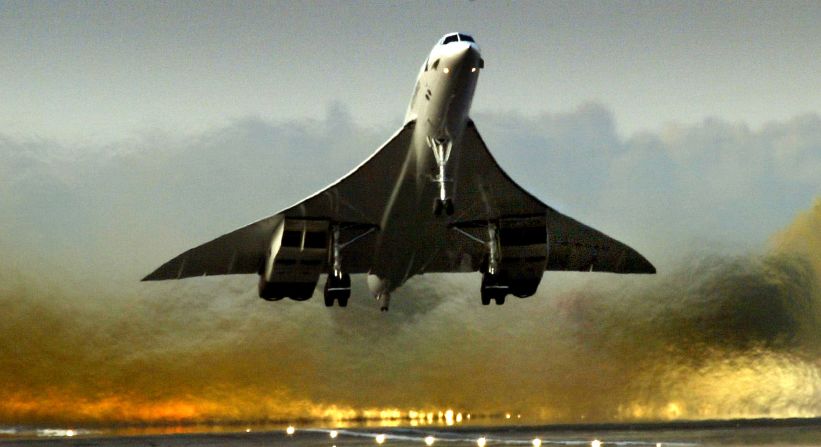
An Anglo-French project, the Concorde first entered service in 1976. One of only two supersonic passenger aircraft ever produced, it crossed the Atlantic in three hours at 1,370 miles per hour -- almost twice the speed of sound. Click on for a look back at the plane's captivating -- and tragic -- history.
Mario Tama/Getty Images
Concorde prototype 001 —
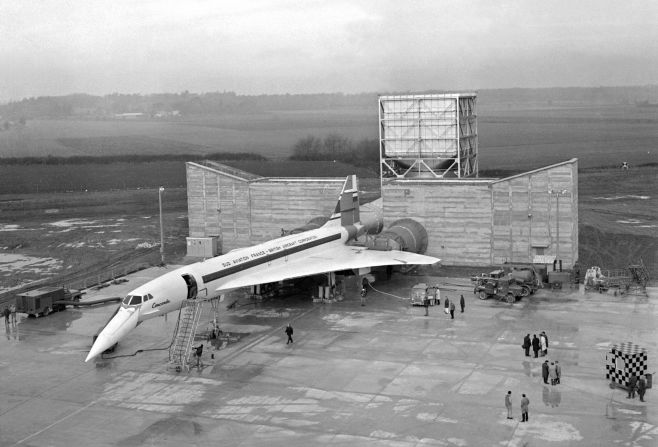
The first Concorde, the 001, was rolled out in 1967. This file photo taken on February 25 1968 at France's Toulouse-Blagnac airport shows the plane in front of an engine-testing system.
AFP/AFP/AFP/Getty Images
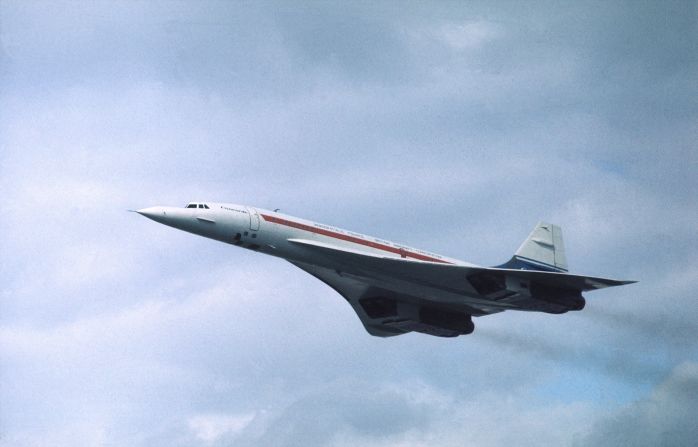
1969: Maiden flight —
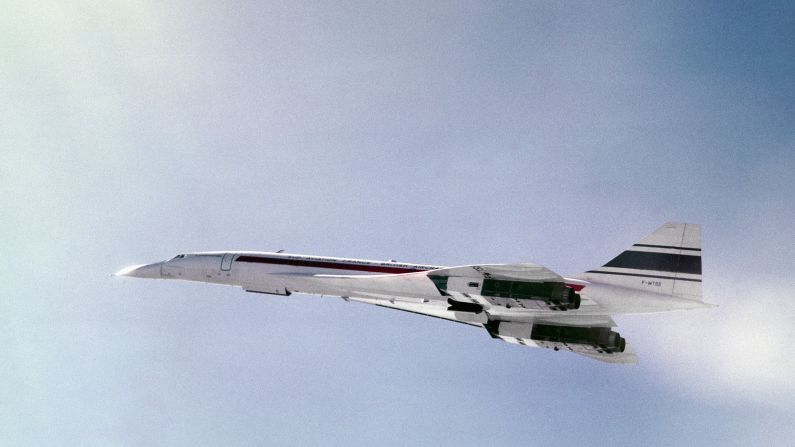
The Concorde is seen here taking its maiden flight on March 2, 1969, over France. Before its inaugural commercial flight in 1976, Concorde had 5,000 hours of testing, making it the most vetted aircraft in history. A test pilot sent by the U.S. government said it "could be the safest airplane ever built."
AFP/Getty Images
1969: Paris Air Show —
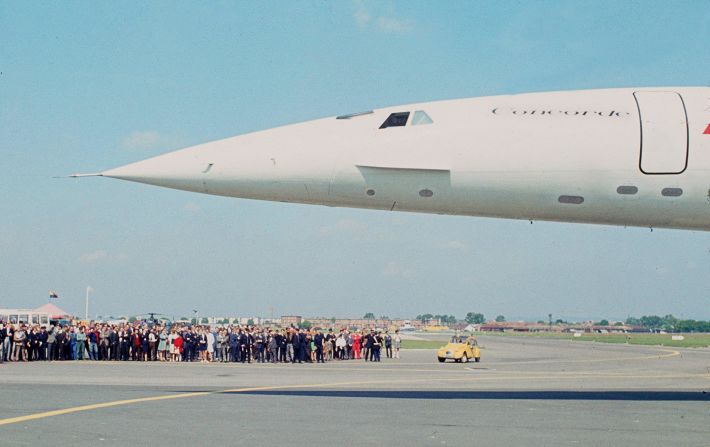
In all, 20 Concordes were manufactured -- 10 in Britain and 10 in France -- although the original plan was for 300. Of these, 14 entered commercial service. The original Concorde prototype is seen here on display at the 1969 airshow in Paris.
STF/AFP/Getty Images/File
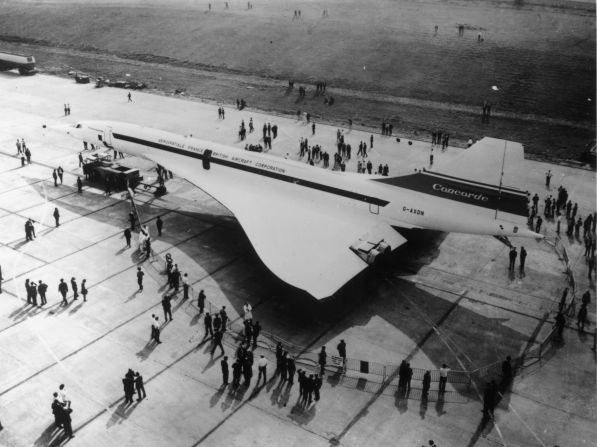
The future of aviation —
Crowds view the supersonic jet at an airfield in Bristol, England, in 1971. By 1972, the plane's future looked bright. More than a dozen airlines had placed orders and the French and British governments expected to recoup their $3.5 billion development costs. But a year later, the Arab oil embargo prompted a steep rise in fuel prices and the thirsty Concorde looked less appealing. Prospective buyers dropped out.
Hulton Archive/Getty Images
1976: Concorde's first commercial flight —
Eventually, the British and French governments were forced to write off the cost of Concorde's production and virtually give the plane to British Airways and Air France. Elegant, fast and luxurious, Concorde was one of only two supersonic planes to have entered commercial service (the other being the Tupolev Tu-144). The first Concordes with commercial passengers simultaneously took flight on January 21, 1976, in Paris and London.
Courtesy Evening Standard/Getty Images
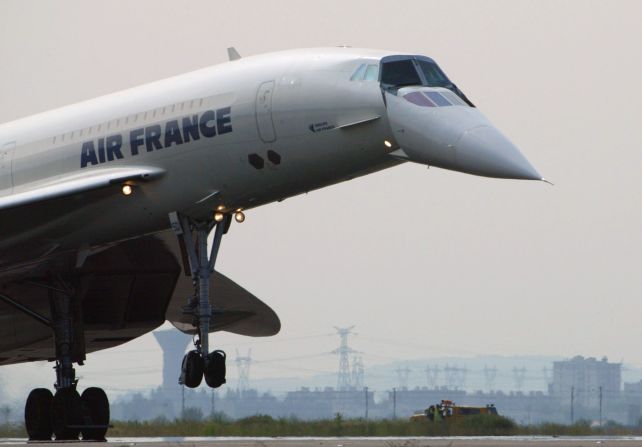
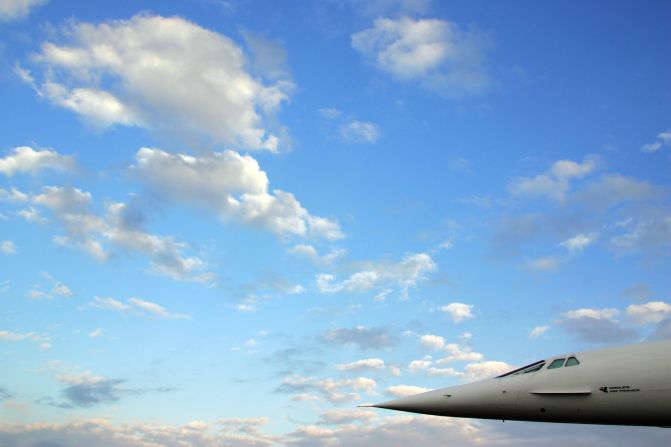
Why the drooping nose? —
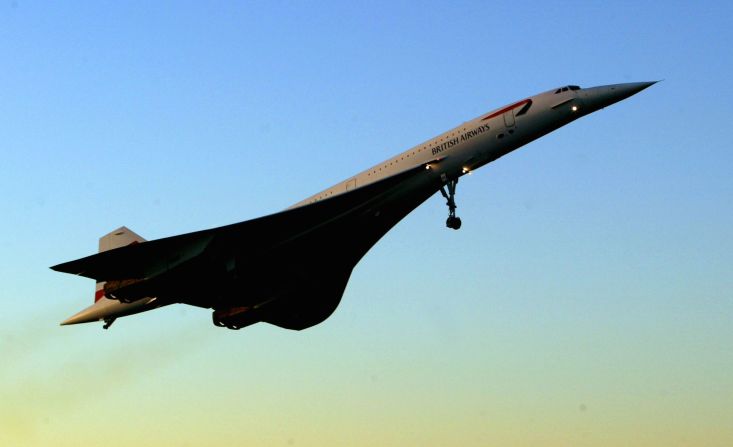
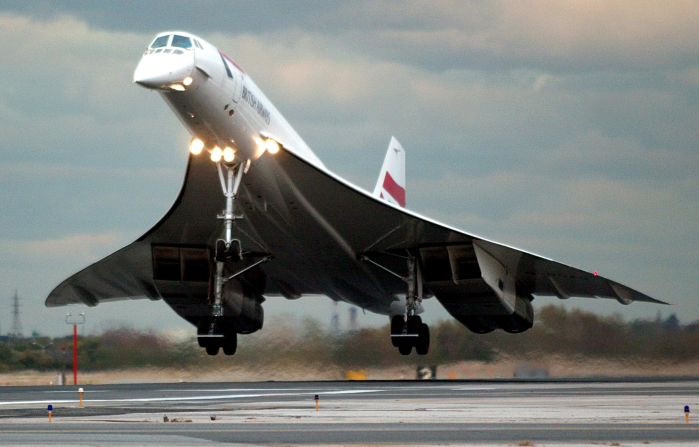
One of the Concorde's most distinctive features? The "droop nose," which sunk down five degrees for take-off and 12.5 degrees for landing. Without that capability, pilots wouldn't have been able to see the runway.
JOEL SAGET/AFP/Getty Images/File
Beginning of the end —
For 24 years Concorde had a perfect safety record, with services from London's Heathrow and Charles de Gaulle in Paris to New York's JFK. But a fatal July 2000 crash was the beginning of the end for the plane. All 109 passengers and crew and four people on the ground were killed when the Air France Concorde caught fire on take-off from Charles-de-Gaulle airport.
JOEL SAGET/AFP/AFP/Getty Images
Last commercial flight —
Services were withdrawn until November 2001, but confidence among passengers was never fully restored. The downturn in the airline industry, which started before the September 11 attacks, made Concorde an unaffordable expense. The last-ever commercial Concorde flight carrying fare-paying passengers arrived at New York's John F. Kennedy International Airport in New York on October 23, 2003, bringing down the curtain on an era of supersonic trans-Atlantic travel for the rich and famous. Its retirement in November 2003 was seen by many as a backward step in air travel.
JEFF CHRISTENSEN/AFP/Getty Images
Museum show piece —
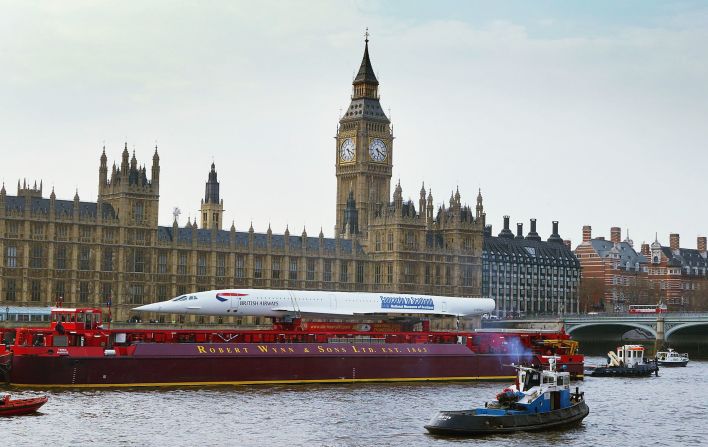
A decommissioned Concorde sails down the River Thames, and past Britain's Houses of Parliament, on April 13, 2004 in London. This 110-ton aircraft was sent to the National Museum of Flight in Scotland.
Scott Barbour/Getty Images Europe/Getty Images
Heavy lifting —
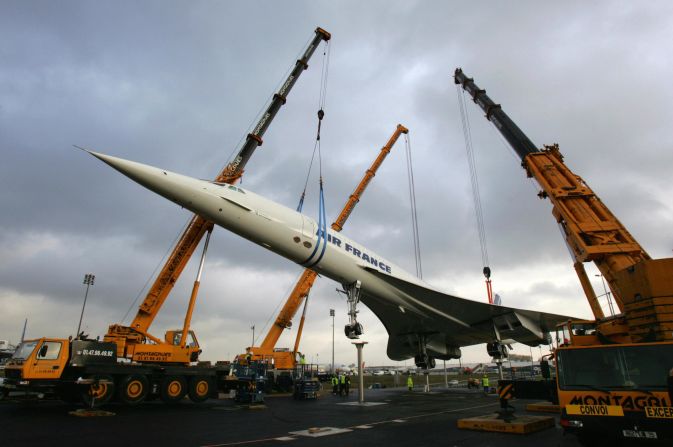
How do you move a decommissioned supersonic jet? Very carefully. This picture taken in 2005 shows the F-PVFF Concorde being lifted as part of a move to its final destination -- Charles de Gaulle Airport. Most of the existing Concorde planes can be found in aviation museums in Europe and the United States.
JOEL SAGET/AFP/AFP/Getty Images
Concorde MSN1 —
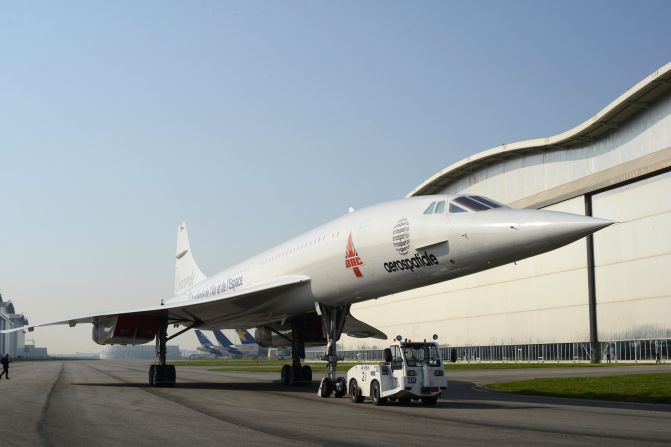
This picture taken in March, 2014 shows the Concorde "MSN1," as it's transferred to the Aeroscopia aviation museum in Blagnac, southwestern France. One of the first Concorde jetliners built in Toulouse, France, it made its last flight in April 1985.
REMY GABALDA/AFP/AFP/Getty Images
Smithsonian Institute —
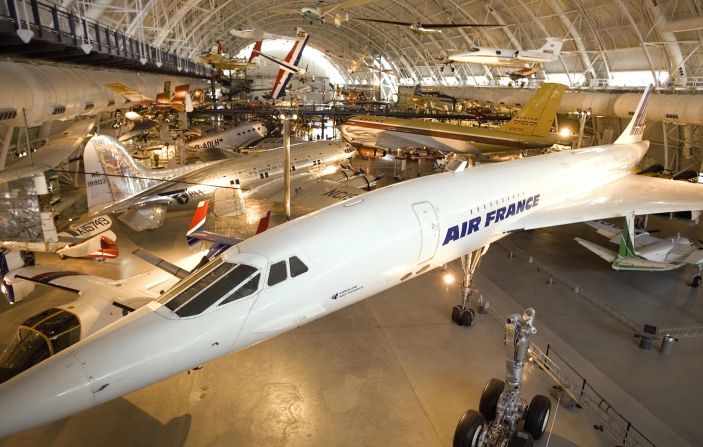
Air France Concorde F-BVFA is displayed at the Smithsonian Institute's Udvar-Hazy Air & Space Museum in Chantilly, Virginia.
PAUL J. RICHARDS/AFP/AFP/Getty Images
Will the Concorde fly again? —
A group of British aviation fans claims to have raised enough money to buy a Concorde and get it back in the sky. According to aviation experts, it's not an impossible dream -- but it won't be easy.