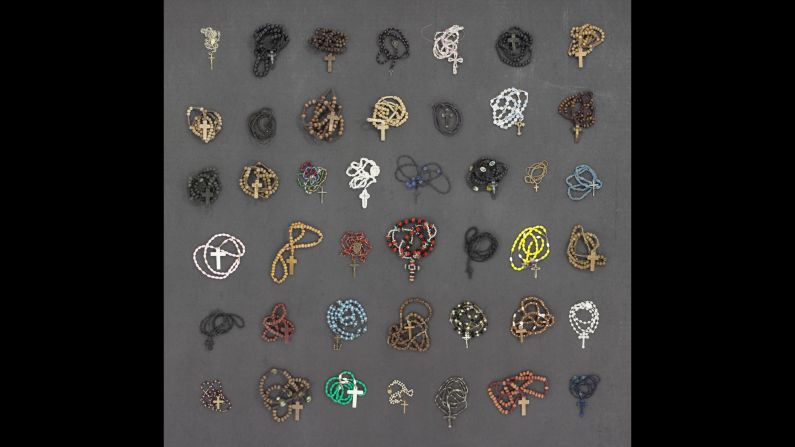
Tom Kiefer's photo project "El Sueno Americano" ("The American Dream") shows objects he found in trash cans while working as a janitor and groundskeeper at a U.S. Customs and Border Patrol facility in Arizona. He said most of the items were taken from people entering the United States illegally. "Items such as rosaries are considered potentially lethal, non-essential property and discarded during intake," he said.
Thomas Kiefer/INSTITUTE
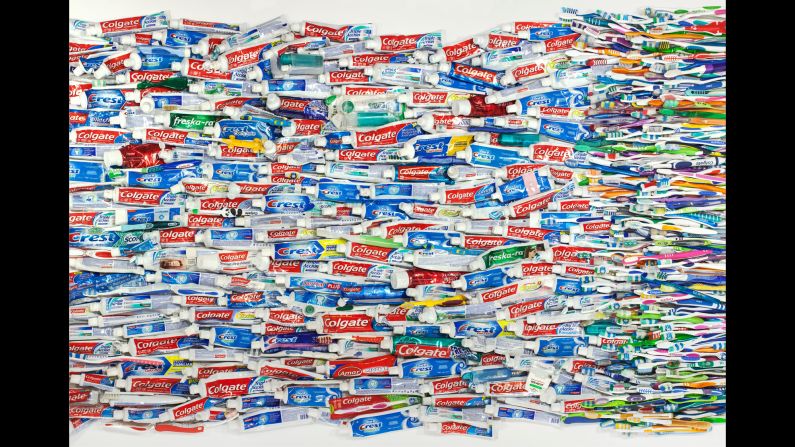
Toothpastes and toothbrushes were commonly disposed items.
Thomas Kiefer/INSTITUTE
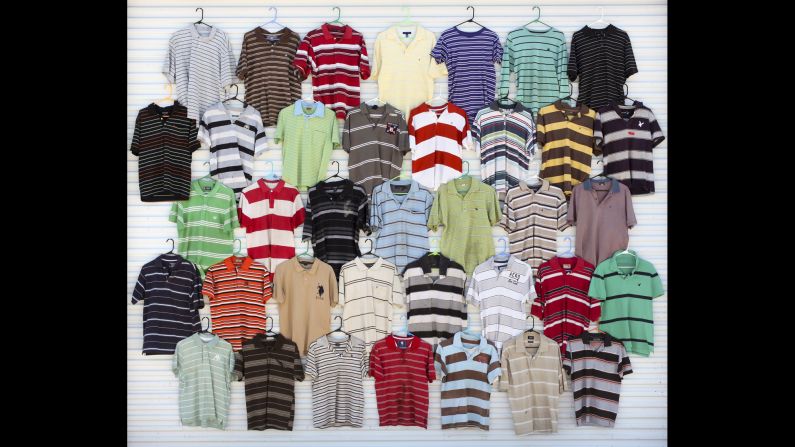
Additional clothing that migrants bring with them is considered non-essential and disposed of during intake. "These are pictures of how people and their personal belongings are treated," Kiefer said. "If someone wants to judge the ethics and morality of all this, it is up to them."
Thomas Kiefer/INSTITUTE
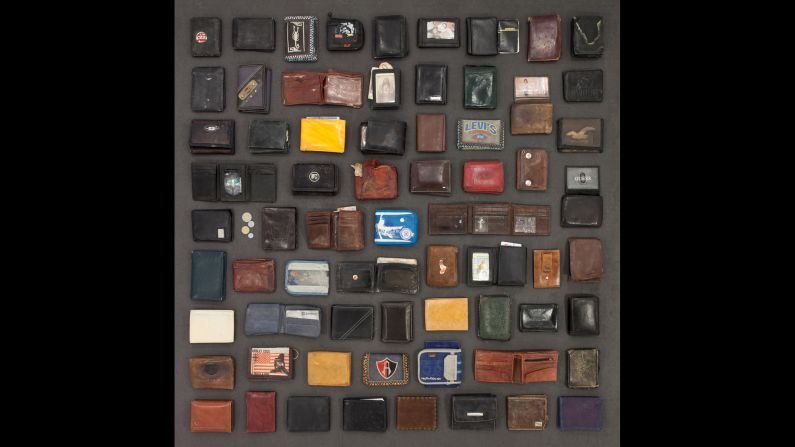
After being apprehended, a detainee's belongings are either placed in a property bag or remain in the backpack they traveled with. Sometimes essential items such as wallets and ID cards are discarded.
Thomas Kiefer/INSTITUTE
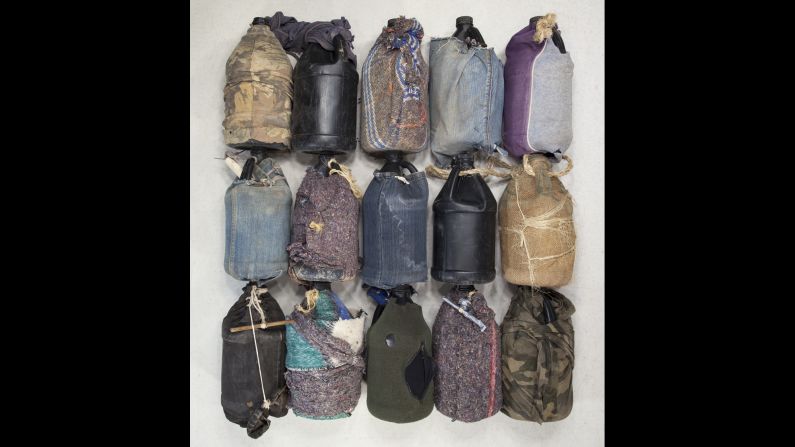
Heavy-duty black plastic bottles are commonly used as canteens and are occasionally covered or insulated with remnants of clothing or blanket.
Thomas Kiefer/INSTITUTE
Kiefer said Snickers is generally the most popular candy bar among people crossing the desert. At the border, all food is regarded as contraband and discarded.
Thomas Kiefer/INSTITUTE
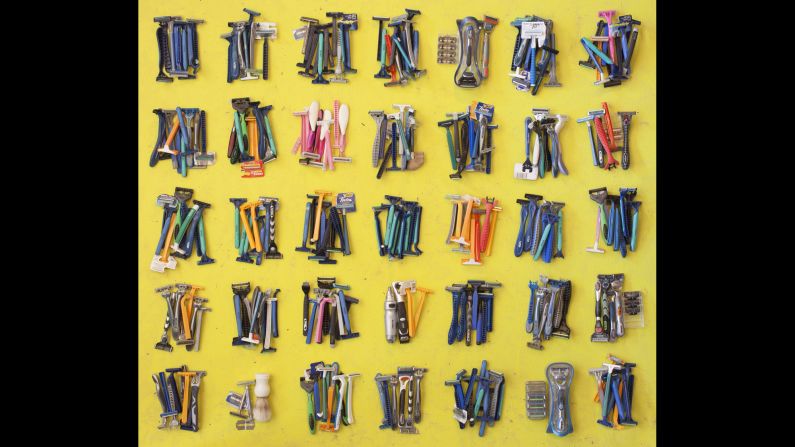
Razors are designated lethal and discarded.
Thomas Kiefer/INSTITUTE
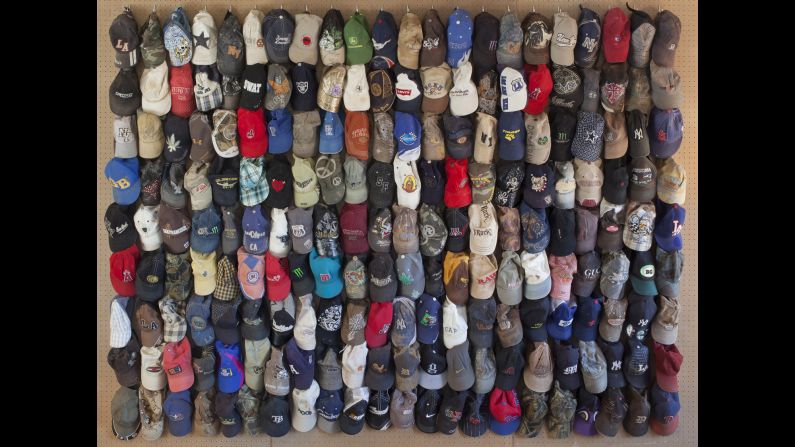
All headgear is considered non-essential personal property and discarded.
Thomas Kiefer/INSTITUTE
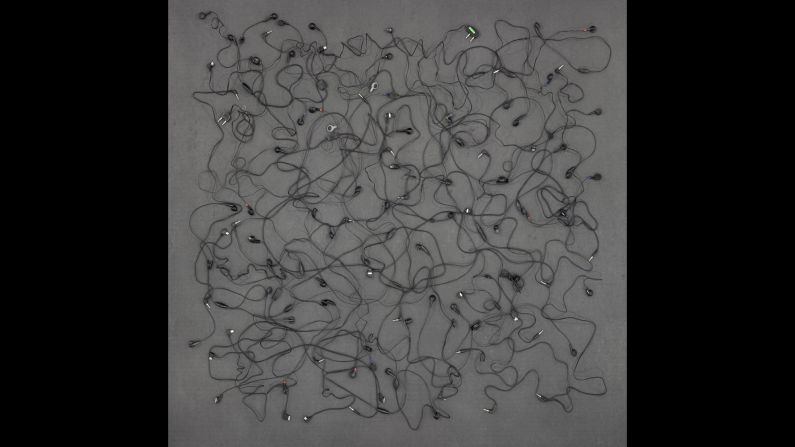
Earphones are considered non-essential personal property and discarded.
Thomas Kiefer/INSTITUTE
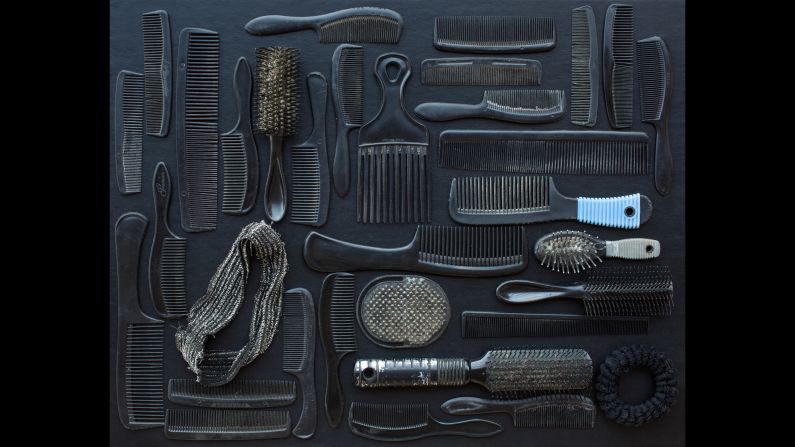
Personal items such as combs, brushes and hair bands are considered potentially lethal and non-essential and discarded during intake.