Climbing Mount Kinabalu, Malaysia’s highest mountain
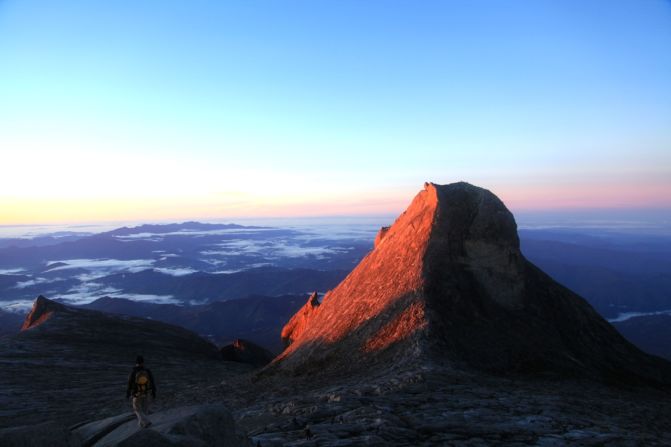
St. Johns Peak, Mount Kinabalu —
At 4,092 meters, the stunning St. Johns Peak is only three meters shorter than Mount Kinabalu's true summit, Low's Peak. It was named after a former British counsel in Brunei who joined the second and third documented climbs of Mount Kinabalu in 1858.
Ian Neubauer/CNN
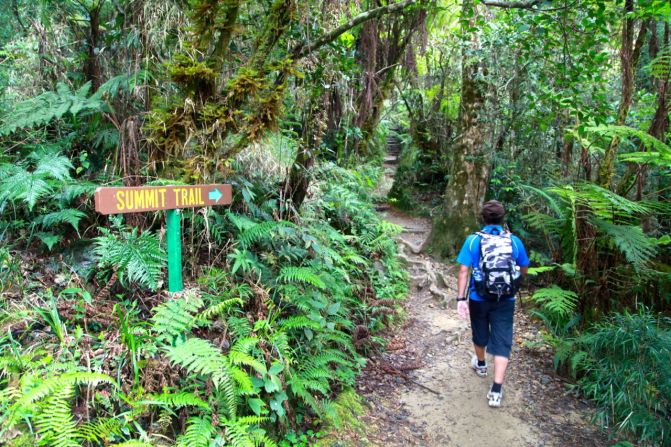
But first you have to start here —
Day one of the hike to the summit of Mount Kinabalu is a slow and steady five-hour ascent through the lower mountain rainforest along six kilometers of reinforced carved steps.
Ian Neubauer/CNN
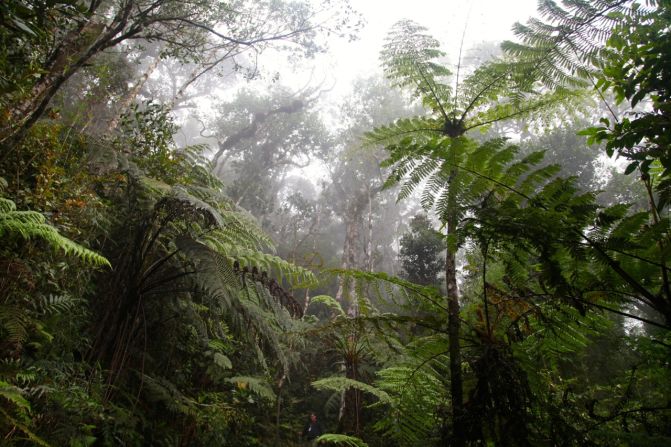
Diverse forests —
The canopies of Mount Kinabalu National Park are among the most biologically diverse places on earth, home to 800 species of orchids and 600 fern species -- around 50 of which are endemic.
Ian Neubauer/CNN
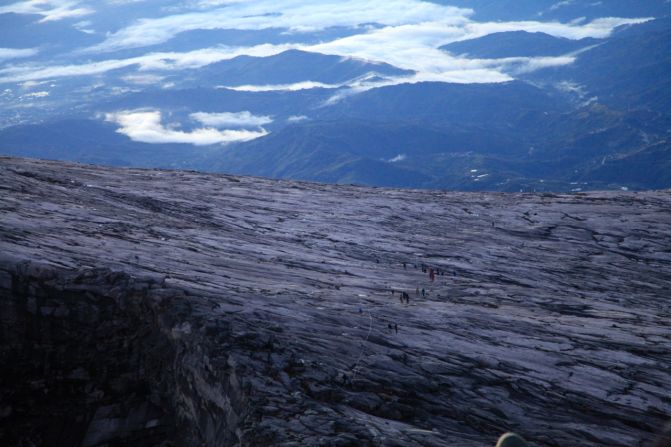
Day two —
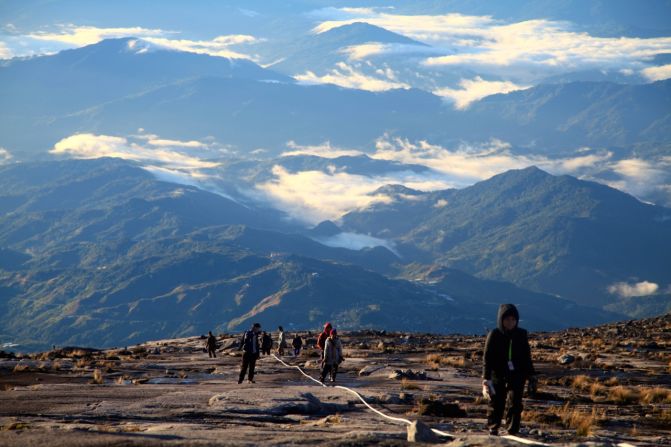
On day two, trekkers rise early for a 3 a.m. start. The final 2.7 kilometers takes two to four hours to complete in the dark. Roped supports are anchored into the cliff's steepest positions.
Ian Neubauer/CNN
Low's Peak —
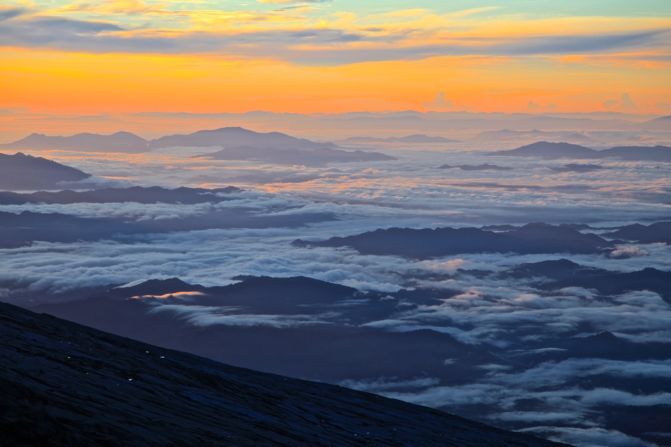
The sun rising over Sabah as seen from the summit at Low's Peak, named after former British colonial administrator Hugh Low, who made the first documented ascent of Mount Kinabalu's summit plateau in 1851.
Ian Neubauer/CNN
Crocker Range —
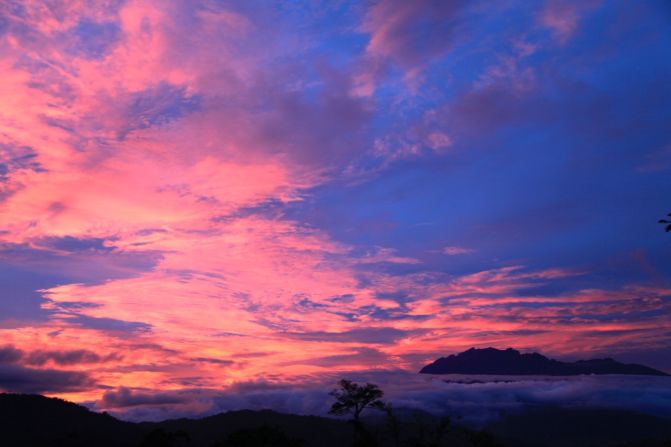
Sunrise colors change throughout the morning. These steaks overlook the Crocker Range, a mountainous spine with an average height of 1,800 meters that divides the west and east coasts of Sabah.
Ian Neubauer/CNN
Mount Kinabalu: Southeast Asia's highest mountain —
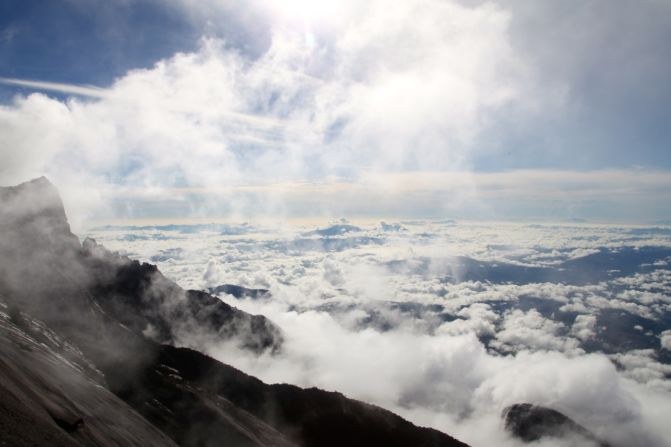
By 9 a.m., clouds begin to ascend over the summit plateau. Rain follows shortly after.
Ian Neubauer/CNN
Too early for some —
The aim of the early morning start is to make it to Low's Peak for sunrise. These hikers didn't succeed.
Ian Neubauer/CNN
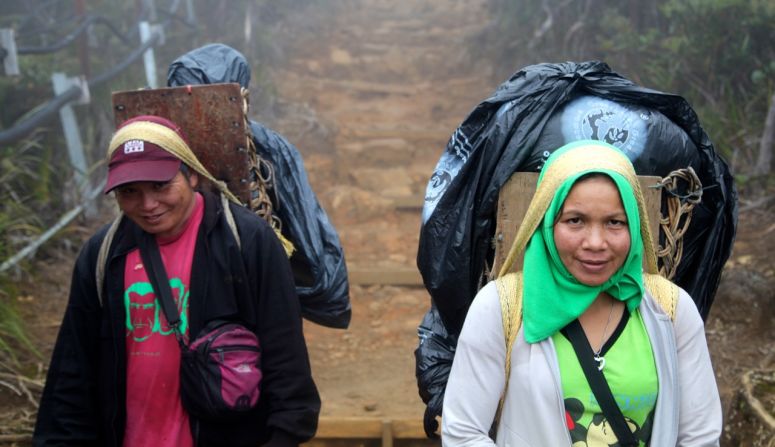
Porters —
Local porters earn only 128 Malaysian ringgit ($40) for two days' work on Mount Kinabalu. Nevertheless, the positions are highly coveted among subsistence farmers living at the foothills of the mountains.
Ian Neubauer/CNN
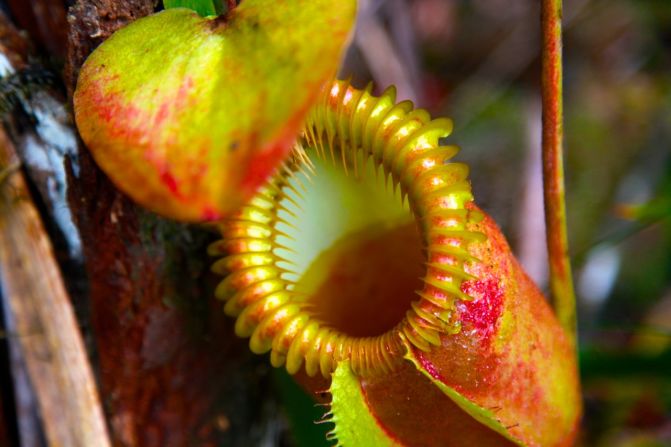
Carnivorous plants —
Nepenthes villosa are the largest and most beautiful of 13 species of carnivorous pitcher plants found within Mount Kinabalu National Park.