Wonder Wall: Art secrets of Berlin’s Cold War divide
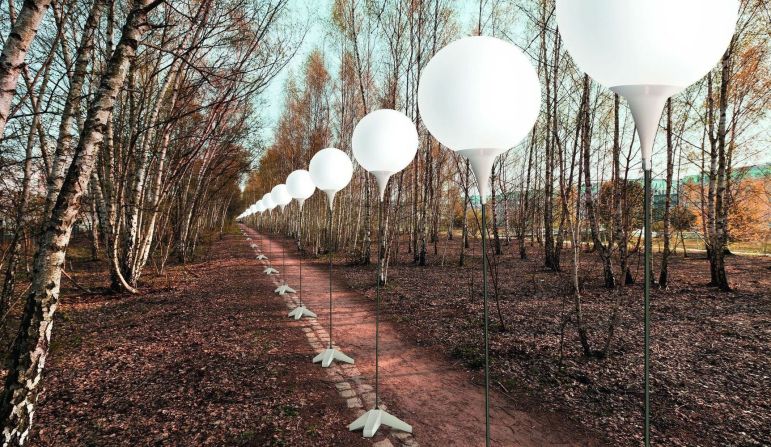
Along the Berlin Wall —
With 8,000 balloons along the former Berlin Wall, "Lichtgrenze" (Border of Lights) marks the 25th anniversary of its collapse. The one-time installation will end in November 2014 with the balloons released into the sky.
Kulturprojekte Berlin/WHITEvoid / Christopher Baude/ Daniel Buche
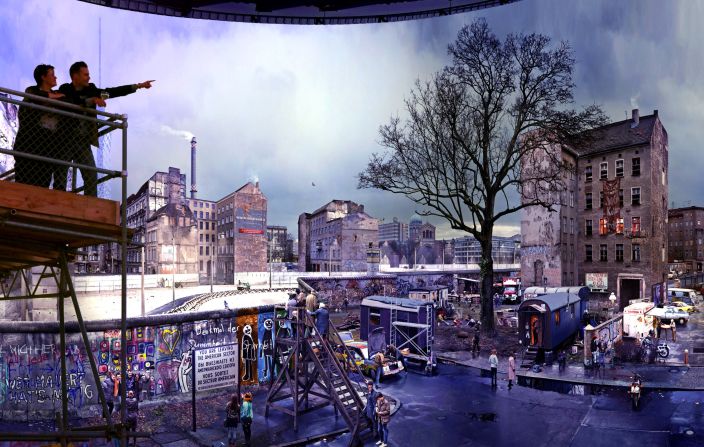
The Panorama —
From the outside, "The Panorama" looks like a large steel-framed cylinder. Inside, there's a compacted view of what daily life was like on both sides of the wall.
asisi/Tom Schulze
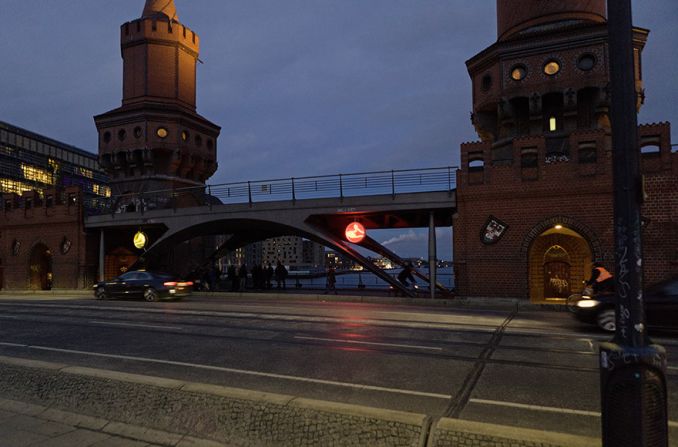
Oberbaumbrucke at night —
"Rock, Paper, Scissors" lights up in neon every six seconds to reflect the significance of the Oberbaumbrucke bridge connecting Kreuzberg and Friedrichshain, former boroughs that were separated by the Berlin Wall.
Thorsten Goldberg
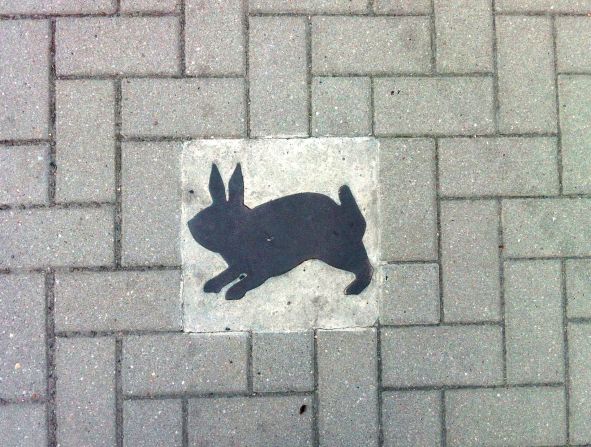
Chausseestrasse —
"Kaninchenfeld" (Rabbit Field) consists of 120 metal silhouettes of the animal inlaid into the ground. The creatures are symbolic because they could dig under the wall during the Cold War and were free to go where they pleased.
Charmaine Li
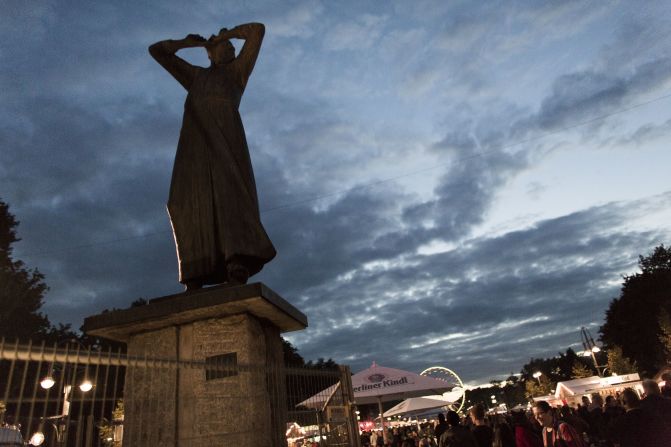
Strasse des 17. Juni —
The base of "Der Rufer" (The Crier) features a line from Italian poet Francesco Petrarch: "I wander through the world and cry, 'Peace, peace, peace.'"
Carsten Koall/Getty Images
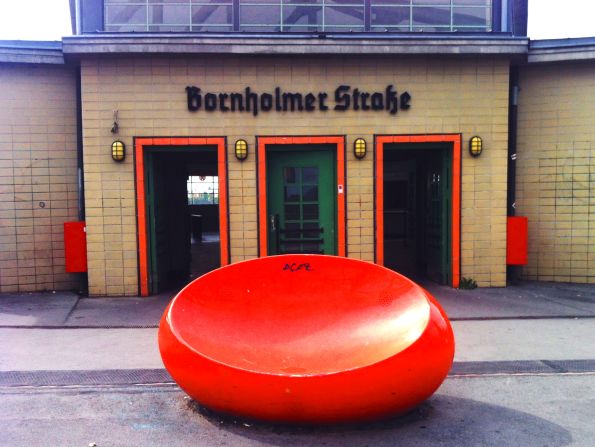
Bornholmer Strasse —
Bornholmer Strasse was the first border crossing to open on November 9, 1989. "Mind the Gap" points out that the former crossing was "an interface between two systems, a chilblain of the Cold War."
Charmaine Li
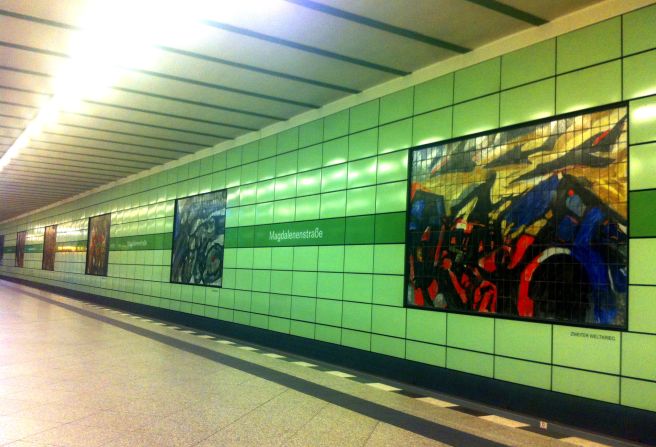
Magdalenenstrasse U-Bahn station —
Commissioned and installed by the East German government in 1986, the works at Magdalenenstrasse U-Bahn station were painted before the fall of the wall and depict German history from the 1800s to the 1980s.
Charmaine Li
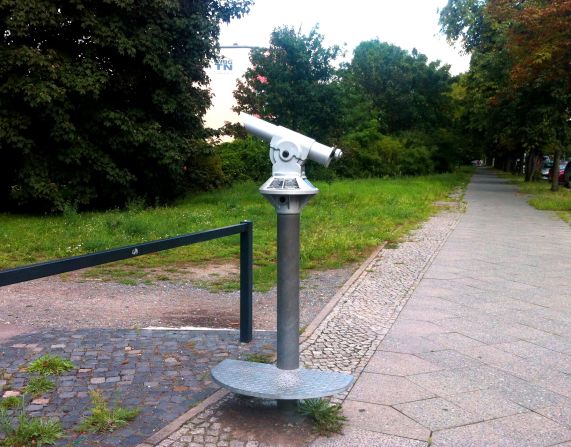
Sonnenallee —
"Ubergang -- Nahe und Distanz" (Crossing -- Proximity and Distance) by Heike Ponwitz stands at the former Sonnenallee border crossing. Inconspicuous gray telescopes symbolize mass surveillance during the era of the Berlin Wall.