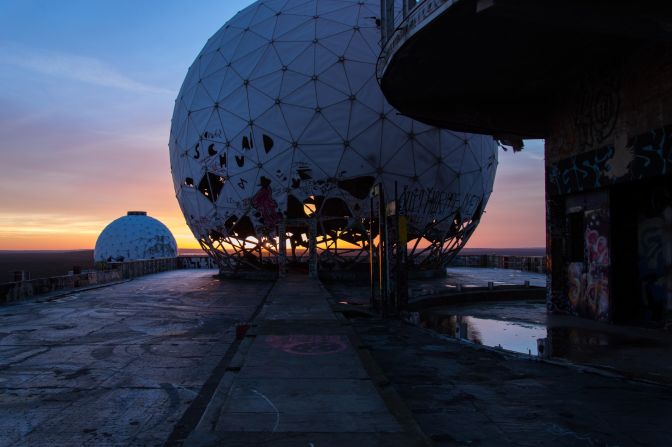
Once a secret military enclave, the Teufelsberg, or Devil's Mountain, a U.S. radar station and listening post, was staffed by 1,000 spies throughout the Cold War. Now it's been overrun by graffiti artists.
www.berliner-teufelsberg.com
The Stasi Museum —
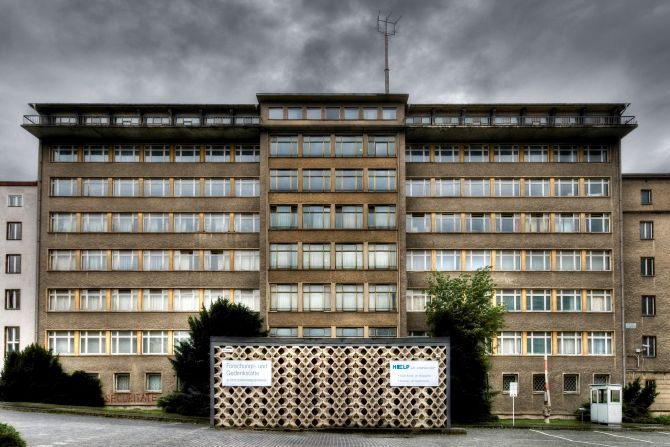
Berlin's Stasi Museum is housed in the former headquarters of East Germany's Ministry of State Security, once known as the "House of One Thousand Eyes."
Courtesy Stasi Museum
'Bureaucracy of evil' —
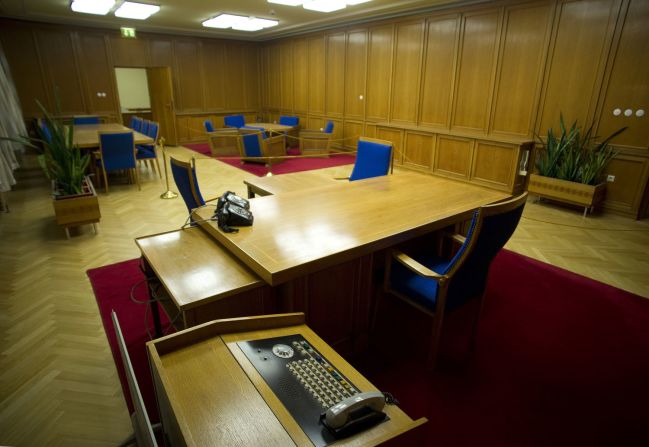
The office of former Stasi chief Erich Mielke is one of the exhibits at the Stasi Museum in Berlin. Mielke was so meticulous, his staff had a design plan for laying out his breakfast.
Odd Andersen/AFP/Getty Images
Button camera —
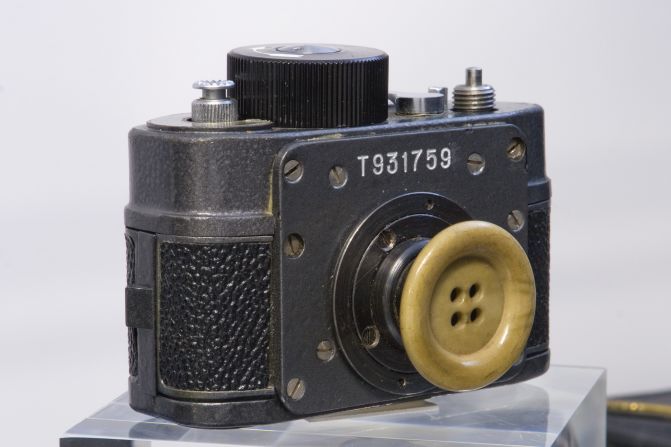
A miniature camera disguised as a button, on display in Berlin's Stasi Museum, shows the lengths to which East Germany's spies went to keep tabs on their rivals, and fellow citizens.
Courtesy Stasi Museum
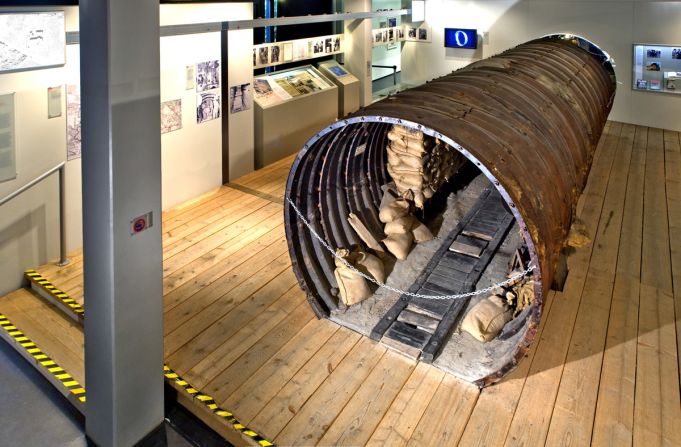
Berlin spy tunnel —
Allied forces dug a spy tunnel under the Berlin Wall to tap East German telephone lines in 1953. A stretch of the tunnel is on display in the city's Allied Museum.
AlliiertenMuseum/Chodan
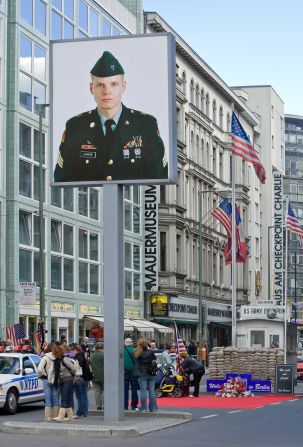
Checkpoint Charlie —
Checkpoint Charlie may be a tourist magnet today, but the most famous crossing point between East and West Berlin still evokes the noir intrigue of John Le Carre's "The Spy who Came in from the Cold."
Courtesy Visit Berlin
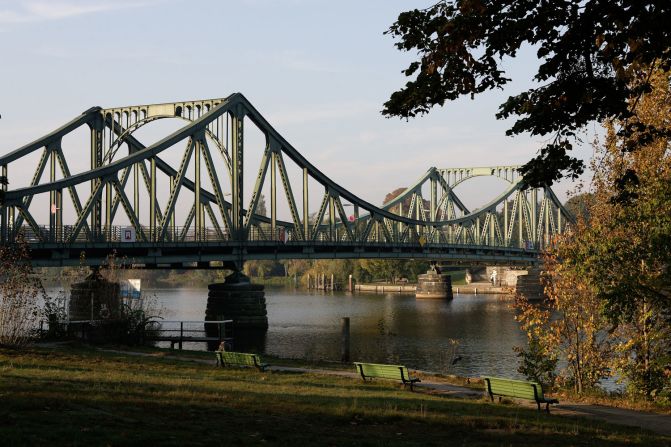
'Bridge of spies' —
The Glienicke Brucke, or Bridge of Spies, between Wannsee in West Berlin and Potsdam in the East, was used for the exchange of captured agents.
Courtesy Visit Berlin
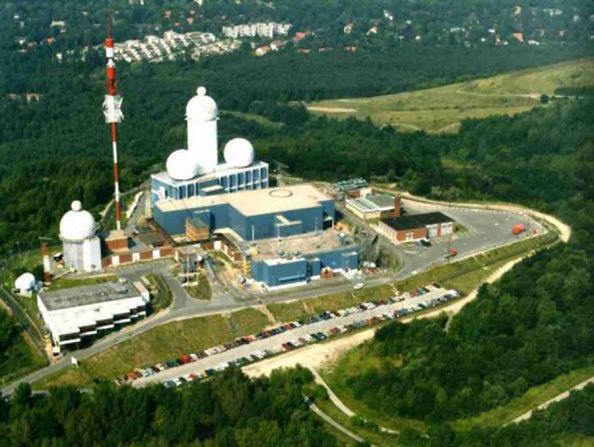
'Devil's Mountain' listening post —
The full history of the Teufelsberg radar station and listening post won't be revealed until documents are declassified in 2022.
AlliiertenMuseum/Chodan
'Palace of Tears' —
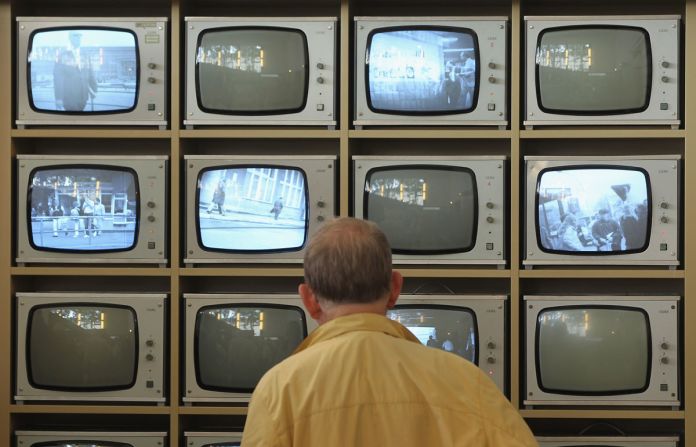
The Tranenpalast, or Palace of Tears, was once the official crossing point for West Germans visiting relatives in the East. It's now a museum with displays that include banks of televisions used for surveillance.