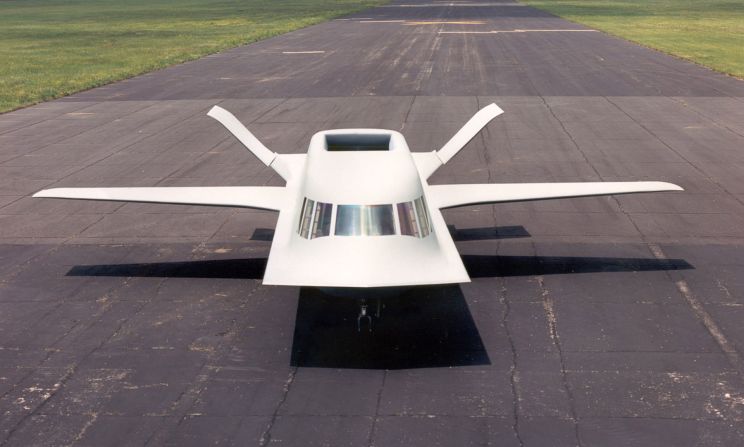
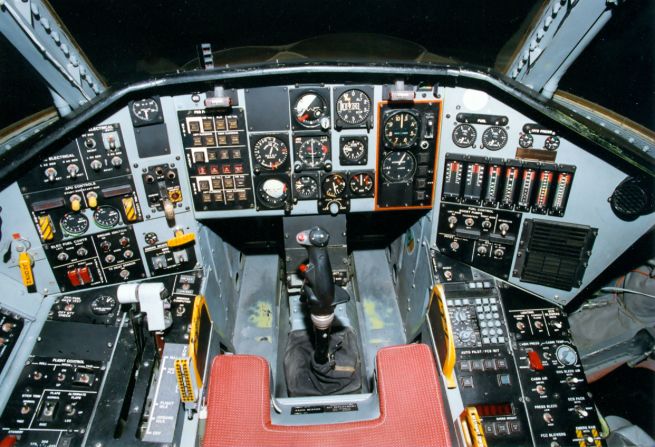
For a single-pilot airplane, Tacit Blue had an unusually wide cockpit, said retired Air Force test pilot Russ Easter, who flew the plane in the early 1980s. "You could extend your arms and not touch either side of the cockpit. It was an interesting situation to sit in there and fly the airplane from that very large office."
US Air Force
Bizarre spy jet: 'The Whale' —
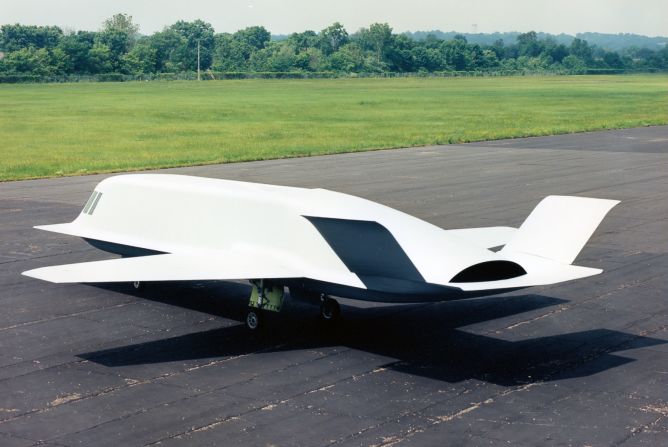
Perhaps you've heard of something called stealth aircraft? Tacit Blue helped invent it. This plane demonstrated that aircraft with curved surfaces could evade radar. Lessons learned from developing Tacit Blue led to the creation of the B-2 Spirit stealth bomber. "The airplane flew pretty solid," said retired Air Force Tacit Blue test pilot Ken Dyson. "From Day One, we did not have to stand down and redesign to make the airplane fly better during the airworthiness test."
US Air Force
Tacit Blue's first pilot —
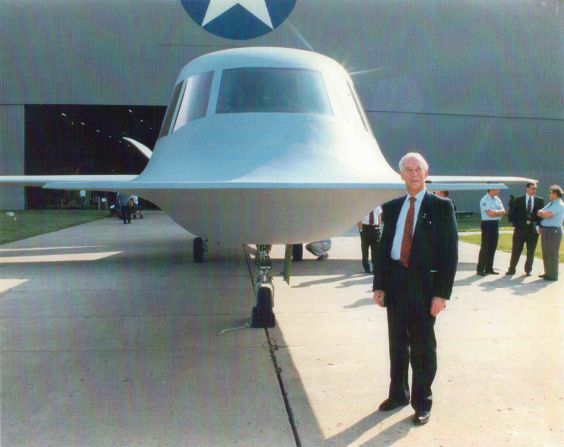
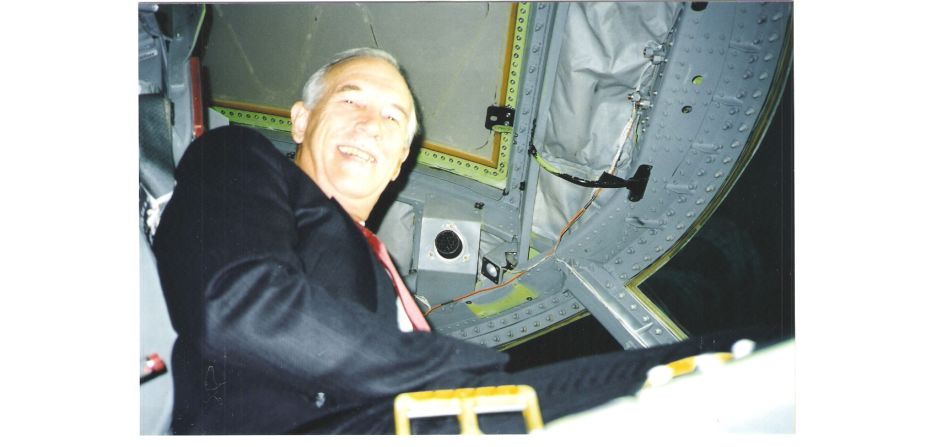
Civilian test pilot Richard G. Thomas stands in front of Tacit Blue during its unveiling at the National Museum of the U.S. Air Force in 1996. Thomas piloted the aircraft on its maiden flight in February 1982.
COURTESY CYNDA THOMAS
Back in the cockpit —
When Thomas climbed back into the cockpit, "he said something like, 'I never thought I'd see the old girl again,'" recalled his widow, Cynda Thomas, who recounted her husband's exploits in her book, "Hell of a Ride." Richard Thomas died in 2006 after battling Parkinson's disease.
COURTESY CYNDA THOMAS
The plane that wouldn't quit: 'Spare 617' —
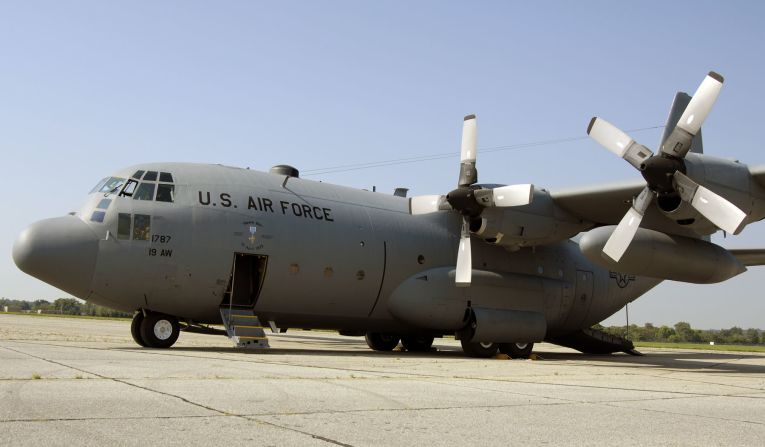
What happened aboard this C-130E Hercules, code named "Spare 617," was "one of the greatest feats of airmanship of the Southeast Asia War," according to the Air Force museum.
US Air Force
The plane that wouldn't quit: Spare 617 —
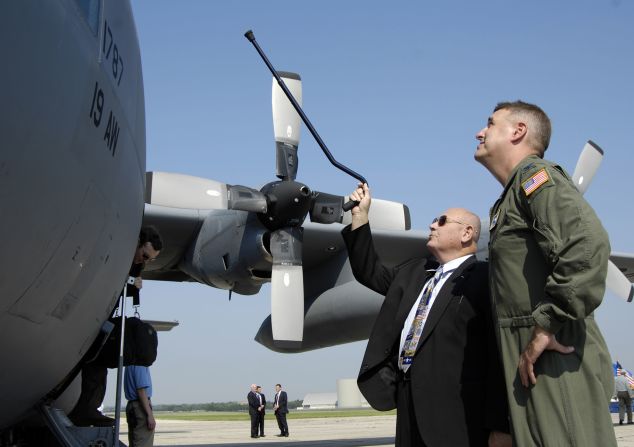
In 2011, retired Col. William Caldwell, left, inspected the aircraft he piloted in 1972, when it was attacked and severely damaged during an ammunition drop over South Vietnam. Caldwell and three surviving crew members overcame huge obstacles to fly the plane to safety.
US Air Force
Angel of freedom: The Hanoi Taxi —
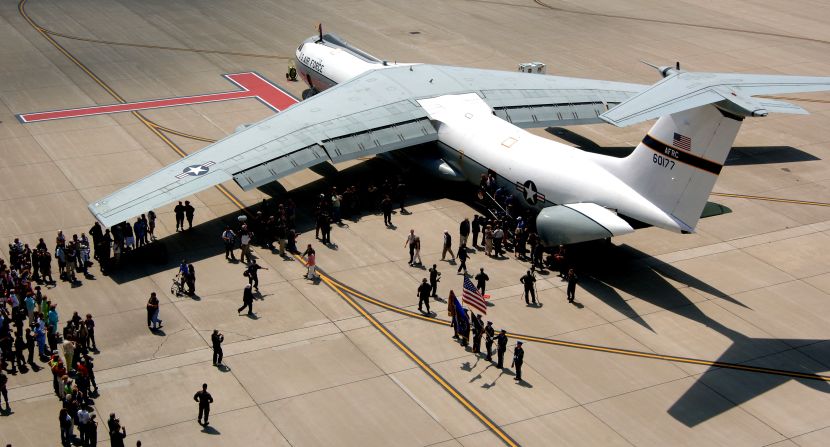
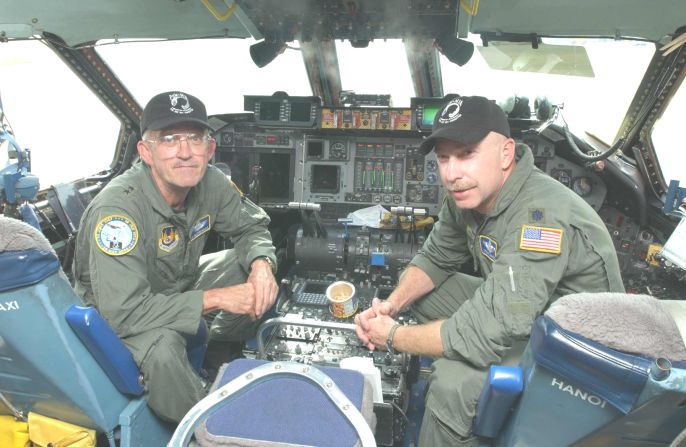
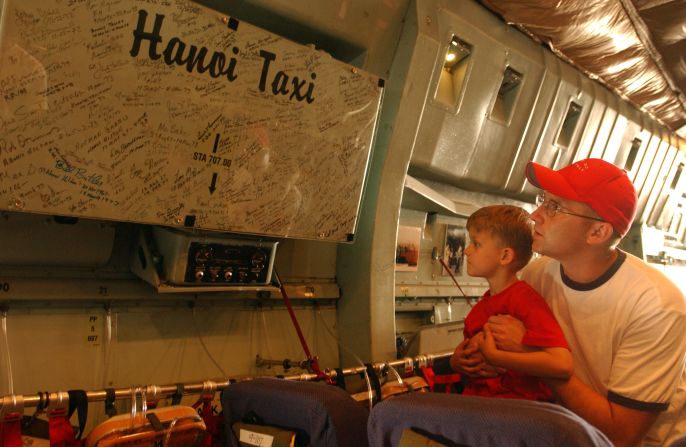
"This plane looked like an absolute angel coming to get us," remembered one ex-Vietnam War POW who rode this C-141 Starlifter -- the Hanoi Taxi -- to freedom.
US Air Force
Angel of freedom: The Hanoi Taxi —
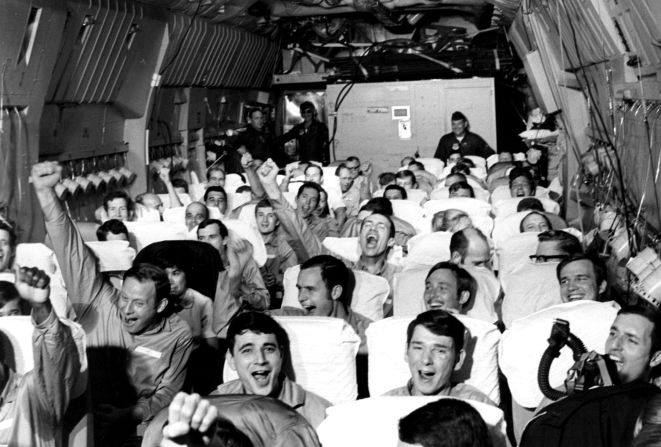
The ex-POWs refused to give their captors the satisfaction of seeing happiness during their release. When the Hanoi Taxi entered international airspace, the cabin burst into joyful pandemonium.
US Air Force
Angel of freedom: The Hanoi Taxi —
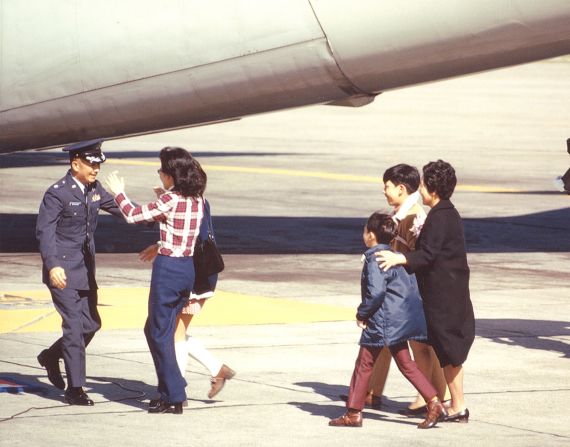
With the Starlifter in the background, TV viewers around the world watched ex-captives reunite for the first time in years with loved ones at Clark Air Base in the Philippines.