25 of mankind’s greatest engineering feats | CNN

CNN values your feedback

1. How relevant is this ad to you?
2. Did you encounter any technical issues?
Thank You!
Your effort and contribution in providing this feedback is much appreciated.
Close
Ad Feedback
Destinations
Food & Drink
News
Stay
Video
Destinations Food & Drink News Stay Video
Watch Listen Live TV
My Account
  • Settings
  • Newsletters
  • Topics you follow
  • Sign out
Your CNN account Sign in to your CNN account

My Account
  • Settings
  • Newsletters
  • Topics you follow
  • Sign out
Your CNN account Sign in to your CNN account

Live TV Listen Watch
Edition
US
International
Arabic
Español
Edition
  • US
  • International
  • Arabic
  • Español

Destinations
Food & Drink
News
Stay
Video

Follow CNN Travel
Download the CNN App

  • World
    • Africa
    • Americas
    • Asia
    • Australia
    • China
    • Europe
    • India
    • Middle East
    • United Kingdom
  • US Politics
    • Elections 2026
    • Trump
    • Facts First
    • CNN Polls
    • Redistricting Tracker
    • Epstein Files
  • Business
    • Tech
    • Media
    • Calculators
    • Videos
  • Markets
    • Pre-markets
    • After-Hours
    • Fear & Greed
    • Investing
  • Health
    • Life, But Better
    • Fitness
    • Food
    • Sleep
    • Mindfulness
    • Relationships
  • Entertainment
    • Movies
    • Television
    • Celebrity
  • Tech
    • Innovate
  • Style
    • Arts
    • Design
    • Fashion
    • Architecture
    • Luxury
    • Beauty
    • Video
  • Travel
    • Destinations
    • Food & Drink
    • Stay
    • News
    • Videos
  • Sports
    • Football
    • Tennis
    • Golf
    • Motorsport
    • US Sports
    • Olympics
  • Science
    • Space
    • Life
    • Unearthed
  • Climate
    • Solutions
    • Weather
  • Weather
    • Video
    • Climate
  • Ukraine-Russia War
  • Israel-Hamas War
  • Features
    • As Equals
    • Call to Earth
    • Freedom Project
    • Impact Your World
    • Inside Africa
    • CNN Heroes
  • Watch
    • Live TV
    • Featured
    • CNN Fast
    • Shows A-Z
    • CNN 10
    • CNN TV Schedule
  • Listen
    • All There Is with Anderson Cooper
    • Chasing Life with Dr. Sanjay Gupta
    • The Assignment with Audie Cornish
    • Terms of Service with Clare Duffy
    • CNN 5 Things
    • All CNN Podcasts
  • Games
    • Daily Crossword
    • Jumble Crossword
    • Photo Shuffle
    • Sudoblock
    • Sudoku
    • 5 Things Quiz
  • About CNN
    • Photos
    • Investigations
    • CNN Profiles
    • CNN Leadership
    • CNN Newsletters
    • Work for CNN

Download the CNN App
Travel

25 of mankind’s greatest engineering feats

Updated 1:54 PM EDT, Tue July 9, 2013
Link Copied!
The Palm islands comprise approximately 100 million cubic meters of rock and sand. <br />In total, 210 million cubic meters of rock, sand and limestone were reclaimed (through dredging) to create the islands, with 10 million cubic meters of rock used in the outer ring alone. The rocks used for both islands were transported from 16 quarries throughout the UAE and the materials used are enough to build a wall that could circle the world three times. <strong>Completion date:</strong> September 24, 2008.
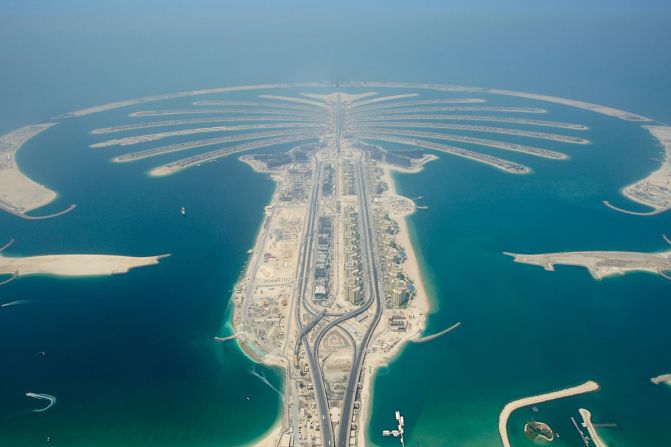
The Palm, Dubai —
The Palm islands comprise approximately 100 million cubic meters of rock and sand.
In total, 210 million cubic meters of rock, sand and limestone were reclaimed (through dredging) to create the islands, with 10 million cubic meters of rock used in the outer ring alone. The rocks used for both islands were transported from 16 quarries throughout the UAE and the materials used are enough to build a wall that could circle the world three times. Completion date: September 24, 2008.
courtesy The Palm Jumeirah
The Aqueduct, one of the Iberian Peninsula's best preserved ancient monuments, features 44 double arches (or 88 when counted individually) and 79 single arches -- a total of 167. <br />It was built during the reign of Roman Emperor Trajan and is still in use today, carrying water from the Frío river to the town of Segovia. The bridge, which consists of 24,000 granite blocks, was constructed without the use of mortar and each of its 167 arches is more than nine meters high. <strong>Completion date: </strong>AD 50.<br />
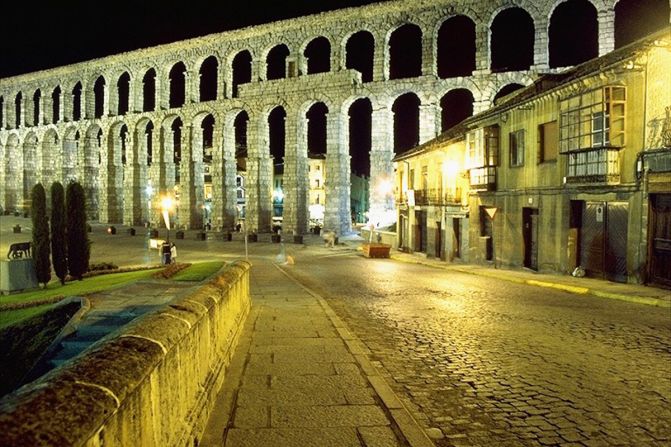
Aqueduct of Segovia, Spain —
The Aqueduct, one of the Iberian Peninsula's best preserved ancient monuments, features 44 double arches (or 88 when counted individually) and 79 single arches -- a total of 167.
It was built during the reign of Roman Emperor Trajan and is still in use today, carrying water from the Frío river to the town of Segovia. The bridge, which consists of 24,000 granite blocks, was constructed without the use of mortar and each of its 167 arches is more than nine meters high. Completion date: AD 50.
courtesy Spanish Tourist Board
The Great Wall of China is 8,850 kilometers long (5,500 miles) and was constructed over a period of 2,000 years. Construction began in 475 BC, to protect China from the invading Huns. During the Ming dynasty, between 1368 and 1644 A.D, it was given a makeover, with the addition of watchtowers, battlements and cannons -- some of which stand 980 meters above sea level. The mortar used to bind the stones of the wall is made from rice flour. <strong>Completion date:</strong> 204 BC.
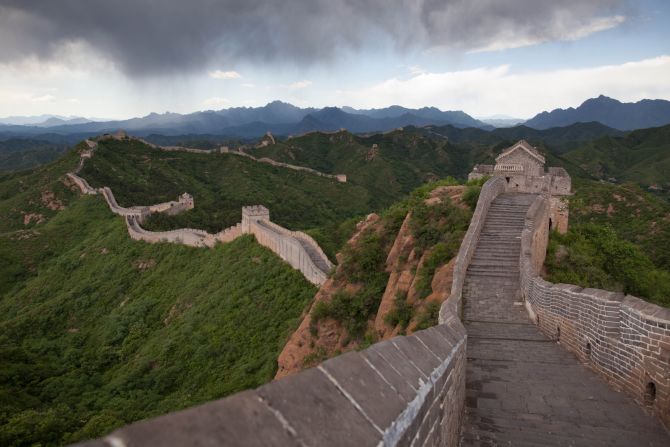
Great Wall of China, China —
The Great Wall of China is 8,850 kilometers long (5,500 miles) and was constructed over a period of 2,000 years. Construction began in 475 BC, to protect China from the invading Huns. During the Ming dynasty, between 1368 and 1644 A.D, it was given a makeover, with the addition of watchtowers, battlements and cannons -- some of which stand 980 meters above sea level. The mortar used to bind the stones of the wall is made from rice flour. Completion date: 204 BC.
Ed Jones/AFP/GettyImages
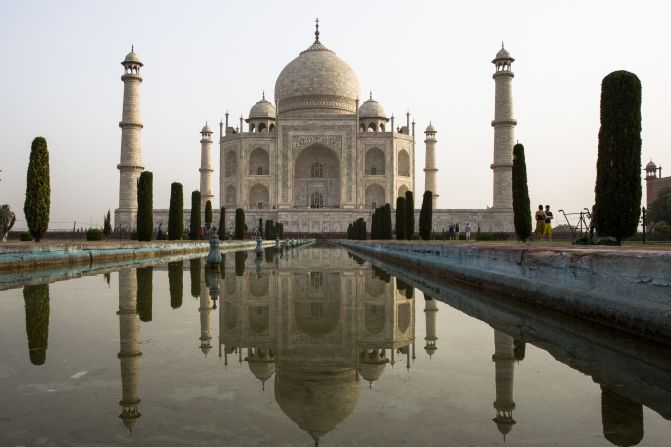
As many as 28 different varieties of semi-precious and precious stones were used to adorn the exterior of the Taj Mahal.<br />Construction of the Taj Mahal took around 20 years, beginning in around 1632 and finishing around 1653. Exact dates are unknown. The building, which was made from white marble from the quarries of Rajasthan, appears pink in the morning, white in the day and golden in the moonlight. The building is symmetrical in every way, and was built as a memorial to the wife of Mughal emperor Shah Jahan. <strong>Completion date:</strong> 1653.
Taj Mahal, Agra, India —
As many as 28 different varieties of semi-precious and precious stones were used to adorn the exterior of the Taj Mahal.
Construction of the Taj Mahal took around 20 years, beginning in around 1632 and finishing around 1653. Exact dates are unknown. The building, which was made from white marble from the quarries of Rajasthan, appears pink in the morning, white in the day and golden in the moonlight. The building is symmetrical in every way, and was built as a memorial to the wife of Mughal emperor Shah Jahan. Completion date: 1653.
Daniel Berehulak/Getty Images
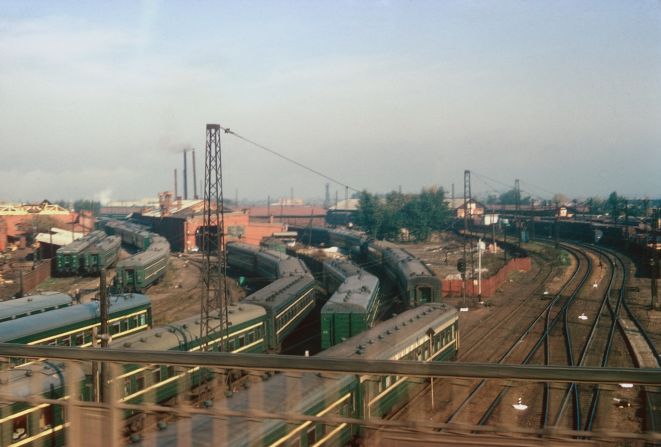
The Trans-Siberian Railroad connects Moscow and Eastern Russia with Japan, China and Mongolia.<br />Northern Siberia isn't the easiest landscape to cross, which is what makes the 8,851-kilometer (5,500 mile) Trans-Siberian railway so impressive. Engineers had to design a railway that was capable of operating in temperatures of minus 20 degrees Celsius. The railway travels through eight time zones, 87 towns and cities and crosses 16 major rivers, including the Volga, Ob, Yenisey, Oka and Amur. Some 90,000 people helped construct the railway, which took 10 years to build -- pretty impressive considering the tools at workers' disposal were shovels, picks and wheelbarrows. <strong>Completion date: </strong>1904.
Trans-Siberian Railroad, Russia —
The Trans-Siberian Railroad connects Moscow and Eastern Russia with Japan, China and Mongolia.
Northern Siberia isn't the easiest landscape to cross, which is what makes the 8,851-kilometer (5,500 mile) Trans-Siberian railway so impressive. Engineers had to design a railway that was capable of operating in temperatures of minus 20 degrees Celsius. The railway travels through eight time zones, 87 towns and cities and crosses 16 major rivers, including the Volga, Ob, Yenisey, Oka and Amur. Some 90,000 people helped construct the railway, which took 10 years to build -- pretty impressive considering the tools at workers' disposal were shovels, picks and wheelbarrows. Completion date: 1904.
Archive Photos/Getty Images
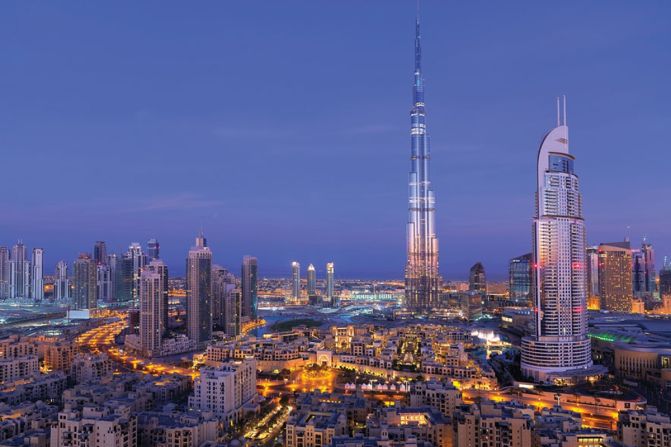
The Burj Khalifa has a height of 828 meters and is both the tallest building in the world and the tallest free-standing structure in the world. Engineers faced multiple challenges, including the strong winds that batter the tower. Because of this, over 40 wind tunnel tests were conducted, not just to determine how the wind would affect the building but also to test the cranes used to construct it. <strong>Completion date:</strong> January 4, 2010.
Burj Khalifa, Dubai, UAE —
The Burj Khalifa has a height of 828 meters and is both the tallest building in the world and the tallest free-standing structure in the world. Engineers faced multiple challenges, including the strong winds that batter the tower. Because of this, over 40 wind tunnel tests were conducted, not just to determine how the wind would affect the building but also to test the cranes used to construct it. Completion date: January 4, 2010.
courtesy Buj Khalifa
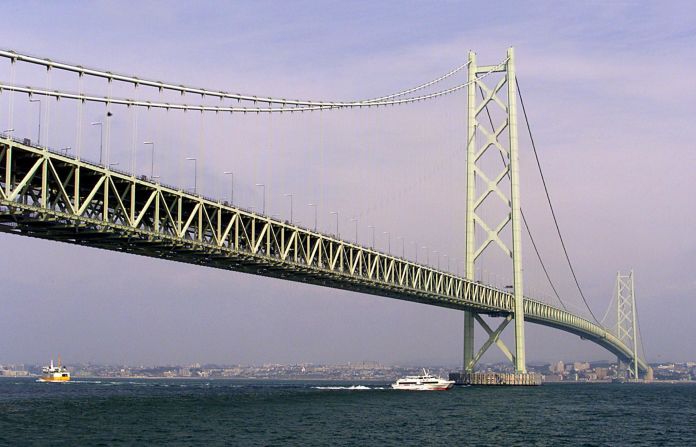
It took 2 million workers 10 years to construct the Akashi Kaikyo Bridge. <br />It connects the city of Kobe, on Japan's mainland, with Iwaya on Awaji Island. Before it opened, the only way to get between the two cities was by ferry. However, the waterway was prone to severe storms and when two ferries capsized in 1955, killing 168 people, public outrage convinced the government of the need for a bridge. It's the longest suspension bridge in the world, with a length of 1,991 meters. <strong>Completion date: </strong>April 5, 1998.
Akashi Kaikyō Bridge, Akashi Strait, Japan —
It took 2 million workers 10 years to construct the Akashi Kaikyo Bridge.
It connects the city of Kobe, on Japan's mainland, with Iwaya on Awaji Island. Before it opened, the only way to get between the two cities was by ferry. However, the waterway was prone to severe storms and when two ferries capsized in 1955, killing 168 people, public outrage convinced the government of the need for a bridge. It's the longest suspension bridge in the world, with a length of 1,991 meters. Completion date: April 5, 1998.
TORU YAMANAKA/AFP/Getty Image
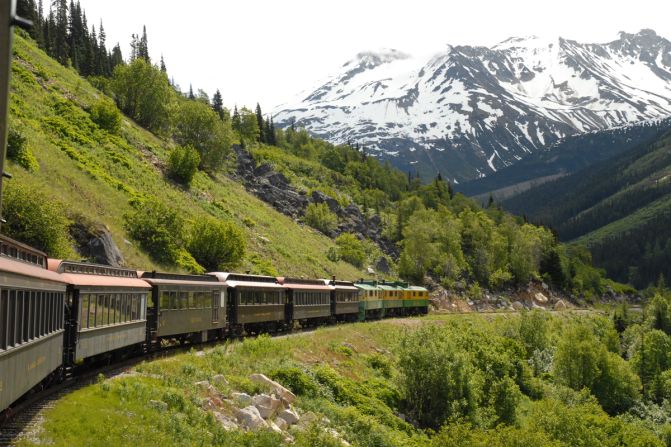
Built during the Klondike Gold Rush and financed largely by British investors, the "railroad built on gold" was constructed in just 26 months, using 450 tons of explosives to blast through Canada's coastal mountains. Passengers should hold on tight -- the railroad climbs almost 278 meters in just 32 kilometers and has numerous other steep gradients of up to 4%.<br />The railway still uses vintage cars, the oldest dating back to 1881. <strong>Completion date: </strong>July 29, 1900.
White Pass and Yukon Route Railroad, Canada —
Built during the Klondike Gold Rush and financed largely by British investors, the "railroad built on gold" was constructed in just 26 months, using 450 tons of explosives to blast through Canada's coastal mountains. Passengers should hold on tight -- the railroad climbs almost 278 meters in just 32 kilometers and has numerous other steep gradients of up to 4%.
The railway still uses vintage cars, the oldest dating back to 1881. Completion date: July 29, 1900.
courtesy Yukon Government
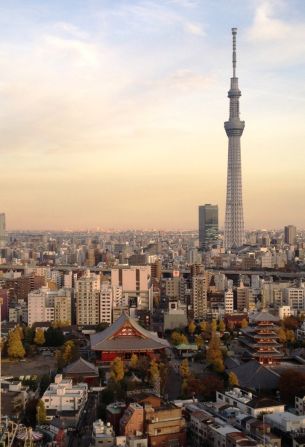
The Sky Tree's reinforced concrete center column is separate from the surrounding steel framing and incorporates an earthquake-resistant design similar to that used in pagoda temples.<br />Engineers really did reach for the sky when they built the 634-meter Tokyo Sky Tree in earthquake-prone Japan, although given that the company responsible for the design is the same company behind plans for a space elevator, we think the structure will be around for a good few years. It was built on notoriously unstable reclaimed ground, but engineers used a traditional Japanese building technique known as shinbashira, which relies on one central column to counterbalance seismic waves, greatly reducing the sway. <strong>Completion date:</strong> May 22, 2012.
Tokyo Sky Tree, Tokyo —
The Sky Tree's reinforced concrete center column is separate from the surrounding steel framing and incorporates an earthquake-resistant design similar to that used in pagoda temples.
Engineers really did reach for the sky when they built the 634-meter Tokyo Sky Tree in earthquake-prone Japan, although given that the company responsible for the design is the same company behind plans for a space elevator, we think the structure will be around for a good few years. It was built on notoriously unstable reclaimed ground, but engineers used a traditional Japanese building technique known as shinbashira, which relies on one central column to counterbalance seismic waves, greatly reducing the sway. Completion date: May 22, 2012.
courtesy JNTO
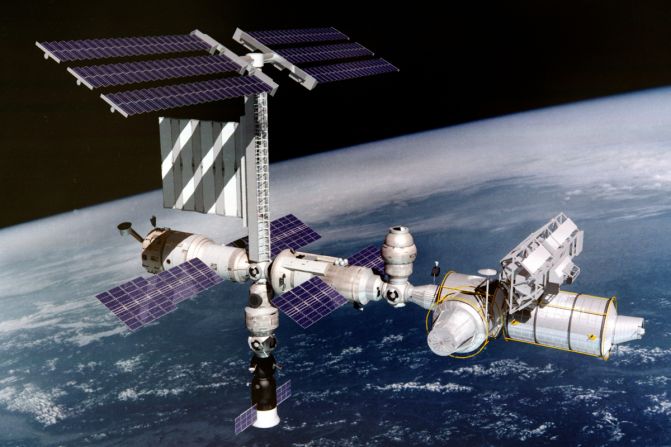
The International Space Station cost $100 billion to build and involved 100,000 people in 15 nations. It also ranks as one of the more unusual construction sites, located 354 kilometers (220 miles) above Earth. The hazards faced by those carrying out maintenance go far beyond a falling hammer or nail gun injury -- one tiny rip in a protective spacesuit means instant death. <strong>Completion date: </strong>Ongoing.
International Space Station —
The International Space Station cost $100 billion to build and involved 100,000 people in 15 nations. It also ranks as one of the more unusual construction sites, located 354 kilometers (220 miles) above Earth. The hazards faced by those carrying out maintenance go far beyond a falling hammer or nail gun injury -- one tiny rip in a protective spacesuit means instant death. Completion date: Ongoing.
courtesy NASA
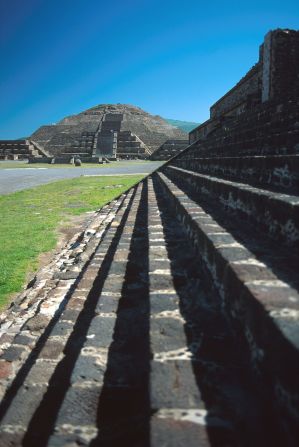
Teotihuacan is an Aztec name meaning "the place where men become Gods."<br />It was the largest city in the pre-Columbian Americas. The most famous structure is the Pyramid of the Sun, which was built in two phases. The second phase took its height to 224 meters, making it the third-tallest pyramid in the world. The entire city originally covered around 20 square kilometers (eight square miles) and was home to 2,200 structures, built with stone and lime plaster. <strong>Completion date:</strong> 100 BC.
Teotihuacan, Mexico —
Teotihuacan is an Aztec name meaning "the place where men become Gods."
It was the largest city in the pre-Columbian Americas. The most famous structure is the Pyramid of the Sun, which was built in two phases. The second phase took its height to 224 meters, making it the third-tallest pyramid in the world. The entire city originally covered around 20 square kilometers (eight square miles) and was home to 2,200 structures, built with stone and lime plaster. Completion date: 100 BC.
courtesy Mexicotravel.co.uk
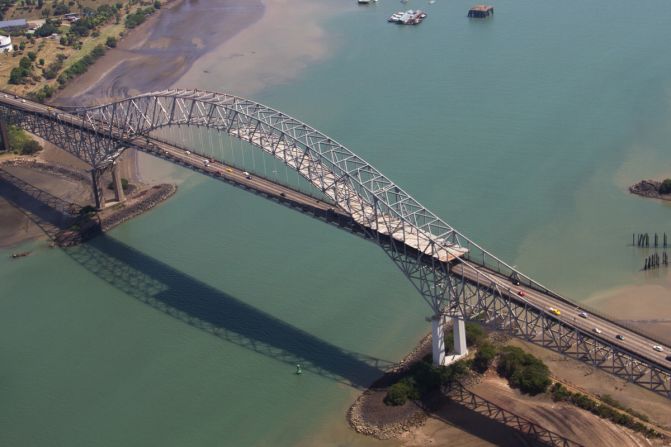
More than 4.5 million cubic yards of concrete were used in the construction of this canal's locks and dams.<br />The Panama Canal is a 77-kilometer (47-mile) long waterway that connects the Atlantic and Pacific Oceans. The earth and rubble excavated to make way for it was enough to bury Manhattan to a depth of four meters. A series of locks allows ships to pass through the water; each of the moveable lock doors weighs 750 tons and each of the locks fills with 52 million gallons of water to accommodate the 15,000 ships that use the canal every year. <strong>Completion date: </strong>January 7, 1914.
Panama Canal, Panama —
More than 4.5 million cubic yards of concrete were used in the construction of this canal's locks and dams.
The Panama Canal is a 77-kilometer (47-mile) long waterway that connects the Atlantic and Pacific Oceans. The earth and rubble excavated to make way for it was enough to bury Manhattan to a depth of four meters. A series of locks allows ships to pass through the water; each of the moveable lock doors weighs 750 tons and each of the locks fills with 52 million gallons of water to accommodate the 15,000 ships that use the canal every year. Completion date: January 7, 1914.
courtesy visipanama.com
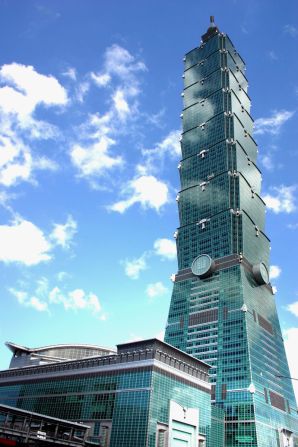
<strong>Fast fact:</strong> Taipei 101 was the first building in the world to break through 500 meters.<br />Upon its completion, the tower claimed several records: it had the world's fastest elevator, was the world's tallest building and was the world's tallest structure, thanks to its spire. Eight "mega-columns" make the building especially earthquake resistant. <strong>Completion date:</strong> December 31, 2004.
Taipei 101, Taipei, Taiwan —
Fast fact: Taipei 101 was the first building in the world to break through 500 meters.
Upon its completion, the tower claimed several records: it had the world's fastest elevator, was the world's tallest building and was the world's tallest structure, thanks to its spire. Eight "mega-columns" make the building especially earthquake resistant. Completion date: December 31, 2004.
courtesy Taipei Tourist Board
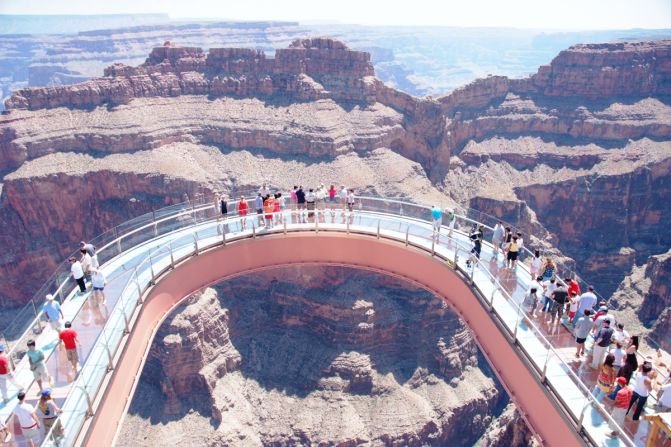
The Skywalk's foundation is strong enough to support 71 million pounds -- the equivalent of 71 fully loaded 747 airplanes.<br />Located 1,219 meters above the Colorado River, the Grand Canyon's Sky Walk consists of one million pounds of steel and 83,000 pounds of glass. It was the creation of Las Vegas businessman David Jin, who approached the Hualapai Tribe with the idea of a glass walkway over the Grand Canyon in 1996. The Skywalk was assembled on site, with the drilling alone taking over a year to complete. <strong>Completion date:</strong> March 28, 2007.
Grand Canyon Skywalk, Arizona, United States —
The Skywalk's foundation is strong enough to support 71 million pounds -- the equivalent of 71 fully loaded 747 airplanes.
Located 1,219 meters above the Colorado River, the Grand Canyon's Sky Walk consists of one million pounds of steel and 83,000 pounds of glass. It was the creation of Las Vegas businessman David Jin, who approached the Hualapai Tribe with the idea of a glass walkway over the Grand Canyon in 1996. The Skywalk was assembled on site, with the drilling alone taking over a year to complete. Completion date: March 28, 2007.
courtesy Grand Canyon
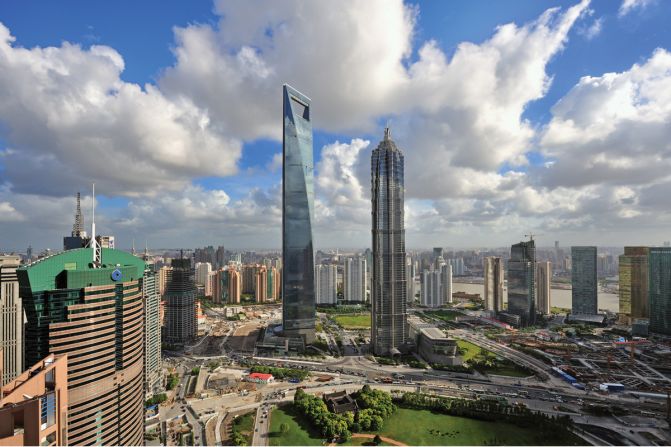
The trapezoid-shaped opening near the top of the Shanghai World Financial Center reduces wind pressure on this 101-story-building.<br />When it was completed in 2008, the Shanghai World Financial Center became the second-tallest building in the world and the tallest building in mainland China, with a total height of 492 meters. Its most distinctive feature is its trapezoid, which is designed to reduce wind pressure and has earned the building the nickname "bottle opener." Visitors to the observation deck can purchase bottle openers in the shape of the building. <strong>Completion date: </strong>July 17, 2008.
Shanghai World Financial Center, Shanghai —
The trapezoid-shaped opening near the top of the Shanghai World Financial Center reduces wind pressure on this 101-story-building.
When it was completed in 2008, the Shanghai World Financial Center became the second-tallest building in the world and the tallest building in mainland China, with a total height of 492 meters. Its most distinctive feature is its trapezoid, which is designed to reduce wind pressure and has earned the building the nickname "bottle opener." Visitors to the observation deck can purchase bottle openers in the shape of the building. Completion date: July 17, 2008.
courtesy mori building
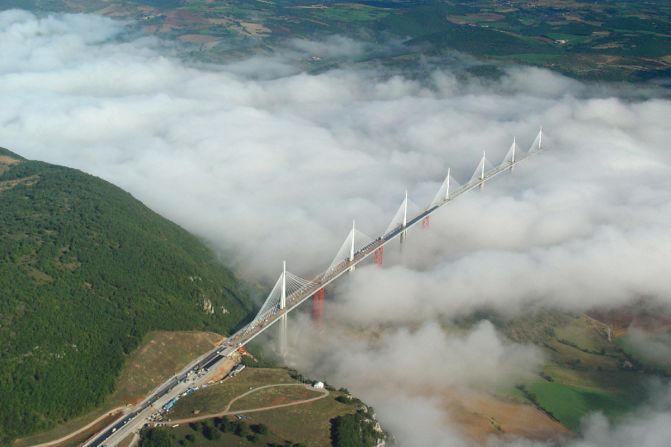
The Millau Viaduct has the highest road bridge deck in Europe -- it sits 270 meters (890 feet) above the Tarn river at its highest point.<br />The Millau Viaduct is the world's tallest bridge, with a total height of 343 meters (886 ft), making it taller than the Eiffel Tower. The viaduct, which crosses the valley of the river Tarn, was created to ease traffic on the route between Paris and Spain. It cost €320 million ($412 million dollars) but offers good value for money, with a lifespan of 120 years. <strong>Completion date:</strong> December 16, 2004.
Millau Viaduct, Millau, France —
The Millau Viaduct has the highest road bridge deck in Europe -- it sits 270 meters (890 feet) above the Tarn river at its highest point.
The Millau Viaduct is the world's tallest bridge, with a total height of 343 meters (886 ft), making it taller than the Eiffel Tower. The viaduct, which crosses the valley of the river Tarn, was created to ease traffic on the route between Paris and Spain. It cost €320 million ($412 million dollars) but offers good value for money, with a lifespan of 120 years. Completion date: December 16, 2004.
courtesy French Tourist Board
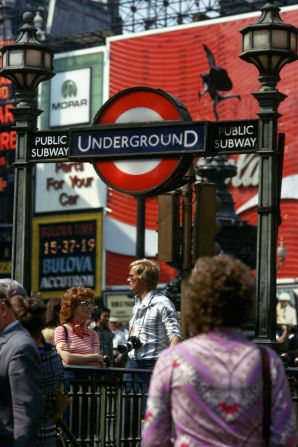
Aldgate Station, on the Circle, Hammersmith and City and Metropolitan Lines, is built on a huge plague pit, where more than 1,000 bodies were buried.<br />The London Underground celebrated its 150th birthday this year. The entire network has a length of 402 kilometers (249 miles) and more than 1 billion journeys are made every year. When it opened in 1863, it was the world's first underground railway and the trains, which traveled between Paddington and Farringdon, were gas-lit wooden carriages pulled by steam locomotives. <strong>Completion date: </strong>January 10, 1863.
London Underground, London —
Aldgate Station, on the Circle, Hammersmith and City and Metropolitan Lines, is built on a huge plague pit, where more than 1,000 bodies were buried.
The London Underground celebrated its 150th birthday this year. The entire network has a length of 402 kilometers (249 miles) and more than 1 billion journeys are made every year. When it opened in 1863, it was the world's first underground railway and the trains, which traveled between Paddington and Farringdon, were gas-lit wooden carriages pulled by steam locomotives. Completion date: January 10, 1863.
courtesy Visit Britain Britain on view
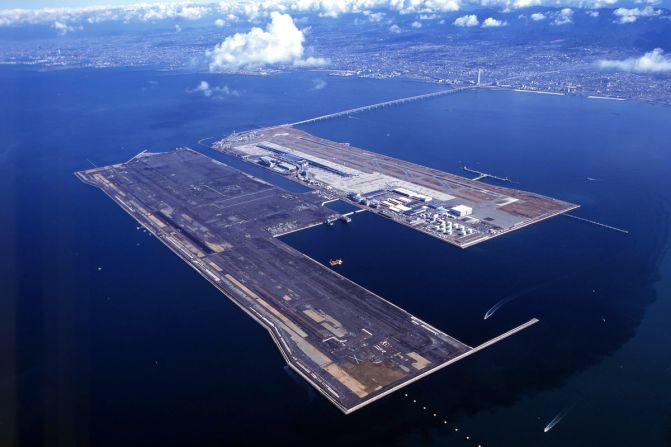
Kansai International Airport was the first airport to be built on an artificial island.<br />Osaka is one of Japan's most crowded cities, so when a new airport was called for, engineers came up with a novel solution -- a man-made island. Construction of the island, which measures four kilometers (2.5 miles) by 2.5 kilometers (1.6 miles) took three years. Some 10,000 workers and 80 ships were used to excavate 21 million cubic meters of landfill and the island's construction became the world's most expensive civil engineering project, with a total cost of $20 billion. <strong>Completion date:</strong> 1994.
Kansai Airport, Osaka, Japan —
Kansai International Airport was the first airport to be built on an artificial island.
Osaka is one of Japan's most crowded cities, so when a new airport was called for, engineers came up with a novel solution -- a man-made island. Construction of the island, which measures four kilometers (2.5 miles) by 2.5 kilometers (1.6 miles) took three years. Some 10,000 workers and 80 ships were used to excavate 21 million cubic meters of landfill and the island's construction became the world's most expensive civil engineering project, with a total cost of $20 billion. Completion date: 1994.
courtesy Kansai International Airport Co Ltd. and JNTO
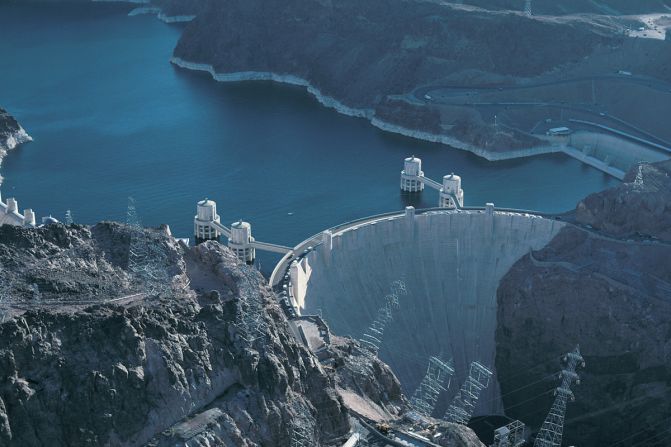
Dam workers wore "hard hats" made by coating cloth hats with coal tar. These proved to be such an effective way to protect the workers' heads that the contractor, Six Companies, ordered commercially made hard hats of the same design.<br />The Hoover dam rises 221 meters above the Colorado River and resulted in the creation of Lake Mead, which is the largest man-made lake in the Western Hemisphere and feeds Las Vegas and neighboring towns. The dam is 210 meters thick at its base and 13 meters thick at its highest point. It's a gravity dam, which means that its foundations rely on gravity to keep the structure from collapsing. <strong>Completion date:</strong> March 1, 1936.
Hoover Dam, Arizona/Nevada, United States —
Dam workers wore "hard hats" made by coating cloth hats with coal tar. These proved to be such an effective way to protect the workers' heads that the contractor, Six Companies, ordered commercially made hard hats of the same design.
The Hoover dam rises 221 meters above the Colorado River and resulted in the creation of Lake Mead, which is the largest man-made lake in the Western Hemisphere and feeds Las Vegas and neighboring towns. The dam is 210 meters thick at its base and 13 meters thick at its highest point. It's a gravity dam, which means that its foundations rely on gravity to keep the structure from collapsing. Completion date: March 1, 1936.
courtesy Travelnevada
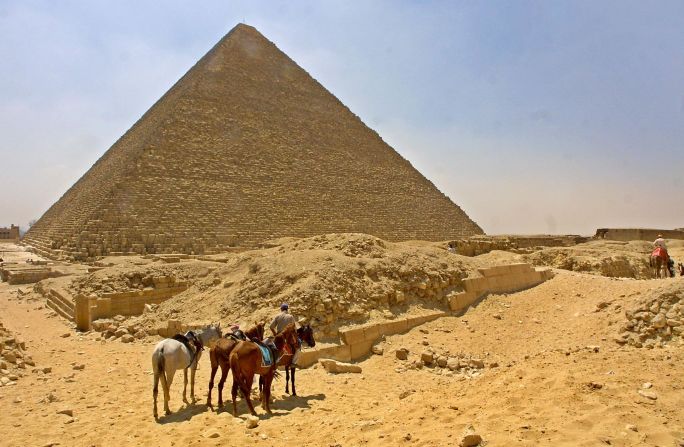
The Great Pyramid was the tallest man-made structure in the world for more than 3,800 years.The builders responsible for the Great Pyramid of Giza would have needed more than a few tea breaks to keep them motivated. The pyramid consists of 2.3 million stone blocks. The largest ones, found in the King's chamber, weigh between 25 and 80 tons and were transported to the site from Aswan, 800 kilometers away. In total, 5.5 million tons of limestone, 8,000 tons of granite and 500,000 tons of mortar were used. Experts have never worked out how the individual blocks were moved into place. <strong>Completion date</strong>: 2504 BC.
Great Pyramid of Giza, Egypt —
The Great Pyramid was the tallest man-made structure in the world for more than 3,800 years.The builders responsible for the Great Pyramid of Giza would have needed more than a few tea breaks to keep them motivated. The pyramid consists of 2.3 million stone blocks. The largest ones, found in the King's chamber, weigh between 25 and 80 tons and were transported to the site from Aswan, 800 kilometers away. In total, 5.5 million tons of limestone, 8,000 tons of granite and 500,000 tons of mortar were used. Experts have never worked out how the individual blocks were moved into place. Completion date: 2504 BC.
MARWAN NAAMANI/AFP/Getty Images
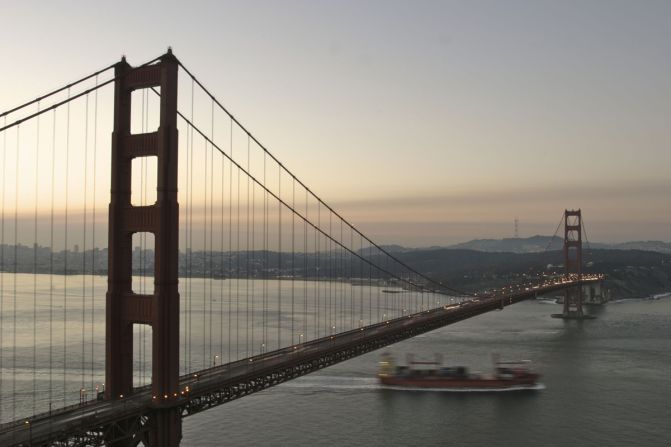
Each of the bridge's two main cables is made of 27,572 strands of wire. <br />Often referred to as "the bridge that couldn't be built," the Golden Gate Bridge crosses the stretch of water nicknamed "the Golden Gate" by gold prospectors heading to the Californian hills. Prior to 1937, San Francisco was America's largest city but its growth rate was slow compared to others, due to the lack of a link with other communities around the bay. The size of the strait (2,042 meters wide) combined with strong winds and regular earthquakes led many construction experts to say a bridge couldn't be built. The solution? Huge amounts of concrete, 128,747 kilometers (80,000 miles) of wire housed inside two cables, 600,000 rivets and a whole lot of hard work. <strong>Completion date: </strong>May 27, 1937.
Golden Gate Bridge, San Francisco —
Each of the bridge's two main cables is made of 27,572 strands of wire.
Often referred to as "the bridge that couldn't be built," the Golden Gate Bridge crosses the stretch of water nicknamed "the Golden Gate" by gold prospectors heading to the Californian hills. Prior to 1937, San Francisco was America's largest city but its growth rate was slow compared to others, due to the lack of a link with other communities around the bay. The size of the strait (2,042 meters wide) combined with strong winds and regular earthquakes led many construction experts to say a bridge couldn't be built. The solution? Huge amounts of concrete, 128,747 kilometers (80,000 miles) of wire housed inside two cables, 600,000 rivets and a whole lot of hard work. Completion date: May 27, 1937.
courtesy San Francisco Travel Association Socct Chernis
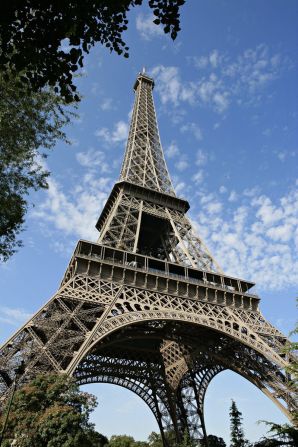
Temperature alters the height of the Eiffel Tower by up to 6 inches (15 centimeters) over the year.<br />The Eiffel Tower weighs 13,200 tons and was the first building to surpass the height of the Great Pyramid of Giza. It remained the world's tallest building until 1929, when New York's Chrysler Building took the top spot. Gustave Eiffel's initial building plans and calculations were so precise that no revisions had to be made during the construction process. <strong>Completion date:</strong> March 31, 1889.
Eiffel Tower, Paris —
Temperature alters the height of the Eiffel Tower by up to 6 inches (15 centimeters) over the year.
The Eiffel Tower weighs 13,200 tons and was the first building to surpass the height of the Great Pyramid of Giza. It remained the world's tallest building until 1929, when New York's Chrysler Building took the top spot. Gustave Eiffel's initial building plans and calculations were so precise that no revisions had to be made during the construction process. Completion date: March 31, 1889.
courtesy toureiffel.fr
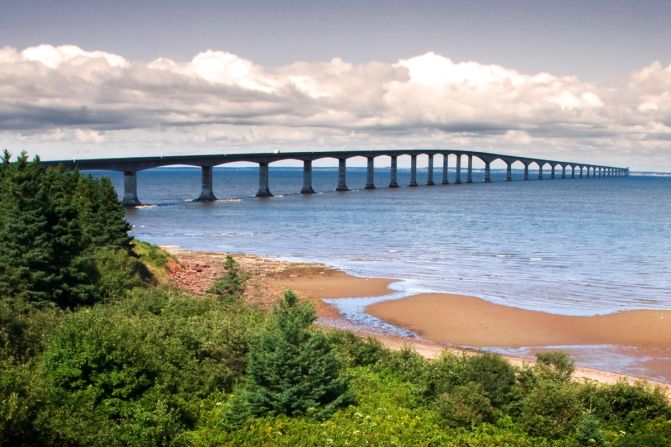
The bridge's curve is designed to help drivers stay alert. <br />Before construction of Confederation Bridge, the only way to reach Prince Edward Island from Canada's mainland was by ferry or airplane.<br />The wind, waves and snow that batter the bridge, which links Canada's smallest province with New Brunswick, forced engineers to come up with a concrete mix that was 60% stronger than most. A purpose-built floating crane, the Svanen, was used to maneuver the individual sections (which included 65 reinforced concrete piers) into place. <strong>Completion date:</strong> May 31, 1997.
Confederation Bridge, Prince Edward Island, Canada —
The bridge's curve is designed to help drivers stay alert.
Before construction of Confederation Bridge, the only way to reach Prince Edward Island from Canada's mainland was by ferry or airplane.
The wind, waves and snow that batter the bridge, which links Canada's smallest province with New Brunswick, forced engineers to come up with a concrete mix that was 60% stronger than most. A purpose-built floating crane, the Svanen, was used to maneuver the individual sections (which included 65 reinforced concrete piers) into place. Completion date: May 31, 1997.
courtesy Cadian Tourism
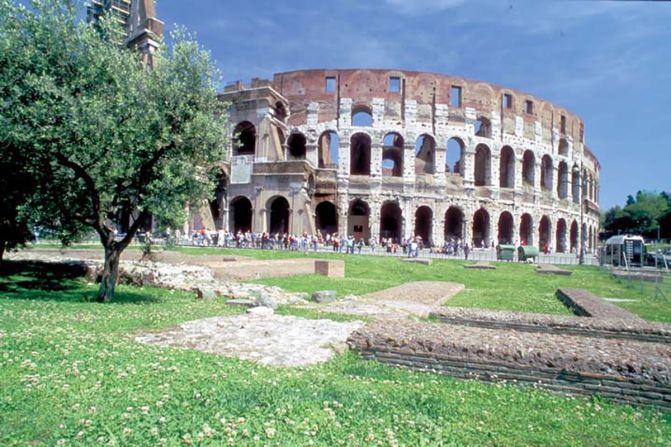
The Colosseum could accommodate 50,000 spectators.<br />It's the largest amphitheater built by the Roman empire. It's estimated that the outer wall, which is 189 meters long and 156 meters wide, was originally built using 100,000 cubic meters of travertine stone. Some of this stone was later used in the construction of St Peter's Basilica and other nearby monuments. <strong>Completion date:</strong> 80 AD.
Colosseum, Rome —
The Colosseum could accommodate 50,000 spectators.
It's the largest amphitheater built by the Roman empire. It's estimated that the outer wall, which is 189 meters long and 156 meters wide, was originally built using 100,000 cubic meters of travertine stone. Some of this stone was later used in the construction of St Peter's Basilica and other nearby monuments. Completion date: 80 AD.
courtesy Vito Arcomano italian tourist board
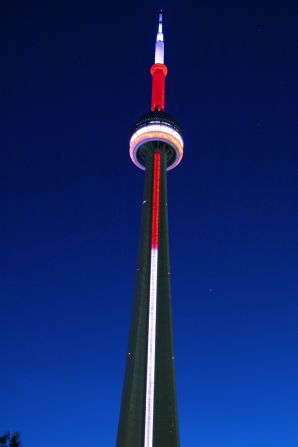
The CN Tower was built to withstand an earthquake of 8.5 on the Richter scale.<br />It was the world's tallest building when it was completed in 1976 and designed to withstand winds of up to 418 kph (260 mph). But strong winds and earthquakes are not the only factors the building has to contend with -- on average, lightning strikes the tower 75 times every year. Long copper strips, which run down the side of the building and are attached to grounding rods buried below ground, protect the structure from damage. <strong>Completion date:</strong> October 1, 1976.
CN Tower, Toronto, Canada —
The CN Tower was built to withstand an earthquake of 8.5 on the Richter scale.
It was the world's tallest building when it was completed in 1976 and designed to withstand winds of up to 418 kph (260 mph). But strong winds and earthquakes are not the only factors the building has to contend with -- on average, lightning strikes the tower 75 times every year. Long copper strips, which run down the side of the building and are attached to grounding rods buried below ground, protect the structure from damage. Completion date: October 1, 1976.

courtesy www.torontowide.com

My Account
  • Settings
  • Newsletters
  • Topics you follow
  • Sign out
Your CNN account Sign in to your CNN account

Live TV Listen Watch
  • World
    • Africa
    • Americas
    • Asia
    • Australia
    • China
    • Europe
    • India
    • Middle East
    • United Kingdom
  • US Politics
    • Trump
    • Facts First
    • CNN Polls
    • Elections 2026
    • Redistricting Tracker
    • Epstein Files
  • Business
    • Tech
    • Media
    • Calculators
    • Videos
  • Markets
    • Pre-markets
    • After-Hours
    • Fear & Greed
    • Investing
  • Health
    • Life, But Better
    • Fitness
    • Food
    • Sleep
    • Mindfulness
    • Relationships
  • Entertainment
    • Movies
    • Television
    • Celebrity
  • Tech
    • Innovate
  • Style
    • Arts
    • Design
    • Fashion
    • Architecture
    • Luxury
    • Beauty
    • Video
  • Travel
    • Destinations
    • Food & Drink
    • Stay
    • News
    • Videos
  • Sports
    • Football
    • Tennis
    • Golf
    • Motorsport
    • US Sports
    • Olympics
  • Science
    • Space
    • Life
    • Unearthed
  • Climate
    • Solutions
    • Weather
  • Weather
    • Video
    • Climate
  • Ukraine-Russia War
  • Israel-Hamas War
  • Features
    • As Equals
    • Call to Earth
    • Freedom Project
    • Impact Your World
    • Inside Africa
    • CNN Heroes
  • Watch
    • Live TV
    • Featured
    • CNN Headlines
    • Shows A-Z
    • CNN 10
    • CNN TV Schedule
  • Listen
    • All There Is with Anderson Cooper
    • Chasing Life with Dr. Sanjay Gupta
    • The Assignment with Audie Cornish
    • Terms of Service with Clare Duffy
    • CNN 5 Things
    • All CNN Podcasts
  • Games
    • Daily Crossword
    • Jumble Crossword
    • Photo Shuffle
    • Sudoblock
    • Sudoku
    • 5 Things Quiz
  • About CNN
    • Photos
    • Investigations
    • CNN Profiles
    • CNN Leadership
    • CNN Newsletters
    • Work for CNN

Watch Listen Live TV
My Account
  • Settings
  • Newsletters
  • Topics you follow
  • Sign out
Your CNN account Sign in to your CNN account
Follow CNN Travel

Download the CNN app

Terms of Use Privacy Policy Ad Choices Accessibility & CC About Newsletters Transcripts Sitemap

© 2026 Cable News Network. A Warner Bros. Discovery Company. All Rights Reserved.
CNN Sans ™ & © 2016 Cable News Network.

Download the CNN app

Scan the QR code to download the CNN app on Google Play.

Scan the QR code to download the CNN app from Google Play.

Download the CNN app

Scan the QR code to download the CNN app from the Apple Store.

Scan the QR code to download the CNN app from the Apple Store.