Your effort and contribution in providing this feedback is much
appreciated.
Close
Ad Feedback
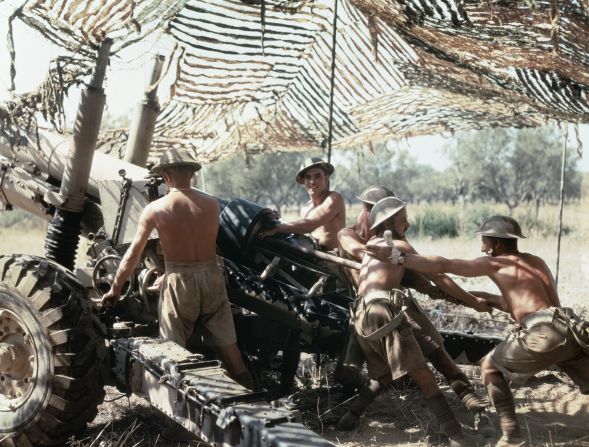
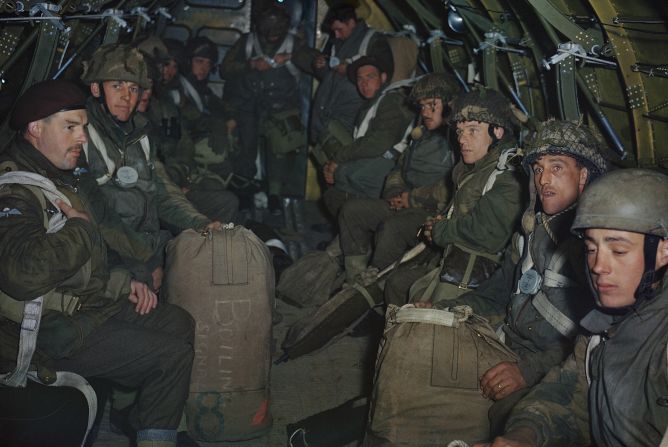
Rare color photos of World War II
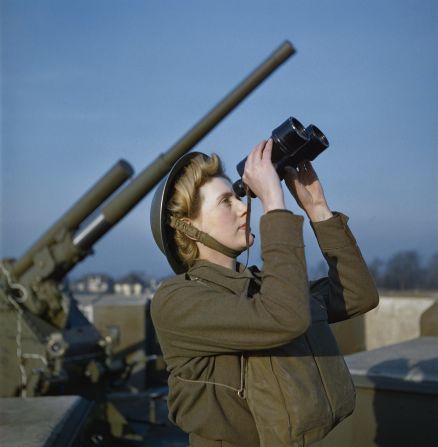
A 'spotter' at a 3.7-inch anti-aircraft gun site, in December 1942. Scroll through to see more images from the Imperial War Museums' collection of color World War II photographs, which are in their original condition, and are neither retouched nor colorized.
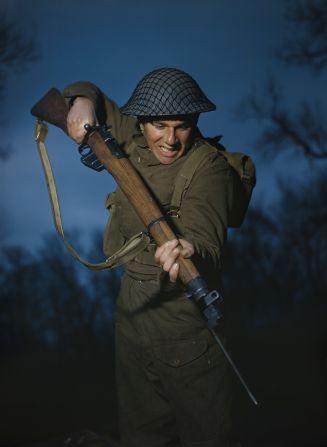
The image shows Private Alfred Campin of the 6th Battalion, Durham Light Infantry during battle training in Britain, March 1944. "This is one of my favorite shots," said Ian Carter, author of an Imperial War Museums book in which they were published. You can see the tan in the man's face and you can see he's a veteran of the desert. This was part of a whole sequence taken in black and white, with just a few color shots. This soldier was killed in Normandy, but he's immortalized by this picture."
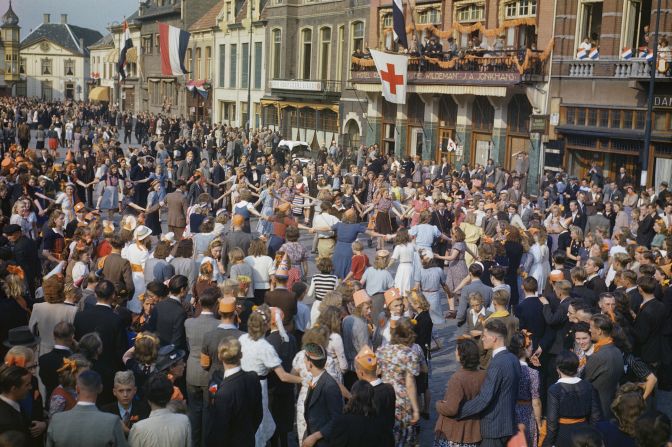
Dutch civilians dance in the streets after the liberation of Eindhoven by Allied forces, September 1944. "The great thing about this particular scene is the orange: when the Dutch were liberated they hung out flags and sheets, everything was orange and that would be lost in a black and white photograph," said Carter.
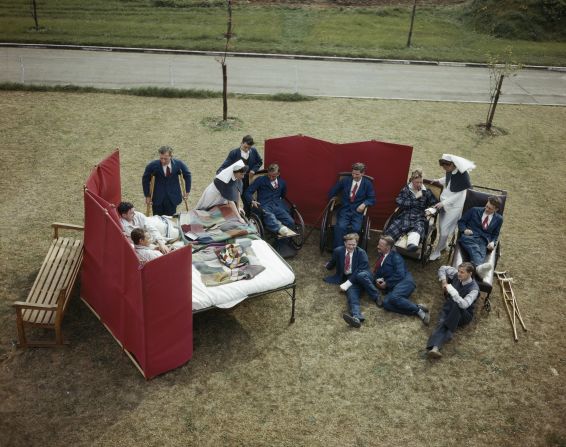
Nurses and convalescent aircrew at Princess Mary's Royal Air Force Hospital at Halton in Buckinghamshire, August 1943. The hospital was opened in 1927, and treated some 20,000 RAF casualties during the War.
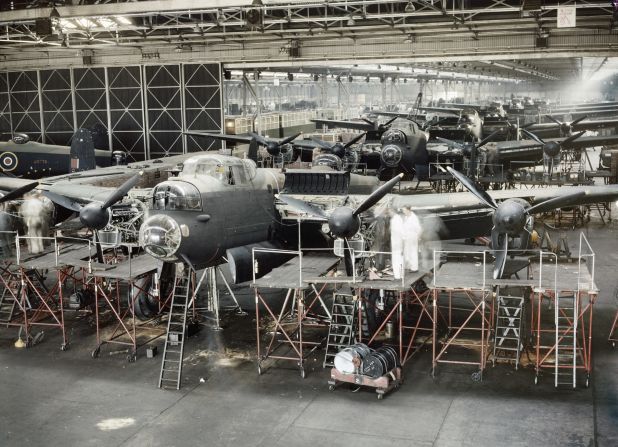
Lancaster bombers nearing completion in Avro's assembly plant at Woodford near Manchester, 1943. Some 125,000 British aircraft were built during the Second World War, and over half of the workforce were women.
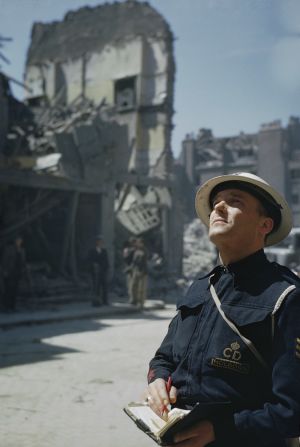
An Air Raid Precautions (ARP, later renamed the Civil Defence Service) warden inspects damaged buildings in Holborn, London. Most wardens were volunteers, with regular daytime jobs. One in six were women.
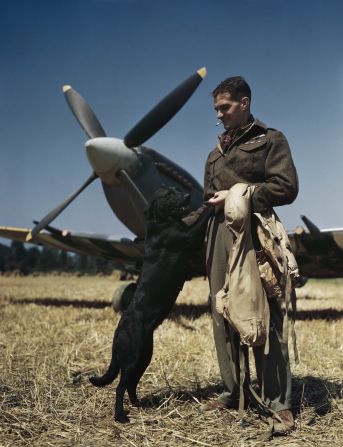
The RAF's top-scoring fighter pilot, with 31 confirmed kills at this date, Wing Commander James "Johnnie" Johnson, with his Spitfire and pet Labrador 'Sally' in Normandy, July 1944.