Up the Down Staircase and into India’s ancient wells | CNN
Thank You!
Your effort and contribution in providing this feedback is much
appreciated.
Close
Ad Feedback
Up the Down Staircase and into India’s ancient wells
India's hidden stepwells —
Victoria Lautman takes tips from drivers, villagers, and pores over old maps to find India's ancient and abandoned stepwells. In the following images, she discusses her journeys and the stepwells she has stumbled upon.
Victoria Lautman
RUDABAI VAV, ADALAJ, GUJARAT —
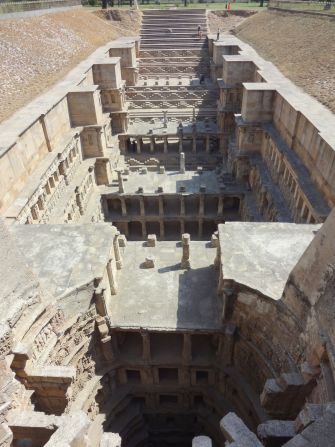
"I went to India for the first time 30 years ago. I didn't know anything. I happened to go with architects. We went to a desert. The ground literally fell away, into this incredibly elaborate hole in the ground. It was one of the most shocking experiences of my life."
Victoria Lautman
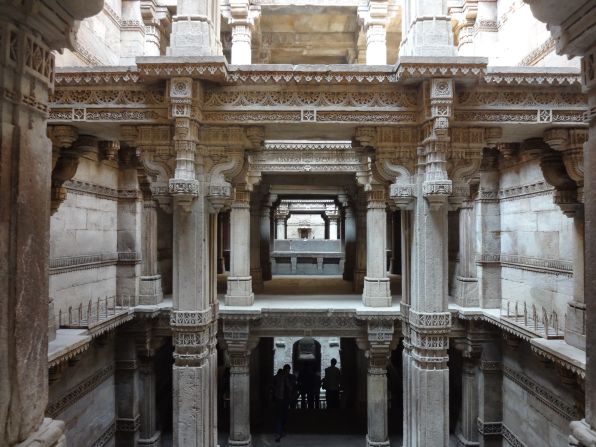
RUDABAI VAV, ADALAJ, GUJARAT —
"This is the first stepwell I saw and I couldn't forget it. The shock of looking down into architecture instead of up at it subverted everything I'd expected from a building. The dramatic contrasts of light & shade, the cool air, the telescoping views and hushed sounds...every sense was on alert. Who wouldn't remember that for decades?"
Victoria Lautman
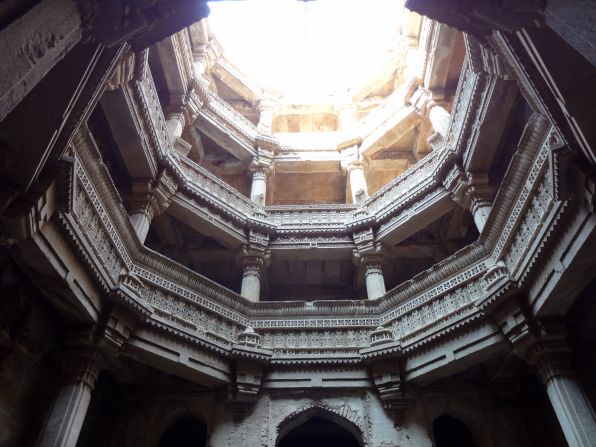
NEEMRANA BAOLI, NEEMRANA, RAJASTHAN —
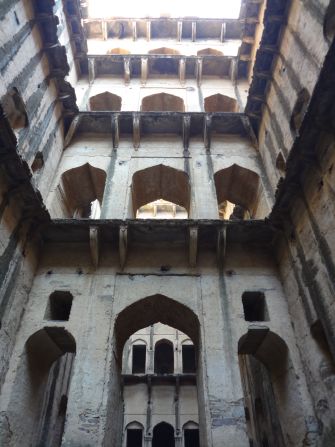
"This is where I knew I had slipped over the line from 'enchanted' to 'obsessed.' Neemrana is very deep -- 9 stories -- and dangerously decrepit, but one of the most marvelous structures I've ever seen. Ever."
Victoria Lautman
RANI KI VAV, PATAN, GUJARAT —
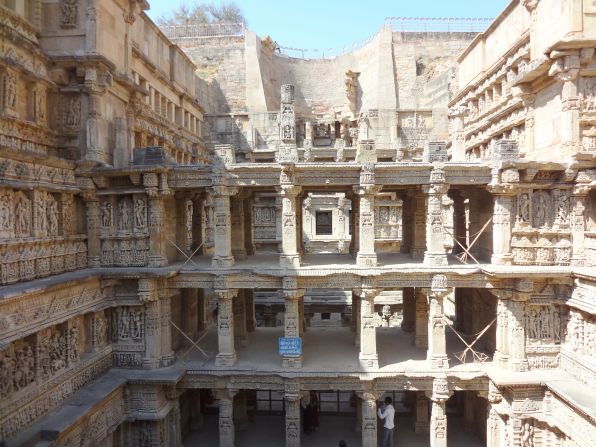
"This is the largest, most grandiose, costliest and probably most impressive stepwell ever built. Last year it became an UNESCO World Heritage Site, thankfully, and it's literally impossible to try and describe it."
Victoria Lautman
RANI KI VAV, PATAN, GUJARAT —
"The scale and detailed sculptures -- hundreds of Hindu deities -- is just overwhelming."
Victoria Lautman
NEEMRANA BAOLI, NEEMRANA, RAJASTHAN —
"It's magnificent, gorgeous, and utterly frightening all at the same time."
Victoria Lautman
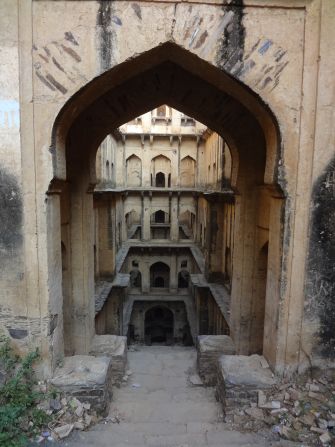
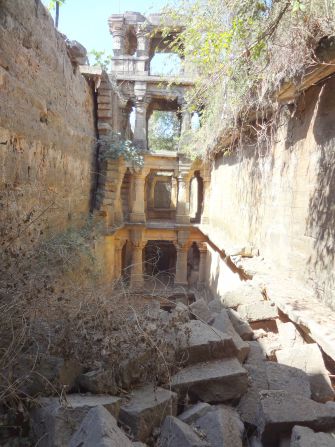
Ambapur vav, Ambapur, Gujarat —
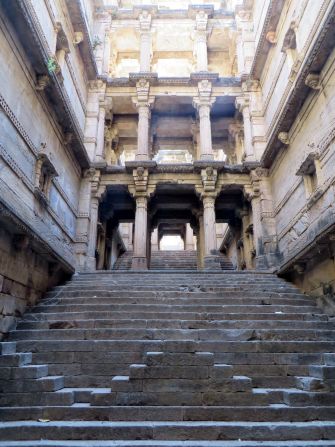
"This impressive, ignored, disintegrating stepwell is in a small village about 15 minutes away from its famous sister, Rudabai vav in Adalaj, and yet no-one ever visits. It was built at the same time, most likely by the same queen, and while less showy and grand it's nevertheless beautiful and elegant, with sculptural niches climbing up the narrow walls. It's "protected" by the local government (even though chunks are falling from it and bonfires have been lit within) but easily accessible through an adjacent temple."
Victoria Lautman
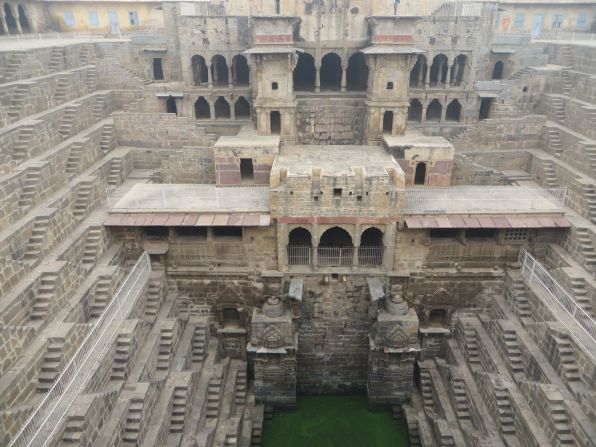
Chand Baori, Abhaneri, Rajasthan —
"Chand Baori is one of the better known stepwells thanks to it's cameo appearance in several movies. But still, tourists generally miss the short detour off the road between Jaipur and Agra and if they realized it, they'd kick themselves. It's one of the oldest, deepest, most impressive wells or 'kund,' defined by the sculptural geometric steps on all four sides and steep funnel shape. It's impossible to take a bad photo of a kund..."
Victoria Lautman
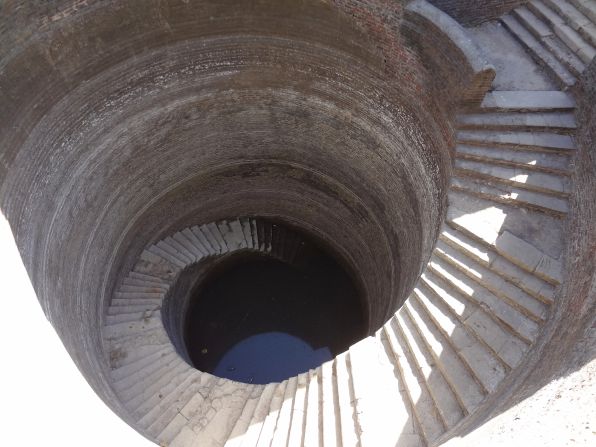
Helical vav, Champaner, Gujarat —
"When I give lectures, the so-called Helical vav invariably causes gasps -- something about that sinuous spiral and severe simplicity is so compelling. Even more startling -- as with many stepwells -- is the subtlety of it's above-ground presence: just a low masonry wall. Lovely."
Picasa
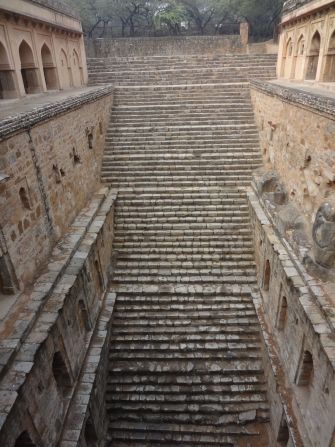
Rajon ki Baoli, Delhi —
"There are a number of really wonderful stepwells in and around Delhi, some just a few yards from main tourist attractions, and yet even local guides have no idea that they exist or how to find them. Rajon ki baoli is located in the Mehrauli archeological park, itself a magical place studded with tombs and ruins. It's deep, in good shape, still harvests water, and its many levels of "apartments make it such a fun place to explore."
Victoria Lautman
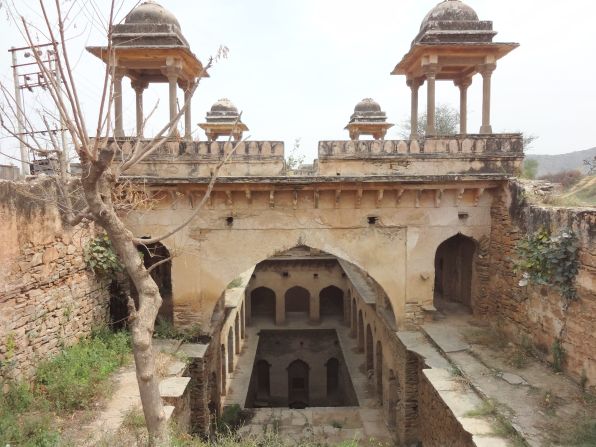
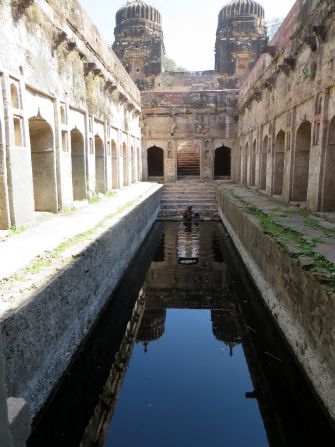
Mukundpura baoli, Narnaul, Haryana —
"It's not easy getting to this small stepwell in the fields outside the city of Narnaul, with its many spectacular Mughal monuments. But the dirt road eventually lead to pretty -- if overgrown -- stepwells, with its four chattris that come into view. What a peaceful spot in its day - I'm sorry this one's such a ruin."
Victoria Lautman
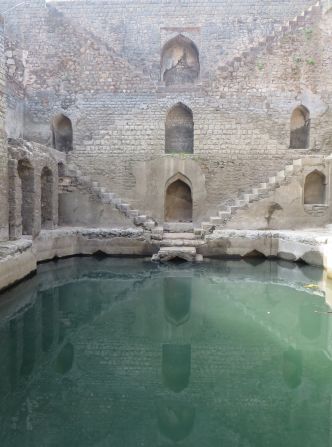
Ujala baoli, Mandu, Madhya Pradesh —
"The fort at Mandu has a number of stepwells, tanks, and sophisticated water-harvesting systems but none as beautiful as Ujala baoli. The picture doesn't show what an odd, asymmetrical structure it really is, or it's sadly dilapidated state."
Victoria Lautman
Mertaniji ki Baoli, Jhunjhunu, Rajasthan —
"It's so steep and in such terrible condition that Mertaniji looks as though it's weeping filthy tears - but it's also an enormous feat of engineering and architecture. An estimated 25% of stepwells were commissioned by women, and this is one of them -- another "protected", awe-inspiring monument that unfortunately has all sorts of garbage in it."
Victoria Lautman
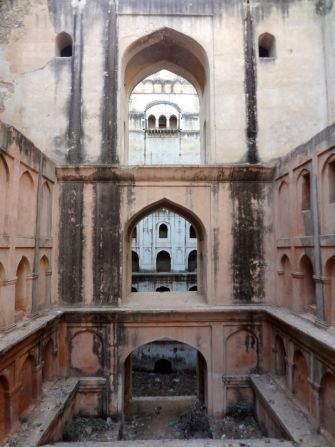
Raja Bir Singh Dev baoli, Serol, Madhya Pradesh —
"A farm family cares for this stepwell, using it as it was in past centuries: for drinking, washing, and irrigation. It's large scale, huge entry towers, and architectural details make it another of my favorites -- an unexpected treasure way out in the countryside."
Victoria Lautman
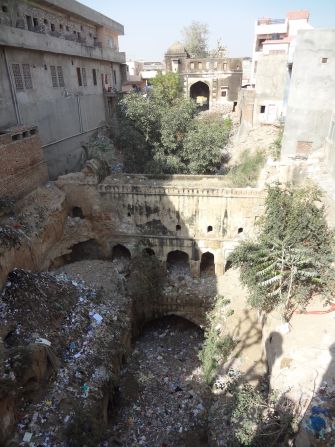
Derelict Baoli, Fatehpur, Rajasthan —
I always show this baoli, or stepwell, as an example and reminder of how a unique, awe-inspiring, formerly essential monument can be reduced to rubble. I had to climb on a roof to even see the extent of this marvel, one of the largest I've encountered, and which must have been an incredible sight hundreds of years ago. Now it's surrounded by buildings, used as a dump, and no-one has any idea it's there. It made me cry."
Victoria Lautman
VIKIA VAV, GHUMLI, GUJARAT —
"I'd read about Vikia Vav in Morna Livingston's book "Steps to Water" from 2002 and was determined to find it on a search mission in Gujarat. It was by far the most difficult to locate and get to. Even local villagers had no knowledge of it, seemingly, and I was eventually led to it along a dirt track by a sympathetic fellow on a motorcycle. (The road) had so many rocks that my driver lost a tire. It's (from the) late 13th century, in the middle of nowhere on a former trade route, and nearly destroyed by the horrific earthquake in Gujarat in 2001. But marvelous still."
Victoria Lautman
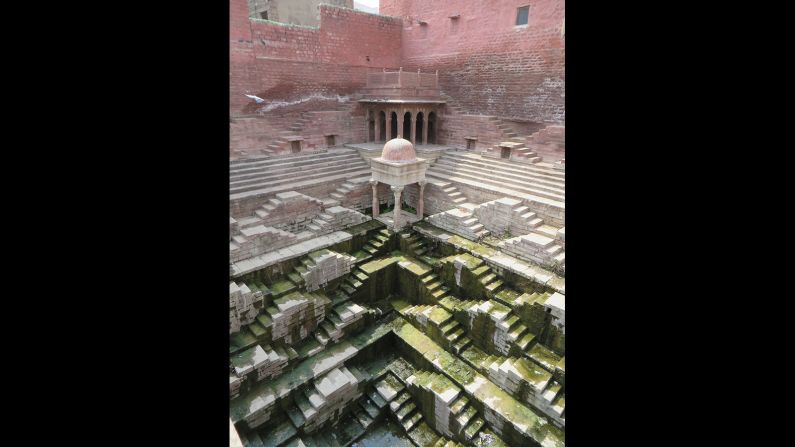
Mahila Bag Jhalra, Jodhpur, Rajasthan —
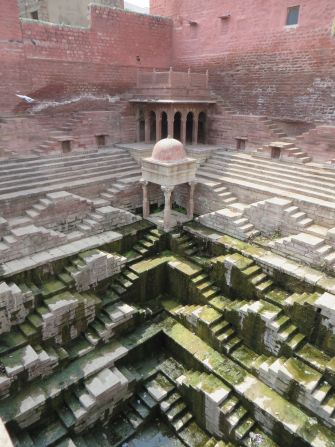
"This is another example of a kund, small but powerfully sculptural. The gradation of hues from pink to white to green (from algae) makes it one of the most colorful of all the stepwells I've visited, and it's a particular favorite."