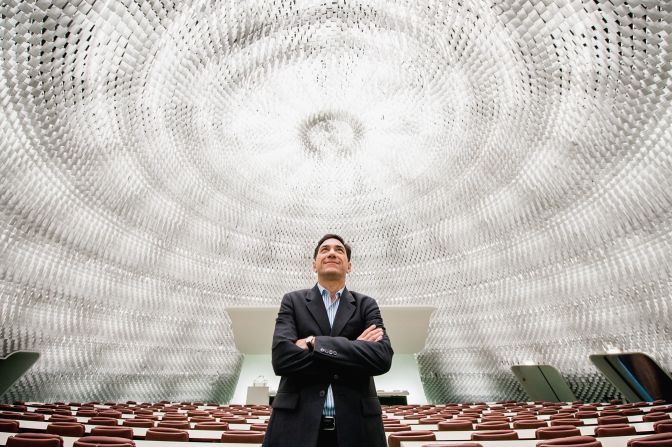
Communist Party Headquarters by Oscar Niemeyer, 1967-80 (Paris, France) —
"What I like most is that it's old school. It's not trying to be witty or clever. It doesn't pay homage to other buildings. The building incorporates interesting structural solutions, but they are not the main attraction. It's an exercise in space -- it's sculptural, but beyond a simplistic object." -- Edgar Gonzalez of Brisac Gonzalez
Courtesy Gareth Gardner and Edward Tyler
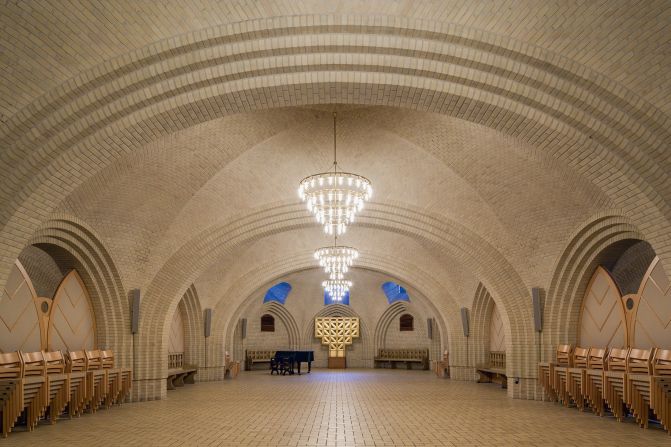
Grundtvig's Church by Peder Vilhelm Jensen-Klint, 1913-40 (Copenhagen, Denmark) —
"I first visited a few years ago on an office trip to Copenhagen, and as I engaged with the building I found it increasingly compelling. It demonstrates how a building can be a contemporary image of its time while remaining grounded in its culture." -- Michael Squire of Squire and Partners
Courtesy Gareth Gardner and Edward Tyler
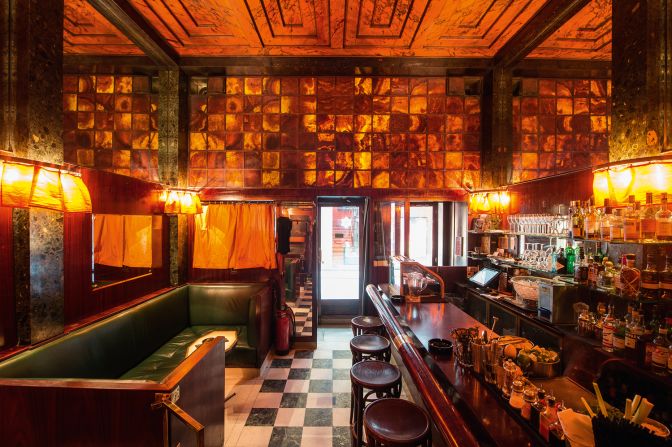
American Bar by Adolf Loos, 1908 (Vienna, Austria) —
"One of the most resonant reasons for choosing this bar is its size. It's tiny. We live in a time when buildings are not considered important unless they're big. But this little bar has far more ideas packed into it than all those huge buildings put together." -- Sean Griffiths
Courtesy Gareth Gardner and Edward Tyler
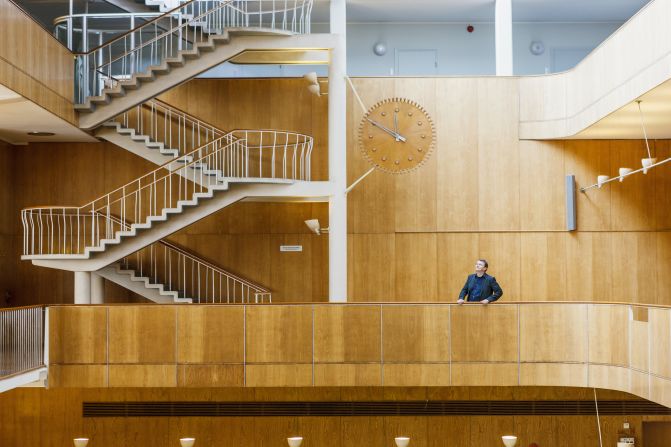
Gothenburg Law Courts by Erik Gunnar Asplund, 1937 (Gothenburg, Sweden) —
"There is something about Asplund's Law Courts at Gothenburg that confirms that being an architect is really worth the effort. Modern buildings so often seem quite shallow in their thinking. But then you see something like this and are reminded of what architecture at the very highest level can achieve." -- Tim Ronalds of Tim Ronalds Architects
Courtesy Gareth Gardner and Edward Tyler
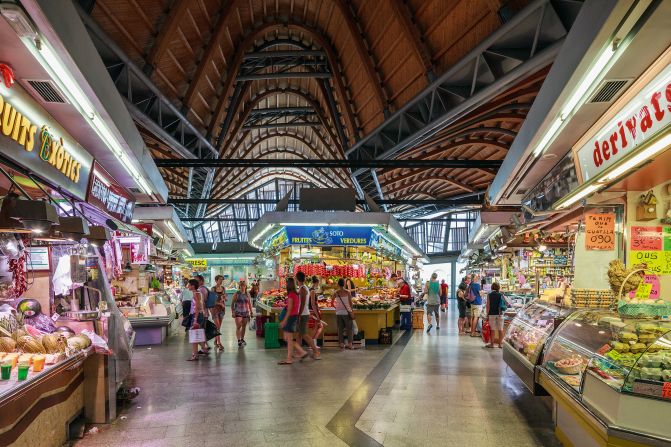
Santa Caterina Market by Enric Miralles Benedetta Tagliabue, 1997-2005 (Barcelona, Spain) —
"Santa Caterina is both civilized and civic, balancing so many priorities: commerce, elderly housing, rubbish, as well as archaeological remains. The combinations of new and old building fabric, logical, simple design and extraordinarily willful elements, the mix of uses, traditional market retail and new technology are something we can all learn from in making our cities." -- Alex Mowat of Mowat & Company
Courtesy Gareth Gardner and Edward Tyler
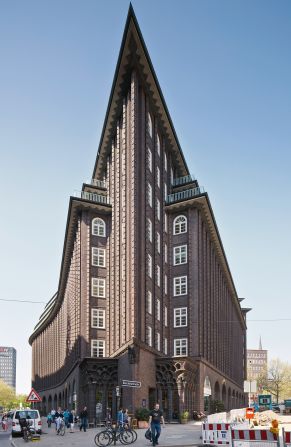
Chilehaus by Fritz Höger, with artist Richard Kuöhl, 1922--24 (Hamburg, Germany) —
"I spent my adolescence in Liverpool, like Hamburg, another great port city. My grandfather was a marine engineer for shipping lines trading with the Far East and on the dock road the prows of ships, overshadowing the great 19th century wall, were messengers from a world beyond. Chilehaus has a potent sense of this spirit of mercantile voyaging which appeals to me still." -- Eric Parry of Eric Parry Architects
Courtesy Gareth Gardner and Edward Tyler
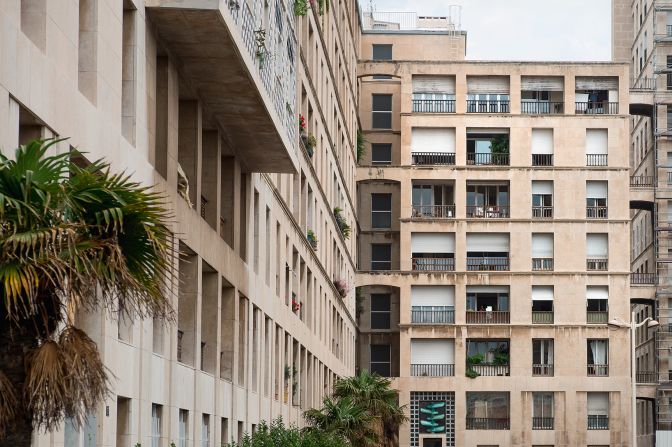
La Tourette by Fernand Pouillon, 1948-53 (Marseille, France) —
"(French architect Fernand Pouillon) made public housing with a bit of swagger, demonstrating the opposite of the mean-spirited and minimum-necessary approach so prevalent in this type of project." -- Adam Khan of Adam Khan Architects
Courtesy Gareth Gardner and Edward Tyler
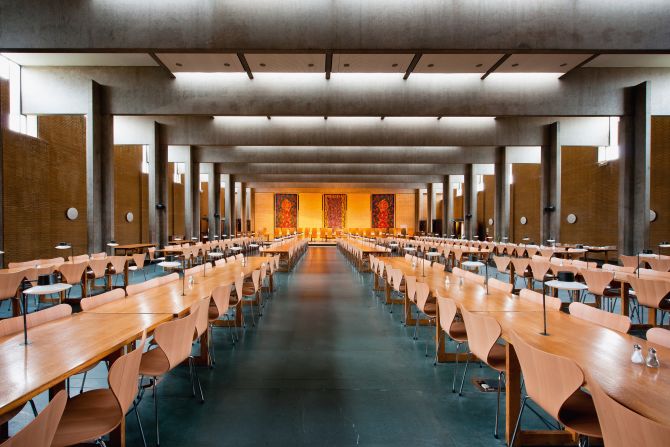
St Catherine's College, Oxford by Arne Jacobsen, 1962-68 (Oxford, England) —
"There is a real craftsmanship in Jacobsen's architecture which we revel in and aspire to, a finesse in details that takes ages to work out well. Nowadays, there seems to be a polarization between fine art and craft in architecture, but the craft element -- really understanding how you make a building -- should be considered far more." -- Rab Bennetts
(Chosen by Rab and Denise Bennetts of Bennetts Associates)
Courtesy Gareth Gardner and Edward Tyler
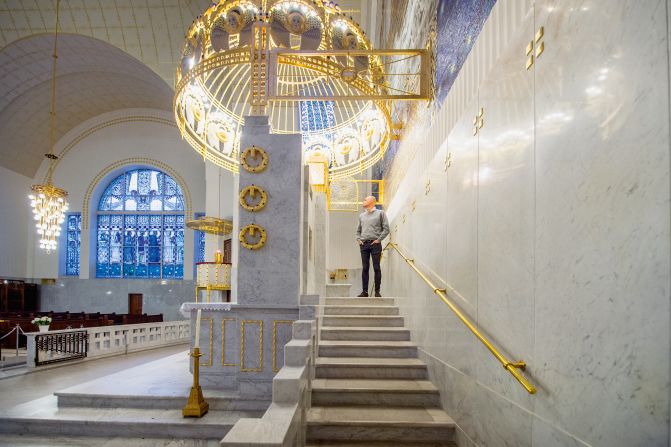
Steinhof Church by Otto Wagner. 1904-7 (Vienna, Austria) —
"While the building has many qualities, it is perhaps most notable for its ability to link the smallest decorative details, such as the infinitely reflecting engraved glass in the altar, back to address the church and the landscape and city beyond. This creates a building linking heaven and earth that can be said to be genuinely contemplative." -- David Archer of Archer Humphryes Architects
Courtesy Gareth Gardner and Edward Tyler
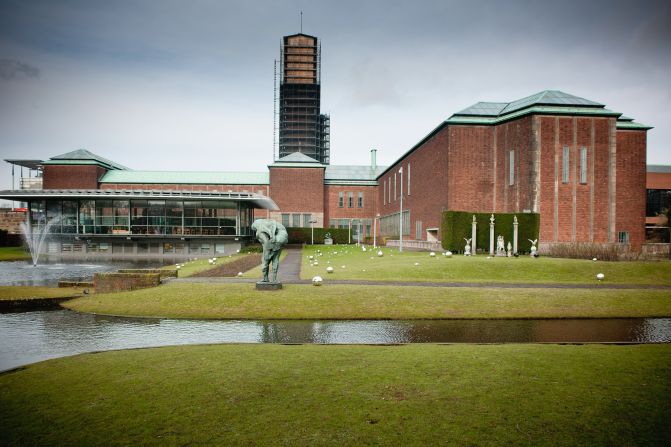
Museum Boijmans Van Beuningen by Adrianus van der Steur, 1928-35 (Rotterdam, Netherlands) —
"Today, I still go to visit the Boijmans quite often. It's a building in which you can wander around and see different things in the architecture every time, and there are very few buildings in which you can do that." -- Hans van der Heijden