How do you build a "Star Wars" universe? The answer lies close to home. Lucas' galaxy far, far away might appear fantastical, but its carefully designed planets are home to myriad architectural styles sourced from here on Earth. Scroll through to discover the inspiration behind planets unknown, and how "Star Wars," in some cases, has gone on to inspire architecture in the real world.
Lucasfilm Ltd./Disney
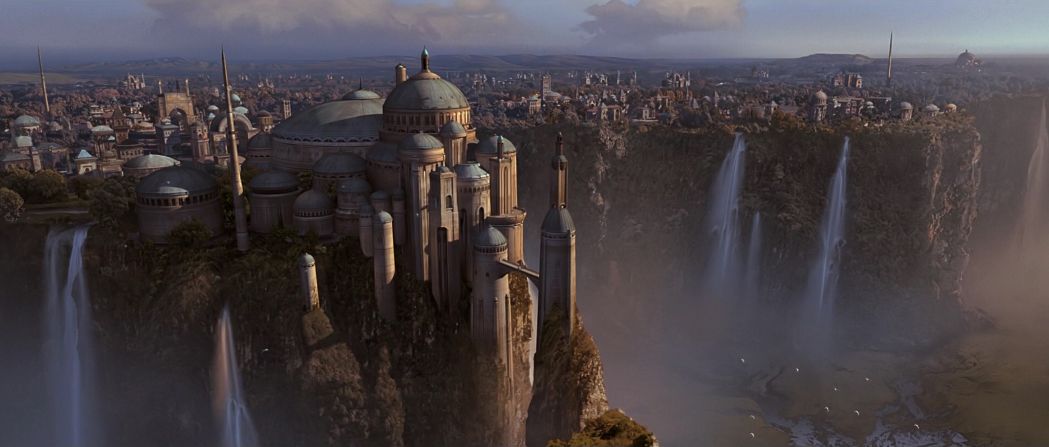
Theed palace, Naboo —
The royal palace of Theed, the capital of Naboo, utilizes a combination of Byzantine exteriors and Baroque/Rococo interiors, informed by the naturalistic style of American architect Frank Lloyd Wright.
Lucasfilm Ltd.
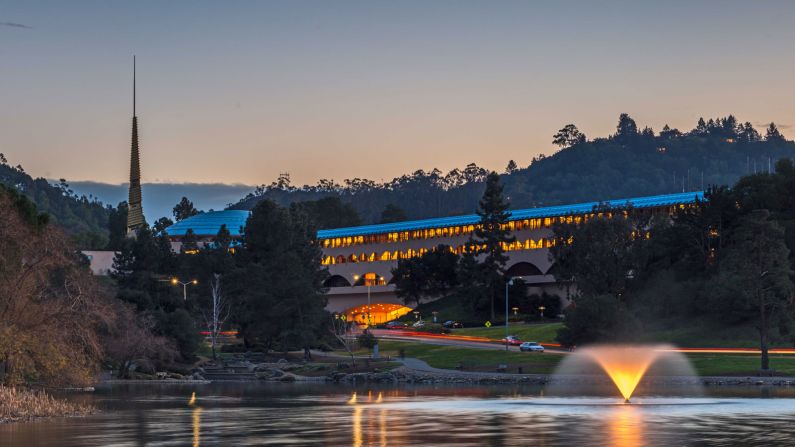
Marin County Civic Center —
Marin County Civic Center, in California, with its blue domed roofs, partly inspired Naboo. Architect Frank Lloyd Wright's brief for the site, his final commission, was that it should complement its parkland environment.
Andrew Kearns/Flickr
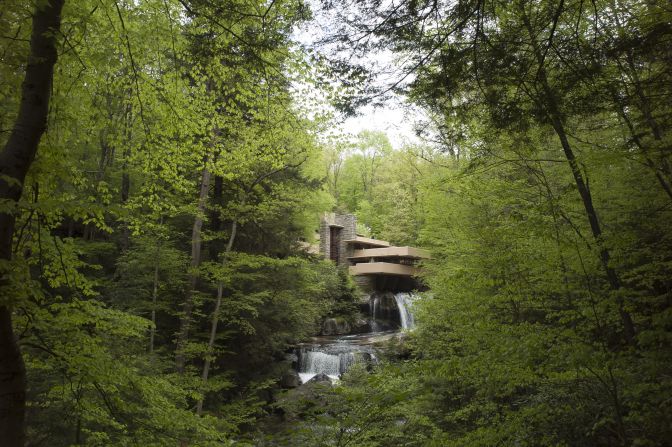
Fallingwater —
Fallingwater, another Frank Lloyd Wright project in Fayette County, Pennsylvania, took this aesthetic even further.
Courtesy Jonathan Lin
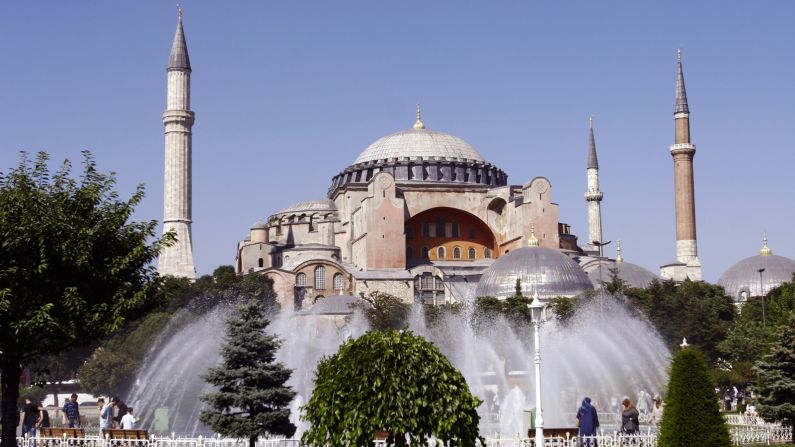
The Hagia Sophia —
David Reat described Theed Palace as a "fusion between Marin, the Hagia Sophia and the Sultan Ahmed Mosque in Istanbul." The Hagia Sophia (pictured) was one of the Roman Empire's first Christian cathedrals, after St. John Lateran in Rome, and is among the best known Byzantine structures in the world.
BULENT KILIC/AFP/Getty Images
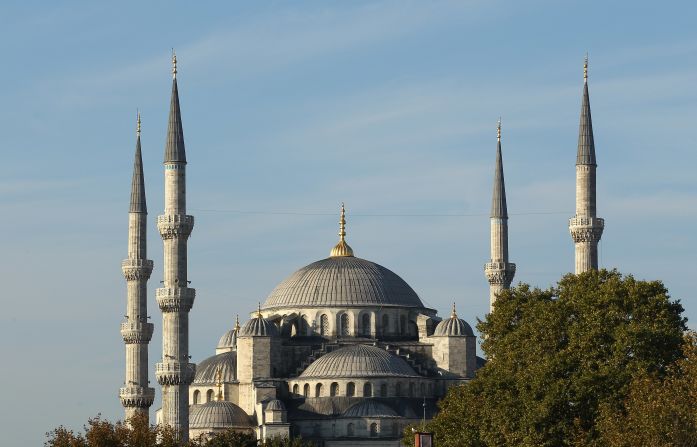
The Sultan Ahmet Mosque —
The Sultan Ahmet Mosque -- otherwise known as the "Blue Mosque" -- in Istanbul dates from the early 17th century and is a symbol of Ottoman might. Located across from the Hagia Sophia, it combines Byzantine and Islamic aesthetics. Doug Chiang's concept art for Theed's cliff-edge palace contains many of the same features, including a minaret-like tower.
Julian Finney/Getty Images Europe/Getty Images
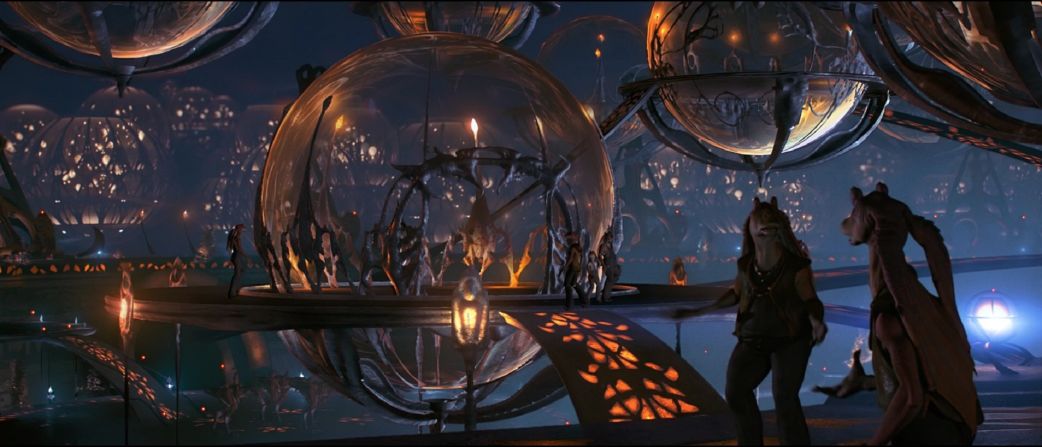
Otoh Gunga —
The Gungans living on Naboo were pilloried by fans, but their underwater home city of Otoh Gunga was one of the most sophisticated in the galaxy. The intricate metalwork echoes Art Nouveau, a school of architecture emphasizing natural forms.
Lucasfilm Ltd.
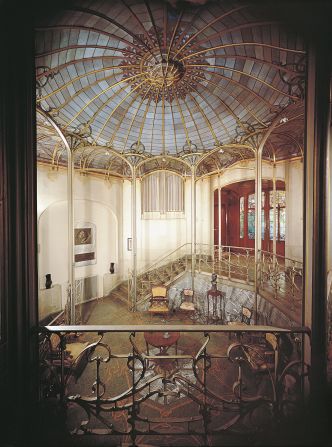
Hotel Van Eetvelde —
The Art Nouveau entrance to the Hotel Van Eetvelde, in Brussels, circa 1900, designed by Victor Horta.
DEA PICTURE LIBRARY/De Agostini Editorial/De Agostini/Getty Images
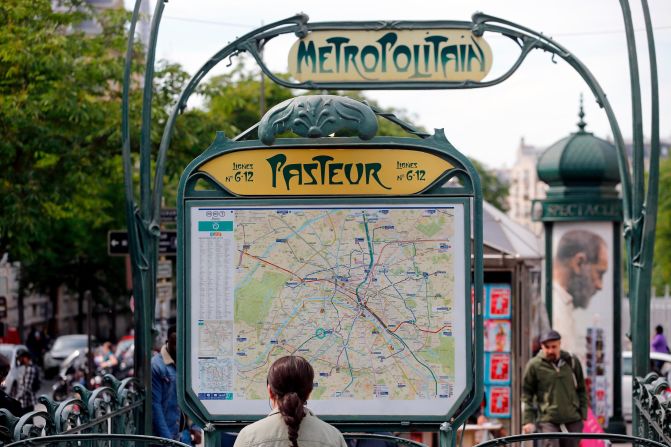
Pasteur metro station —
Hector Guimard's entrance to the Pasteur metro station in Paris, built in the early 20th century.
Thierry Chesnot/Getty Images Europe/Getty Images
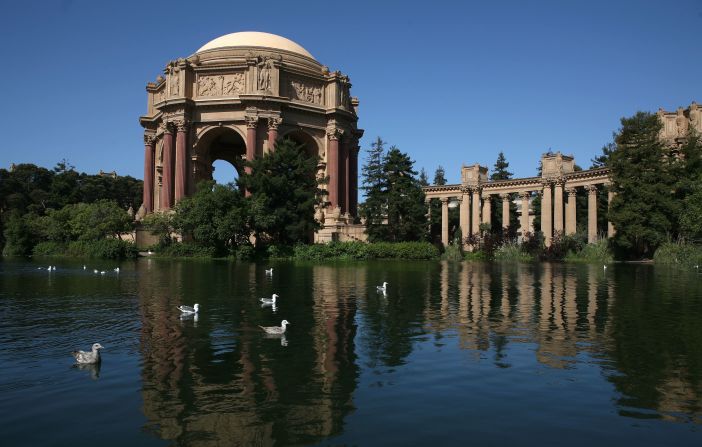
The Palace of Fine Arts —
The Palace of Fine Arts, a stone's throw from Lucasfilm's San Francisco HQ, is built in the neoclassic style with Corinthian columns, domes and water -- not unlike parts of Theed.
Justin Sullivan/Getty Images North America/Getty Images
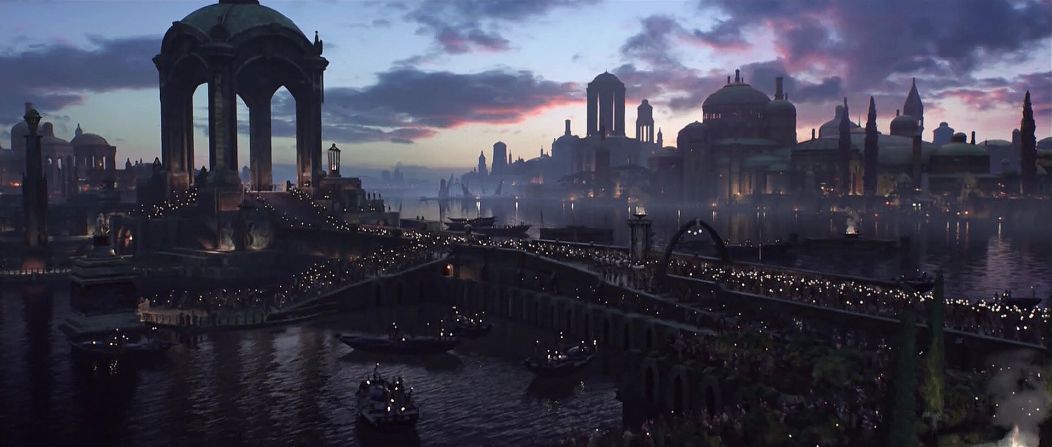
Naboo seen during the funeral of Padme. The neoclassic pavilion on the left has shades of those nearby in San Francisco.
Lucasfilm Ltd.
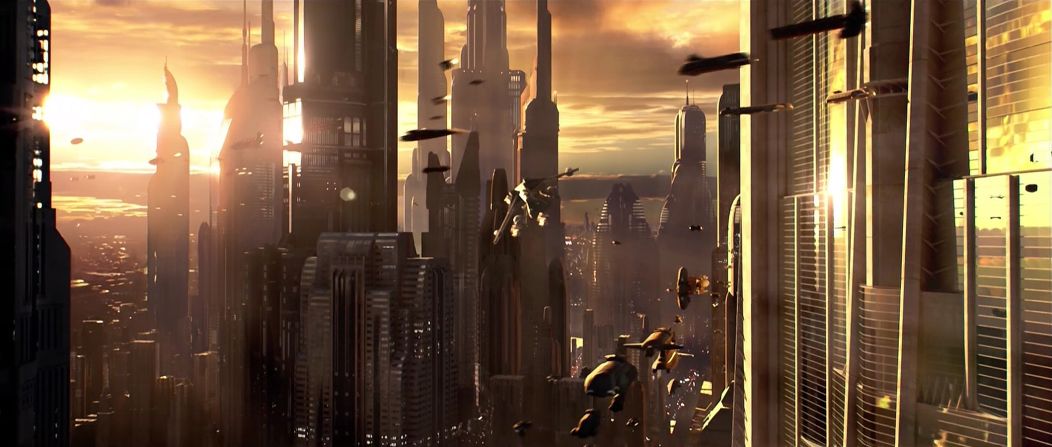
Reat says the city planet Coruscant (Pictured in "Episode III: Revenge of the Sith") was inspired by Trantor, a planet from the "Foundation" series of sci-fi novels by Isaac Asimov, written in the 1940s.
Lucasfilm Ltd.
Had Abbadon —
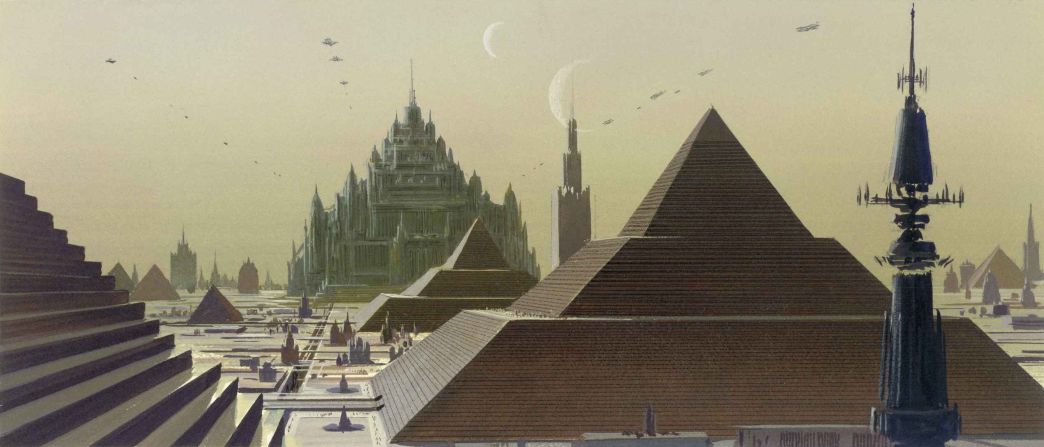
One of Ralph McQuarrie's original paintings of what would become Coruscant. Called Had Abbadon, in the background is the Imperial Palace, home to the Emperor. This vision of Coruscant would never come to pass by the time of the prequels. "Star Wars" lore says the Emperor re-purposed the Jedi Temple when he assumed power at the end of "Revenge of the Sith."
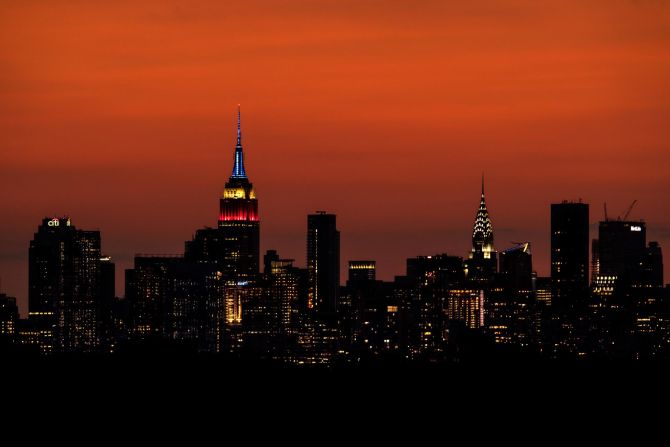
When it came to conceptualizing Coruscant for the special edition version of "Return of the Jedi" in 1997 and later the prequels, George Lucas used the Empire State and the Chrysler Building in New York as two reference points. The metallic finish and curved appendages of the latter would give the capital planet its Art Deco feel.
Richard Heathcote/Getty Images North America/Getty Images
The Republic Executive Building —
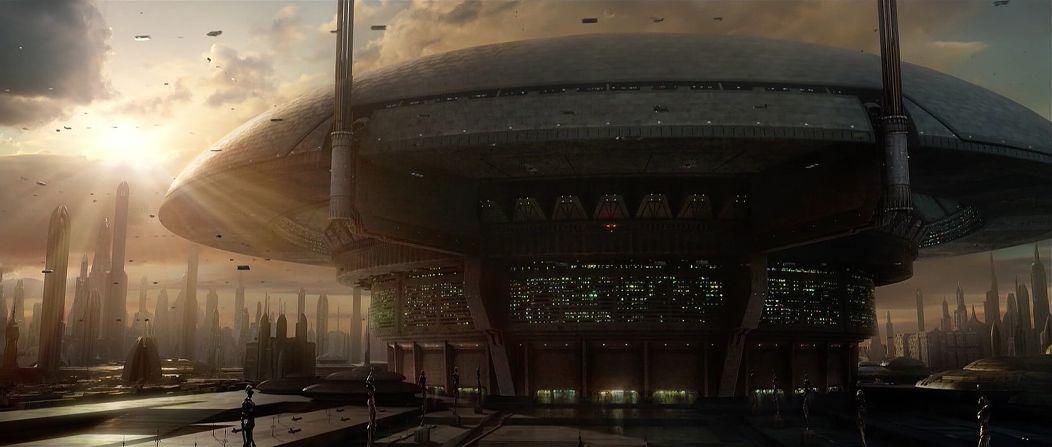
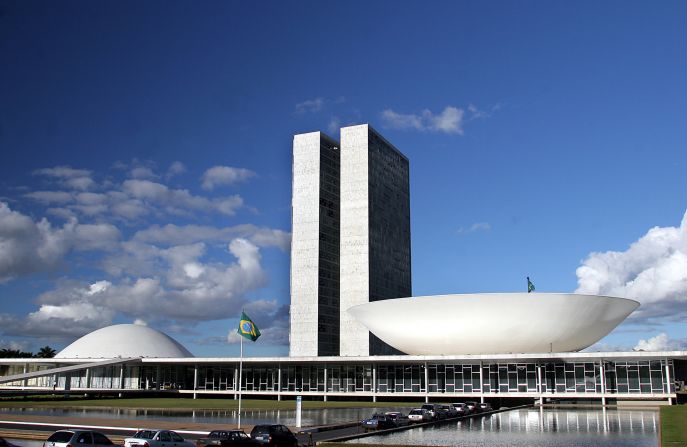
Much of the action on Coruscant -- if we can call it that -- takes place in the Senate. The Republic Executive Building building, a beehive of spacecraft coming and going, is topped with a dome that harks back to Oscar Niemeyer's domed senate chamber in Brasilia.
Lucasfilm Ltd.
The Brazilian National Congress —
Niemeyer's Brazilian National Congress, inaugurated in 1960, is one of many modern structures defining the capital Brasilia. The senate dome (left) may be an inspiration behind the senate in "Star Wars," but the link remains unconfirmed.
EVARISTO SA/AFP/AFP/Getty Images
The Grand Convocation Chamber —
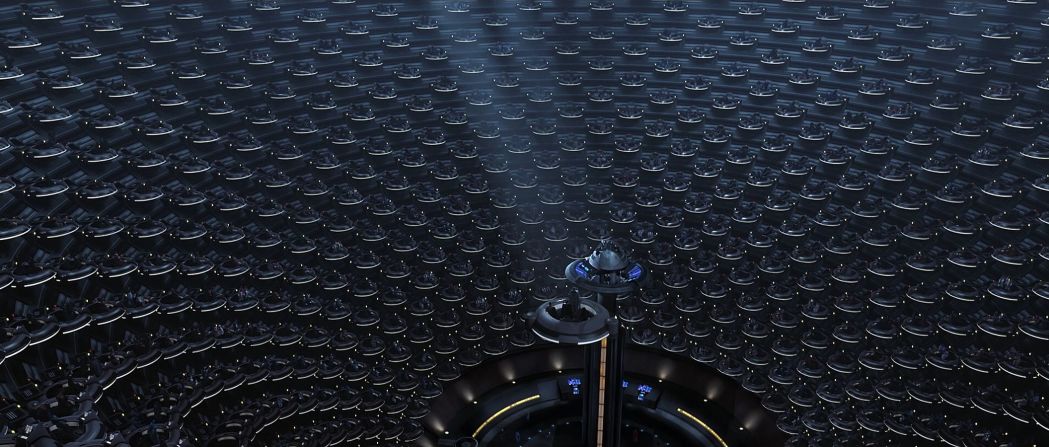
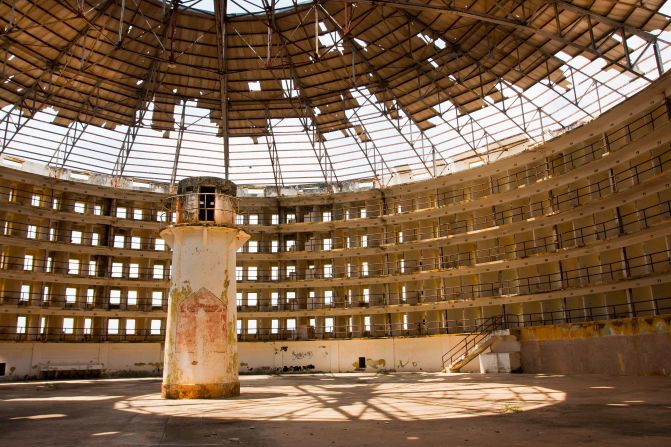
The Senate's Grand Convocation Chamber held a galaxy's worth of politicians, laid out around a central pillar from which the chancellor mediates affairs. The design is double-edged. It appears similar to Jeremy Bentham's panopticon, an 18th century prison design providing an omniscient position for the chancellor.
Lucasfilm Ltd.
Presidio Modelo —
Cuba's now abandoned Presidio Modelo was a real-life example of a functioning panopticon prison, with a central, supposedly omniscient tower.
Paolo Arsie Pelanda/Shutterstock
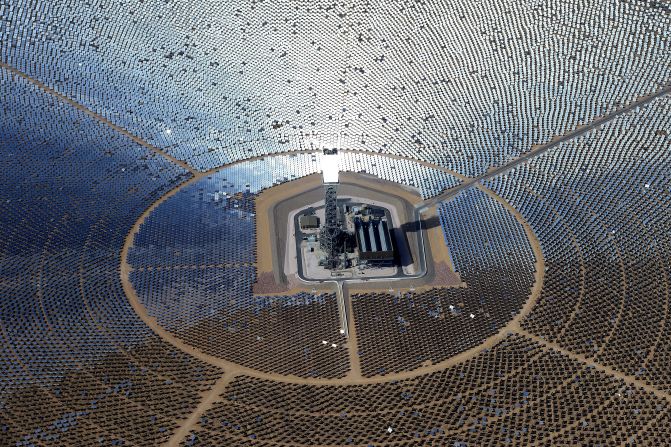
The chamber also looks like a concentrated solar array (like this example in the Mojave Desert, California). With all eyes on you, you're at the whims of the body politic. And as Chancellor Valorum found out in "The Phantom Menace," it's easy to get burned.
Ethan Miller/Getty Images North America/Getty Images
The Jedi Temple —
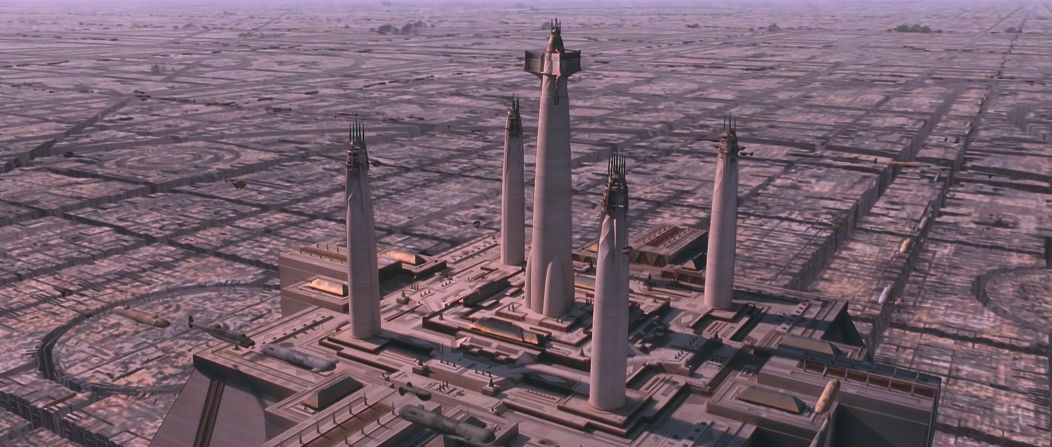
The Jedi Temple, seen in "The Phantom Menace." There's cross-pollination of religious architecture throughout: what Reat describes as a "Brutal interpretation of Aztec architecture," and minaret-like towers which "have an entasis, or a bulging," he says, "which reminds you of Southeast Asian towers."
Lucasfilm Ltd.
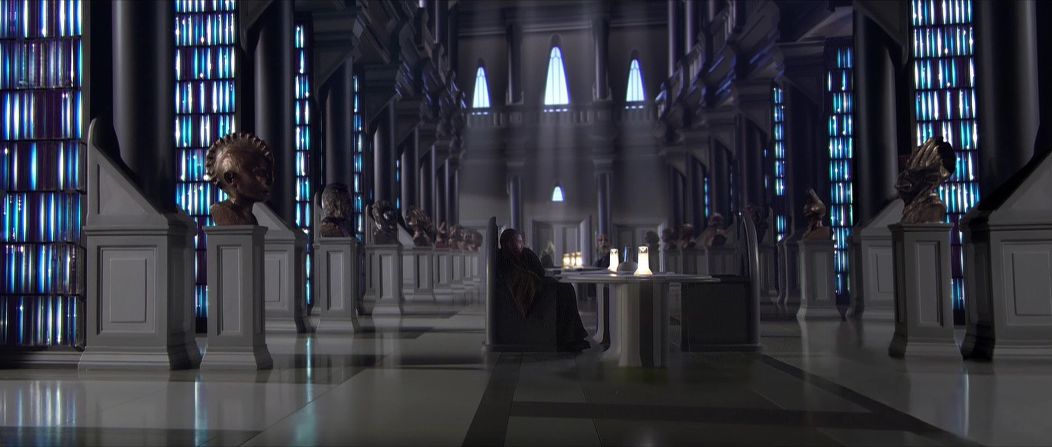
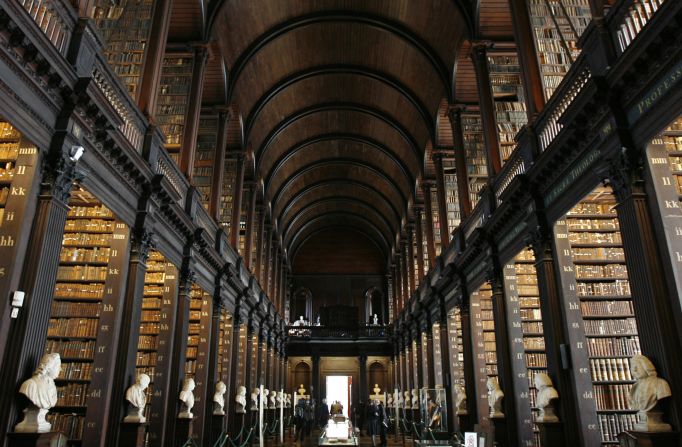
The Jedi Temple archives from "Attack of the Clones." Parts of the internal spaces of the temple were supposedly modeled on the Vatican, but the archives have one clear inspiration: The Long Room at Trinity College Dublin.
Lucasfilm Ltd.
The library Long Room at Trinity College, Dublin, pictured in 2007. Completed in 1732, the room is 213 feet long and contains over 200,000 books. There were stirrings in the Irish press that the college was seeking legal advice after the release of "Attack of the Clones" in 2002, but nothing came of it.
BENOIT DOPPAGNE/AFP/AFP/Getty Images
The Death Star —
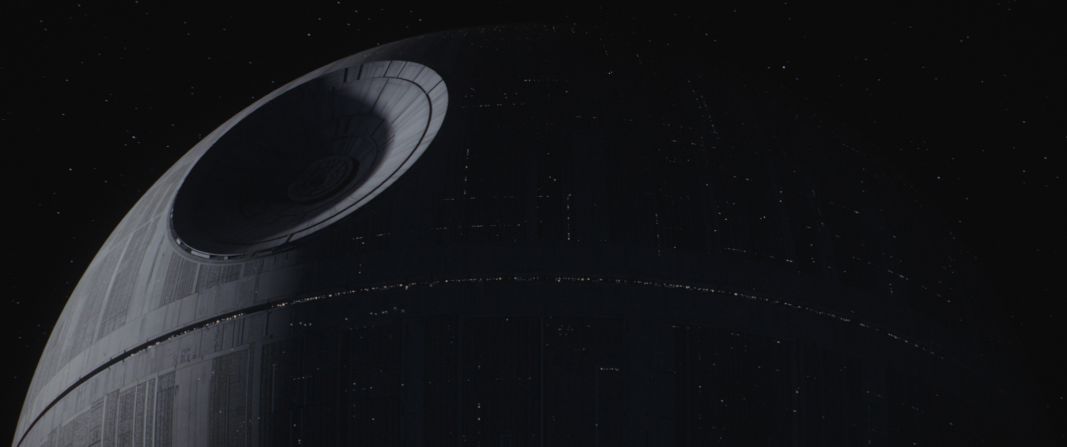
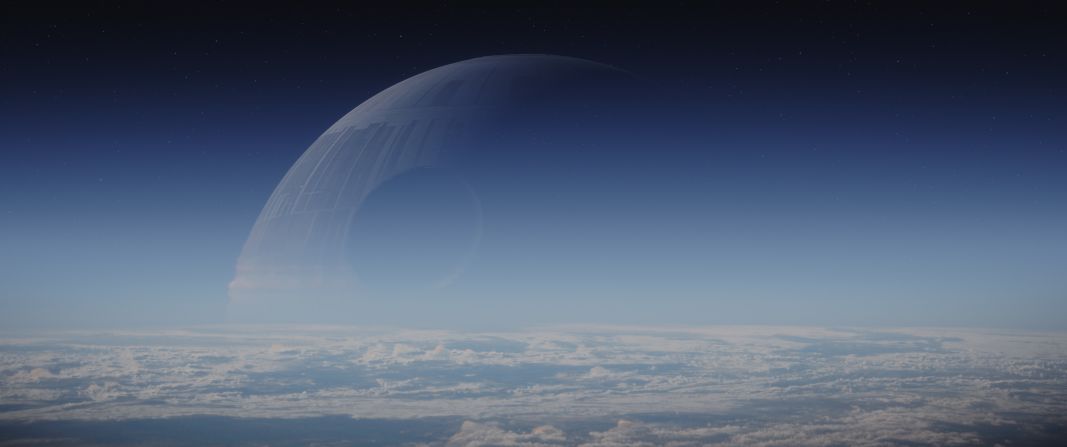
The Death Star in "Rogue One: A Star Wars Story." Not originally conceived as spherical, it took its shape after production designer John Barry added a curve to the lengthy corridors requested by Lucas.
Lucasfilm Ltd.
The Death Star II —
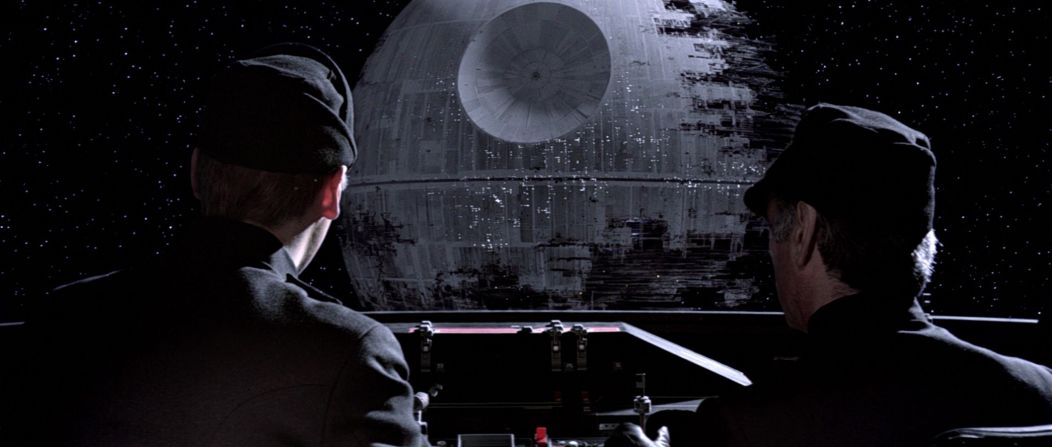
The second Death Star in "Return of the Jedi" was conspicuously incomplete, but its weapon was fully operational. The Imperial aesthetic, down to officer's uniforms, was heavily-indebted to Nazi Germany, all part of Lucas and McQuarrie's choice to easily signpost the galaxy's baddies.
Lucasfilm Ltd.
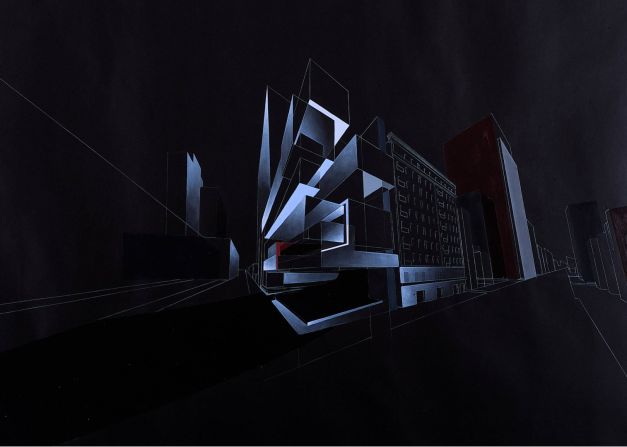
Zaha Hadid's painting of the Lois & Richard Rosenthal Center for Contemporary Art in Cincinnati, Ohio. Hadid was inspired by the Russian avant-garde and Suprematism, creating abstract works that, like the second Death Star, broke down at their extremities.
Zaha Hadid Architects
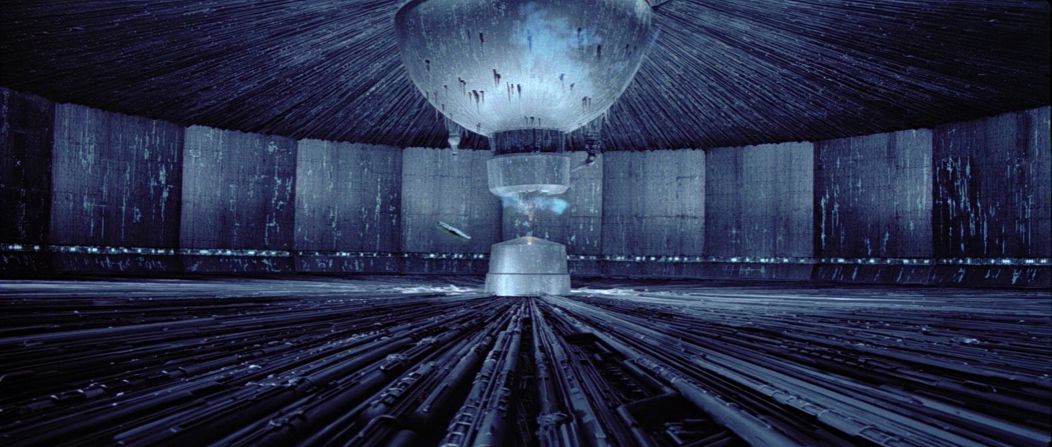
The fatal flaw within the second Death Star in "Return of the Jedi" was its reactor core. For a real-world likeness, seek out the photography of Reginald Van de Velde. His series capturing abandoned cooling towers, some as tall as 800 feet, are uncannily like the Death Star's vast interior.
Lucasfilm Ltd.
Starkiller Base —
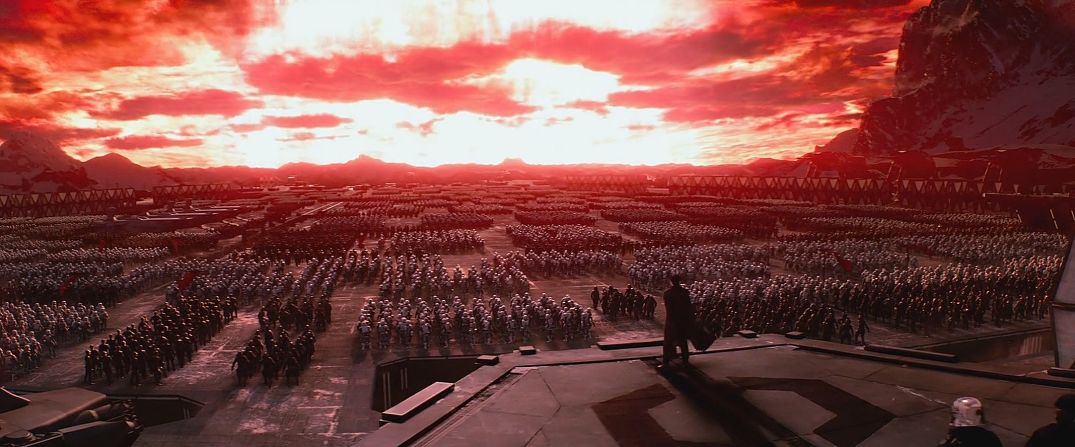
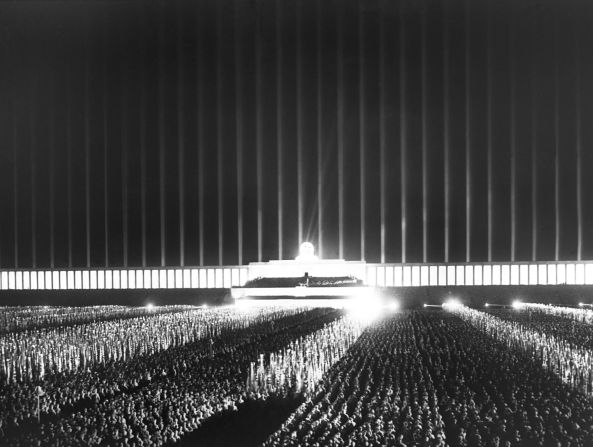
A still from "Star Wars: The Force Awakens" depicts a show of force from First Order troops on Starkiller Base. The visual language echoes the Nuremberg Rallies of the 1930s, when Nazi party members gathered annually in northern Bavaria. In the background, the base's weapon is fired, perhaps an allusion to the "Cathedral of Light."
Lucasfilm Ltd./Disney
The "Cathedral of Light" was the name given to the practice of turning anti-aircraft searchlights to the sky en masse at the Zeppelin Field at Nuremberg. The visual spectacle was described as "both solemn and beautiful" by British ambassador Nevile Henderson. Pictured is one such instance in September 1937.
Historical/Corbis Historical/Corbis via Getty Images
Star Destroyers —
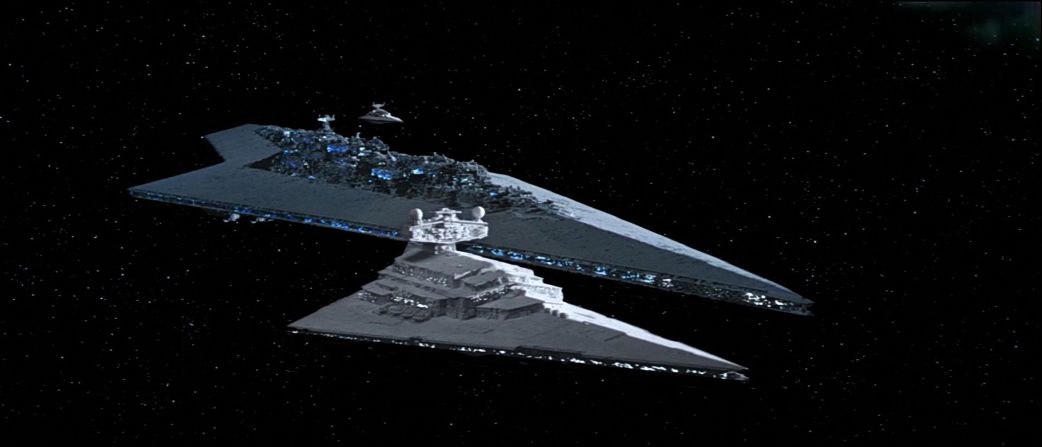
Two Star Destroyers and the "Executor," Darth Vader's Super Star Destroyer, seen in "The Empire Strikes Back." The Imperial spaceships are, like the Death Star, Brutalist on close inspection, a mass of hard lines and boxy shapes. Originally conceived as a 36-inch model, the Star Destroyer silhouette would eventually show up in the real world.
Lucasfilm Ltd.
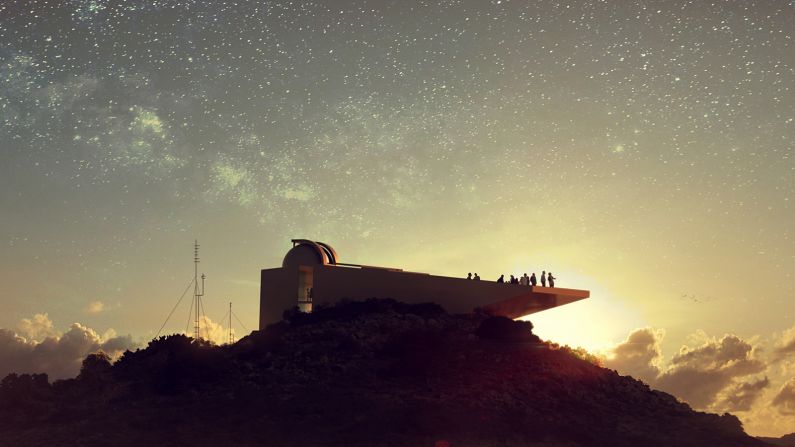
Troodos Observatory, Cyprus —
A number of outlets noticed a distinctly Star Destroyer-esque shape to Kyriakos Tsolakis Architects' concept for a new astronomical center at the Troodos Observatory, in Cyprus. The company isn't shy about its inspiration: architect Nicodemos K. Tsolakis said in September: "I was a 'Star Wars' fan growing up. Of course, the client didn't know this when they hired us. They were pretty surprised with where we took it but they love the ideas."
Kyriakos Tsolakis Architects
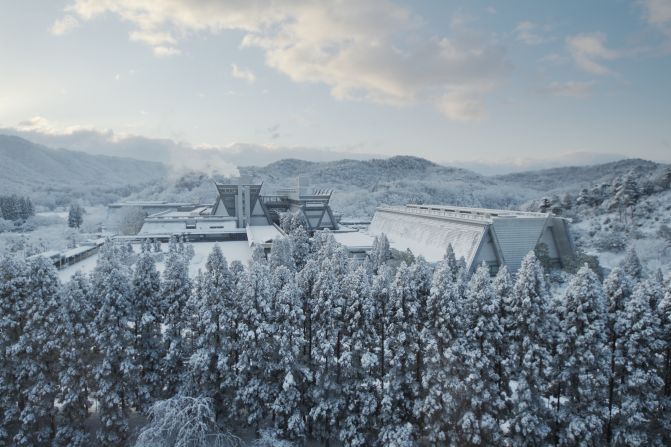
The Kyoto ICC —
What if the Empire got to the ice planet Hoth first? The Kyoto International Conference Center certainly looks the picture under a blanket of snow. Designed by Sachio Otani and opened in 1966, it uses Brutalist concrete in a modern take on traditional Japanese architecture. Full of triangles and hexagons -- see Christoffer Rudquist's incredible photo series of the interiors -- the shapes also happen to mimic Imperial aesthetics almost perfectly.
Yoshinori Kuwahara/Moment Open/Getty Images
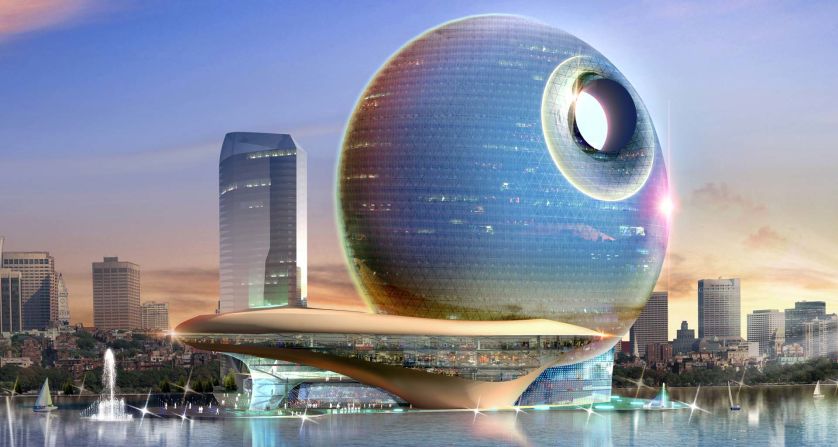
The Full Moon Hotel, Baku —
The Full Moon Hotel by Heerim Architects drew instant comparisons with the Death Star when renders hit the internet in 2007. The hotel, planned for Baku, Azerbaijan, wouldn't have been out of step with the city -- it's home to a bevvy or intriguing architecture -- but to date the building sadly remains unrealized.
Heerim Architects & Planners Co., Ltd.
Cloud City —
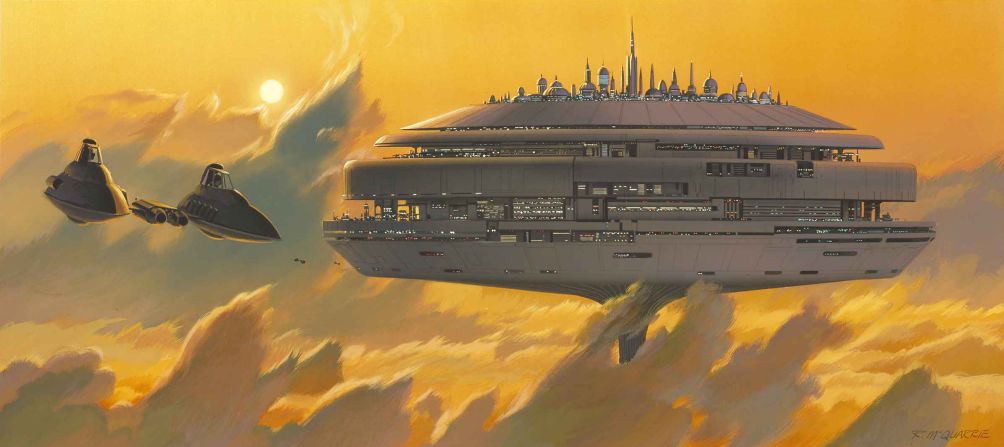
Ralph McQuarrie's concept art of Cloud City, as seen in "The Empire Strikes Back." The floating metropolis was inspired by "Flash Gordon" and 1930s sci-fi/western serial "The Phantom Empire," says Reat.
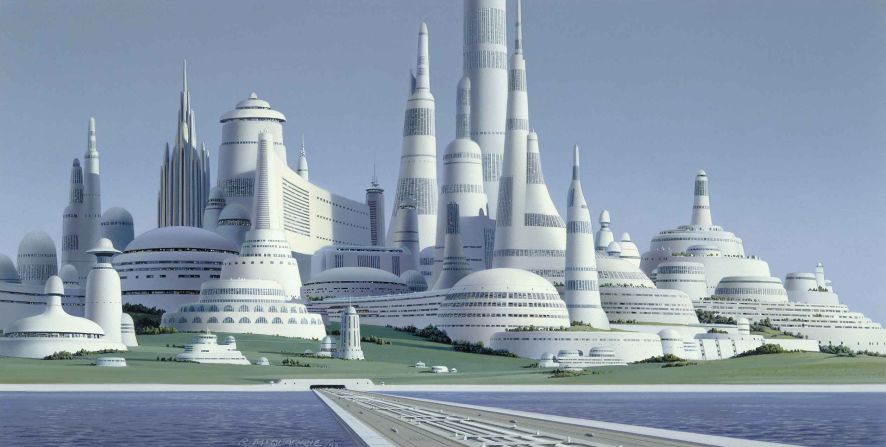
"George was actually one of the ultimate recyclers of concept art," says Szostak. This McQuarrie painting shows an early version of Alderaan, which was at one time imagined as an Imperial City. Another unused McQuarrie Imperial City looked a lot like Cloud City, and later on the two would be combined.
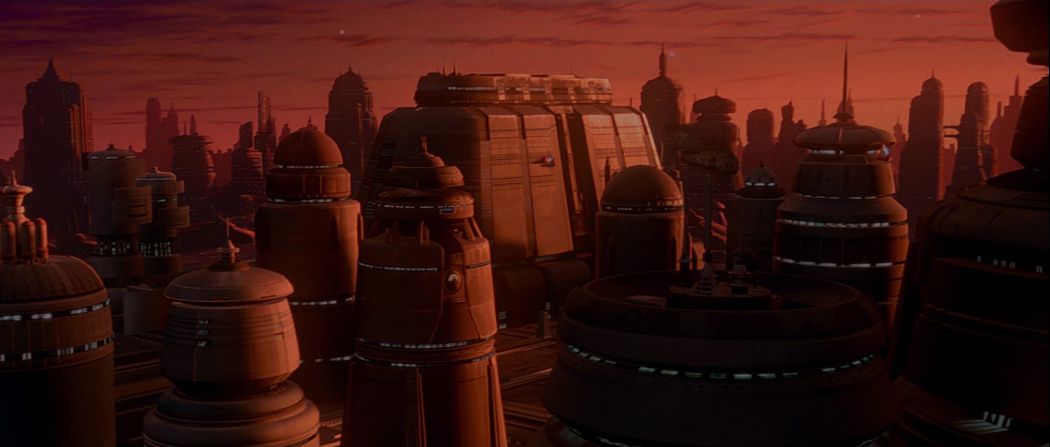
When Cloud City received a revamp in 1997 with the release of the special editions, the architecture drew close resemblance to McQuarrie's early Alderaan concepts.
Lucasfilm Ltd.
HAVOC —
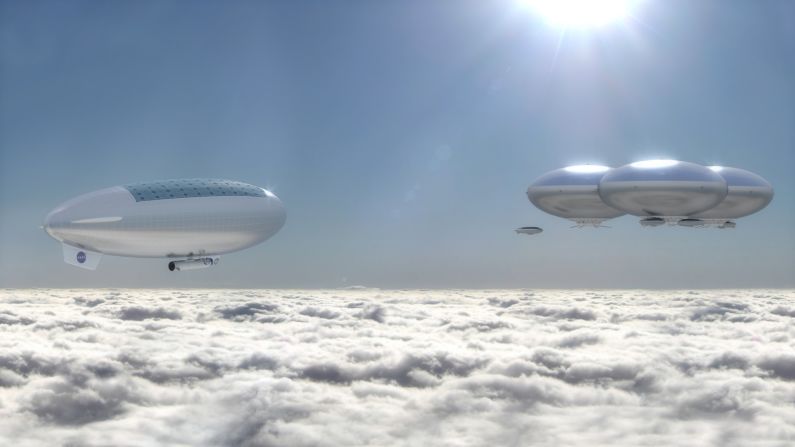
Similar to Cloud City, in 2014 NASA proposed that "HAVOC" (High Altitude Venus Operational Concept), a floating settlement above the toxic, highly pressurized surface of Venus, might be one way to successfully explore our nearest solar neighbor.
Courtesy SACD/NASA
Ahch-To —
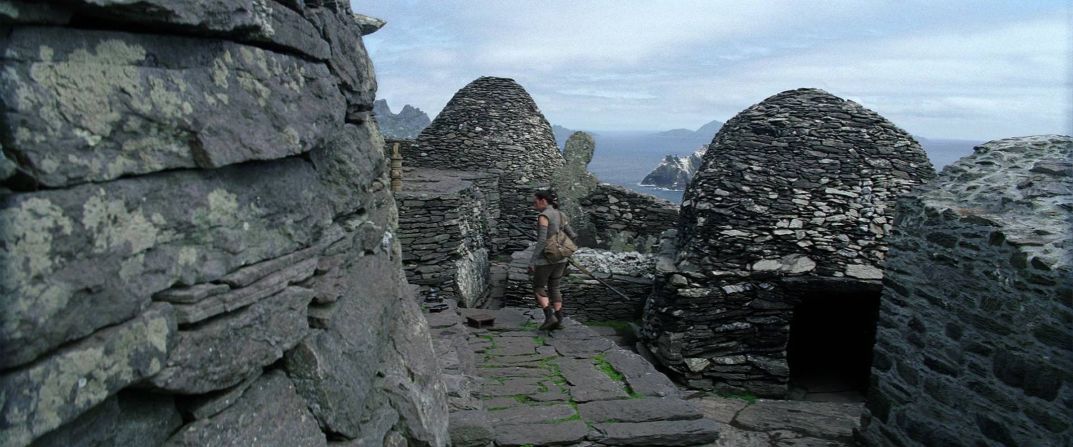
Stone clochans, as seen in "The Force Awakens." The 6th century structures on Skellig Michael, an outcrop off southwest Ireland, were once a Christian monastery, but in the "Star Wars" universe double as the site of the first Jedi temple.
Lucasfilm Ltd.
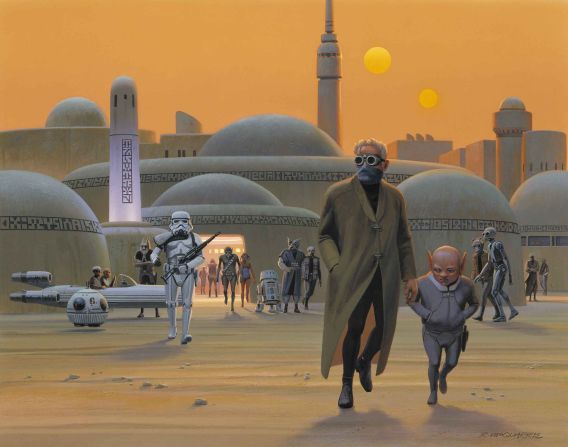
One of Ralph McQuarrie's early paintings of Mos Eisley, Tatooine. The city, "a hive of scum and villainy," was imagined to be constructed of mud, rammed earth and plaster in the North African vernacular.
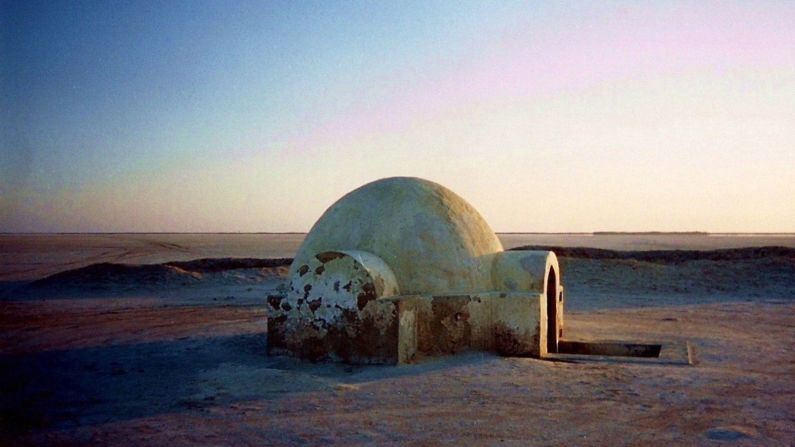
The films famously shot scenes for Tatooine in Tunisia, utilizing grain storage containers called ghorfas and turning the Sisi el Driss Hotel in Matmata into Luke's subterranean home. Pictured is the entrance to Luke's homestead, which fans restored in 2012.
Damien Slattery
Desert Cities —
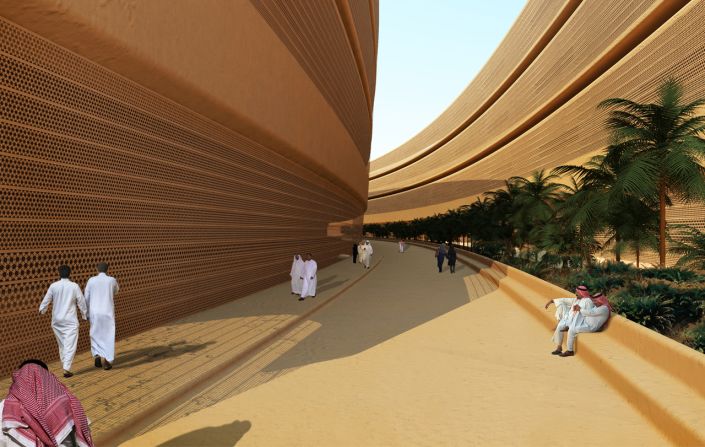
Tatooine, with its desert climate, relied on moisture farmers for water. The problems surrounding arid climates is a crucial design consideration for architects operating in parts of the Middle East. In 2015, Luca Curci Architects presented "Desert Cities," a proposal for sustainable living in the UAE's open desert, utilizing natural building materials and water recycling.
Luca Curci Architects
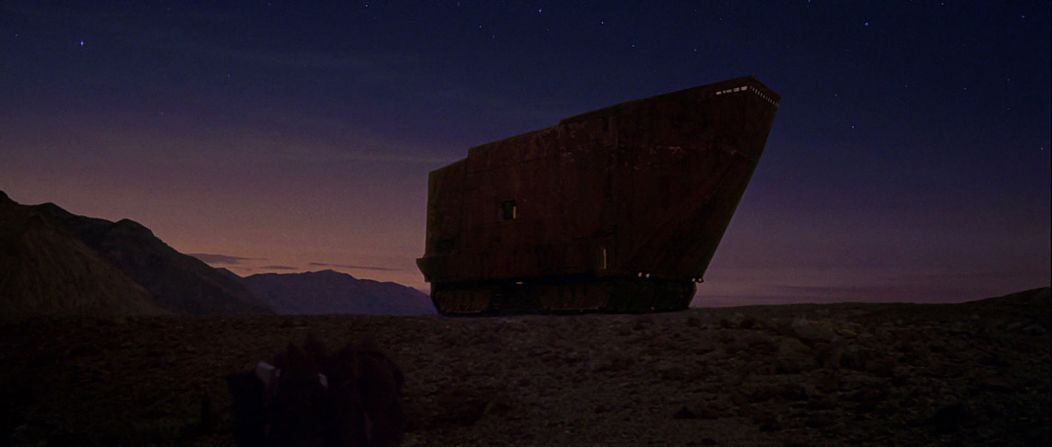
The sandcrawler, a tracked vehicle from Tatooine, featured in the first "Star Wars" film. Not a building per se, it has an unlikely architectural legacy ...
Lucasfilm Ltd.
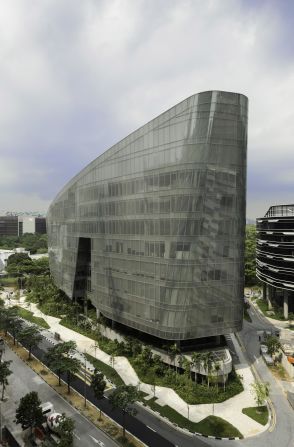
Architecture firm Aedas took the sandcrawler silhouette and successfully applied it to none other than the Lucasfilm Singapore HQ. Completed in 2013, the design went on to win a number of awards.
Aedas
Jabba's Palace —
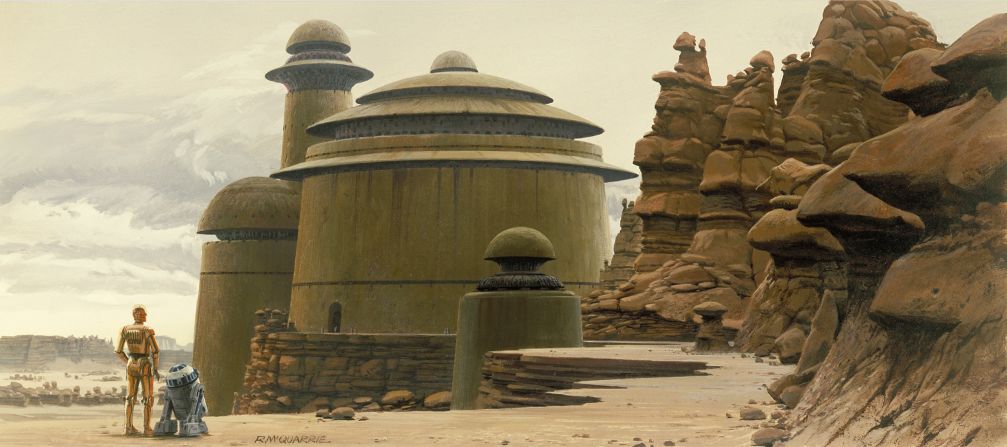
Jabba the Hutt's palace on Tatooine, as painted by Ralph McQuarrie. A combination of Byzantine shapes and clean Brutalist surfaces, it's an example of the "Star Wars" universe's magpie approach to architecture.