Your effort and contribution in providing this feedback is much
appreciated.
Close
Ad Feedback
NASA lures would-be space travelers with awesome tourism posters
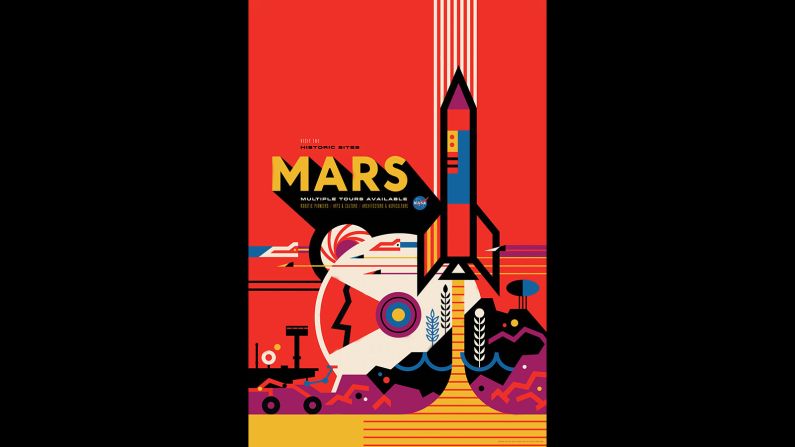
Mars, illustrated by Invisible Creature —
NASA's Jet Propulsion Laboratory (JPL) released a set of "travel posters" depicting various cosmic destinations. This poster shows Mars as a habitable world. The posters -- the brainchild of The Studio, the design and strategy team at JPL -- are a way to celebrate the discovery of planets. JPL visual strategist David Delgado says of the designs: "All of these far off places are hard to get to, but they are there. The immediate thought was, if we could go there someday, what would it be like?"
Invisible Creature
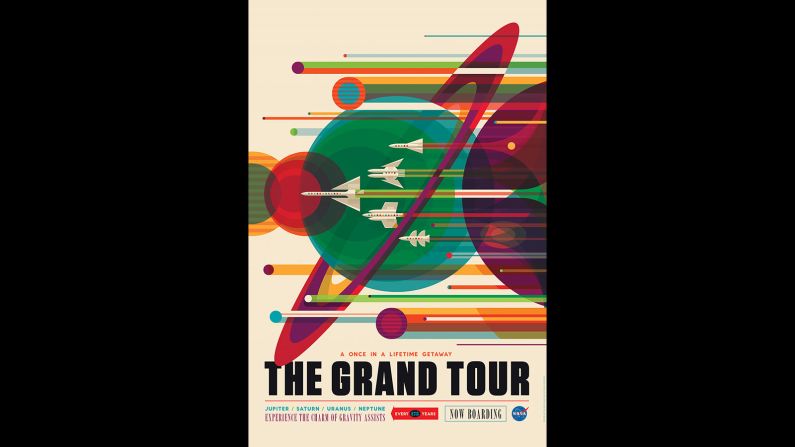
Grand Tour, illustrated by Invisible Creature —
Once every 175 years Jupiter, Saturn, Uranus and Neptune align. NASA's Voyager mission was designed to take advantage of this alignment in the late 1970s and the 1980s.
Invisible Creature
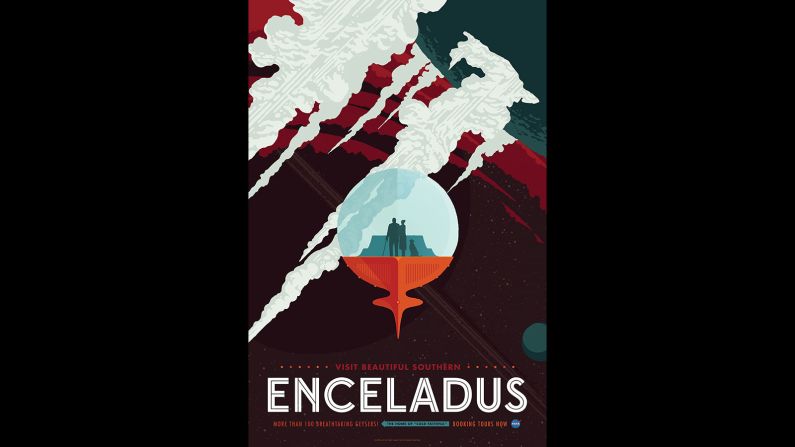
Enceladus, illustrated by Invisible Creature —
Enceladus' icy jets have a pivotal role in creating Saturn's E-ring. Other findings from NASA's Cassini mission show strong evidence of a global ocean and hydrothermal activity beyond Earth.
Invisible Creature
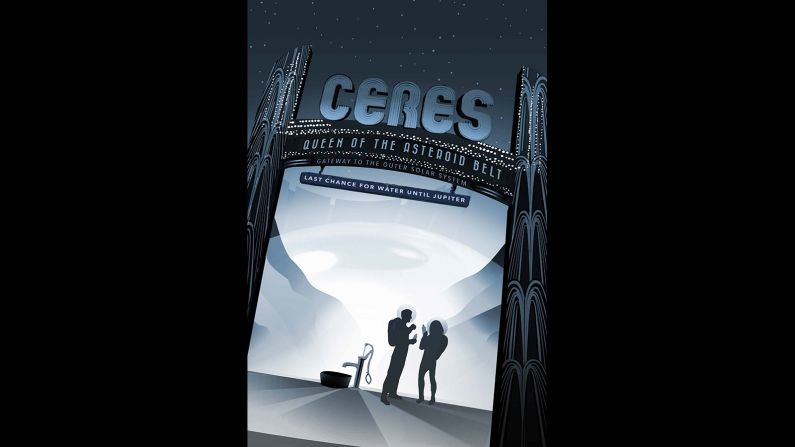
Ceres, illustrated by Liz Barrios De La Torre —
Ceres is the closest dwarf planet to the Sun and the largest object in the main asteroid belt between Mars and Jupiter. Could the planet be a future rest stop enroute to Jupiter?
Courtesy NASA/JPL-Caltech
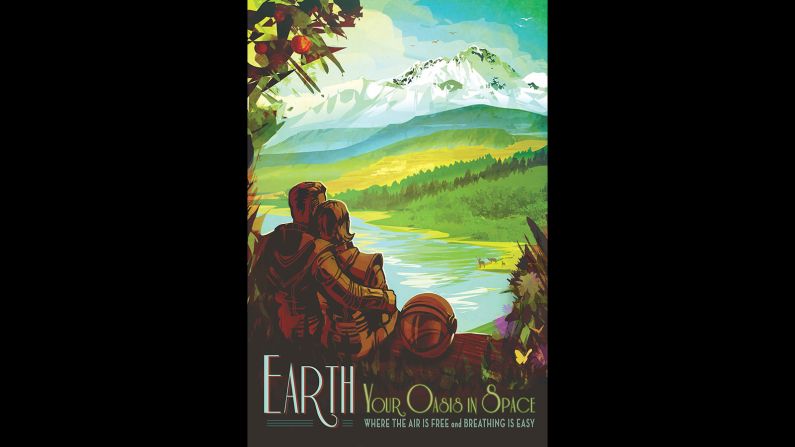
Earth, illustrated by Joby Harris —
There's no place like home. NASA's earth science missions study our planet as a whole system -- to understand how it's changing.
Courtesy NASA/JPL-Caltech
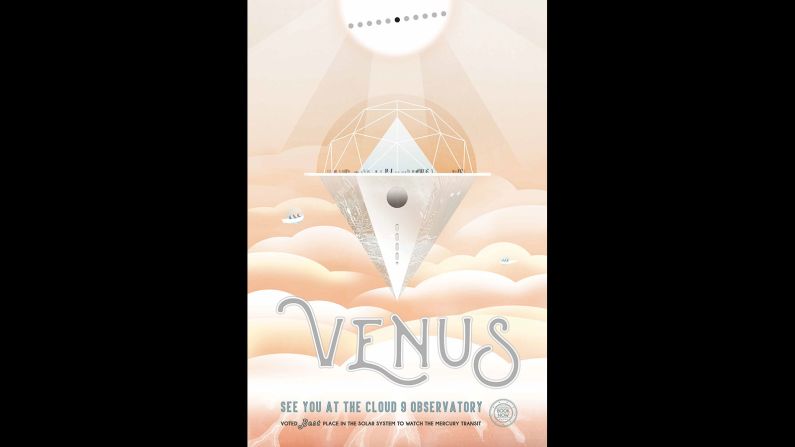
Venus, illustrated by Jessie Kawata —
This poster imagines the "best" vantage point on Venus, to spot the Mercury Transit -- or when Mercury comes between the Sun and Earth.
Courtesy NASA/JPL-Caltech
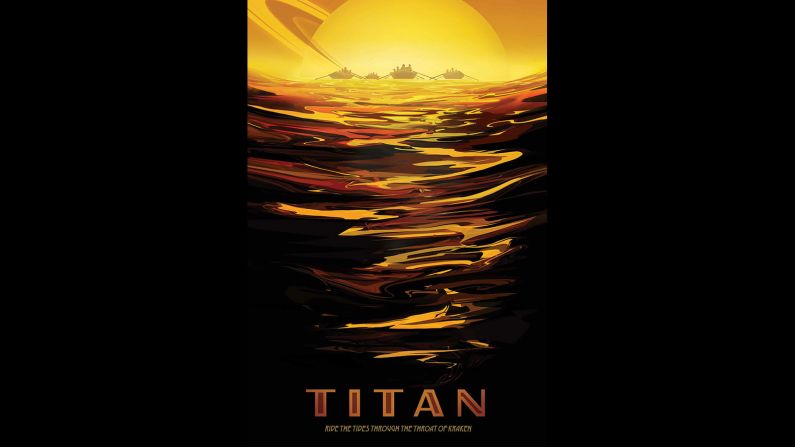
Titan, illustrated by Joby Harris —
Titan, Saturn's largest moon, has a surface shaped by rivers and lakes of liquid ethane and methane. In this depiction, visitors could paddle through the Kraken Mare.
Courtesy NASA/JPL-Caltech
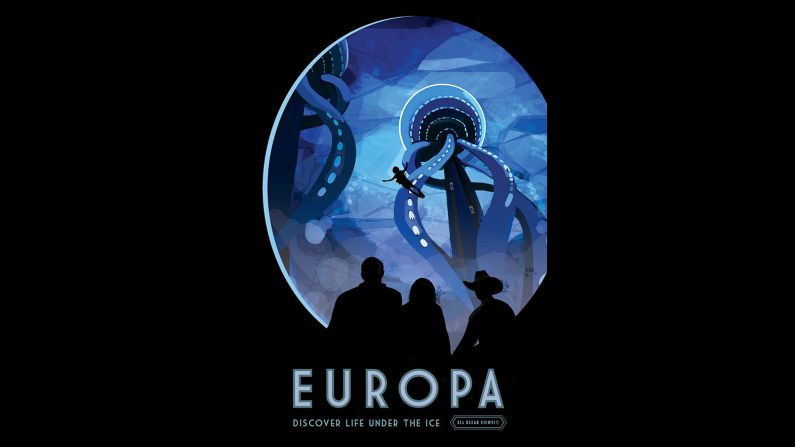
Europa, illustrated by Liz Barrios De La Torre —
Jupiter's icy moon Europa is believed to conceal a global ocean of salty liquid water twice the volume of Earth's oceans.
Courtesy NASA/JPL-Caltech
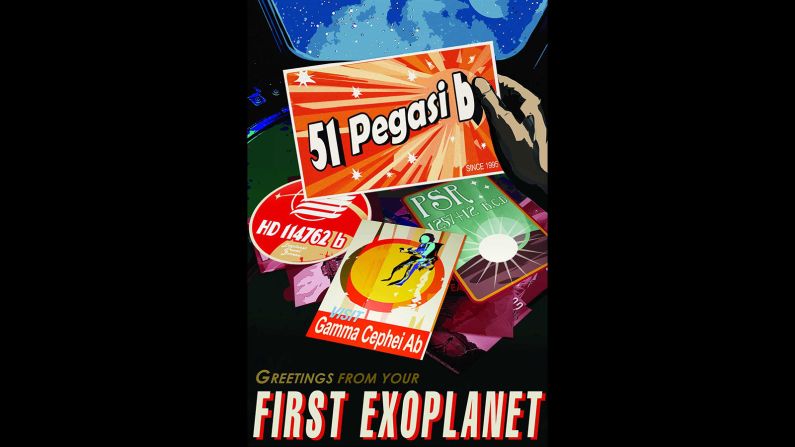
In 1995, scientists discovered 51 Pegasi b. The exoplanet is about half the mass of Jupiter.
Courtesy NASA/JPL-Caltech
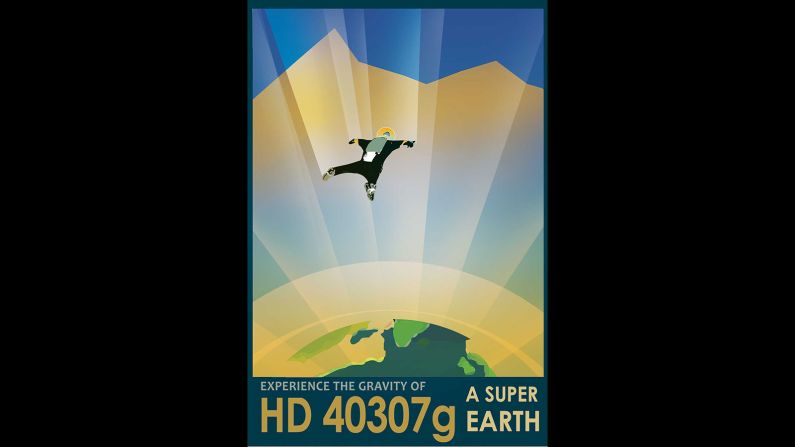
HD 40307 g is an exoplanet located 42 light-years away. Its gravity would be at least twice as strong as it is on Earth.
Courtesy NASA/JPL-Caltech
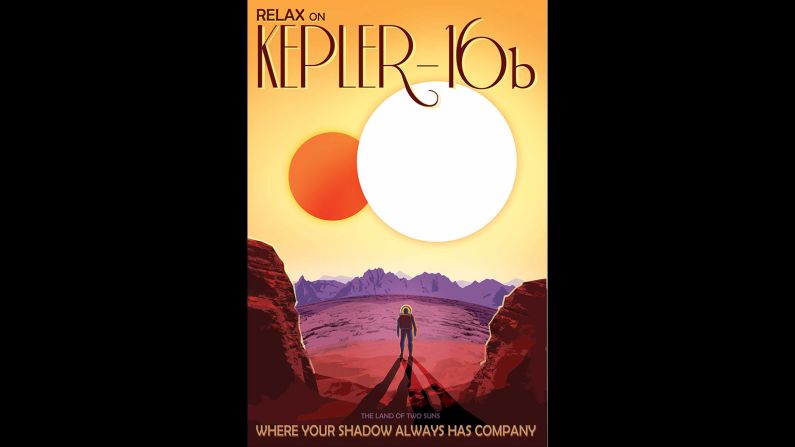
Kepler-16b, illustrated by Joby Harris —
The extrasolar planet Kepler-16b is billed as the "land of two suns" for the twin orbs that shine down on it.
Courtesy NASA/JPL-Caltech
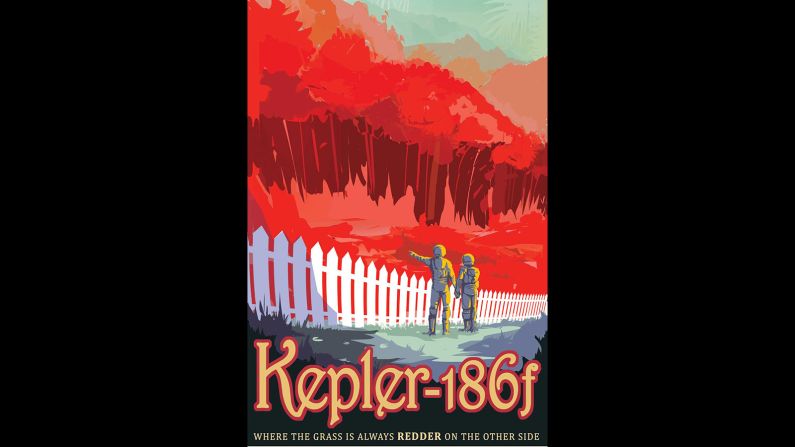
Kepler-186f, illustrated by Joby Harris —
Kepler-186f orbits a cooler, redder sun. The discovery of Kepler-186f was a step in finding worlds with similar characteristics to Earth.
Courtesy NASA/JPL-Caltech
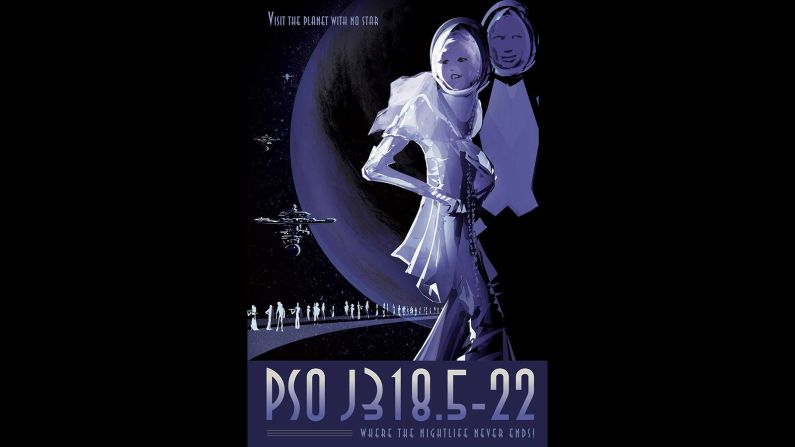
PSO-J318.5-22, illustrated by Joby Harris —
PSO-J318.5-22 belongs to a special class of free-floating planets, called rogue. They wander alone in the galaxy and do not orbit a parent star. The planets glow faintly from the heat of their formation until they cool down completely.
Courtesy NASA/JPL-Caltech
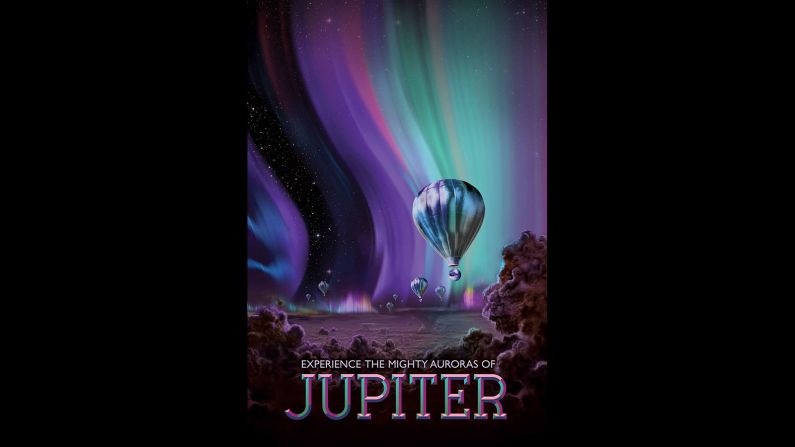
Is this the most incredible light show in the solar system? Jupiter's auroras are hundreds of times more powerful than Earth's. This poster depicts the Jovian cloudscape.