Discovered: Funny medieval doodles and secret, rare manuscuripts | CNN
Thank You!
Your effort and contribution in providing this feedback is much
appreciated.
Close
Ad Feedback
Discovered: Funny medieval doodles and secret, rare manuscuripts
700-year-old doodles, what's changed? —
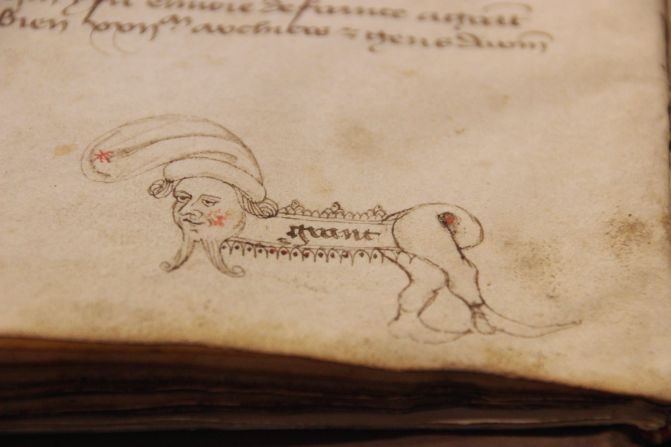
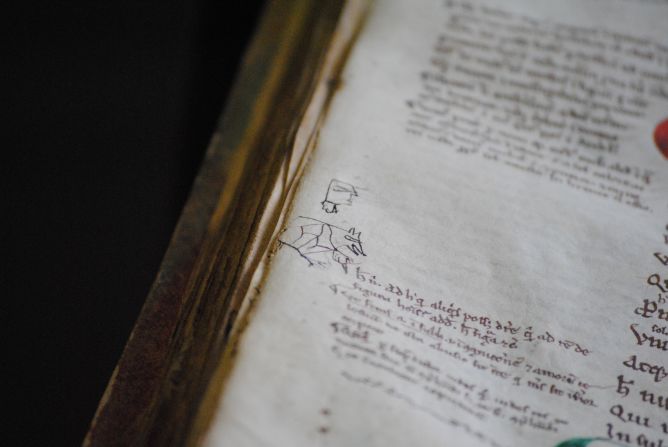
Medieval scribes had to create their own nibs by whittling the ends of feathers. To test them, they often drew doodles that were never intended to be seen. Many of the doodles are extremely imaginative. This artist liked to create weird, hybrid creatures.
Erik Kwakkel, Leiden University
700-year-old doodles, what's changed? —
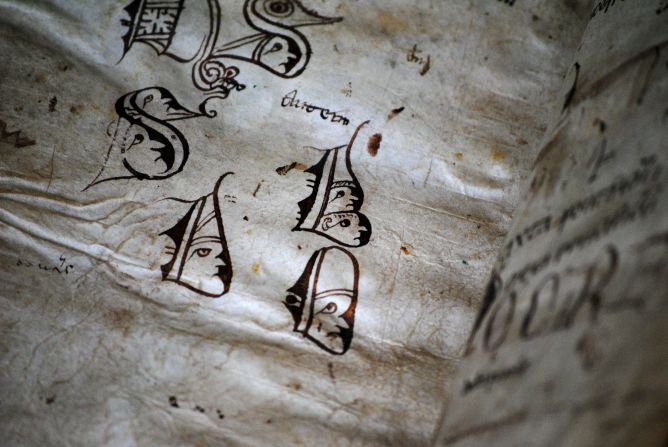
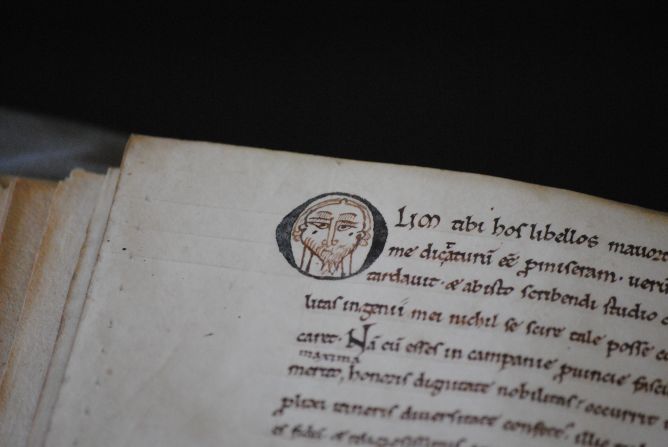
Sometimes they would test the pen by playing around with variations of illuminated lettering.
Erik Kwakkel, Leiden University
700-year-old doodles, what's changed? —
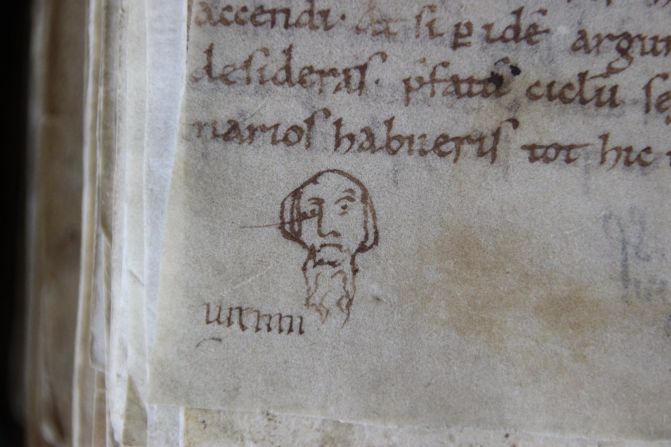
But it is the funny faces that capture the imagination most, giving us an unprecedented insight into the humor and individuality of medieval monks.
Erik Kwakkel, Leiden University
700-year-old doodles, what's changed? —
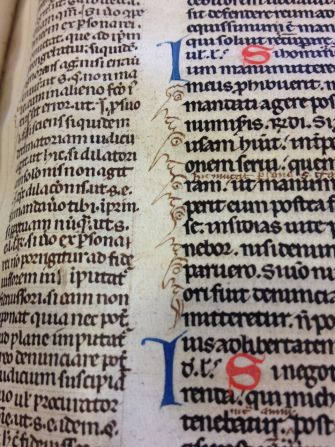
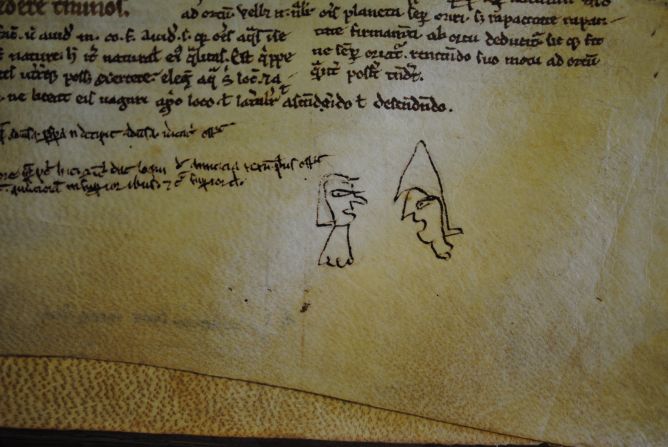
It is thought that these doodles, of faces in profile with long, sharp noses, were intended to highlight important sections of text.
Erik Kwakkel, Leiden University
700-year-old doodles, what's changed? —
Some of the doodles are rather crude, but they may be depicting a scene of importance to the scribe.
Erik Kwakkel, Leiden University
700-year-old doodles, what's changed? —
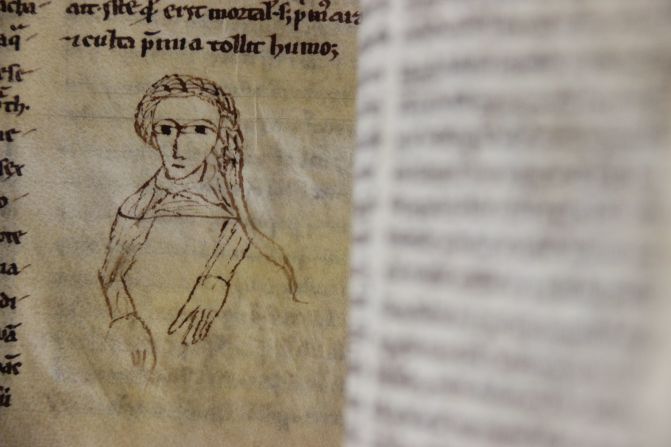
Others are more sophisticated, and demonstrate fledgling artistic talent.
Erik Kwakkel, Leiden University
700-year-old doodles, what's changed? —
Doodles were commonly drawn on the back or front pages of books, which were intended to be glued onto the covers, hiding the doodles. But some are found in the margins, as well. These may have been drawn by bored students.
Erik Kwakkel, Leiden University
700-year-old doodles, what's changed? —
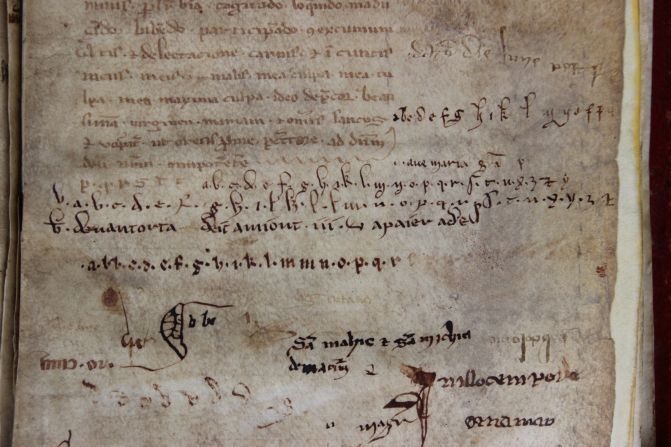
Scribes also tested their pens with snatches of writing. They normally used their own natural handwriting as opposed to the style required by the manuscript, allowing modern scholars to analyze them more accurately.
Erik Kwakkel, Leiden University
700-year-old doodles, what's changed? —
It is difficult to miss the sense of humor that underpins many of these medieval doodles. They were an expression of fun in a more austere age.
Erik Kwakkel, Leiden University
700-year-old doodles, what's changed? —
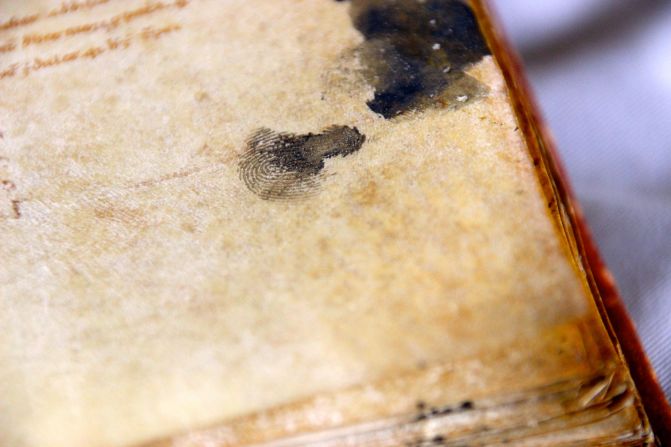
Details like this thumb-print give a sense of humanity to the scribes, who lived more than 700 years ago.
Erik Kwakkel, Leiden University
700-year-old doodles, what's changed? —
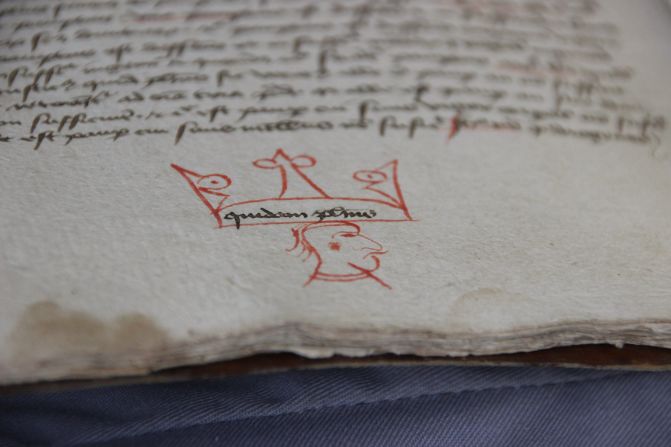
This doodle, of a man with an oversized crown on his head, contains the first words of the next page to give the reader a "heads-up". It appears in a hymn book, so it would have made it easier to sing fluently.
Erik Kwakkel, Leiden University
700-year-old doodles, what's changed? —
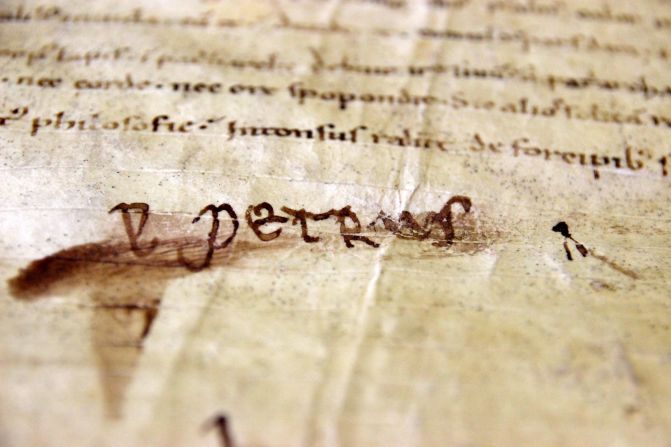
On rare occasions, students would scrawl their names in the margins of books, like naughty schoolchildren do today. This one was named "Peter".
Erik Kwakkel, Leiden University
700-year-old doodles, what's changed? —
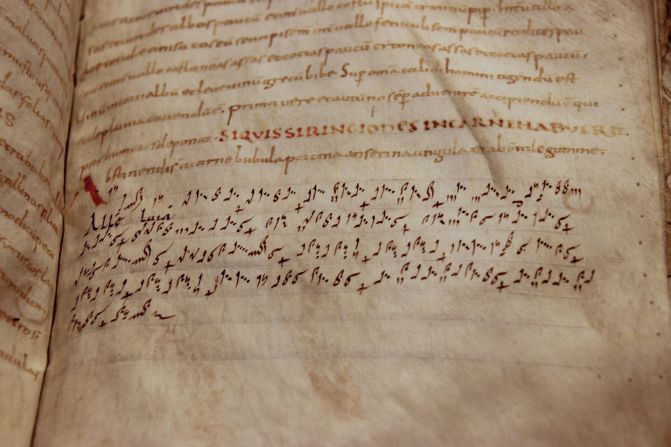
This theological book has had musical notes from a hymn drawn into it by a reader, for his own amusement. It is one of the earliest examples of musical notation in existence.
Erik Kwakkel, Leiden University
700-year-old doodles, what's changed? —
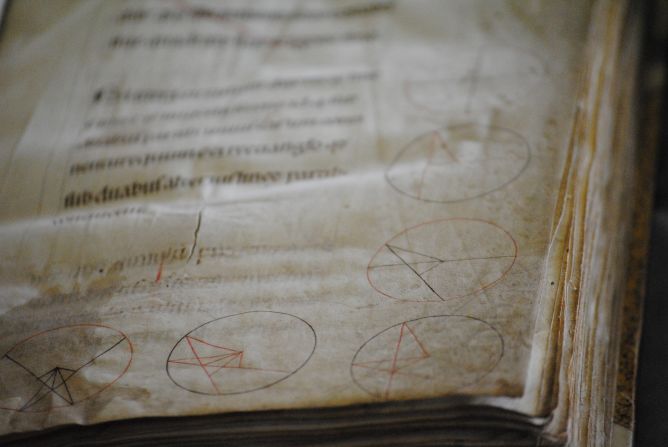
These concentric diagrams may have been experiments in mathematics. Or they may have been ways of idling away the time in a boring lesson.
Erik Kwakkel, Leiden University
700-year-old doodles, what's changed? —
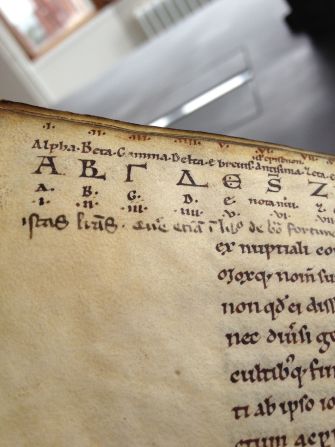
This student decided to practice his Greek translation at the top of his textbook.
Erik Kwakkel, Leiden University
700-year-old doodles, what's changed? —
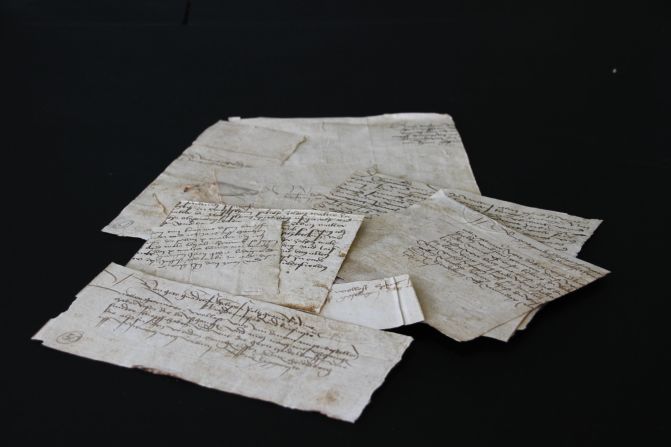
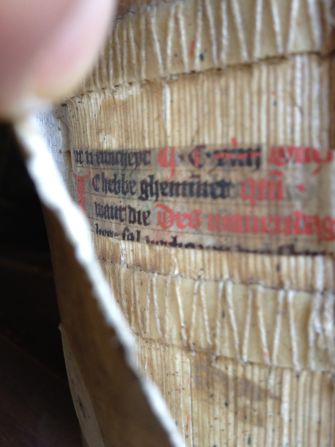
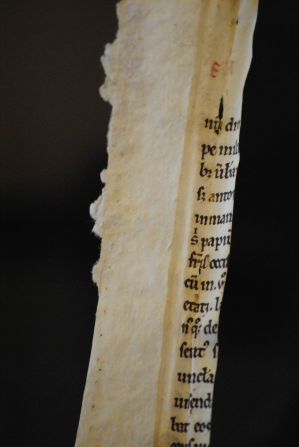
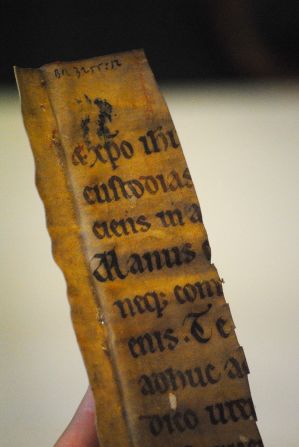
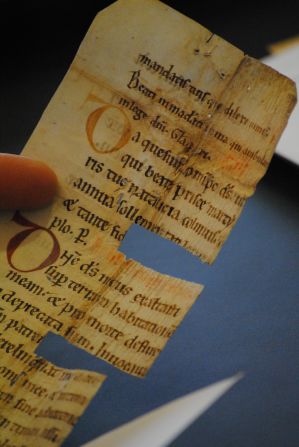
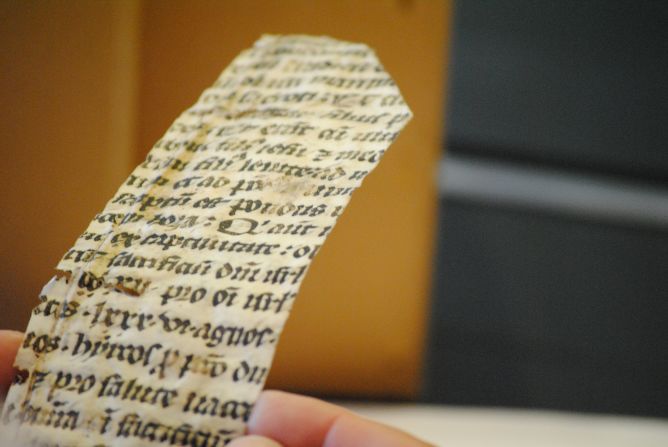
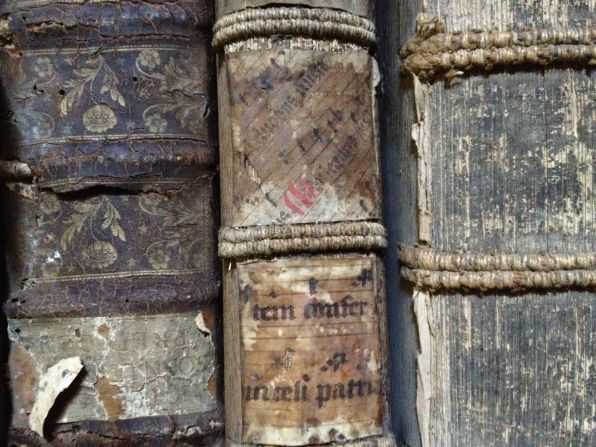
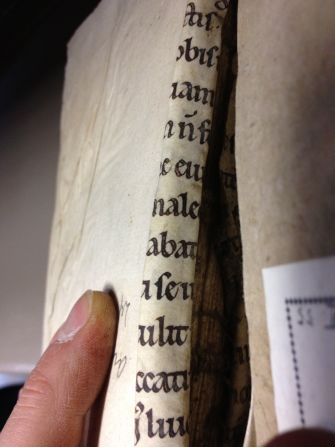
These fragments of rare manuscripts were found hidden inside the binding of medieval books.
Erik Kwakkel, Leiden University
700-year-old doodles, what's changed? —
The calligraphy is beautiful, but handwritten books had fallen out of fashion with the invention of the printing press in the 15th Century.
Erik Kwakkel, Leiden University
700-year-old doodles, what's changed? —
For this reason, handwritten books and notes were thrown away, or sliced up and used to pad out bindings.
Erik Kwakkel, Leiden University
700-year-old doodles, what's changed? —
The careless way in which the manuscripts were thrust into the covers shows that, ironically enough, they only survived because they were not valued at all.
Erik Kwakkel, Leiden University
700-year-old doodles, what's changed? —
Some include just tantalizing words and phrases. Scholars are working to decipher and identify them, and work out what they can teach us.
Erik Kwakkel, Leiden University
700-year-old doodles, what's changed? —
They survived for so long partially because they were made of parchment, which lasts far longer than paper.
Erik Kwakkel, Leiden University
700-year-old doodles, what's changed? —
An aura of mystery surrounds them, as they are like puzzles waiting to be cracked.
Erik Kwakkel, Leiden University
700-year-old doodles, what's changed? —
One fragment shows the early workings of a translation from Arabic into Latin, giving modern scholars an unprecedented insight into the process.
Erik Kwakkel, Leiden University
700-year-old doodles, what's changed? —
This is a piece of Hebrew writing on parchment, probably part of a Torah scroll. It was found in the binding of a medieval book.
Erik Kwakkel, Leiden University
700-year-old doodles, what's changed? —
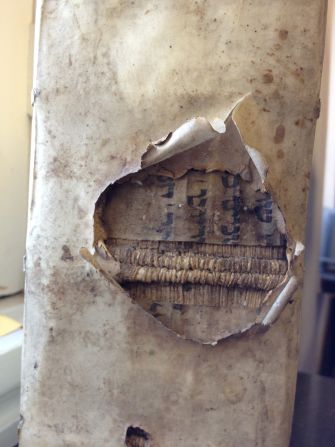
Sometimes the fragments are visible through the cover, which has worn away with age.
Erik Kwakkel, Leiden University
700-year-old doodles, what's changed? —
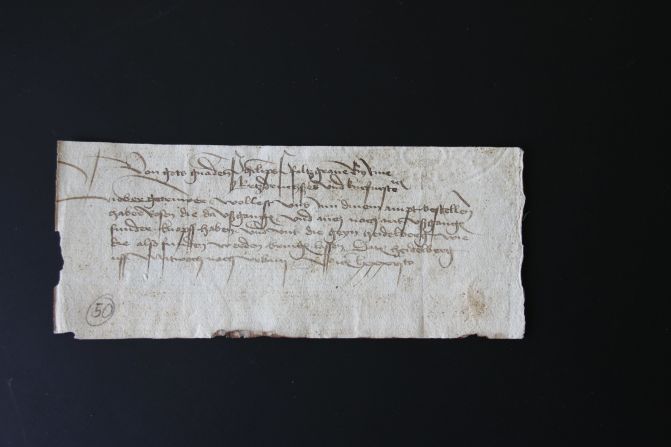
One particularly fascinating example was a note from a 15th Century German nobleman to his servant. "Could you please get me some wild roses, but make sure to include some that are still in bud," it says.