25-year-old whiz kid forgoes traditional ink and brush in favor of mathematical concepts that generate stunning imagery | CNN
Thank You!
Your effort and contribution in providing this feedback is much
appreciated.
Close
Ad Feedback
Math genius and artist: Is this the next da Vinci?
x + y = ART? —
The following math formulas may or may not jog memories of high school trigonometry. Scroll through for a dose of variables, tessellations, polygons, and everything else that inspires Hamid Naderi Yeganeh, a mathematician, who through his passion for numbers, cranks out gorgeous images. The images themselves take a few weeks at a time to create.
Courtesy Hamid Naderi Yeganeh
10,000 line segments —
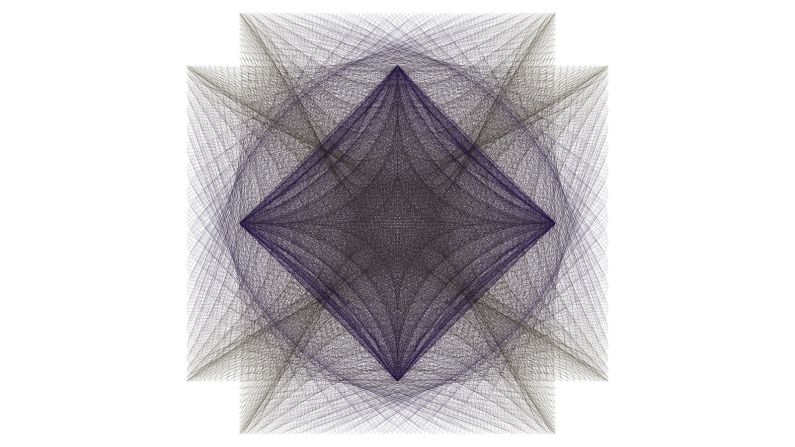
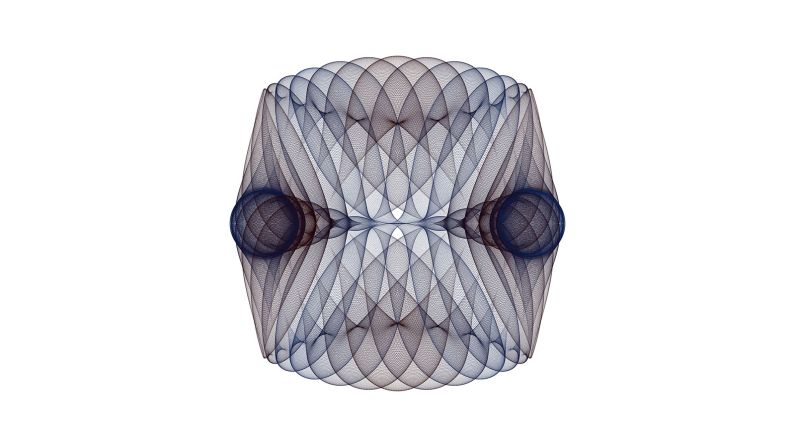
This image shows 10,000 line segments. For each k=1,2,3,...,10000 the endpoints of the k-th line segment are: ((3/4)cos(86πk/10000), (sin(84πk/10000))^5) and ((sin(82πk/10000))^5, (3/4)cos(80πk/10000))
courtesy Hamid Naderi Yeganeh
10,000 line segments —
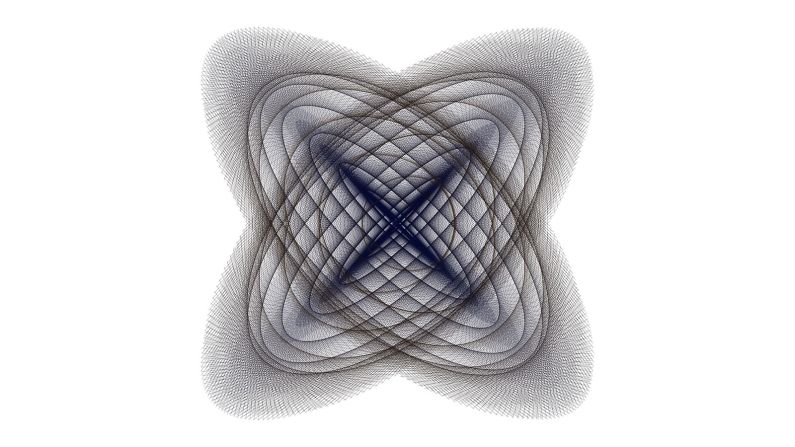
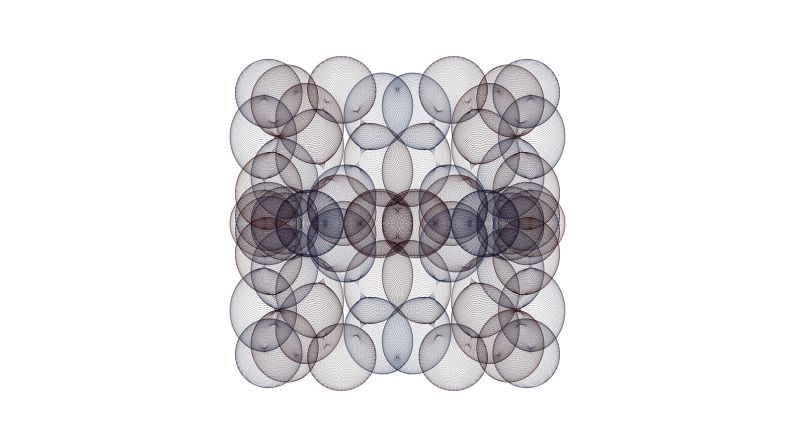
This image shows 10,000 line segments. For each k=1,2,3,...,10000 the endpoints of the k-th line segment are: (sin(108πk/10000)sin(4πk/10000), cos(106πk/10000)sin(4πk/10000)) and (sin(104πk/10000)sin(4πk/10000), cos(102πk/10000)sin(4πk/10000))
courtesy Hamid Naderi Yeganeh
9,000 circles —
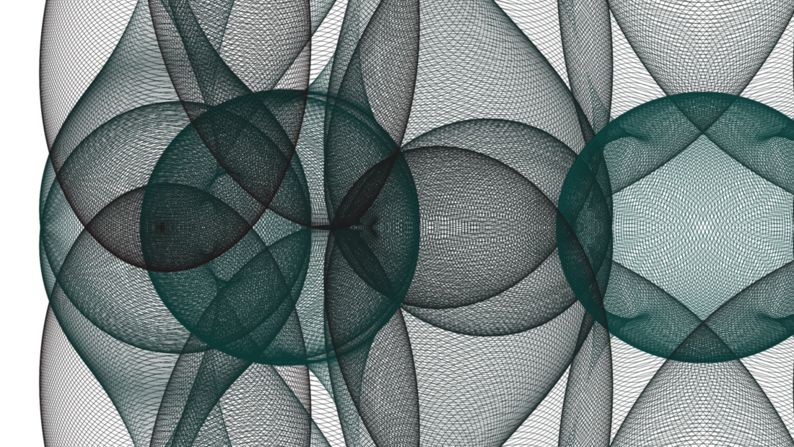
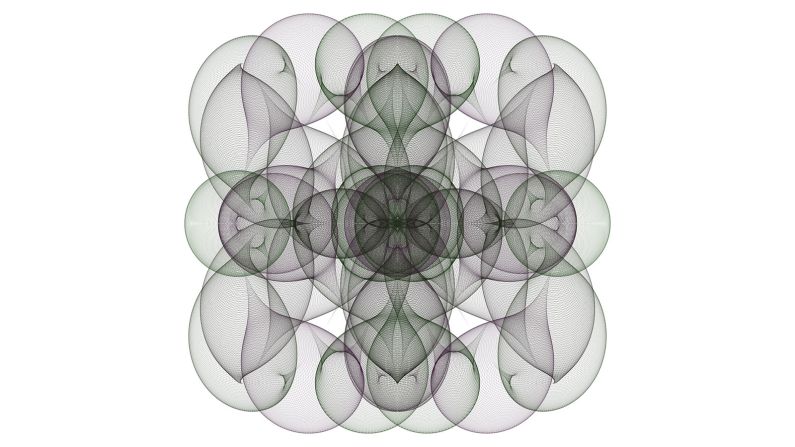
This image shows 9,000 circles. For k=1,2,3,...,9000 the center of the k-th circle is: (cos(6πk/9000), (sin(20πk/9000))^3) and the radius of the k-th circle is: (1/4)(sin(42πk/9000))^2
courtesy hamid maderi jeganeh
8,000 circles —
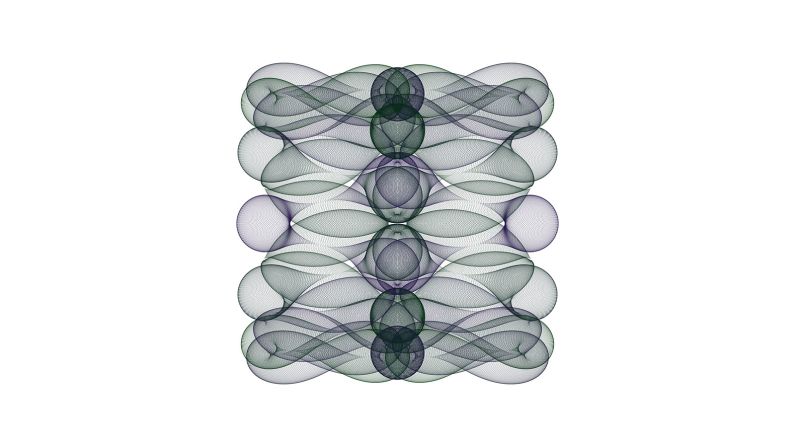
This image shows 8,000 circles. For k=1,2,3,...,8000 the center of the k-th circle is: (sin(14πk/8000), (cos(26πk/8000))^3) and the radius of the k-th circle is: (1/4)(cos(40πk/8000))^2
courtesy Hamid Naderi Yeganeh
6,000 circles —
This image shows 6,000 circles. For k=1,2,3,...,6000 the center of the k-th circle is: (cos(6πk/6000), (sin(14πk/6000))^3) and the radius of the k-th circle is: (1/4)(cos(66πk/6000))^2
courtesy Hamid Naderi Yeganeh
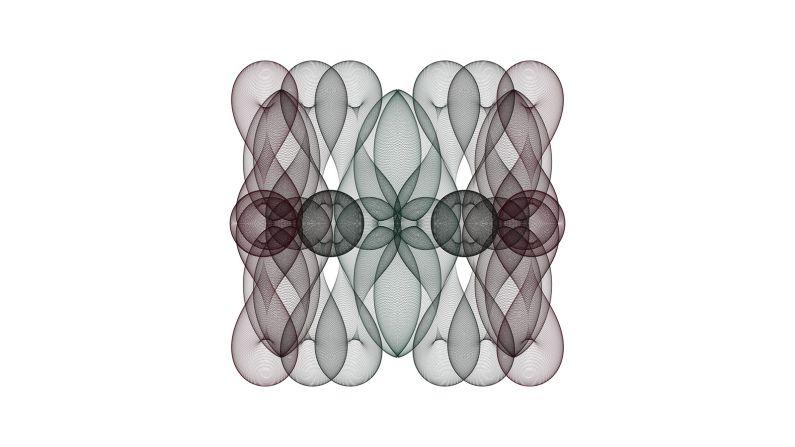
10,000 circles —
This image shows 10,000 circles. For k=1,2,3,...,10000 the center of the k-th circle is: ((cos(14πk/10000))^3, (sin(24πk/10000))^3) and the radius of the k-th circle is: (1/3)(cos(44πk/10000))^4
courtesy Hamid Naderi Yeganeh
8,000 circles —
This image shows 8,000 circles. For k=1,2,3,...,8000 the center of the k-th circle is: ((sin(22πk/8000))^3, cos(6πk/8000)) and the radius of the k-th circle is: (1/5)(sin(58πk/8000))^2
courtesy Hamid Naderi Yeganeh
7,000 circles —
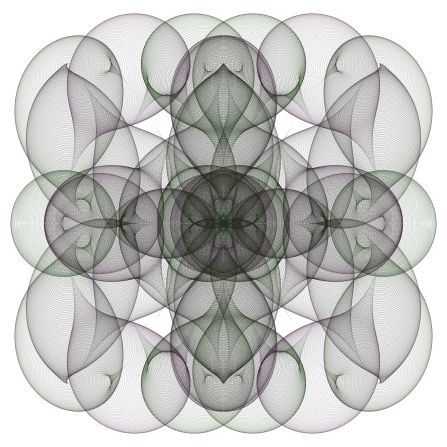
This image shows 7,000 circles. For k=1,2,3,...,7000 the center of the k-th circle is: (cos(2πk/7000), (sin(18πk/7000))^3) and the radius of the k-th circle is: (1/4)(cos(42πk/7000))^2
courtesy Hamid Naderi Yeganeh
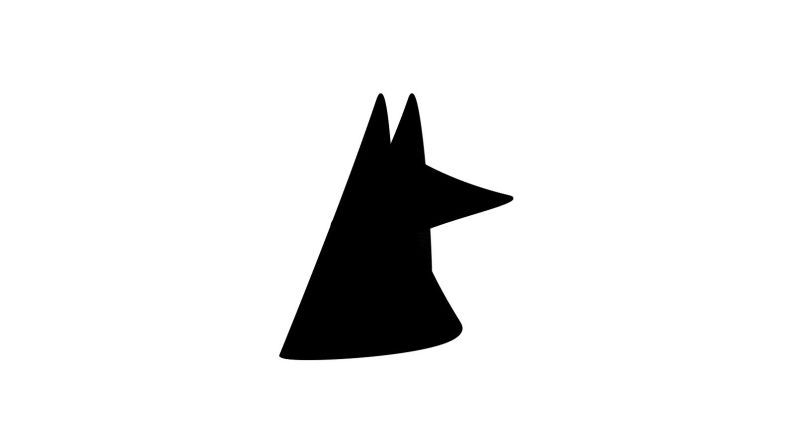
Looks are deceiving —
Yeganeh says this fox is created using one of the most complex math formulas found in his work. The image shows a subset of the complex plane that contains all complex numbers of the form: λA(t)+(1-λ)B(t), 0 ≤ t ≤ 2π , 0 ≤ λ ≤ 1, where A(t)=sin(4t+(π/4))cos(2t)+(2i/3)sin(2t+(π/2)) and B(t)=(2/3)(sin(t+(π/5)))^3(cos(t+(π/3)))^2+i(sin(3t-(π/3)))^2+(i/2)sin(4t+(π/6))
courtesy Hamid Naderi Yeganeh
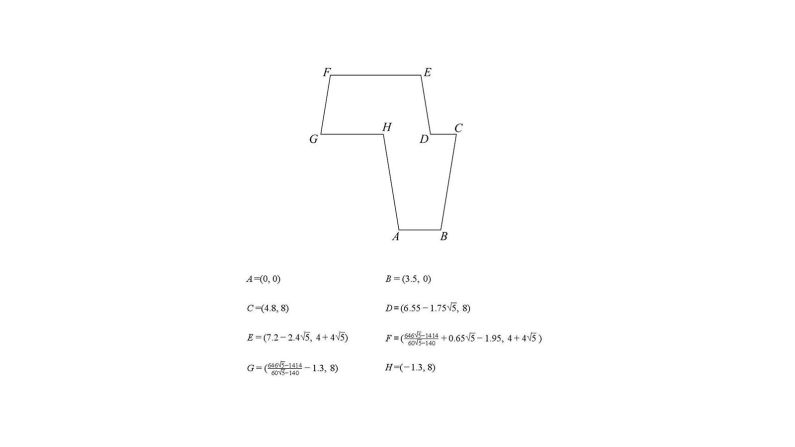
A study in fractals —
This diagram reveals the process that mathematician Hamid Naderi Yeganeh uses to create fractals, or repeating mathematical sets of Africa.
courtesy Hamid Naderi Yeganeh
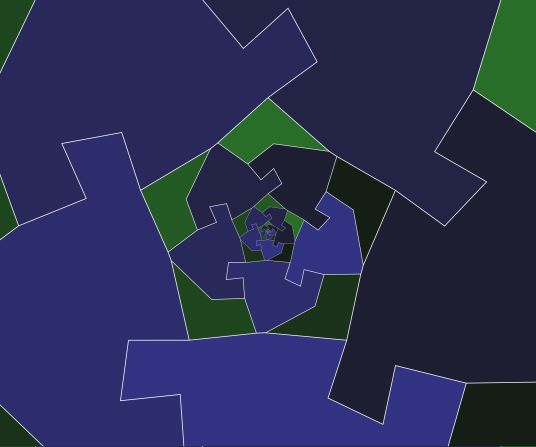
Dizzying tessellations —
Yeganeh says he greatly admires tessellations found in Iranian tessellations. He uses two polygons, one in the shape of South America, and one in the shape of North America, to create this tessellation.