Japan’s ‘nature architecture’ has deep cultural roots
Some of Japan's most innovative and forward-looking buildings draw on traditions blurring the line between nature and architecture.
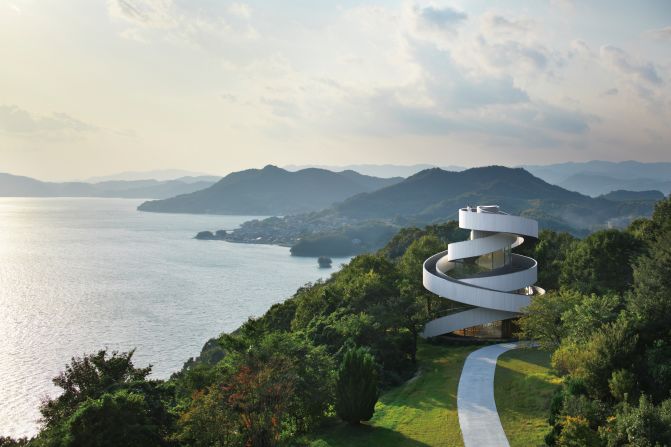
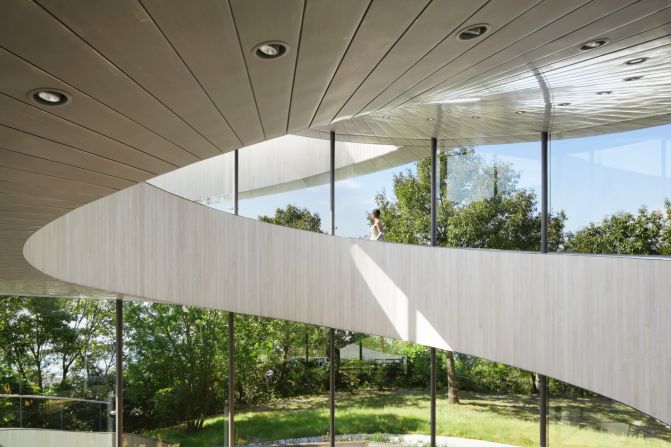
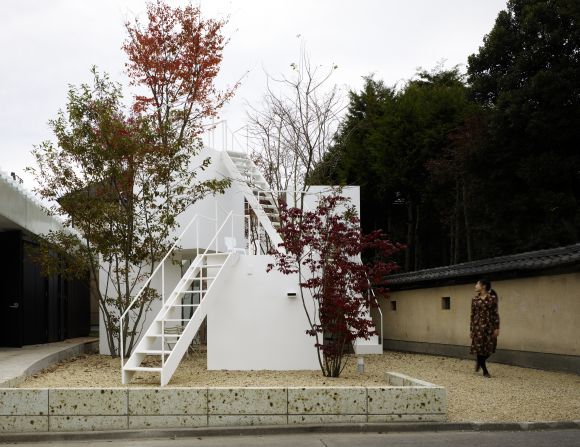
Set midway on a hill in Hiroshima, this chapel designed by Japanese architect Hiroshi Nakamura spirals up toward the sky, while hugging the surrounding environment.
World Architecture Festival
Ribbon Chapel —
Primarily a wedding chapel, the building's two spiral staircases entwine to personify the act of marriage. "Instead of designing something preconceived in the architect's mind or the designers mind, it's important to emphasize what nature has to offer," Nakamura tells CNN.
Courtesy Koji Fujii/Nacasa and Partners Inc
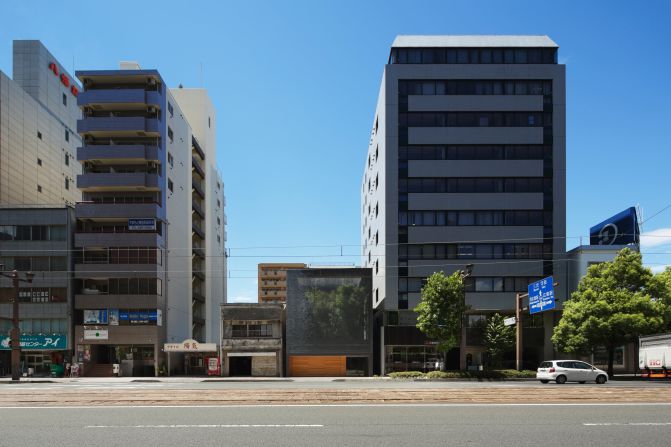
Optical Glass House —
This house in downtown Hiroshima uses a glass facade to draw attention to natural phenomena such as light, wind and rain.
"You see the light coming through the façade, filtering through the optical glass to create the light patterns on the wall," explains Nakamura.
Courtesy Koji Fujii/Nacasa and Partners Inc
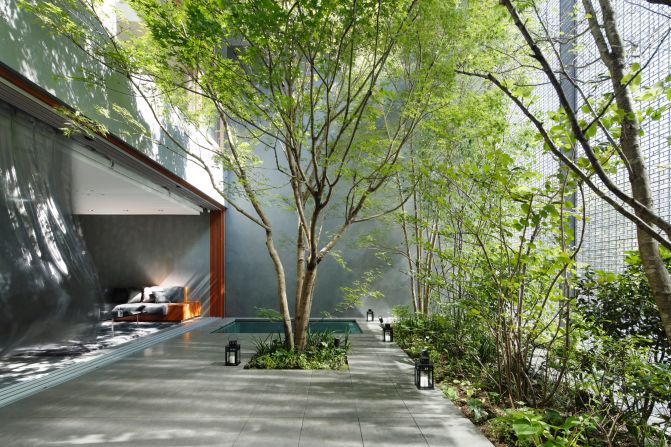
Optical Glass House —
In front of the glass is an indoor garden visible from every room in the house. Light dances through the trees into the living room, and a water-basin skylight creates water patterns on the entrance floor when it rains.
"The architecture emphasizes the natural phenomenon so people can feel that they're part of nature," he says.
Courtesy Koji Fujii/Nacasa and Partners Inc
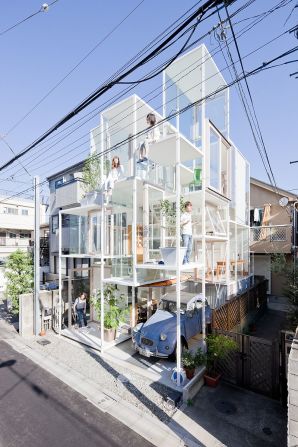
Sou Fujimoto's tree house —
Sou Fujimoto breathes nature into his designs. This house in central Tokyo represents a single tree, with many branches.
Iwan Baan
Tree house —
Even in dense urban areas, Japanese architecture sits in harmony with the built environment, as exampled in Fujimoto's projects.
Iwan Baan
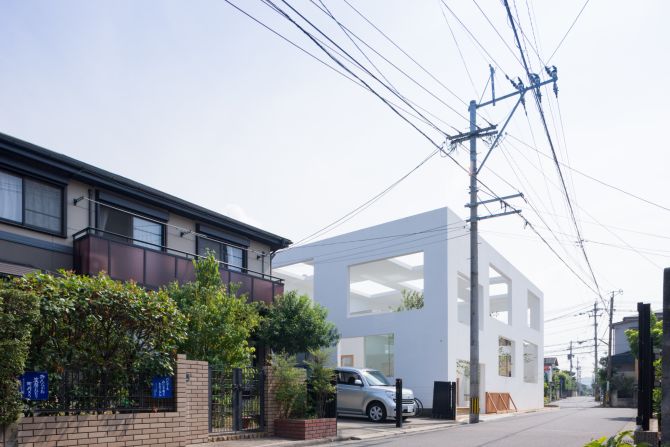
House before House —
This house designed by Sou Fujimoto mirrors that of a porous mountain. Large trees dwarf small minimalist blocks. Fujimoto has said, "It is a really fundamental question -- how architecture is different from nature, or how architecture could be part of nature."
DAICI ANO
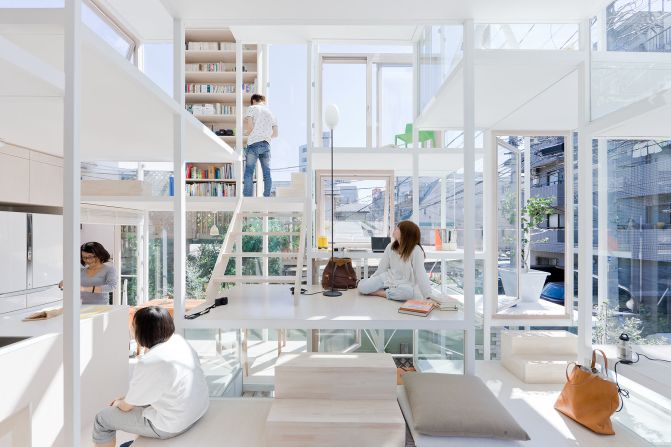
House N —
House N, designed by Sou Fujimoto, resembles being in the clouds. There is no distinct boundary between the street and the inside of the house.
Iwan Baan
A university in nature —
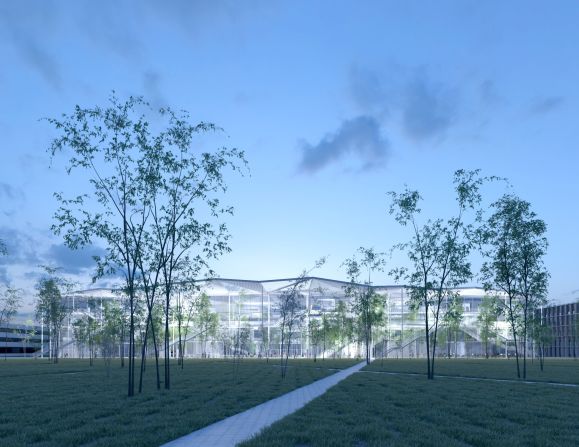
Fujimoto's Polytechnique University, which will be built in Paris, lets nature and light invade the building.
SFA+NLA+OXO+RSI
Thousand trees —
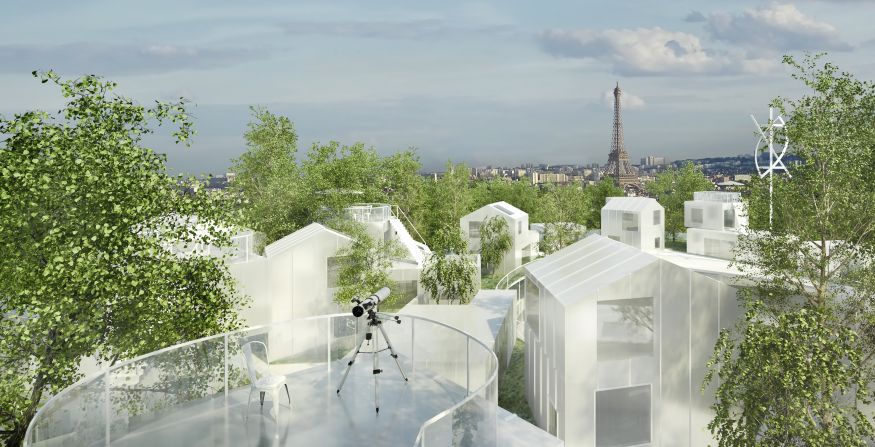
This project by Sou Fujimoto in collaboration with Manal Rachdi- OXO Architects, called "Thousand Trees," transforms the skyline of Paris with exactly that -- a residential building covered in 1,000 trees, adding a layer of protection against air pollution.
SFA+OXO+MORPH
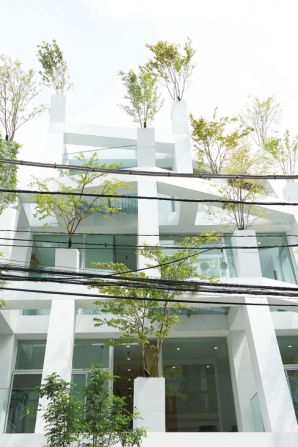
Sou Fujimoto designed this building, located in the back alleys of Omotesando in Tokyo, to create a new fusion between the built environment and nature. Trees are placed on the end of the concrete frame, to make it appear as if real trees are sprouting out of an artificial one.
v.sadoun
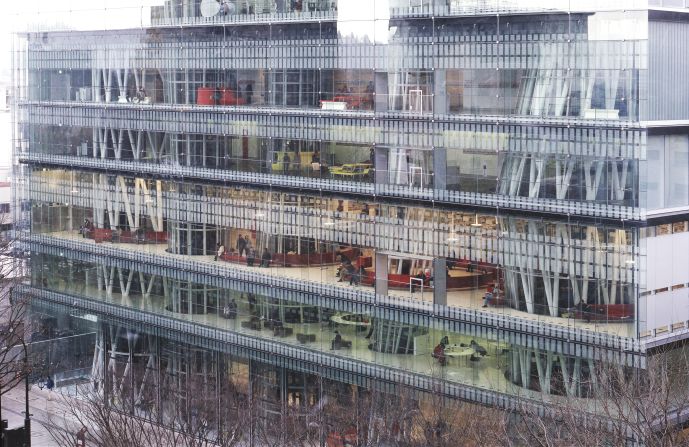
Sendai Mediatheque —
One of Toyo Ito's masterpieces, this library employs structural tubes resembling tree trunks in place of walls. It's built to withstand the shock of powerful earthquakes. Ito has said that "all architecture is an extension of nature."
Photo by Tomio Ohashi
Taichung Metropolitan Opera House, Taiwan —
Ito's Taiwan opera house incorporates the surrounding park and landscape into its structure.
Rendering by kuramochi+oguma
Sayama Forest Chapel —
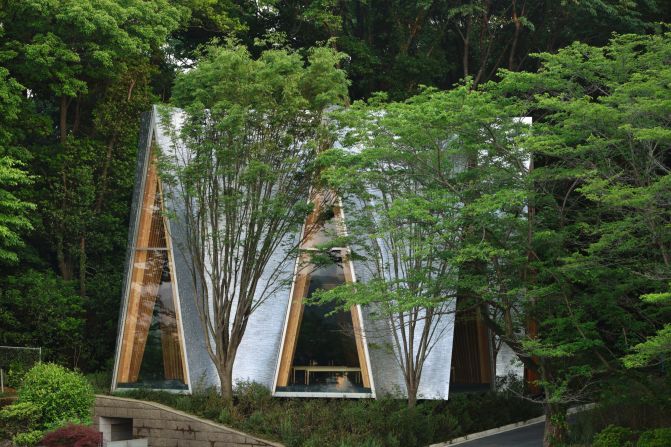
The upper walls of this chapel in Japan's Saitama prefecture lean inward in order to avoid the tree branches, forming an upside-down "V" structure called "Gassho-zukuri." This structural form is similar to the shape made by two hands while in prayer.
Courtesy Koji Fujii/Nacasa and Partners Inc
Sayama Forest Chapel —
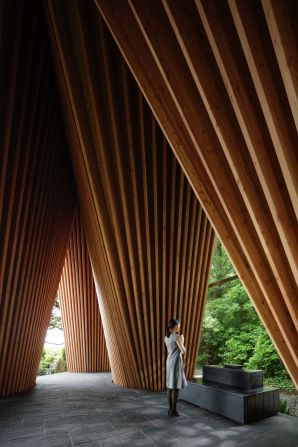
The multi-religious chapel has a small altar looking out to the forest beyond. The altar and benches can move to accommodate all faiths, as well as those looking for a place to reflect.
"Traditionally in Japanese culture people have this mindset of becoming part of nature," explains Nakamura.