‘The Ivory Mirror: The Art of Mortality in Renaissance Europe’ | CNN
Thank You!
Your effort and contribution in providing this feedback is much
appreciated.
Close
Ad Feedback
‘The Ivory Mirror: The Art of Mortality in Renaissance Europe’
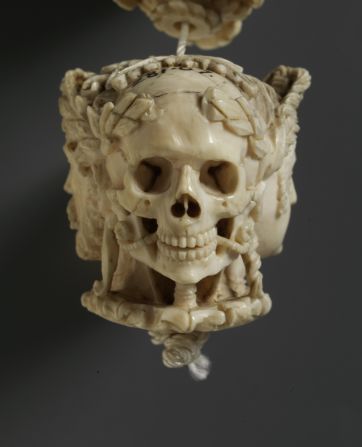
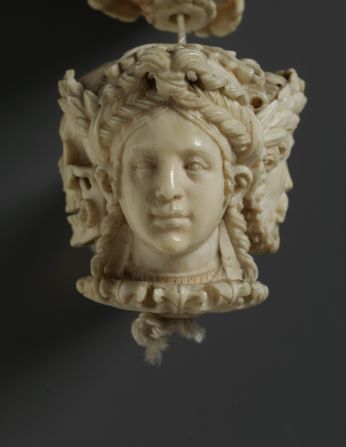
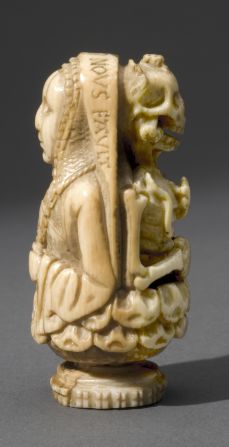
One view of the finials of a chaplet (c.1530) from France or Southern Netherlands —
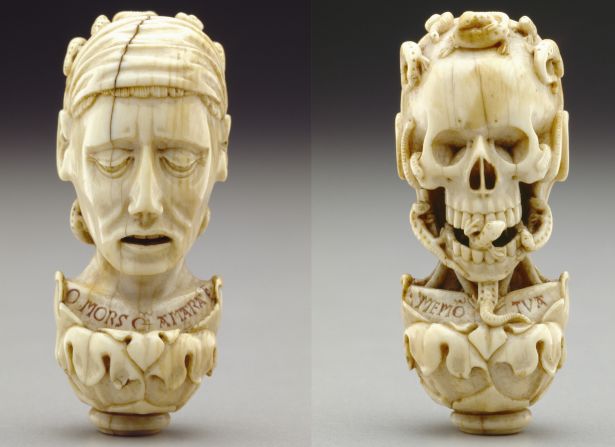
During the late Middle Ages and early Renaissance, ivory carvings that depicted a human face on one side and a skull on the other were coveted collectables.
Courtesy Victoria and Albert Museum
One view of the finials of a chaplet (c.1530) from France or Southern Netherlands —
They were known as "memento mori" objects, after the Latin phrase "remember you must die" that informed popular thinking.
Courtesy Victoria and Albert Museum
Two views of a pendant to a rosary or chaplet (c.1500-1530) attributed to Chicart Bailly —
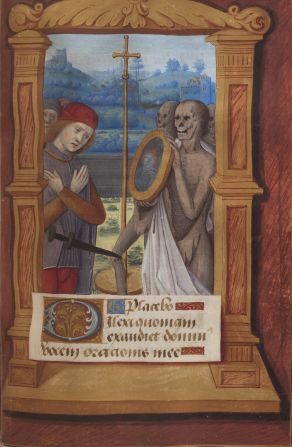
Page from "Office of the Dead" section of the "Book of Hours" (c.1500) from Northern France —
Memento mori were part of a larger cultural moment that emphasized humility, introspection and moral obligation. Jewelery, sculptures, illuminated manuscripts, prints and books -- a variety of which are included in the exhibition -- also reflected that theme.
Courtesy The Huntington Library, Art Collection/Botanical Gardens, San Marino, California
Memento mori pendant (c.1500) from France or Belgium —
According to Stephen Perkinson, an associate professor of art history at Bowdoin College and guest curator of the exhibition, the basic message is "to remind the viewer we are all mortal and that, in the end, death equalizes all of us."
Courtesy Philadelphia Museum of Art
17th century memento mori prayer bead from Germany or the Netherlands —
As the decades wore on, the ivory carvings largely fell out of production, though some later examples remain.
Courtesy Bowdoin College Museum of Art
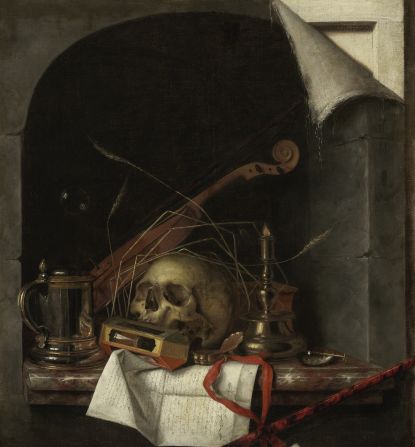
"Vanitas Still Life" (c. 1659-1675) by Cornelis Norbertus Gijsbrechts —
However, the memento mori message lived on in other art forms, like the Dutch vanitas paintings of the 16th and 17th centuries. They included symbols of death (a skull, a snuffed candle) to present the theme in a new way.