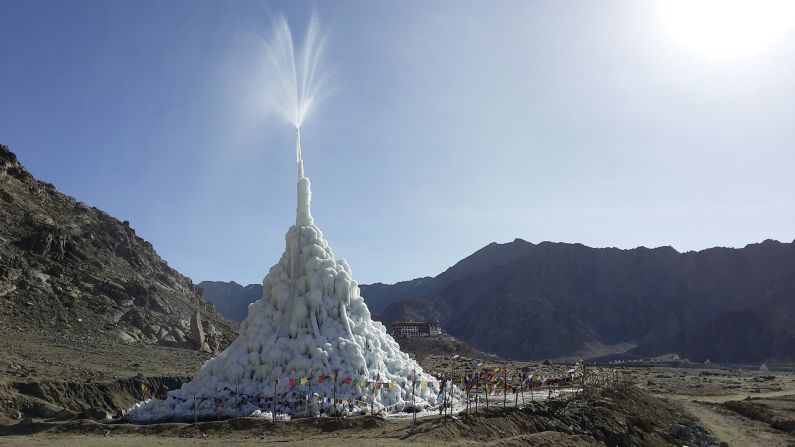
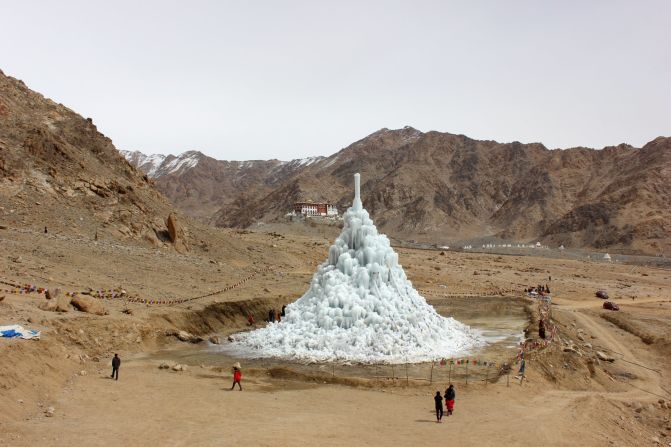
An ice stupa in the Ladakh region of India. This 'artificial glacier' is created using only a pipe and water pressure and can help farmers fight the effects of climate change in the region.
courtesy Sonam Wangchuk
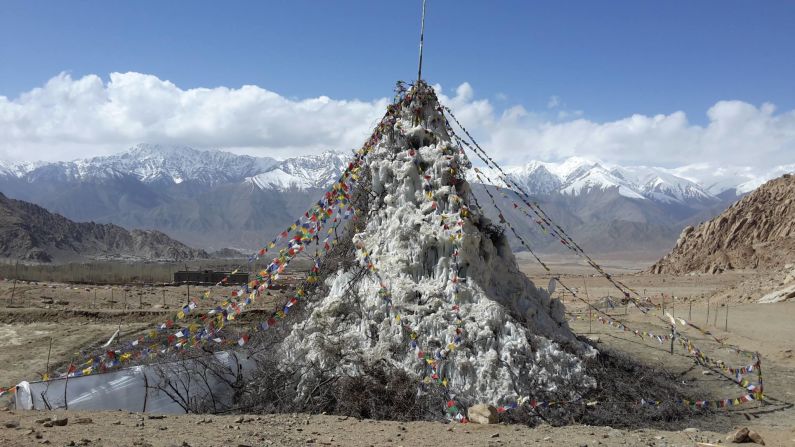
In Spring, when the naturally occurring ice has already melted around it, the artificial glacier still stands.
courtesy Sonam Wangchuk
The conical shape exposes less surface to the sun, which slows down the melting process.
courtesy Sonam Wangchuk
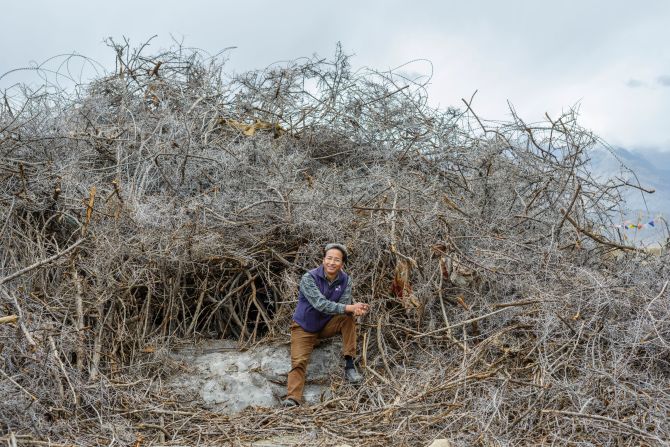
Mechanical engineer Sonam Wangchuk, the inventor of the ice stupa, pictured here with the natural materials, like bushes, that he uses as catalysts to start the ice formation.
Rolex/Stefan Walter
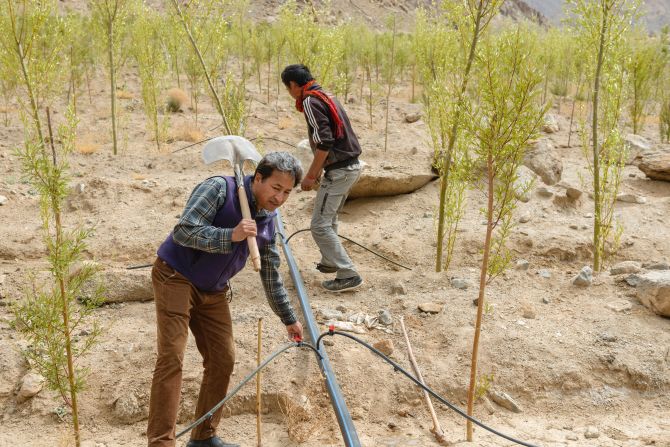
Sonam Wangchuk and a colleague create a drip irrigation network to use water from ice stupas.
Rolex/Stefan Walter
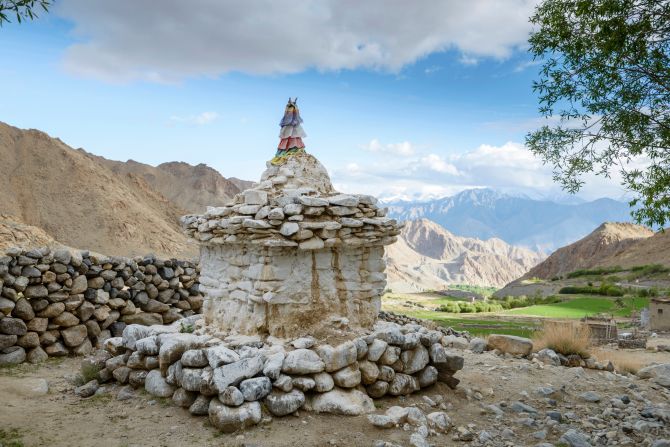
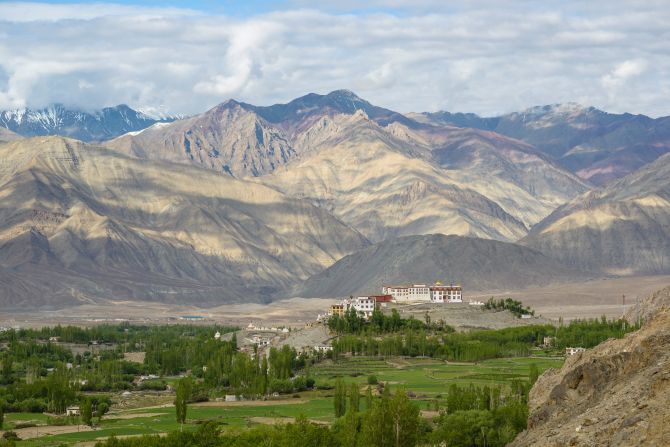
A traditional stone stupa in the Phyang valley in Ladakh.
Rolex/Stefan Walter
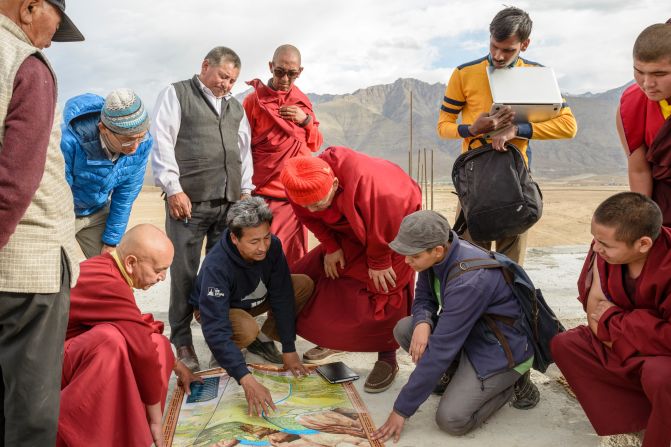
Sonam Wangchuk shows building plans to monks and colleagues at the planned site for a university.
Rolex/Stefan Walter
The stupas are not maintenance-free: "Currently they need a lot of manual intervention: the fountains can freeze when the pipes ice up, things like that," says Wangchuk.
Rolex/Stefan Walter
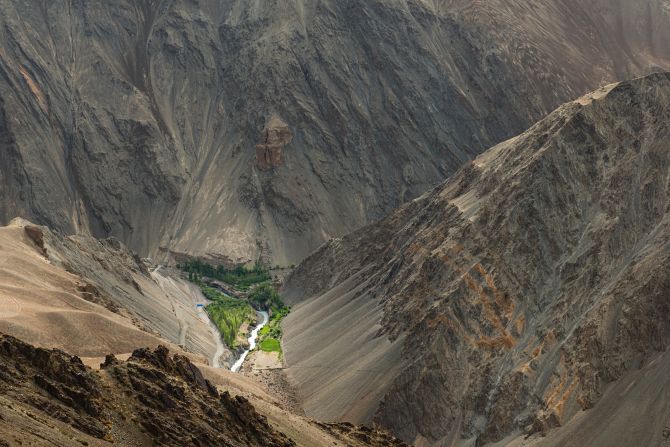
Climate change is making Ladhak even drier, leaving farmers without water in the crucial planting months of April and May, right before the glaciers start to melt in the summer sun.
Rolex/Stefan Walter
Ladakh -- meaning "land of high passes" -- is sandwiched between two of the world's tallest mountain ranges, the Himalayas and the Kunlun.