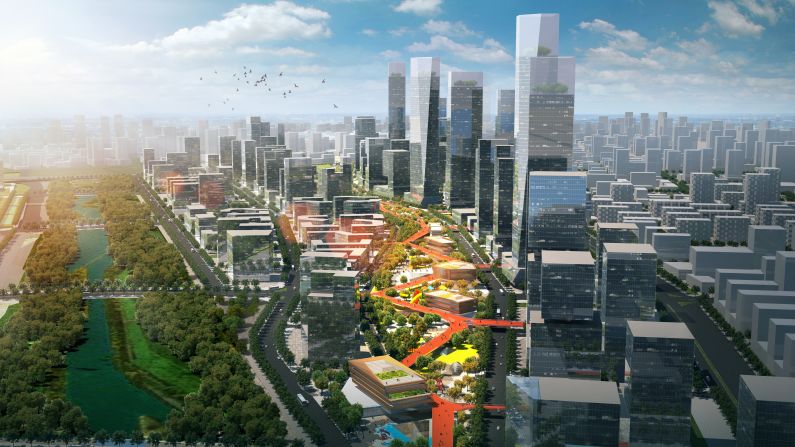
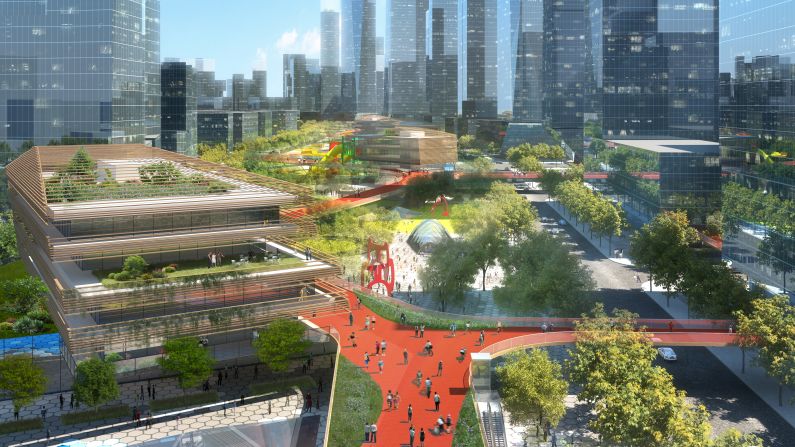
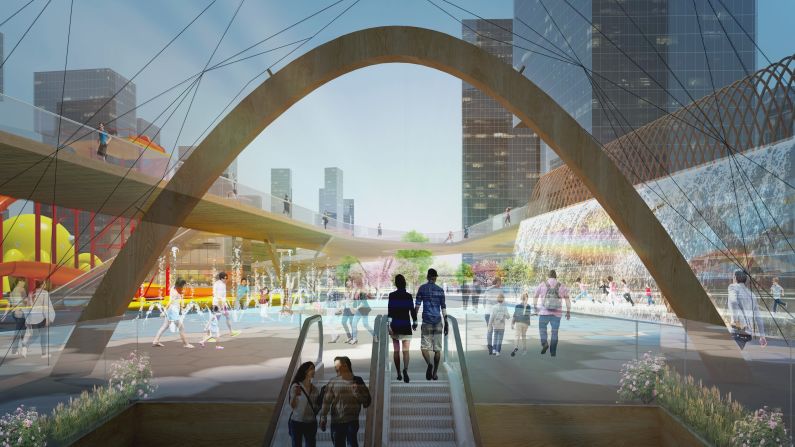
Elevated urban walkways called High Lines are springing up around the world. In the southern Chinese city of Shenzhen, the Silk Road Corridor concept by global architectural firm Hassell proposes a multi-story walkway that would connect buildings, and feature a park and cycling path.
Hassell Studio
Shenzhen, China —
"One element that differentiates this project from other similar 'urban corridor' projects is the idea of integrating small scale cultural and educational uses, commercial and leisure facilities within the park at multiple levels, to create a vibrant, dynamic environment," says Dennis Ho, project leader at Hassell's Hong Kong office.
Hassell Studio
Shenzhen, China —
The Silk Road Corridor spans 1.6 kilometers in the Qinhai business district of Shenzhen. "It's rare to find a 1.6km long green space within a high-density mixed-use development area," Ho says.
Hassell Studio
New York, United States —
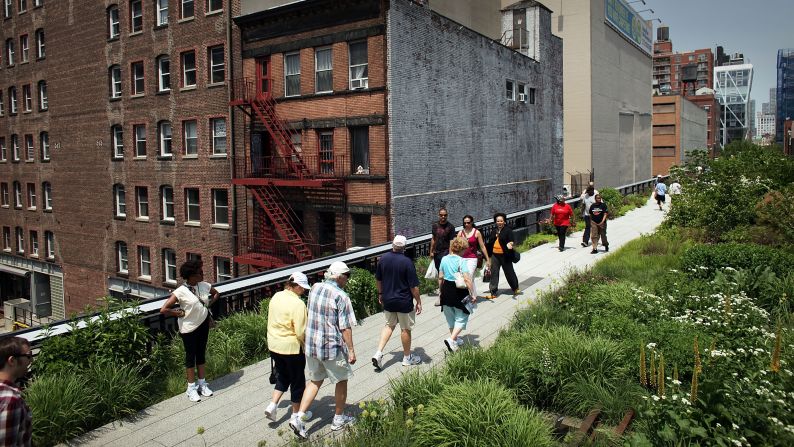
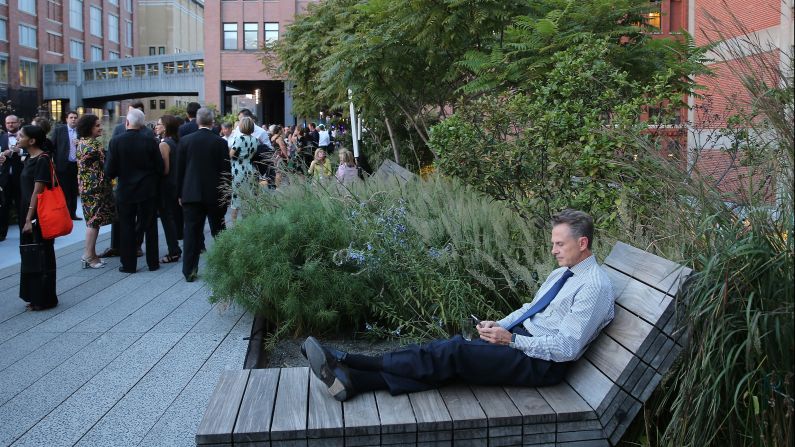
The New York High Line sparked the global trend for creating green urban walkways, which often followed disused railway lines. Following its opening in 2009 in Far West Manhattan, it has inspired various copy cat rail-to-trail projects.
Spencer Platt/Getty Images
New York, United States —
A man relaxes in the High Line park.
J. Countess/Getty Images
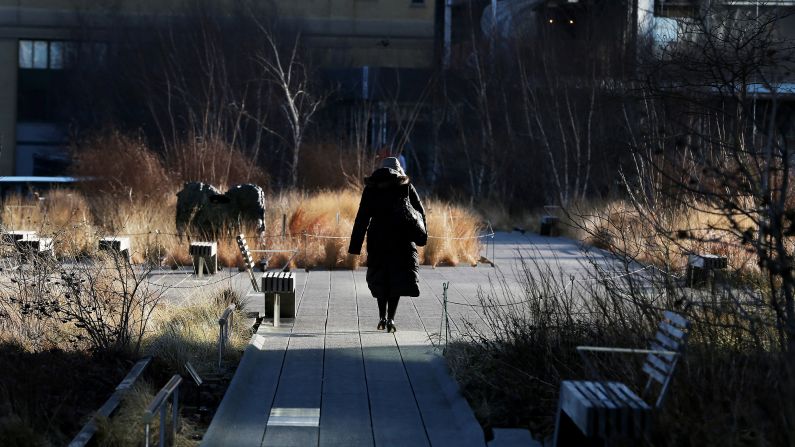
New York, United States —
A woman is bundled up against the cold as she walks through the High Line park in Manhattan on January 24, 2013.
Mario Tama/Getty Images
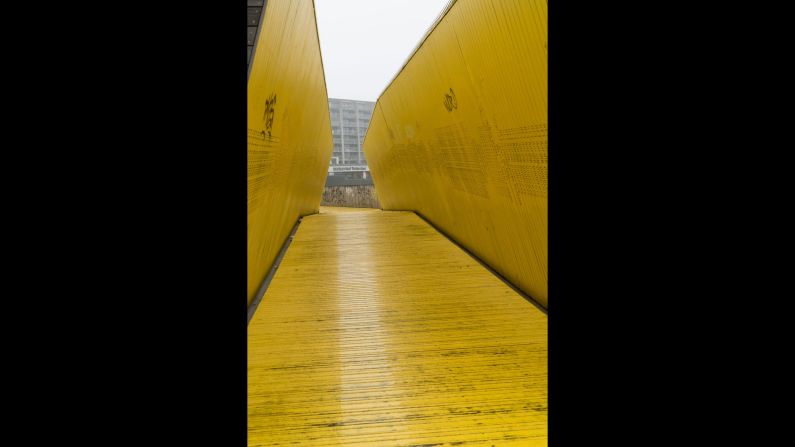
Rotterdam, Netherlands —
The wooden pedestrian bridge "de Luchtsingel" in Rotterdam, Netherlands, was financed by crowdfunding.
Robert B. Fishman/dpa/AP
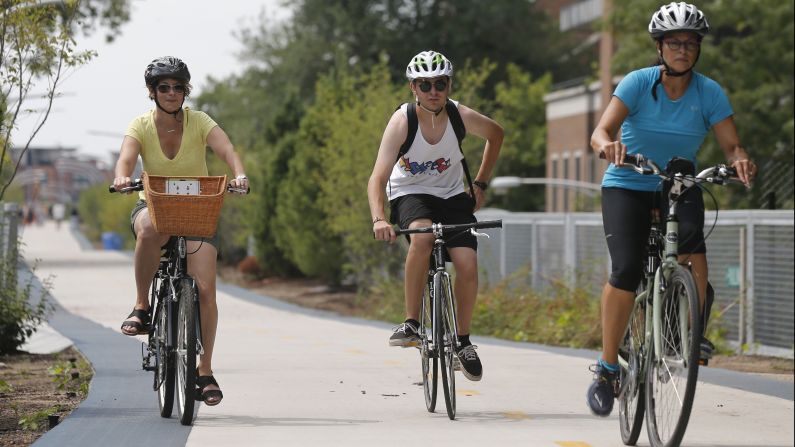
Chicago, United States —
Cyclists pedal along the Bloomingdale Trail, which was once an abandoned Chicago railway line. This relic of the city's industrial past is now a vision of its future.
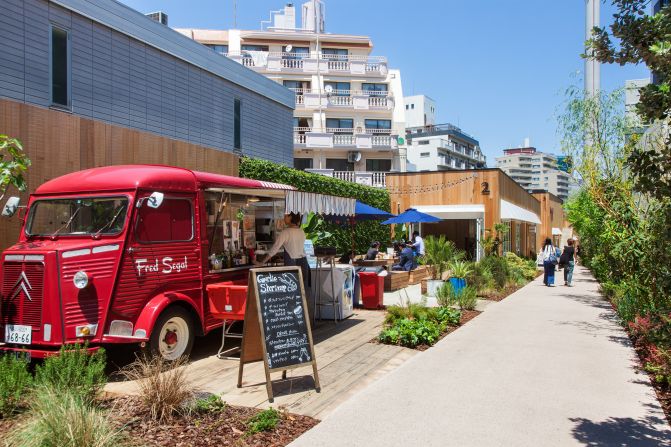
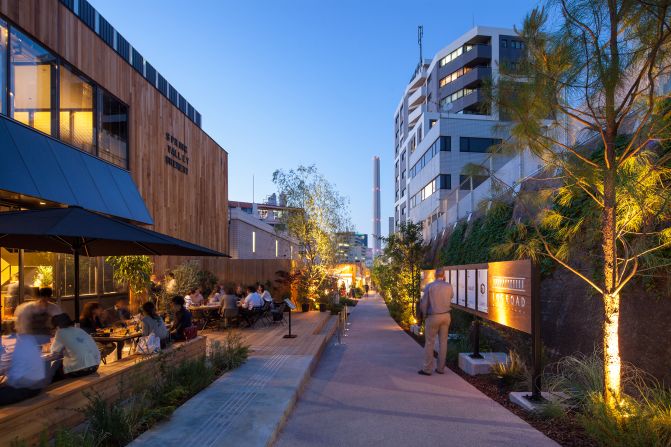
It is dotted with shops, cafes and bars specializing in craft beers, which has led to it being dubbed the Brooklyn of Tokyo.
CNN
Seoul, South Korea —
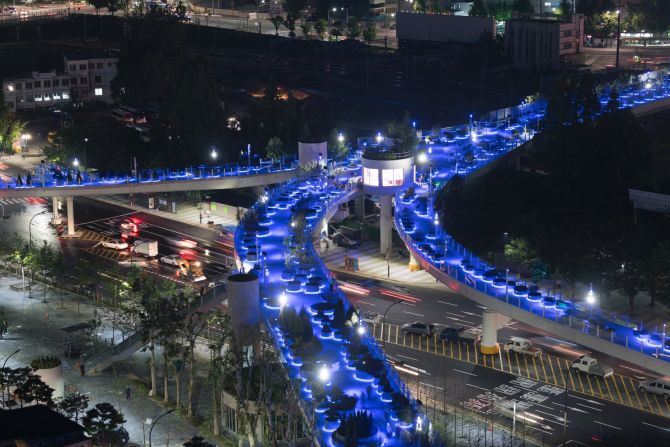
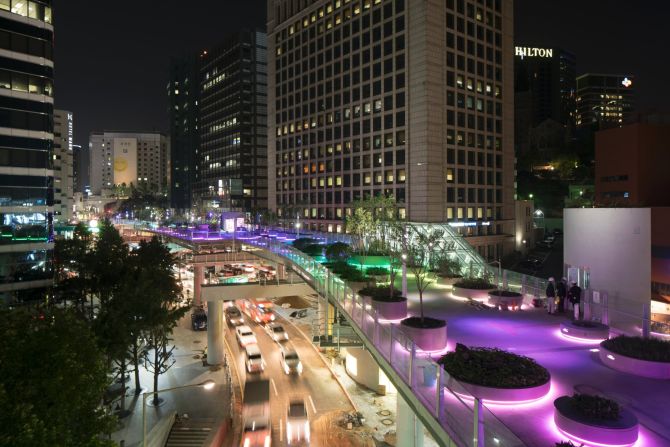
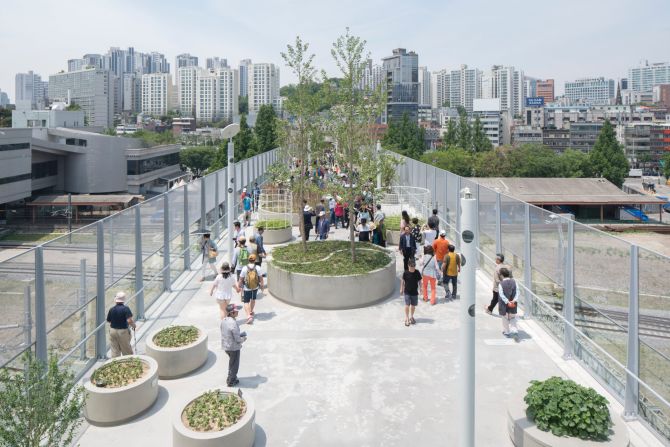
The Seoullo 7017 opened in May 2017. The name is a portmanteau of 2017 and 1970, the year the mile-long stretch of overpass on which it stands originally opened.
Ossip van Duivenbode
Seoul, South Korea —
Designed by Rotterdam-based architects MVRDV, it covers Seoul Station and connects Namdaemun Market with the Malli-dong, Jungnim-dong and Cheongpa-dong neighborhoods.
Ossip van Duivenbode
Seoul, South Korea —
It has been criticized by some for being too exposed to the elements and heavy on concrete.
Ossip van Duivenbode
New York, United States —
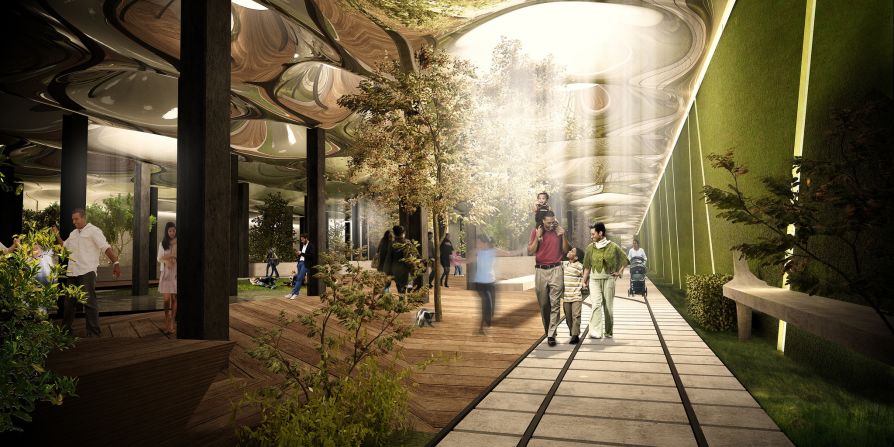
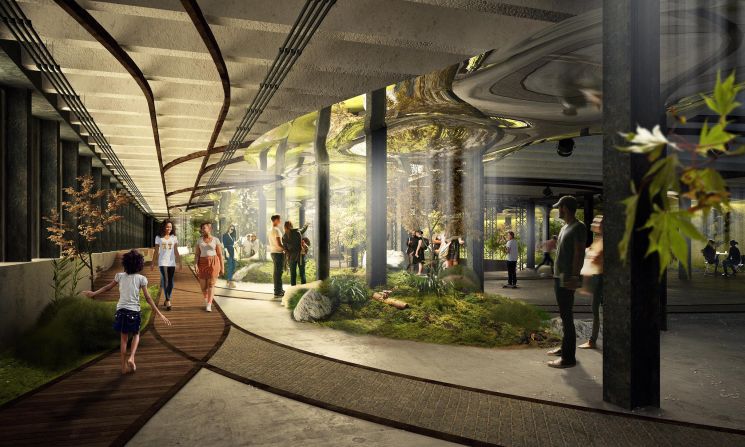
The proposed New York LowLine would transform the abandoned Williamsburg Bridge Trolley Terminal on the Lower East Side of Manhattan.
CNN
New York, United States —
Located in a one-acre former tram terminal abandoned since 1948, when the service was discontinued, the LowLine would rely on "solar collection dishes" above ground collecting light.