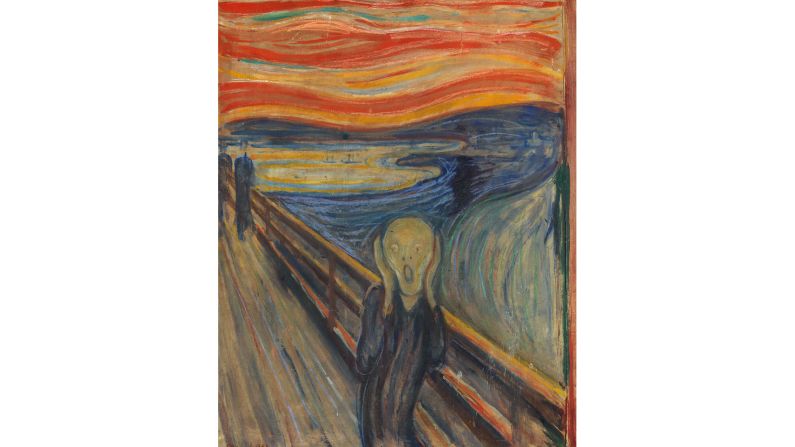
The screaming figure in the center of "The Scream" is the obvious focal point, but what's to be made of the shadowy figures in the background? According to Munch, they're two friends who walked on without him when he stopped and stood "trembling with anxiety" during a stroll.
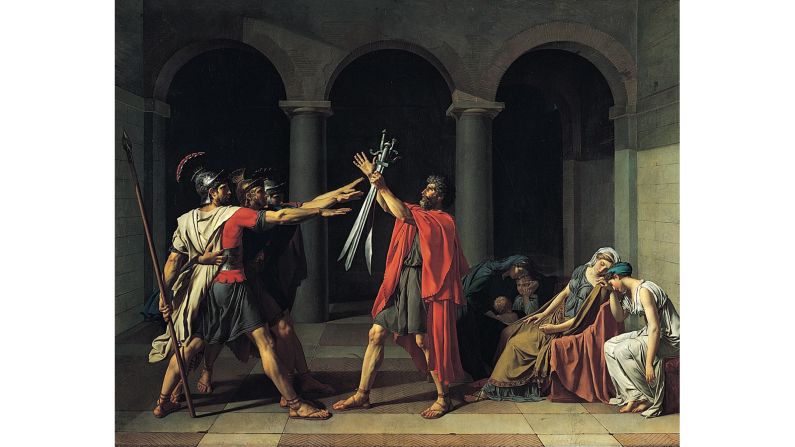
"Oath of the Horatii" (1784) by Jacques-Louis David —
The neoclassical "Oath of the Horatii" depicts three Roman brothers saluting their father, who's holding their swords, before going off to fight rivals from Alba Longa. In their shadow, their mother huddles around her grandchildren.
"The older boy cannot refrain from peeping out in awe at the men and their glittering swords -- demonstrating that to lay down one's life for one's country is honorable and something for which all men should be prepared to fight, even from a young age," Hodge writes.
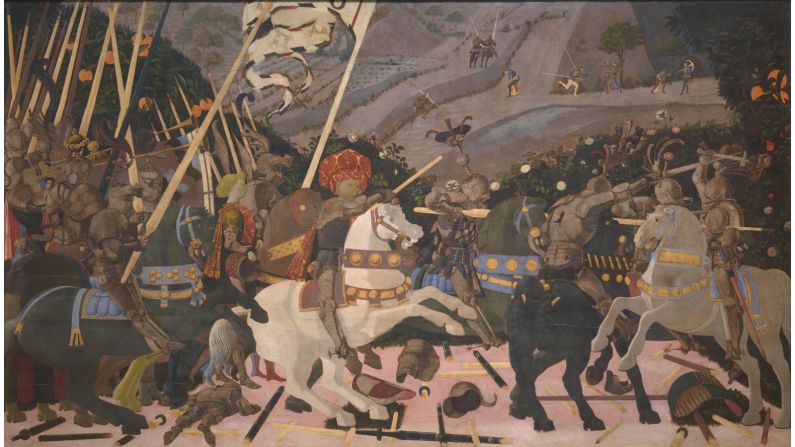
"The Battle of San Romano" (c.1438-40) by Paolo Uccello —
At first glance, this 15th-century painting seems fairly realistic -- until you take a closer look at the horses, who are in stiff, unnatural poses.
"Prior to the photographic studies of motion by Eadweard Muybridge in the 19th century, most people were unaware of how animals move," Hodge writes.
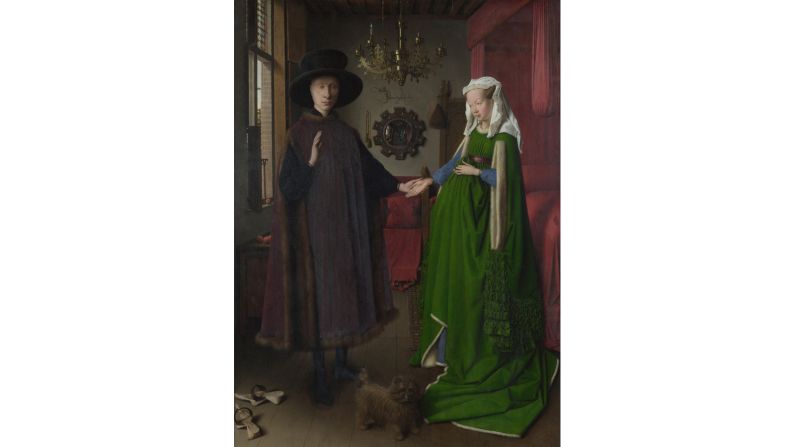
"Arnolfini Portrait" (1434) by Jan van Eyck —
The ornate Latin script above the mirror in the background is not an ancient expression. It's merely a cheeky translation of "Jan van Eyck was here 1434."
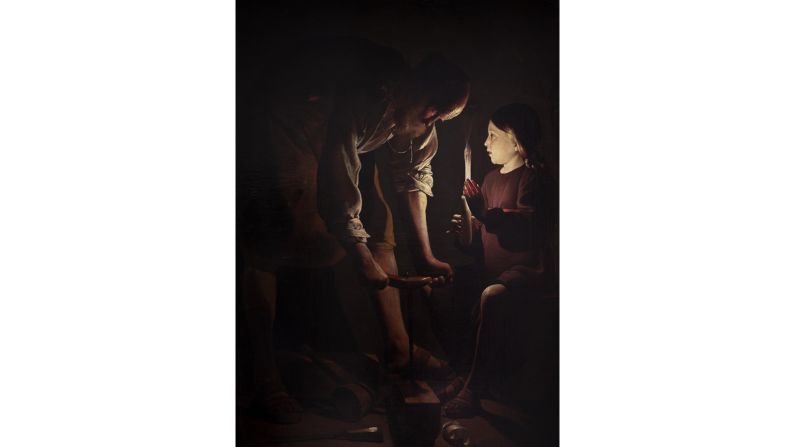
"Saint Joseph the Carpenter" (1645) by Georges de La Tour —
Here, eight-year-old Jesus Christ holds a candle for his stepfather, Joseph. The auger Joseph is using to drill a piece of wood creates the shape of the cross, referencing Jesus' future crucifixion.
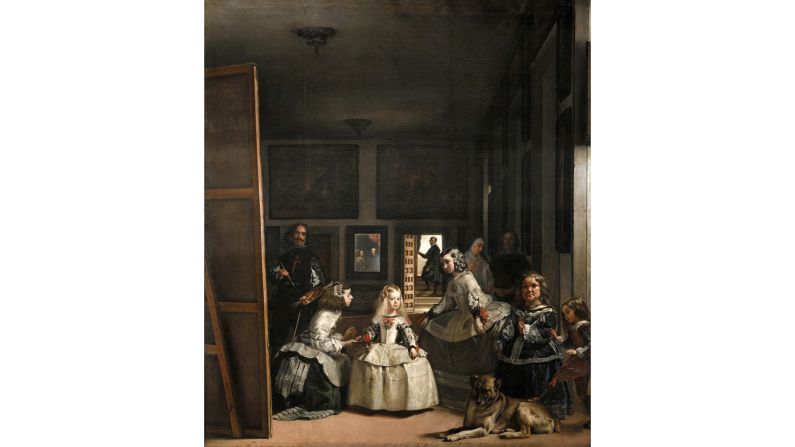
"Las Meninas" (1656) by Diego Velázquez —
The man behind the canvas is none other than Velázquez himself. This is the painter's only known self-portrait.
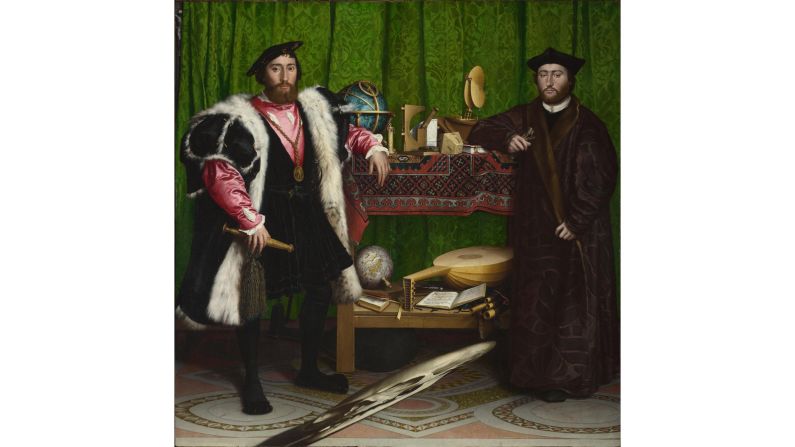
"The Ambassadors" (1533) by Hans Holbein the Younger —
Tilt you head and take closer look at the disc in the foreground: it's a distorted image of a skull. An example of "memento mori" -- a reminder of mortality -- it's meant to remind the viewer of heaven, hell and the afterlife, and the implications of our actions on earth.
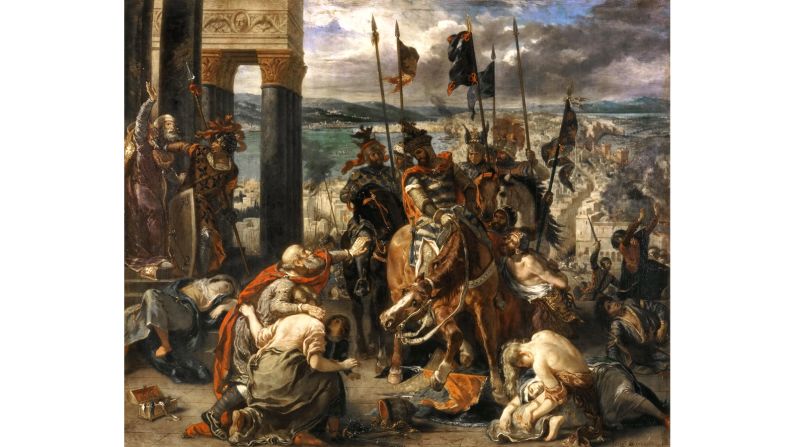
"Entry of the Crusaders in Constantinople" (1840) by Eugène Delacroix —
Huddled before the future Emperor Baldwin IX, three citizens (including a small child) plead for mercy. "The crusade was primarily a French undertaking, yet (French painter) Delacroiz presents an empathetic view of the Byzantine citizens who have suffered," Hodge writes.
"Laughing Cavalier" (1624) by Frans Hals —
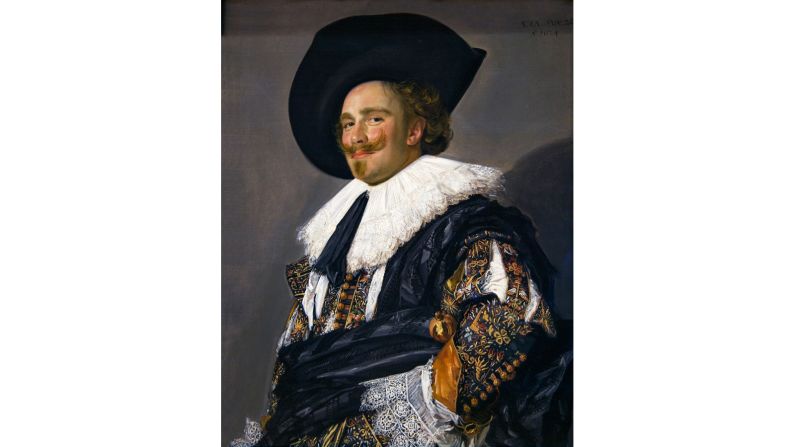
The golden rapier pommel subtly poking out from the crook of the sitter's arm was meant to suggest he was a skilled swordsman -- the mark of a gentleman during that era.