ITS 2015: The future according to fashion’s next big designers | CNN
Thank You!
Your effort and contribution in providing this feedback is much
appreciated.
Close
Ad Feedback
ITS 2015: The future according to fashion’s next big designers
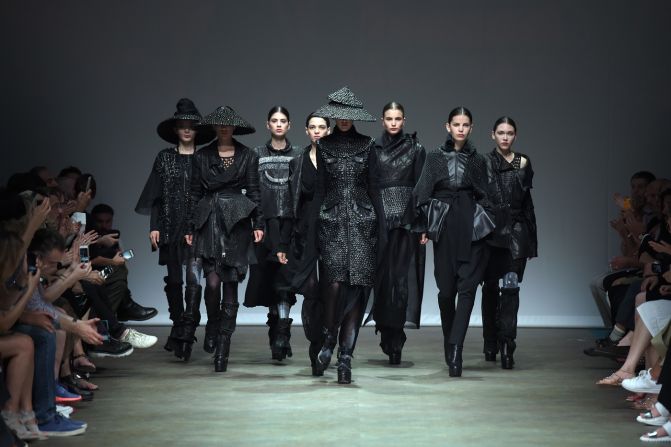
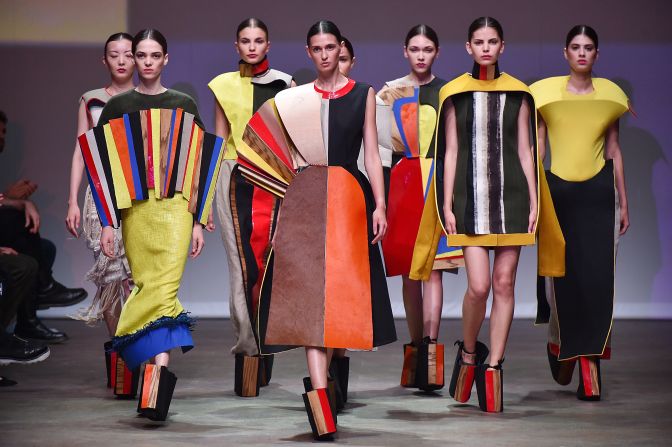
Paula Knorr (Germany) —
Last weekend, the prestigious International Talent Support competition brought together 40 young designers from 21 countries to battle it out for 100,000 Euros in prizes. The designers were told only that their work had to represent their vision of the future.
The fashion competition culminated with 10 finalists presenting their work on the runway. German designer Paula Knorr took home the prize for Fashion Collection of the Year. She was inspired by women's thoughts, and changing notions of femininity.
Courtesy Valerio Pennicino/Getty Images for Samsung
Polina Yakobson and Christine Charlebois (Ireland and Canada) —
Design duo Polina Yakobson and Christine Charlebois, who are both 29-years-old, gave a contemporary take on traditional samurai uniforms.
Courtesy Giovanni Giannoni
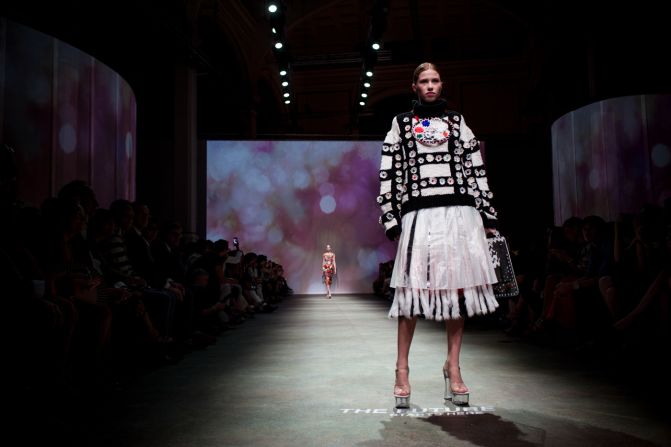
Yuko Koike (Japan) —
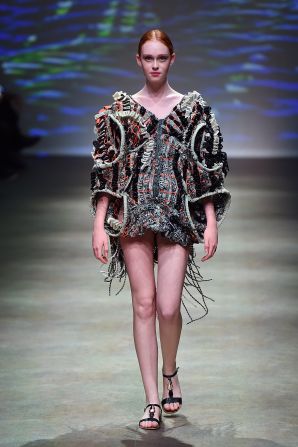
Yuko Koike's cutesy crochet work was paired with teetering Lucite heels.
Courtesy Giuliano Koren
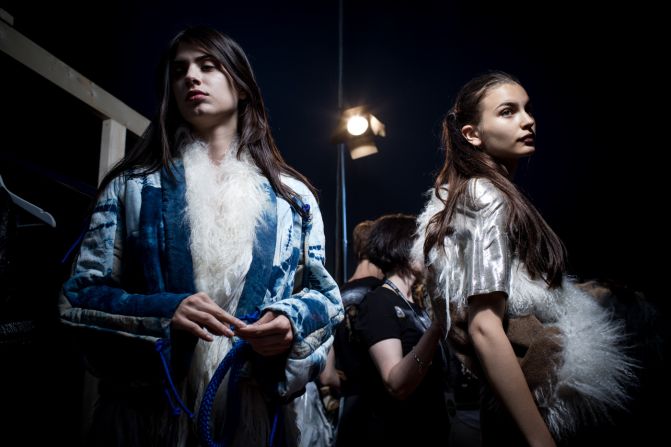
Elina Määttänen (Finland) —
In a similar vein, Elina Määttänen combined Russian flight suits with costumes from traditional Japanese artworks.
Courtesy Giuliano Koren
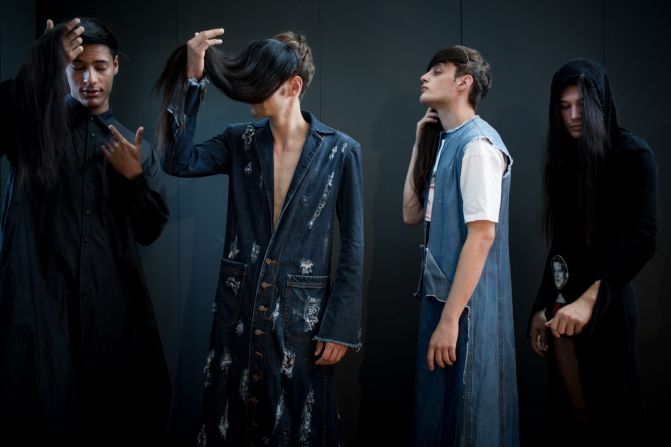
Attila Lajos (Hungary) —
Somewhat more familiar were the looks by Attila Lajos, which featured denim treated in different ways.
Courtesy Giovanni Giannoni
Yunseo Choi (South Korea) —
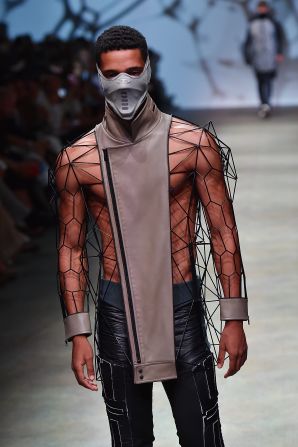
Yunseo Choi's flexible body cages are a sartorial take on the "egg drop challenges" of her childhood.
Courtesy Valerio Pennicino/Getty Images for Samsung
Jennifer Thévenaz-Burdet (Switzerland) —
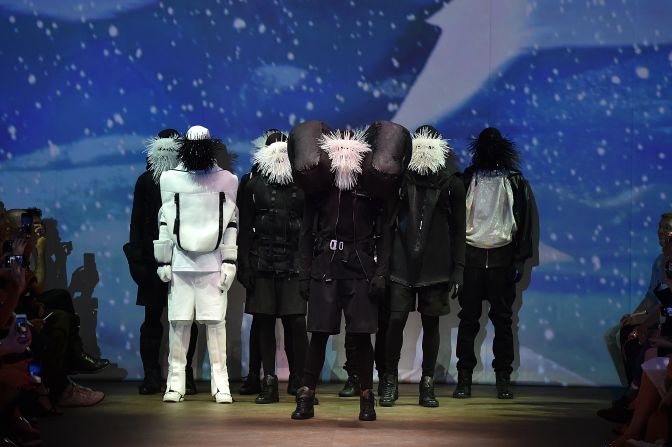
Jennifer Thévenaz-Burdet's collection was all about transformation and fashion that helped the wearer survive extreme weather conditions. One jacket, for example, morphed into a wearable sleeping bag.
Courtesy Valerio Pennicino/Getty Images for Samsung
Quoi Alexander (USA) —
If Quoi Alexander's collection seemed busy and overcomplicated, she succeeded in her mission. According to the designer, her goal was to lace her clothes with as many elements as possible so that the audience could extract a number of different meanings.
Courtesy Valerio Pennicino/Getty Images for Samsung
Richard Quinn (United Kingdom) —
Richard Quinn's deconstructed "Cracked Couture" collection -- his final BA collection from Central Saint Martins -- saw traditional gowns ripped, reattached and reframed for the future.
Courtesy Giovanni Giannoni
Kim Shui (USA) —
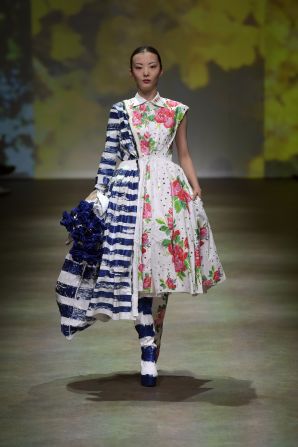
American Kim Shui channeled Ellsworth Kelly in her collection, which offered new interpretations of the ideal female form.