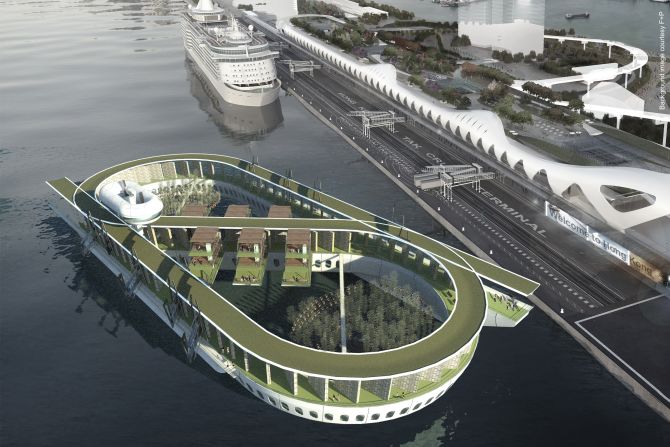
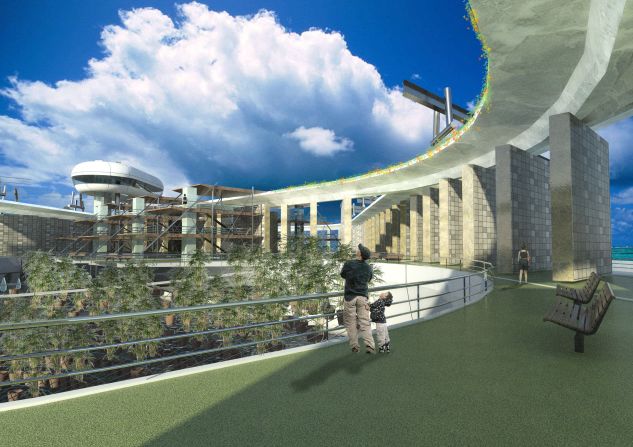
Local architecture firm Bread Studios designed an eternally floating cemetery as a solution to the over-crowded graveyards of Hong Kong.
Bread Studios
Floating Eternity, Hong Kong —
A futuristic idea, Floating Eternity takes burials to the open sea. The offshore cemetery aims to ease pressure on Hong Kong's columbariums and grave yards.
Bread Studios
Ruriden, Tokyo —
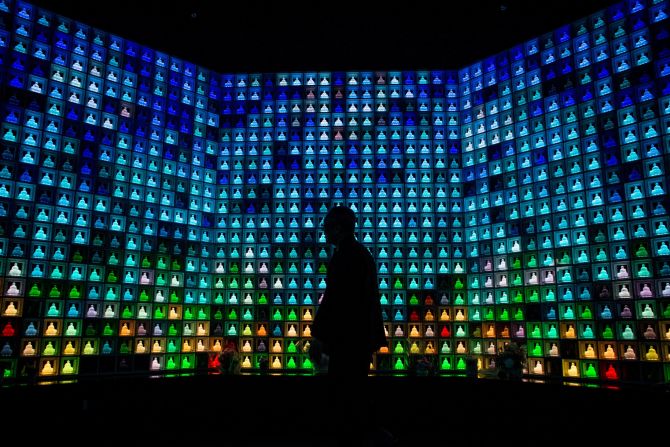
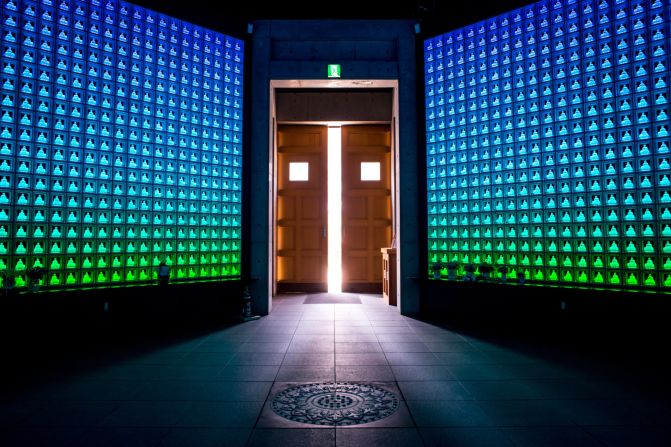
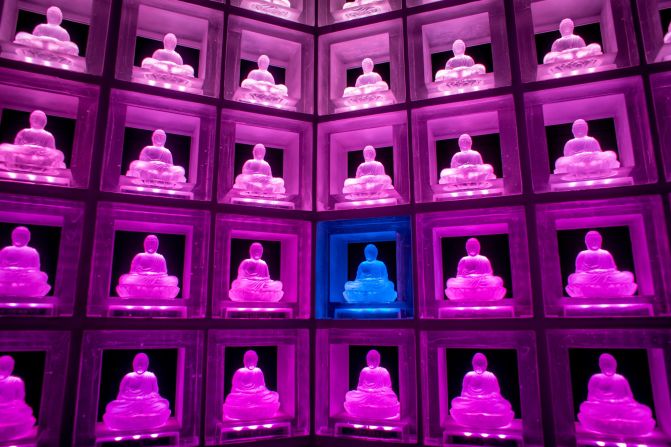
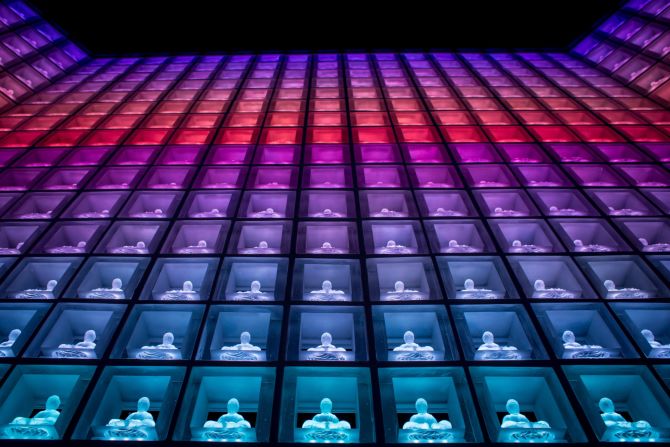
The Ruriden, operated by the Koukokuji buddhist temple, took two years to build and houses 2,046 futuristic alters with glass Buddha statues that correspond to drawers storing the ashes of the deceased.
Chris McGrath/Getty Images AsiaPac/Getty Images
Ruriden, Tokyo —
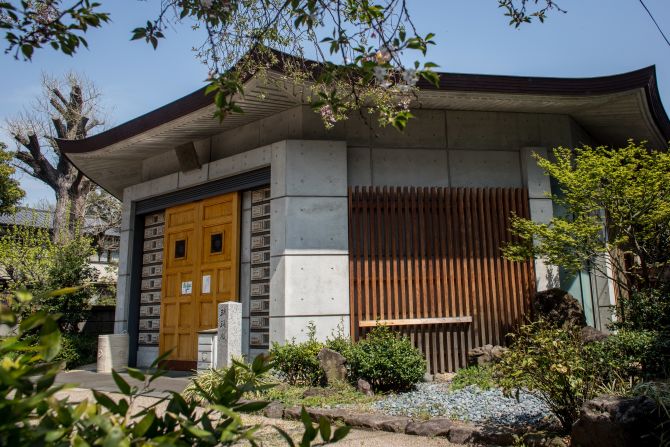
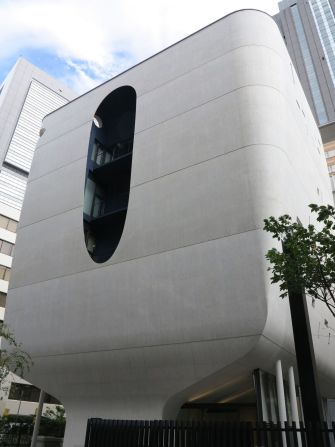
Passersby would never guess what's inside this traditional looking temple. The Ruriden is just one example of columbariums in Asia embracing a more forward-thinking approach to burials.
Chris McGrath/Getty Images AsiaPac/Getty Images
Ruriden, Tokyo —
An electronic card allows the owner of the alter to access the Ruriden. To make it easier to find a loved one's remains, a corresponding Buddha lights up when visitors swipe in.
Chris McGrath/Getty Images AsiaPac/Getty Images
Ruriden, Tokyo —
A glass Buddha alter lights up inside the Ruriden columbarium in Tokyo, Japan.
Chris McGrath/Getty Images AsiaPac/Getty Images
Ruriden, Tokyo —
Ashes are stored for 33 years before being buried below the Ruriden. Currently 600 alters are in use and another 300 are reserved.
Chris McGrath/Getty Images AsiaPac/Getty Images
Floating Eternity, Hong Kong —
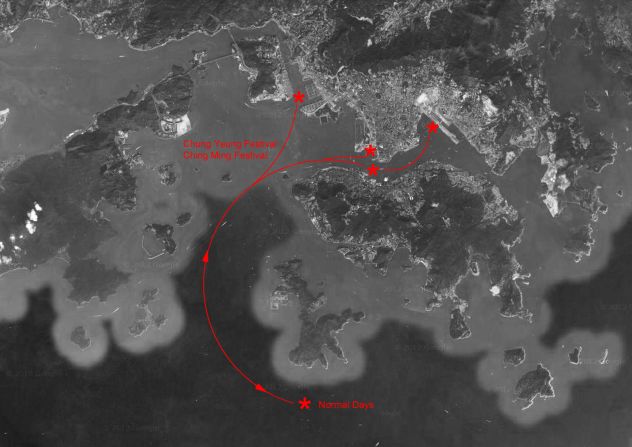
The burial cruise will sail around the back of Hong Kong island on normal days, docking at major Hong Kong harbors during the Chung Yeung Festival and Ching Ming festivals, cultural holidays for commemorating their ancestors.
Bread Studios
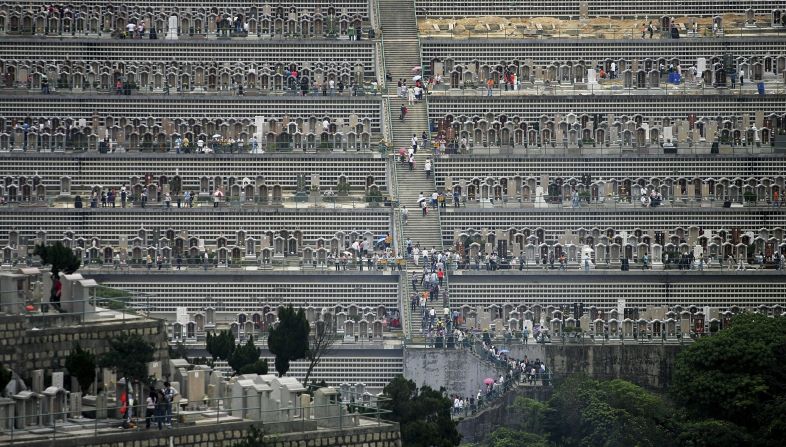
Chai Wan, Hong Kong —
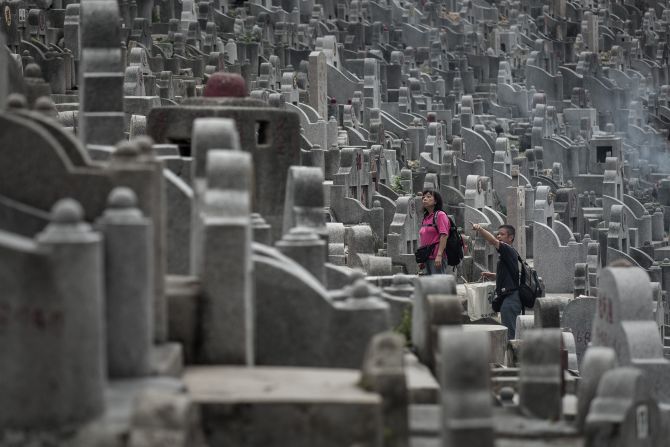
A city well-known for its aging population and land scarcity, Hong Kong burial cites can be over-crowded.
Guang Niu/Getty Images AsiaPac/Getty Images
Hong Kong —
In 50 years' time, the number of deaths per year will have almost doubled in the city, according to the Hong Kong Census and Statistics Department.
PHILIPPE LOPEZ/AFP/AFP/Getty Images
Tokyo -- Shinjuku Rurikoin Byakurengedo columbarium takes a high-tech approach to death with a smart automatic storage system, enabling the building to house tens of thousands of ash urns.