Your effort and contribution in providing this feedback is much
appreciated.
Close
Ad Feedback
Postcards from communist Europe
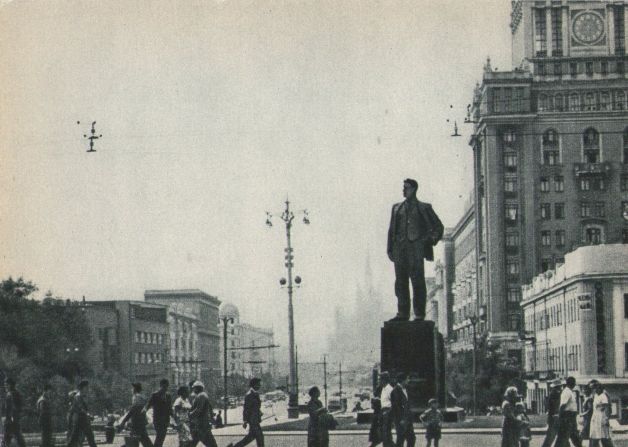
Ministry of Economics buildings, Kalinin Prospekt, Moscow —
In Landscapes of Communism Owen Hatherley notes the recent flurry of new books that depict the "monolithic landscapes" left behind by the collapse of the Soviet Union. But he wanted to show it differently...
Courtesy OWEN HATHERLEY
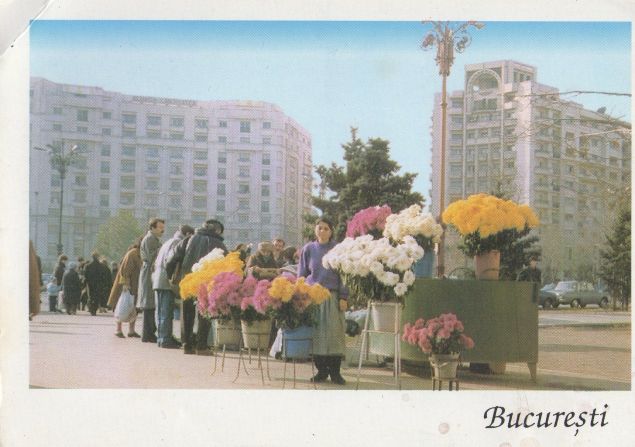
Boulevard of the Victory of Socialism, Bucharest, Romania —
Factual tomes including Richard Pare's The Lost Vanguard and Frédéric Chaubin's CCCP: Cosmic Communist Constructions Photographed have stirred interest in the particular architecture of the former USSR.
Courtesy OWEN HATHERLEY
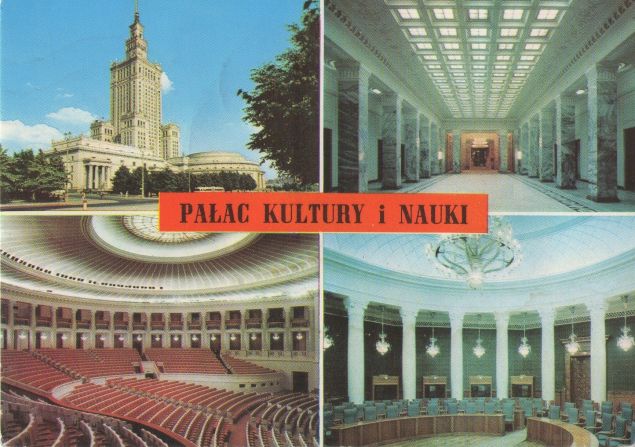
Palace of Culture and Science, Warsaw —
Most of these books "present the fascinating relics of a vanished civilization," Hatherley writes, indulging a western desire to "half-ironically admire the edifices left by a civilization which it is hard to imagine died as recently as twenty-five years ago."
Courtesy OWEN HATHERLEY
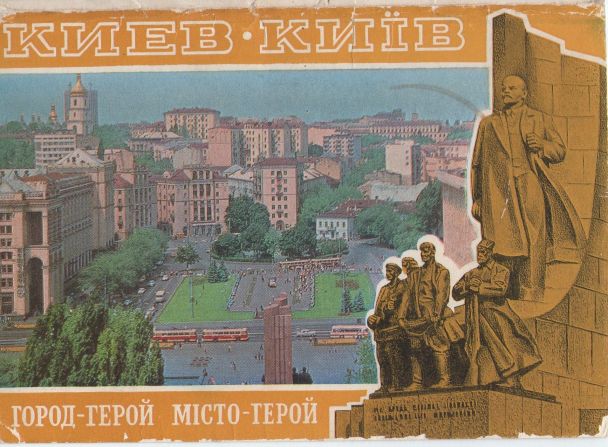
Kiev, Ukraine —
But Hatherley quotes the writer Agata Pyzik (who is also his girlfriend and traveling partner for the book) as saying: "the former USSR is not an alien terrain and obsolete ecology. It's populated by ordinary people, whose lives were thoroughly scattered and jeopardized by both the collapse of the communist economy and the introduction of capitalism."
Courtesy OWEN HATHERLEY
Exhibition of Achievements of the People's Economy, Moscow —
In an article for the Calvert Journal, Hatherley explains the use of postcards: "If the [books] showed these as mundane places in the 21st century, then the postcards show a publicity image, but publicity that is frequently so odd and jarring that it can be hard to imagine how these photographs were intended as a form of architectural and political PR."
Courtesy OWEN HATHERLEY
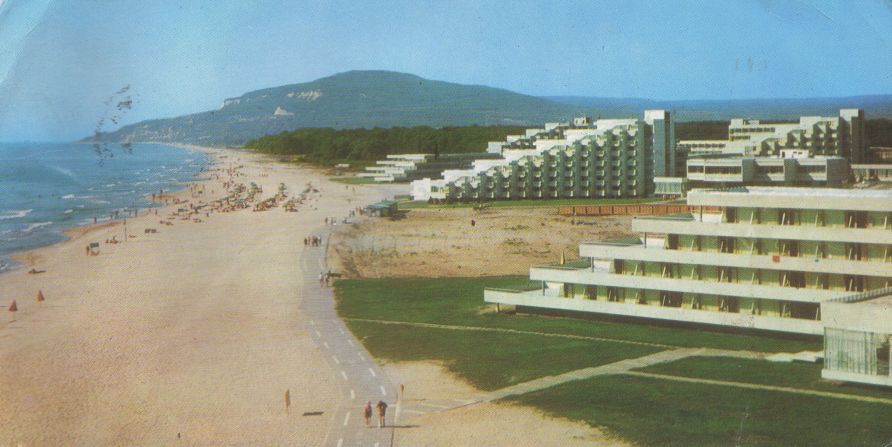
Albena Resort, Bulgaria —
The postcards were mostly found in second hand bookshops in Warsaw, he says. Many had been sent with mundane holiday messages, or the answers to radio competitions scribbled on.
Courtesy OWEN HATHERLEY
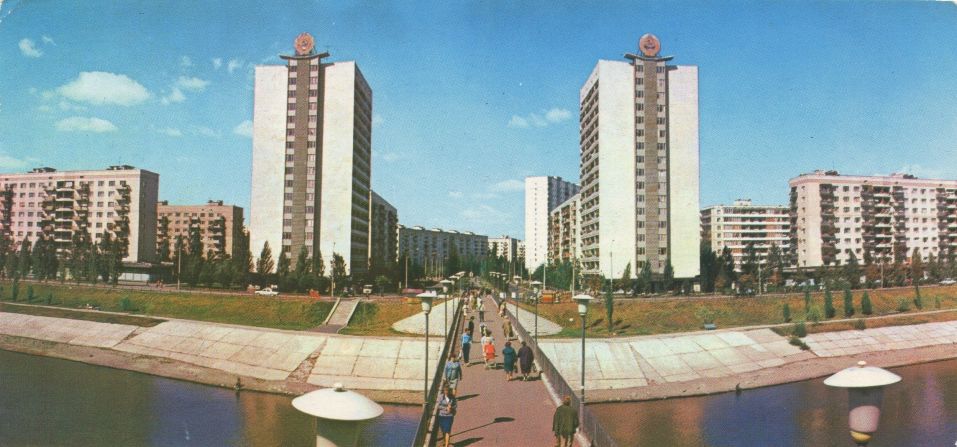
Rusanivka new residential district, Kiev, Ukraine —
But others had traveled further afield: one was found by Pyzik a branch of charity shop Oxfam in Oxford, UK.
Courtesy OWEN HATHERLEY
Jastrzebia Gora, Poland —
Many reveal now-unlikely patterns of travel between the communist eastern European countries: vacationing rituals from the colder countries of the former Warsaw Pact to Bulgaria, the Romanian Black Sea coast, Crimea and the Caucasus, for example.
Courtesy OWEN HATHERLEY
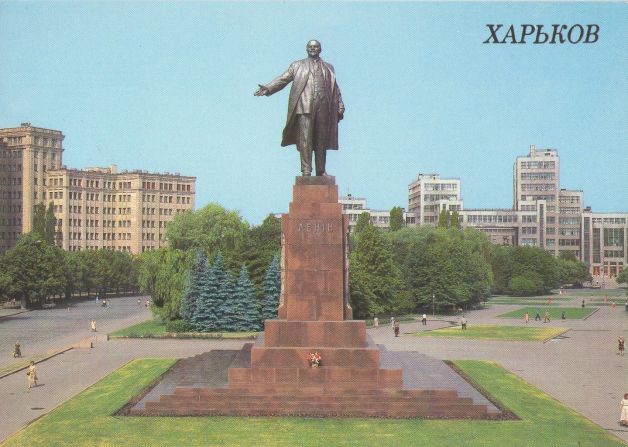
Ukraine's largest statue of Lenin, in Kharkov —
Although some Poles may still holiday in Armenia or eastern Ukraine, "it's unlikely that Lenin statues and modernist theatres would be the images you'd want to send home to your family and friends," says Hatherley.
Courtesy OWEN HATHERLEY
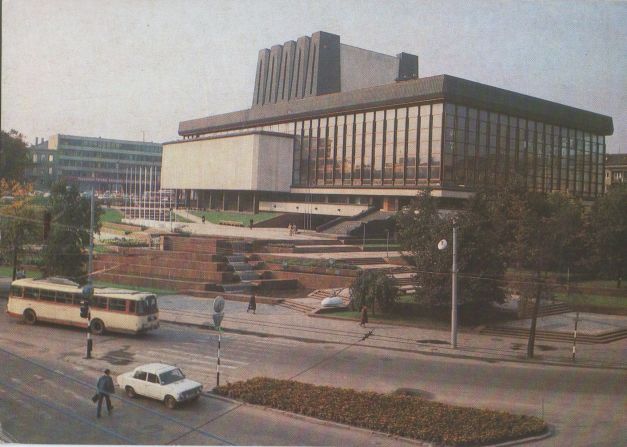
State opera and ballet theatre, Vilnius, Lithuania —
Many post cards seem to have not been intended for tourist purposes at all, instead depicting "housing estates, TV towers, modern public buildings."
Courtesy OWEN HATHERLEY
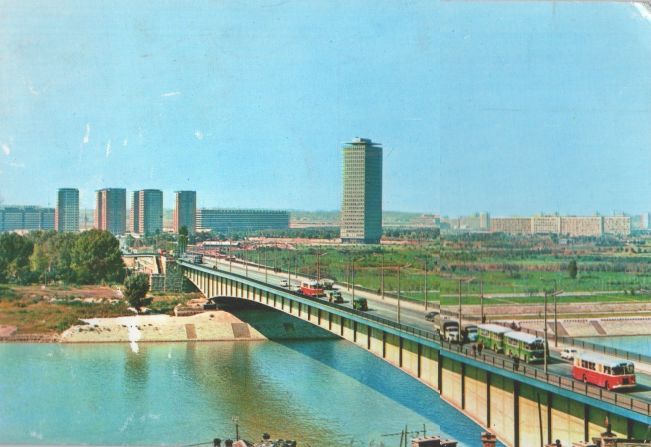
View across the Sava River to New Belgrade, Serbia —
These immense, repetitious housing estates are often the first sight of communist architecture that tourists glimpse when leaving the airport to visit picturesque cities such as Budapest, Prague, St Petersburg, or Krakow.
Courtesy OWEN HATHERLEY
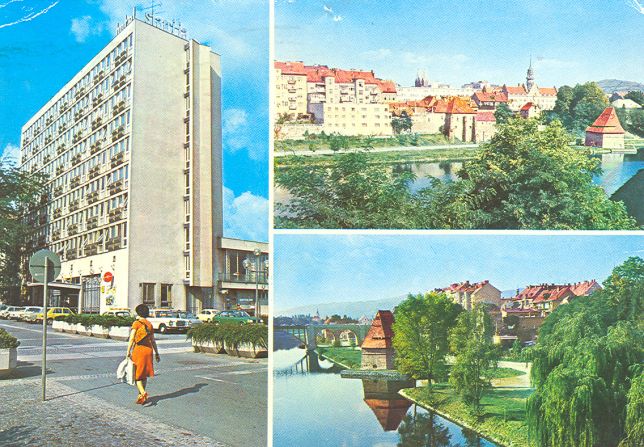
Maribor, Slovenia —
"You must trudge in a coach or cab through communism to arrive at the gorgeous past, and the contrast is not kind," writes Hatherley.
Courtesy OWEN HATHERLEY
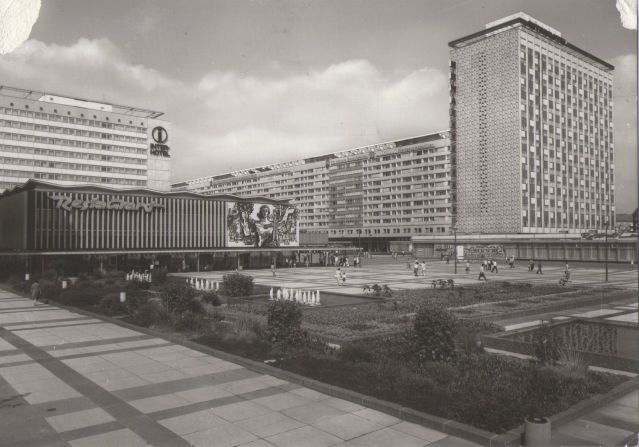
Stasi-controlled Interhotels Newa and Bastei, Dresden, Germany —
These "monolithic, univocal and reductive concrete slabs" contribute significantly to western European and American perceptions that the Soviet Union's architecture was wholly oppressive and barbaric.
Courtesy OWEN HATHERLEY
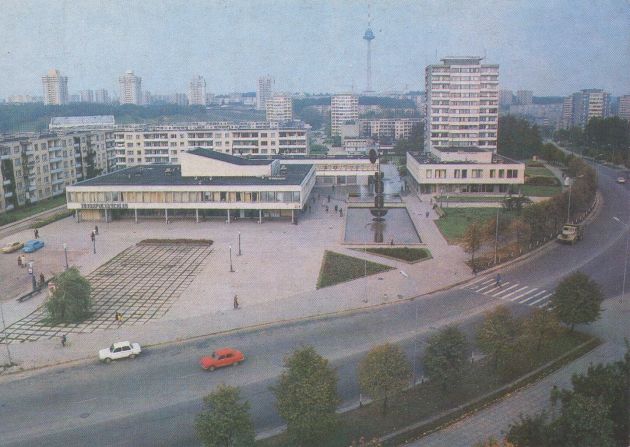
Lazdynai, Vilnius, Lithuania —
"In the view of locals, it's unsurprisingly a little more complex," he writes, "you can come across everything from extreme hostility to a slightly rueful but warm nostalgia, but few would disagree with the notion that something went seriously wrong when these places were made."
Courtesy OWEN HATHERLEY
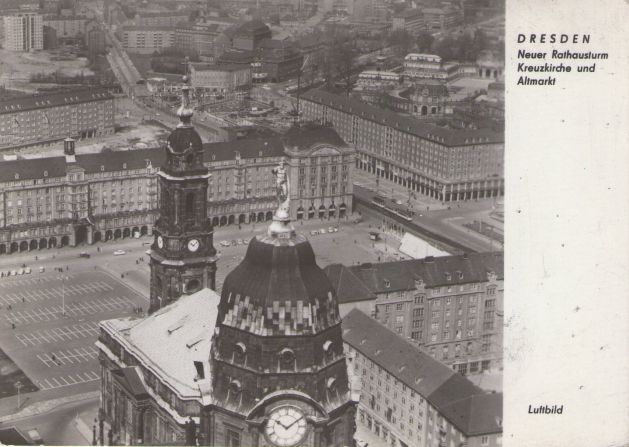
Dresden, German —
The postcards show that this wasn't always the conclusion. "It is ironic that these 'inhuman' structures... are usually the result of what was one of the Soviet empire's most humane policies -- the provision of decent housing at such a subsidy that it was virtually free."
Courtesy OWEN HATHERLEY
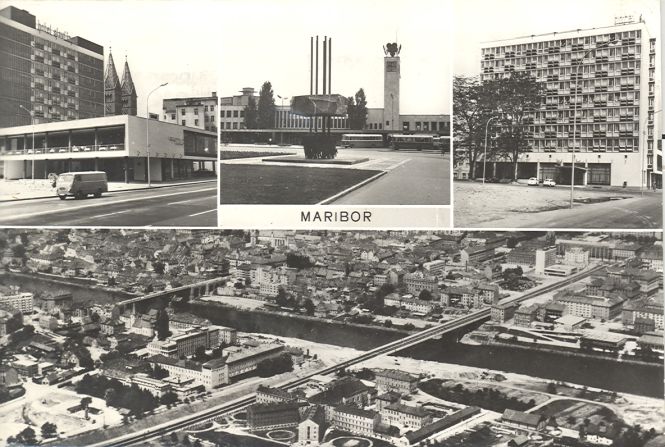
Maribor, Slovenia —
An image of a prefabricated housing estate showed "Places that you might have moved into, or wanted to show off about that," says Hatherley in the Calvert Journal.
Courtesy OWEN HATHERLEY
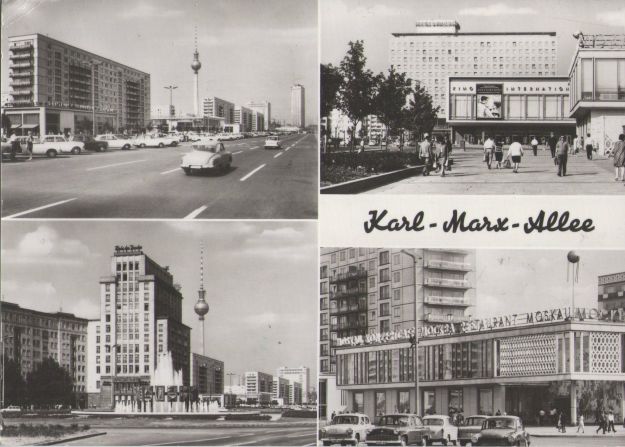
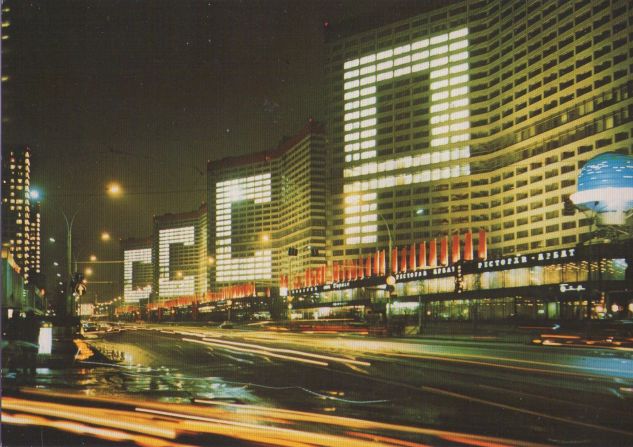
Karl-Marx-Allee, Berlin —
These, then, are "Little reminders that these ordinary spaces were once regarded as something rather special -- places that if you visited or got rehoused in them, you'd want to write home about."
![In<a href="index.php?page=&url=http%3A%2F%2Fcalvertjournal.com%2Ffeatures%2Fshow%2F4458%2Fowen-hatherley-postcards-landscapes-of-communism" target="_blank" target="_blank"> an article for the Calvert Journal</a>, Hatherley explains the use of postcards: "If the [books] showed these as mundane places in the 21st century, then the postcards show a publicity image, but publicity that is frequently so odd and jarring that it can be hard to imagine how these photographs were intended as a form of architectural and political PR."](https://media.cnn.com/api/v1/images/stellar/prod/150826173957-owen-hatherley-post-cards-communism-28.jpg?q=w_2090,h_1083,x_0,y_0,c_fill/h_447)