The revolutionary design of communist currencies | CNN
Thank You!
Your effort and contribution in providing this feedback is much
appreciated.
Close
Ad Feedback
The revolutionary design of communist currencies
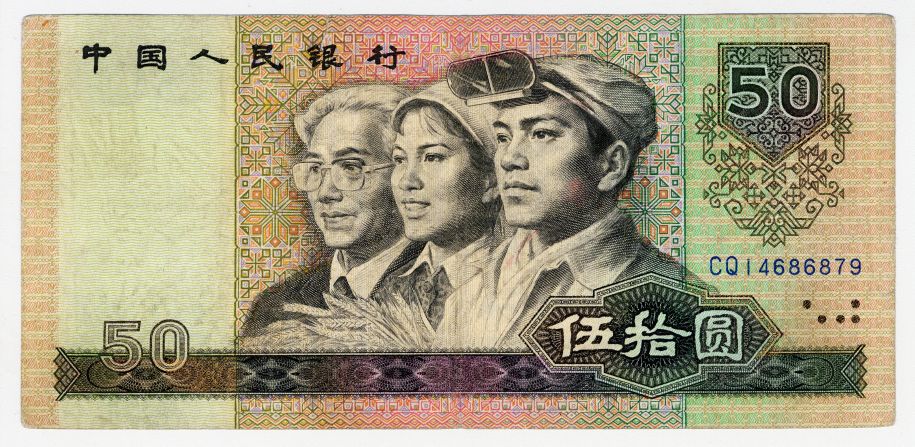
50 yuan note, China, 1980 —
A new British Museum exhibition, "The Currency of Communism," celebrates the centenary of Russia's October Revolution with a display of banknotes and posters from socialist states. Dating back to 1980, this Chinese note is among the newest items in the collection. It depicts the people who the government hoped would spearhead the development of modern China: an intellectual, a farmer and an industrial worker. "Intellectuals were treated with a great deal of suspicion during the cultural revolution of '66 to '76, so it's interesting to see them included, almost as a conciliatory gesture," said curator Thomas Hockenhull.
Courtesy The British Museum
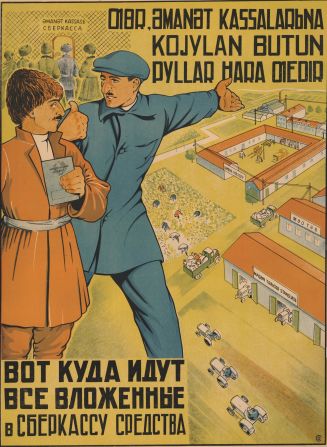
Poster, USSR (Azerbaijan), 1931-1940 —
The new exhibition also features a variety of propaganda posters, such as this one from Azerbaijan (then part of the USSR) shows the supposed benefits of "sberkassa," the financial institution that stored citizens' savings. "This is where all the sberkassa contributions go," reads the caption, as a woman is shown what can be achieved by putting savings into the state bank. The scene depicts a collective farm. "Very representative of lots of poster campaigns in the 1930s and 1940s," according to Hockenhull.
Courtesy The British Museum
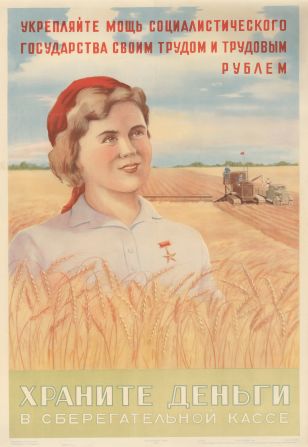
Poster, USSR, 1949 —
"Strengthen the power of the socialist state with your labor," reads this poster from the USSR. Hockenhall describes the depiction of a woman in a wheat field with a gold medal as "a slight irony as no worker would wear such a thing in the middle of a field during harvest season."
Courtesy The British Museum
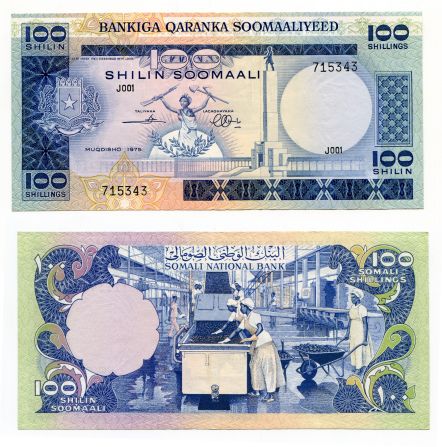
100 shilling note, Somalia, 1975 —
This banknote from Somalia was designed to empower women and show them the things they could achieve through communism, such as finding work and being part of the military. "The image of the woman holding a shovel, a rifle and a baby at the same time might be too optimistic though," said Hockenhull.
Courtesy The British Museum
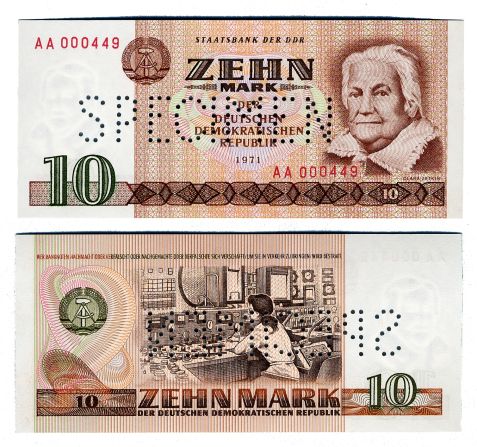
10 mark note, East Germany, 1971 —
The woman pictured on this banknote is Clara Zetkin, a German Marxist who organized the first International Women's Day in 1911.
Courtesy The British Museum
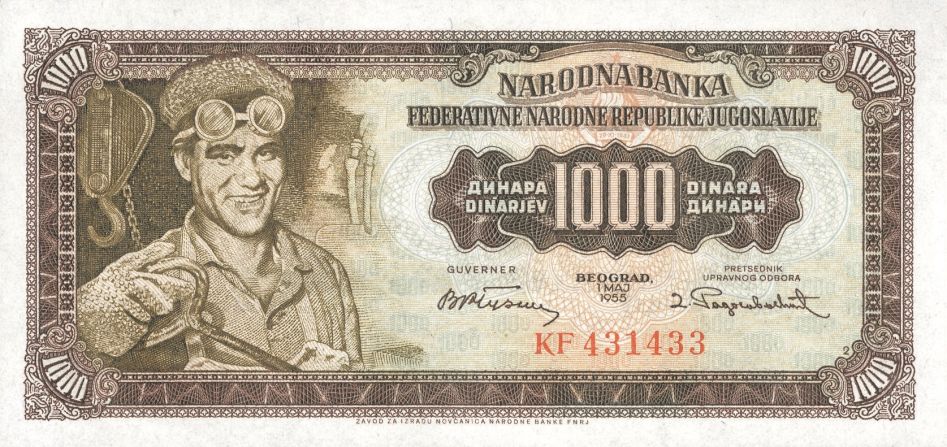
1000 dinara note, Yugoslavia, 1955 —
This note features a portrait of Arif Heralić, a furnace worker whose photograph appeared in a newspaper in 1955. Heralić became a national hero when the image was used on a banknote, though he died penniless in 1971.
Courtesy The British Museum
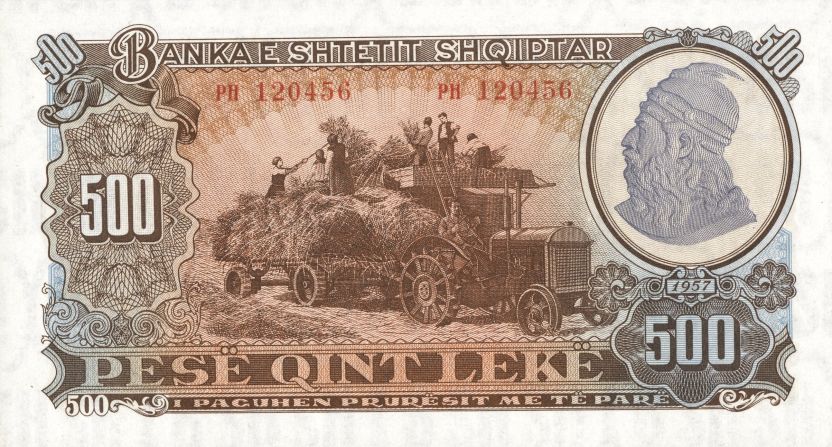
500 leke note, Albania, 1957 —
An Albanian note depicts a farming scene and a trailer overloaded with crops. "The goal is to show the latest technologies and the collective farming operations, to convince the urban citizen that collectivization is both desirable and necessary," said Hockenhull.
Courtesy The British Museum
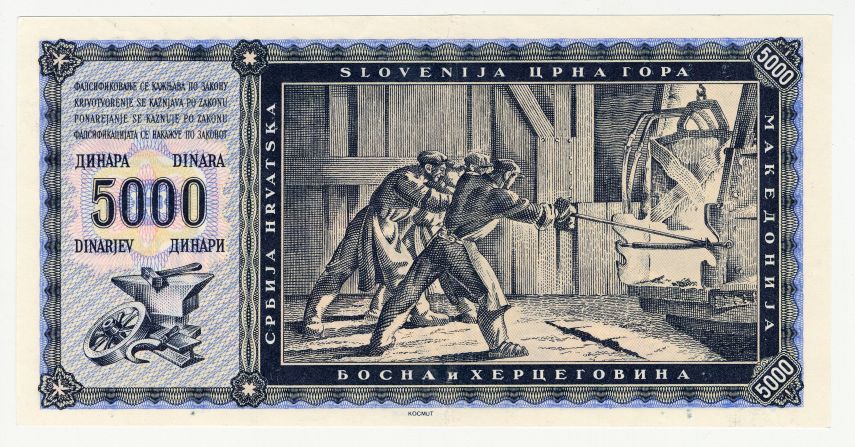
5000 dinara note, Yugoslavia, 1950 —
The foundry is a common motif in socialist art, often acting as a metaphor for the forging of the communism state.
Courtesy The British Museum
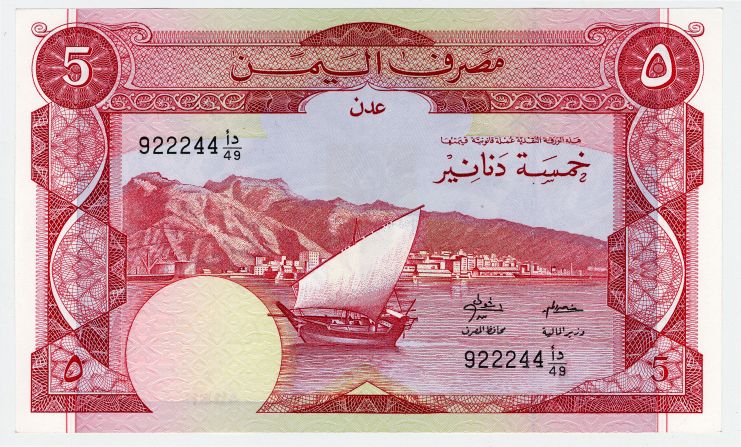
5 dinar note, South Yemen, 1984. —
South Yemen's currency was not updated after it became communist in 1967, so designs still carried earlier images of a boat with the capital Aden in the background.
Courtesy The British Museum
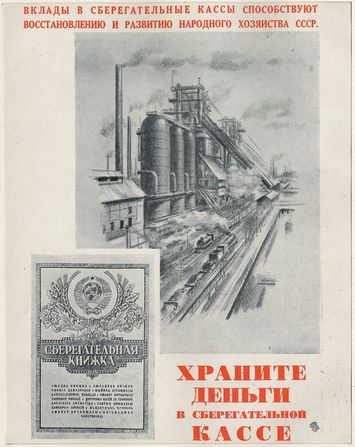
Magazine ad, USSR, 1949 —
"Keep the money in the savings bank," instructs this poster, highlighting the virtues of the "sberkassa," the financial institution that stored citizens' savings. "Contributions to sberkassa will support the reconstruction and development of national economy in the USSR," reads the caption at the top of the page, which also shows a savings account book. According to Hockenhull: "This shows not what the state can do for you, but what you can do for the state. Putting money in a savings account contributes to the development of the people's economy."
Courtesy The British Museum
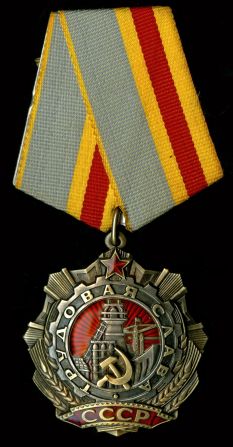
Order of Labour Glory (1st class) medal, USSR, 1985 —
This medal was issued to a female machine builder in Donetsk, Ukraine (then part of the USSR). It was a highly coveted award, with recipients of all three classes given a wide range of benefits, including a 15% pension increase, free public transport, a free annual pass to a sanatorium and a free first-class roundtrip flight every year.