Your effort and contribution in providing this feedback is much
appreciated.
Close
Ad Feedback
Abandoned ruins of the Soviet space shuttle
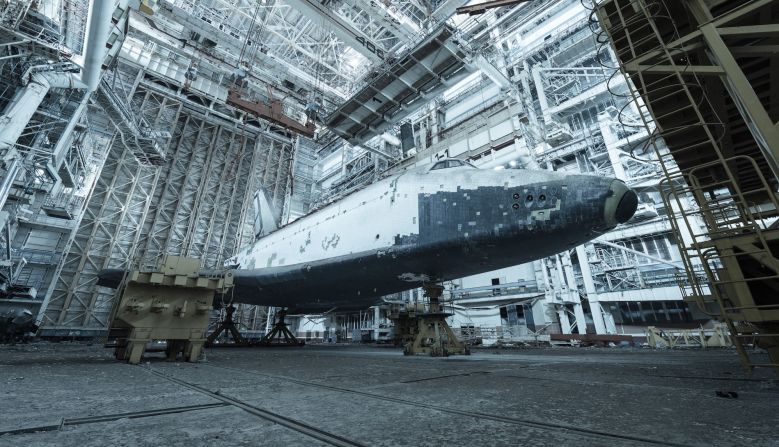
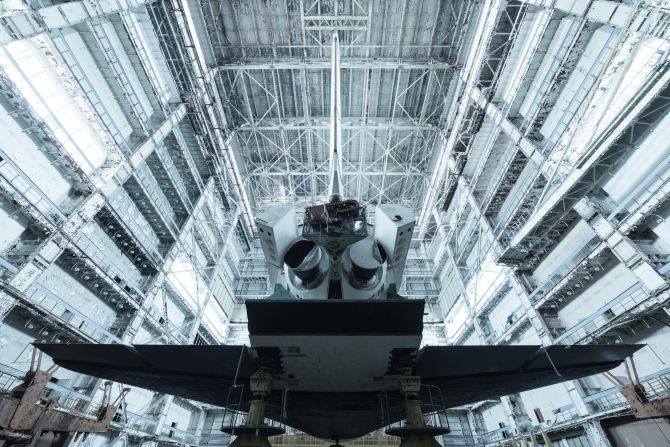
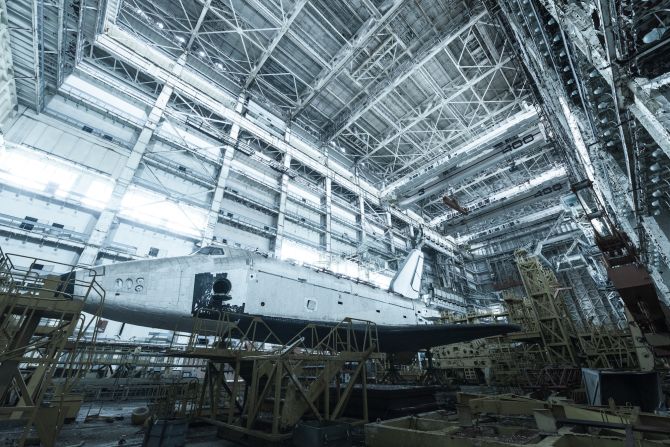
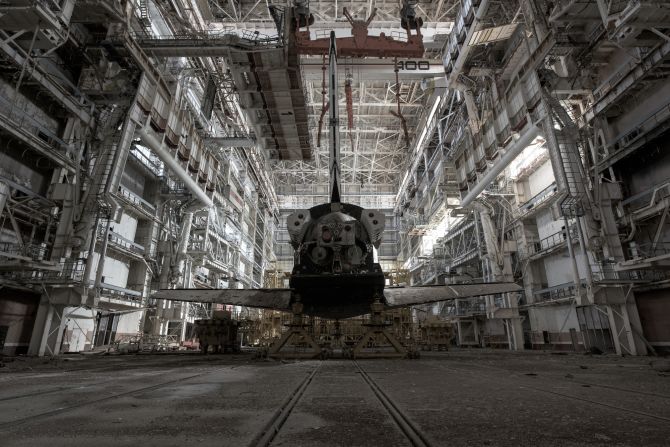
A Soviet-era Buran shuttle lies abandoned in a hangar at the Baikonur Cosmodrome in Kazakhstan. It's been gathering dust here for nearly 30 years. French photographer David de Rueda has visited the site, which is not open to the public, three times between 2015 and 2017, taking these photographs.
David de Rueda
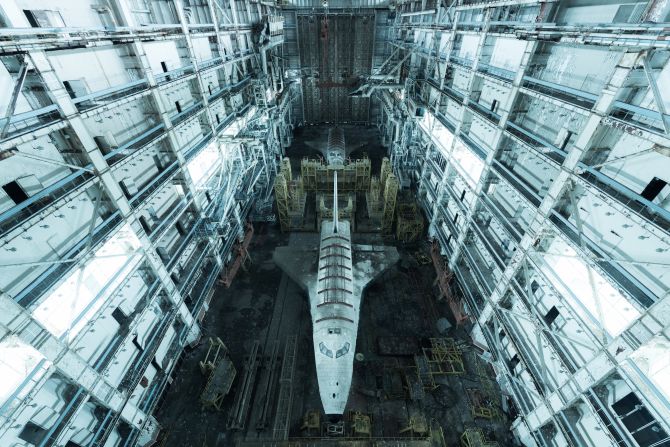
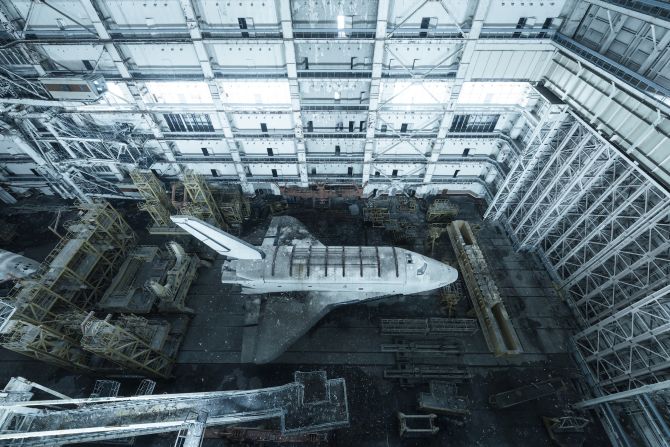
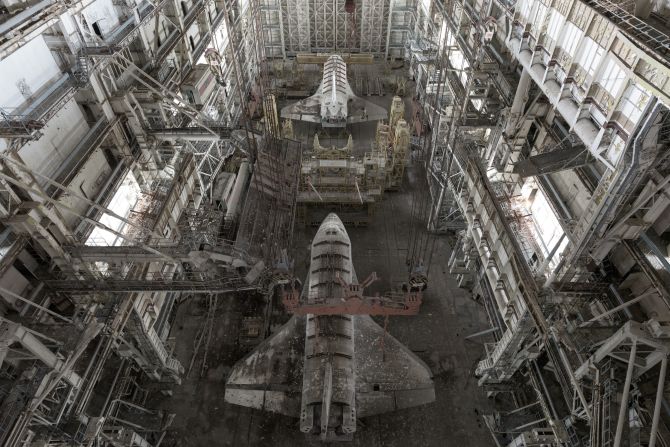
A building called MKZ houses two of the shuttles, only one of which was designed to fly into space: "This is the first photo ever showing both space shuttles and the entire MZK building. It's the main piece of my first trip [in 2015]. After the long trek through the steppe we were quite exhausted but we couldn't sleep because it was too cold. Being there was so unreal and exciting it gave me enough power to take the pictures I was looking for," said de Rueda in an email interview.
David de Rueda
"The hangar is huge: 150 meters long, 80 meters wide and 70 meters high. During the winter, water drops are falling everywhere and it sounds like it's raining inside the hangar. Due to extreme temperature changes (from -40°C to +40°C), the roof of the biggest hangar collapsed in 2002. It destroyed OK-1.01, the only Buran which ever flew."
David de Rueda
The other Buran in the hangar, pictured here, was a full scale model for ground tests.
David de Rueda
The Burans are no longer owned by the Russian government: "RKK Energia, the Russian company that built the vehicles in the 1980s, sold them to a Kazakh company called Infrakos in 2004, which in turn sold it to a Russian-Kazakh company called Aelita a year later," said Soviet space historian Bart Hendrickx in an email interview.
David de Rueda
"The main motive for developing Buran had been to match the military capabilities of the Space Shuttle. When US-Soviet relations improved in the second half of the 1980s, Buran lost much of its "raison d'être" and also much political support from the Kremlin. Gorbachev showed very little enthusiasm for it," said Hendrickx.
David de Rueda
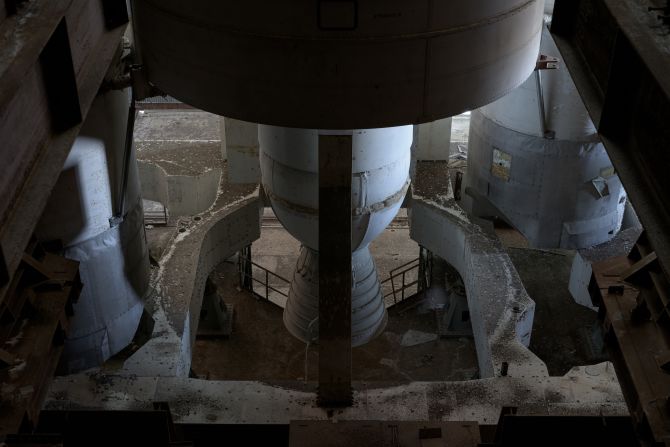
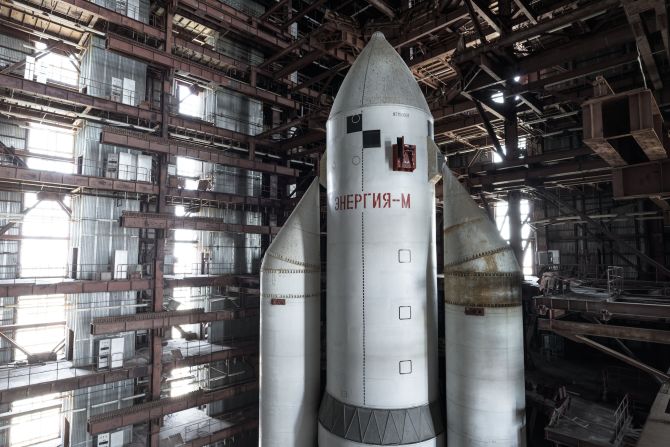
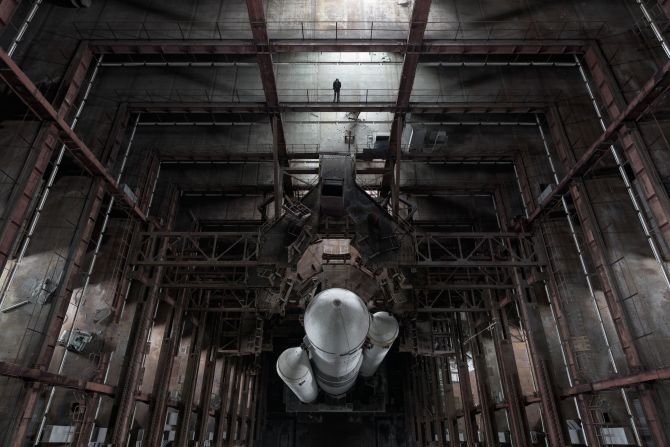
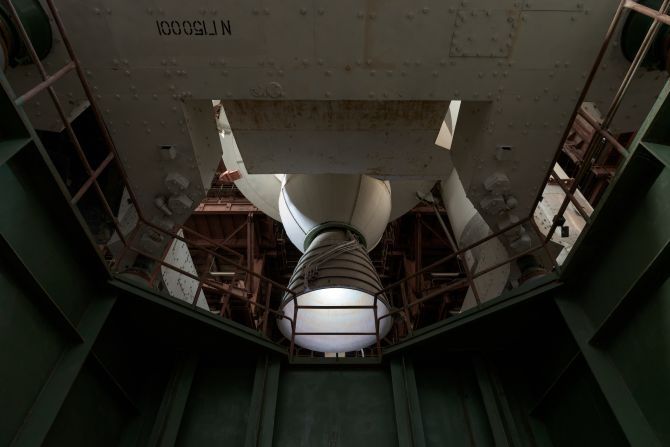
A nearby hangar also houses a mock-up of the rocket used to send the Buran into orbit: "This test model was used for launch pad tests in 1990, but was not built to fly. It is stored in a building more than 100m high that was mainly used for vibration testing," said Hendrickx.
David de Rueda
The Energia rocket was a very distinctive element of the Buran program: "It was a universal launch vehicle that could be used to launch not only Buran, but also other big payloads. For instance, on its first mission in May 1987 it carried a prototype of a big space-based "battle station" which failed to reach orbit," said Hendrickx.
David de Rueda
A wide shot of the hangar that houses the Energia rocket mock-up: "It's more than 100 meters high, the tallest in Baikonur. The view from the top is really impressive. I think it's one of the most powerful pictures I ever took," said de Rueda.
David de Rueda
The Buran program was canceled in 1993: "After the collapse of the Soviet Union, there simply was no money left to use it for the civilian missions that it could still have performed. With hindsight, the decision to build Buran was based on a false perception of the primary objectives of the Space Shuttle program and an urge in the Soviet defense industry to blindly copy whatever the Americans built. There was no fundamental need for it in the immediate future of the Soviet space program," said Hendrickx.
David de Rueda
The vehicles are still in good condition, according to de Rueda: "The shuttles and the rocket have been exposed to dust, bird poop and extreme temperatures for almost 30 years. Time has left its mark. But other than that, they're rather in good condition."
David de Rueda
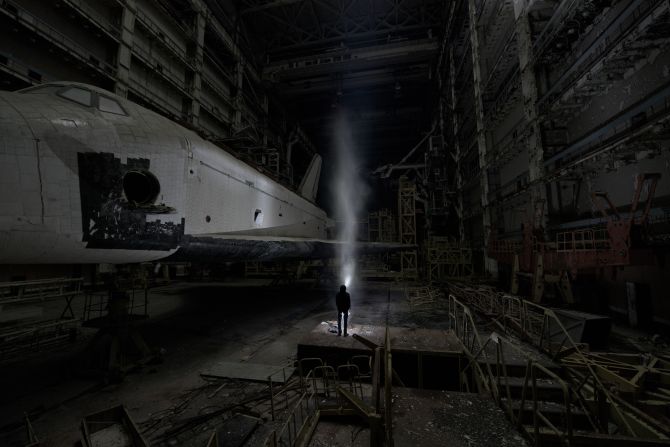
"Space Dust. An enigmatic long exposure next to OK-MT. It reminds me of the first time I entered the hangar. I wasn't sure of what I'd discover. When I saw the nose of the shuttle, I couldn't believe it!"
David de Rueda
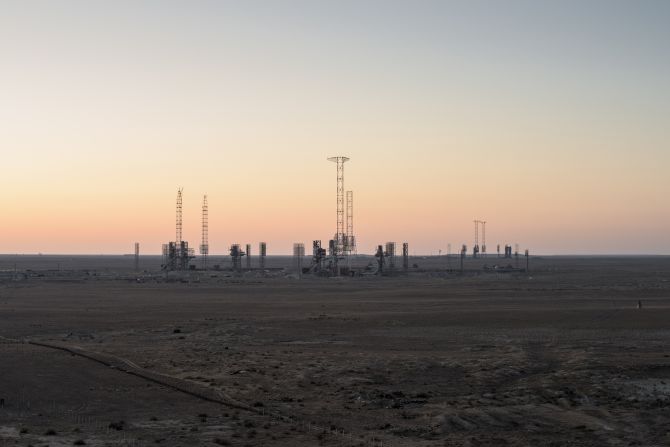
The Baikonur Cosmodrome is an active spaceport and a theater of many achievements, including Yuri Gagarin's first manned space flight in 1961.Site 110 after sunset in a photo taken in August 2017: "It's a launch facility which has also fallen into disrepair. Buran OK-1.01 was launched from there for its only single flight, in 1988. In the background there's Site 250, another abandoned launch pad. I took this photo from the top of MZK building. There was no sound apart from the hot wind blowing. The infinity of the steppe made me feel on another planet," said de Rueda, who also filmed a video at the site.