Behold the post-Soviet city that became a futuristic wonderland
City of the future —
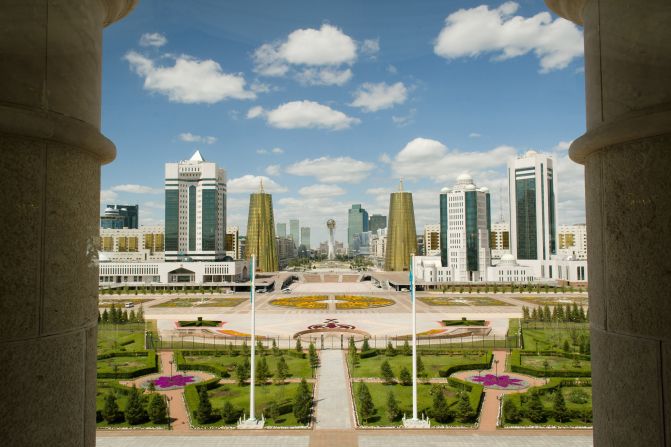
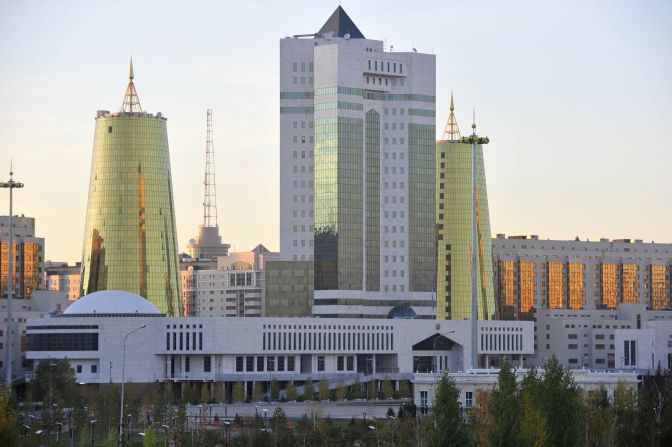
Gazing across Astana's space-age skyline, you'd be forgiven for thinking you'd stumbled across a sci-fi version of planet Earth. With sleek and surreal buildings affectionately nicknamed "The Flying Saucer," "Lollypop," and "Dog Bowl," by local residents, Kazakhstan's capital has become the self-appointed home of futuristic architecture in recent years. We take a look at some of the city's gleaming structures bushing the boundaries of design.
Leon Neal/Getty Images/File
The Palace of Peace and Reconciliation —
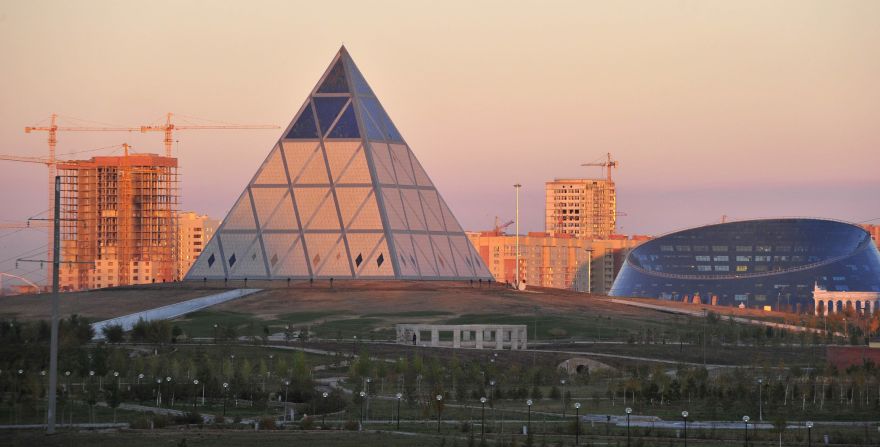
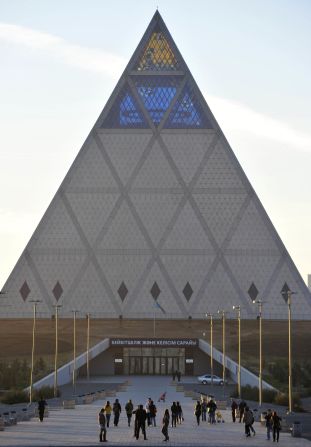
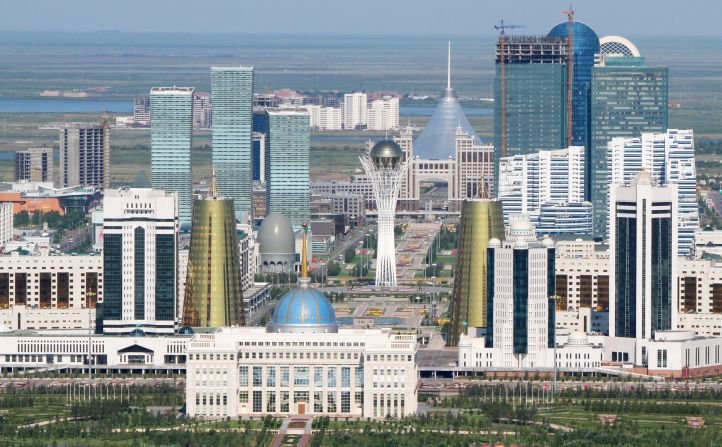
The pyramid might be an ancient design, but it's given a 21st century makeover in Astana's 62-meter-high Palace of Peace and Reconciliation (pictured center). The glass pyramid was built in 2006, specifically to host the Congress of Leaders of World and Traditional Religions.
John Macdougall/Getty Images/File
To the point —
The name "Astana" means "capital" -- apt, considering this is where the capital city moved from Almaty in 1997. Fueled by oil wealth, the new city has gone up in less than two decades, earning a reputation as an architect's playground.
John Macdougall/Getty Images/File
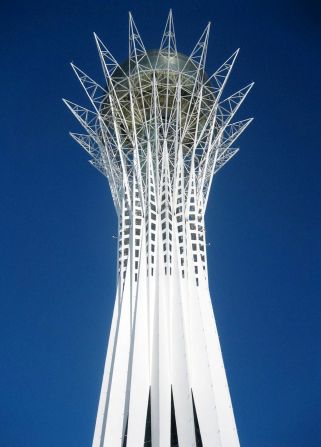
Bayterek Tower —
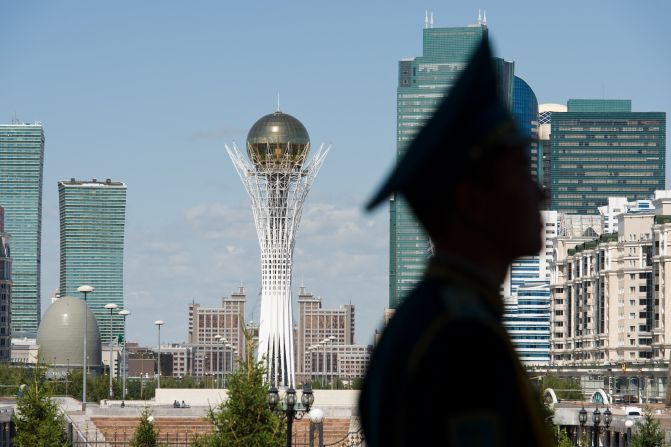
Standing at over 100-meters-tall including antenna, the Bayterek monument symbolizes a Kazakh folktale in which a mythical bird lays a golden egg in the branches of a poplar tree.
Leon Neal/Getty Images/File
The Lollipop —
The spectacular tower has also gained the nickname "The Lollipop," among residents.
Antoine Lambroschini/Getty Images/File
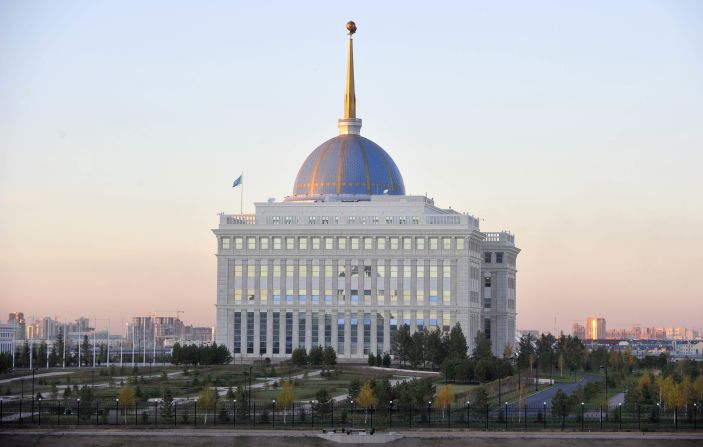
Presidential Palace —
The Ak Orda -- or "White Horde" -- Presidential Palace was built in 2004 out of solid concrete and is lined with Italian marble. It features five levels above ground and five levels below ground.
John Macdougall/Getty Images/File
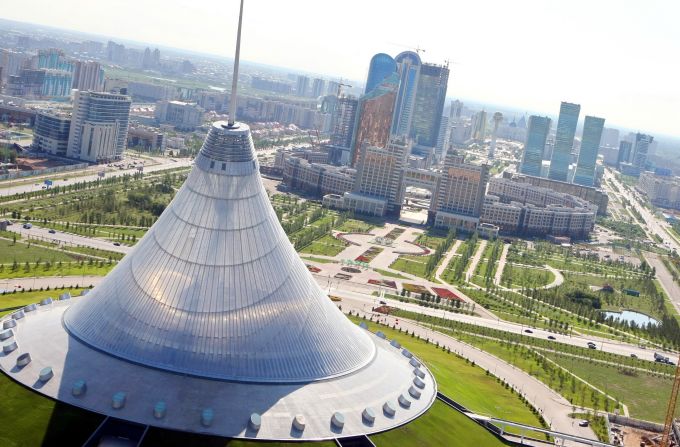
Khan Shatyr —
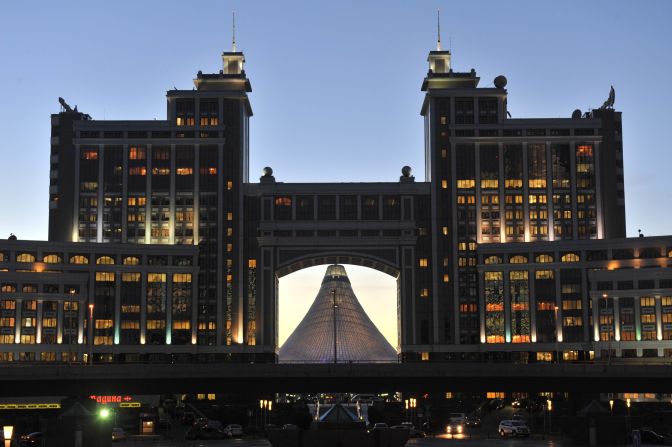
Centuries ago on the old Silk Road trade route, the nomads of Kazakhstan lived in Yurts. Today, Kazakhstan is home to a very different type of yurt -- behold the Khan Shatyr, or King's Tent, a 150-meter-tall shopping mall.
Stanislav Filippov/Getty Images/File
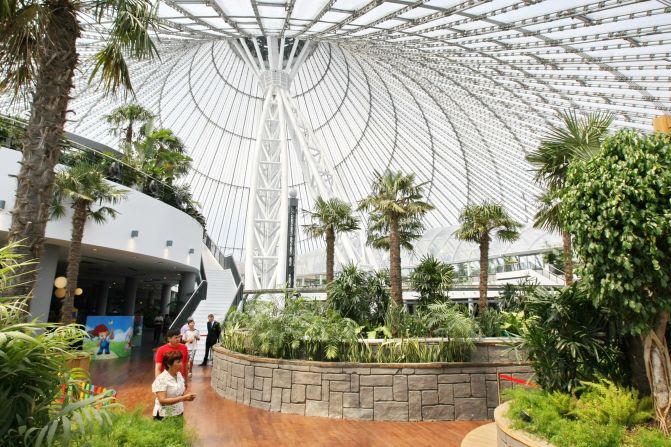
Inside the King's Tent —
Opened in 2010, the building was designed by British architect Norman Foster, and includes a roof made from a transparent polymer called ETFE. ETFE's UV-protection shields shoppers from the harsh summer sun -- but it also captures heat during Astana's bone-chilling winters.
Stanislav Filippovia/Getty Images/File
21st century city —
"This is a city of the 21st century, the capital of a country that's looking towards the future," said Serik Rustembekov, who runs a privately-owned architecture firm in Astana "It's constantly developing -- in science and culture -- and we are opening up to the world."
John Macdougall/Getty Images/File
Symmetrical skyline —
Little surrounds the city for some 1,200 kilometers, which is situated in Kazakhstan's remote steppes. Indeed, this is the world's ninth largest country -- and the world's largest landlocked country. Kazakhstan declared independence from the Soviet Union in 1991, joining the Commonwealth of Independent States (CIS).
Stanislav Filippovia/Getty Images/File
Shabyt Palace of Art —
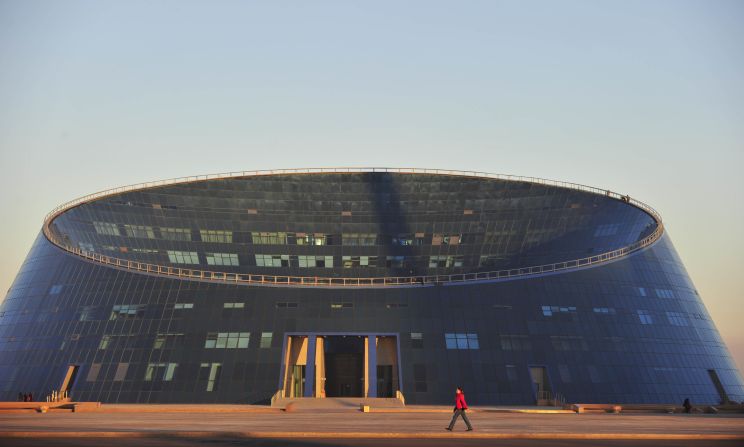
Built as part of the Kazakh National University of Arts, the Shabyt Palace of Arts has also earned the name "The Dog Bowl," among locals.
John Macdougall/Getty Images/File
Kazakhstan Central Concert Hall —
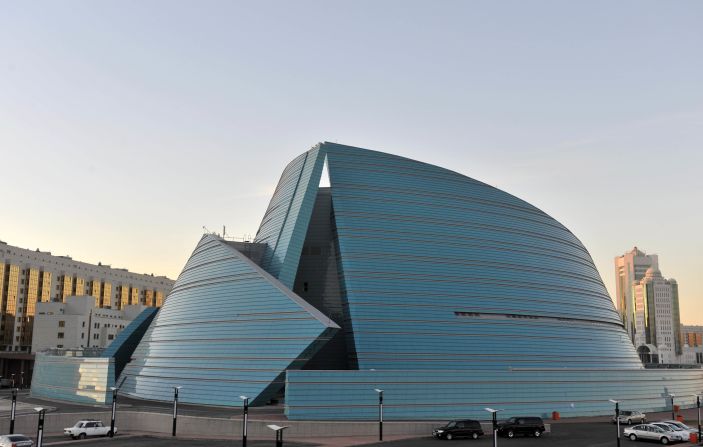
"The concert hall's structures rise as flower petals stirred by the music," said Manfreddi Nicoletti, Italian architect behind the city's luminous blue concert hall. It is one of the largest concert halls for classical music in the world, featuring 3,500 seats.
John Macdougall/Getty Images/File
Rising star —
The Khan Shatyr shopping and entertainment complex can be seen peeking through another building in the capital. Looking ahead, Astana is set to host the World Expo in 2017, focusing on green innovations such as solar, wind, and geothermal energy. Quite an achievement for a capital city which only emerged two decades ago.