How ancient Aboriginal art is thriving in the Instagram age
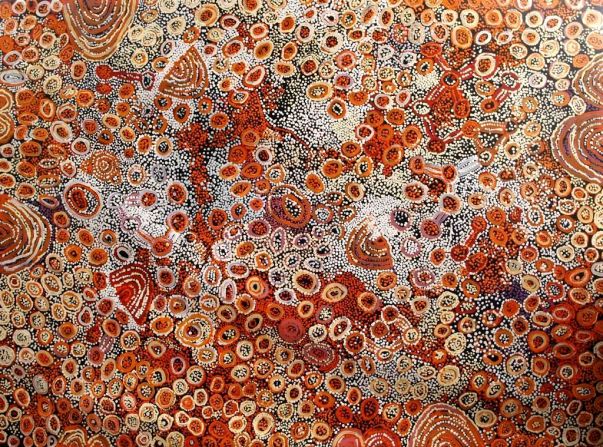
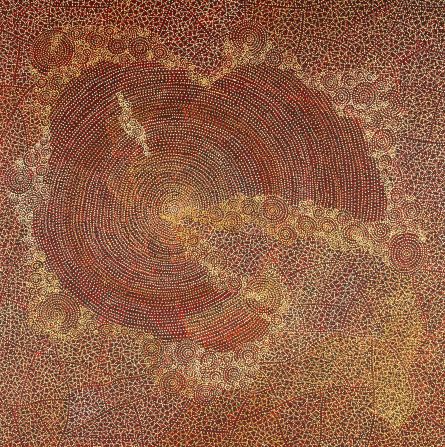
Aboriginal culture dates as far back as 80,000 years, but modern canvas works are finding popularity with international buyers. Pictured, "Marrapinti" by Naata Nungurrayi. Her work often hints at sacred women's ceremonial sites, their dancing, and the designs on their bodies.
Artlandish Aboriginal Art Gallery
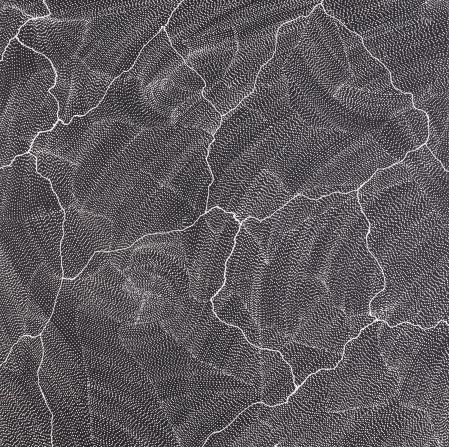
Traditionally paintings were done on rock walls, as body paint, or simply in the dirt or sand. Today most Aboriginal paintings depict stories and "Dreamings" about the land, culture and ceremonies. Pictured, "Water" by Kurun Warun.
Artlandish Aboriginal Art Gallery
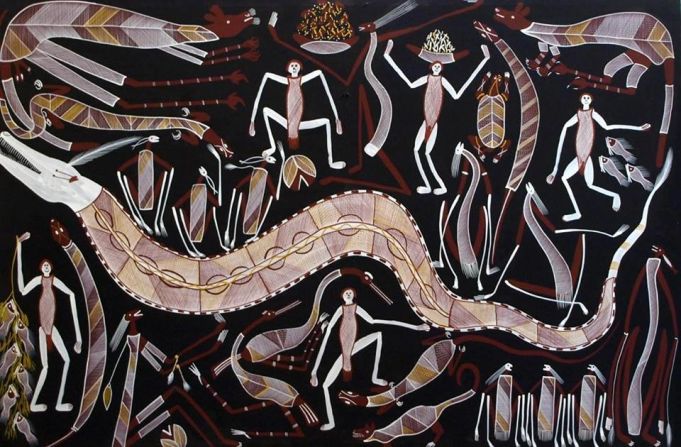
Eddie Blitner paints Mimis -- tiny match-thin spirits which Aborigines believe have lived in the escarpments since the beginning of time. Mimis are so shy they only come out at night with their weapons and pets such as goannas, kangaroos and porcupines. Pictured, Blitner's "Mimi Spirits and Rainbow Serpent."
Eddie Blitner/Artlandish Aboriginal Art Gallery
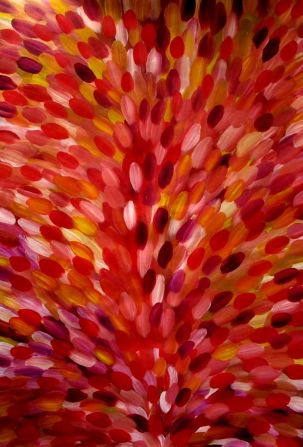
A lot of artists don't start painting until much later in life. Stories are passed down through generations within certain groups. Pictured, "Medicine Leaves" by Gloria Petyarre.
Artlandish Aboriginal Art Gallery
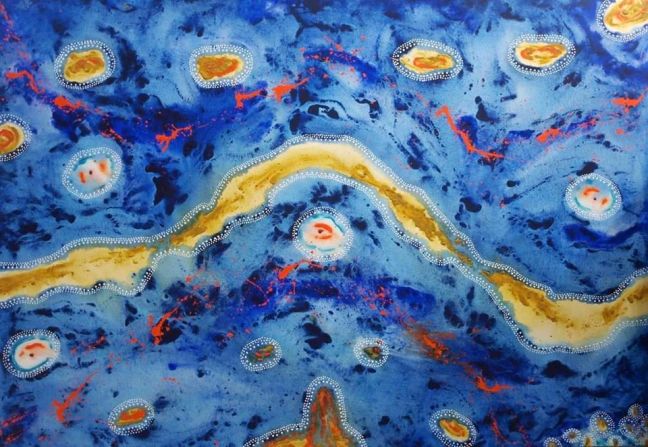
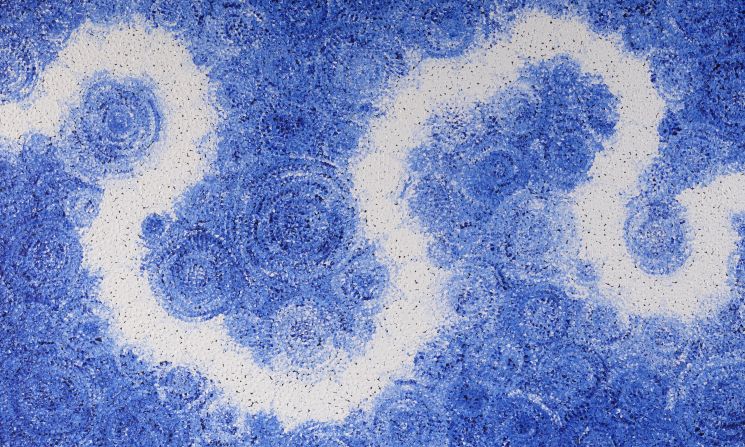
Sales are recovering after the global financial crisis took its toll on the industry. Artlandish Aboriginal Art Gallery in Kununnura sells paintings from $150 up to $150,000. Pictured, "Blue Earth Cycles" by Sarrita King.
Sarrita King/Keith Murphy
Gallery owner Scott Linklater says social media helped the spread of Aboriginal art being worldwide. In March his gallery sold 13 paintings directly through its Facebook page. Pictured, "Lightning" by Sarrita King.
Sarrita Kin/Keith Murphy
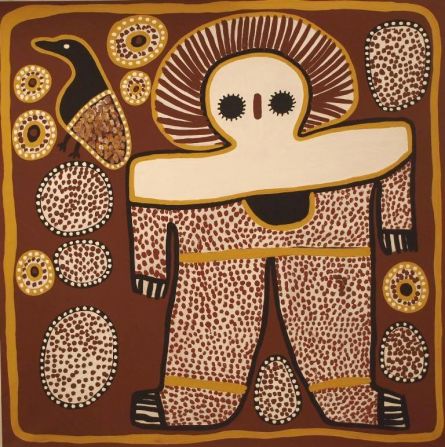
This painting by Lily Karadada shows the Wandjina -- the supreme spirit being according to the Worrorra, Wunambal and Ngarinyin people of the Kimberley region. The Wandjina have large eyes but no mouth, as it is said this would make them too powerful. Pictured, "Wanjina" by Lily Karadada.
Artlandish Aboriginal Art Gallery
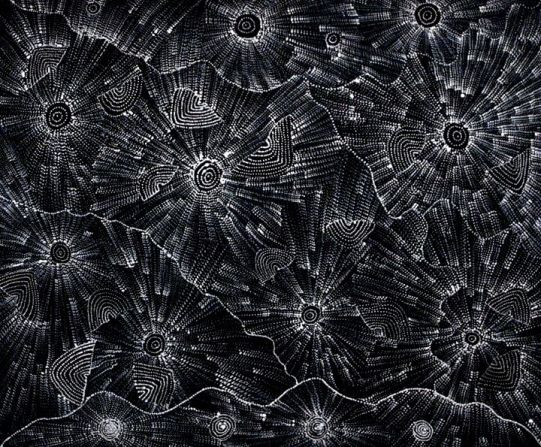
The auction market can be very high end, with many works going for up to $2 million. Pictured, "Water Dreaming" by Lola.
Artlandish Aboriginal Art Gallery
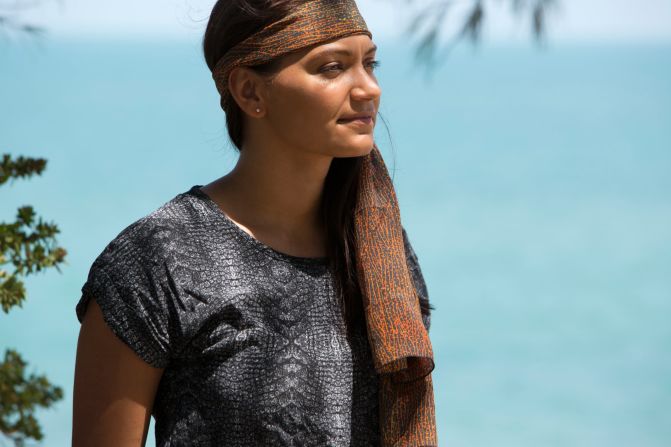
Sarrita King inherits her Australian Aboriginality from her father, the late artist William King Jungala. Inspired by the extreme landscapes of the Northern Territory, her art is popular with European and American buyers.
Saville Coble
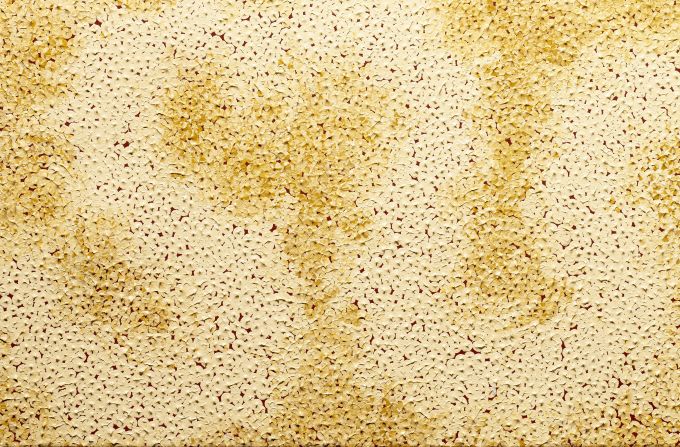
Stylistically, King uses traditional Aboriginal techniques such as "dotting" but also incorporates unorthodox methods to visually articulate the Earth's language. Pictured, her work "Yellow Earth Cycles."
Sarrita King/Keith Murphy
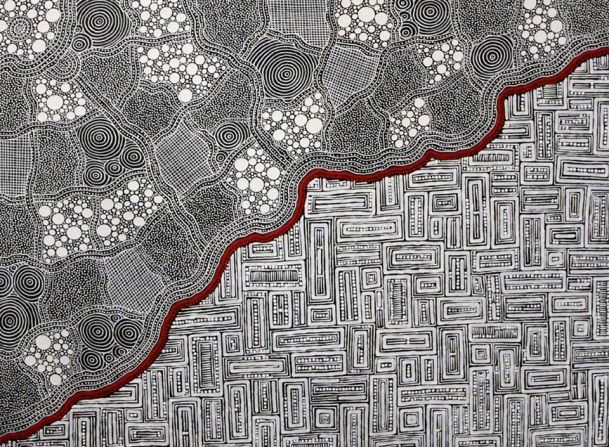
She also works with fellow artist and sister Tarisse King, this picture blending ancient and new techniques to depict culture and landscapes. Their paintings depict rivers, billabongs, shelters, rock holes and food supplies, showing how their ancestors survived on the land. Pictured, "Our Country's Story."