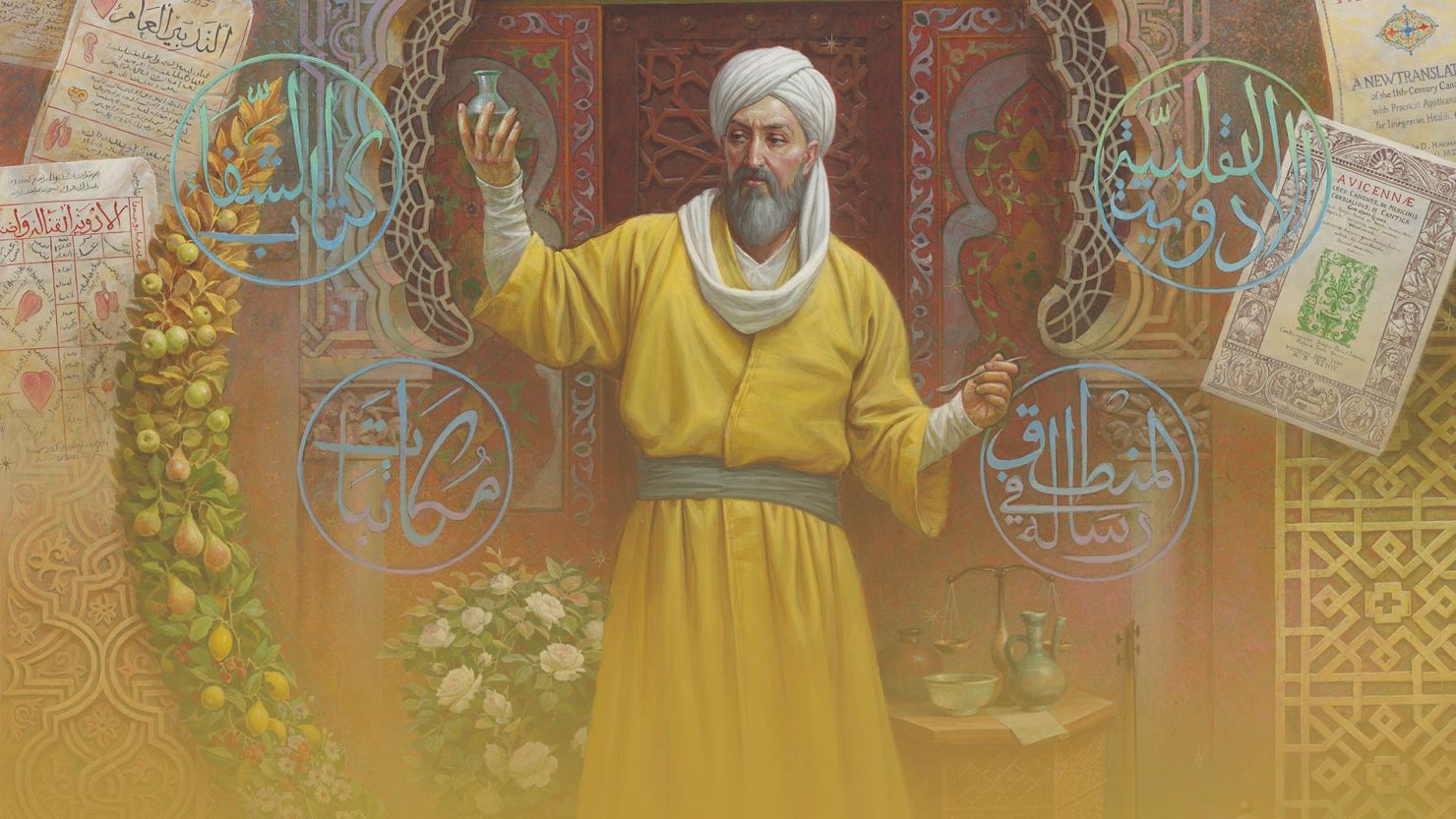

In the world of science and medicine, the name of the Uzbek scholar, Avicenna, shines like a guiding star, inspiring generations of scientists and physicians.
Born in 980 CE in Bukhara, Uzbekistan, Avicenna (also known as Ibn Sina) would go on to become a symbol of the Golden Age of Islamic Science, using his boundless thirst for knowledge to create transformative works.
He not only preserved ancient knowledge but also laid the foundations of medicine, which humanity continues to rely on to this day.

During Avicenna’s time, the world was struck by a devastating plague epidemic. His scientific works and treatment methods became true salvation for humanity. Amid the epidemic, his seminal work, ‘The Canon of Medicine’, was translated into Latin to make its invaluable knowledge accessible to European doctors. This translation helped save hundreds, and later, millions of lives, establishing Avicenna as one of the pivotal figures safeguarding humanity’s health.
Medicine as a calling
Avicenna’s journey into medicine began at a young age. At 16, he was the court physician to Nuh II, the ruler of the Samanids, successfully curing him of an illness that other doctors could not. As a reward, he was granted access to the unique library of the Samanids, which provided him with unlimited opportunities for research. It was here that his brilliant scientific career began. This pivotal moment allowed Avicenna to deepen his studies and reach new heights in medical science and other fields.
By the age of 18, he had mastered the works of Greek philosophers and, three years later, he had begun his career as a scholar. Throughout his life, he authored over 450 works across various fields of science. However, his greatest achievements were always in medicine.
He wrote several medical treatises, the most famous of which is ‘The Canon of Medicine’. This medical encyclopedia, comprised of five volumes, describes 600 treatment methods, the anatomy of the human body, the effects of medicinal plants, and disease prevention. It became the primary medical textbook in Europe and was used in universities until the 17th century.

Many of Avicenna’s ideas remain relevant even today. His contributions to medicine, such as the concept of quarantine to contain epidemics, became the foundation for modern sanitation practices and laid the groundwork for medical ethics.
The harmony of philosophy and science
Avicenna was not only a physician but also a philosopher whose works had a profound impact on global thought. His encyclopedia, ‘The Book of Healing’, covers logic, mathematics, physics, and metaphysics. Written in 1027, it combines the knowledge of East and West at that time, serving as a cultural bridge between civilizations.
His philosophical works continue to inspire scholars and serve as a source of knowledge for new generations.
Considered to have said, “Be friends with exercise, always stay cheerful, and you will live a hundred years, perhaps even more. Mixtures and powders are a false path to health. Heal with nature—in the garden and the open field,” Avicenna was a true advocate for living a healthy lifestyle. He believed that health depended not only on treatment, but also physical activity, fresh air, and natural nutrition.
A visionary ahead of his time
Today, thanks to the initiative of the President of the Republic of Uzbekistan, Shavkat Mirziyoyev, the Center of Islamic Civilization in Uzbekistan is undertaking extensive work to study and promote the legacy of great scholars, including Avicenna. His works are once again in the spotlight, inspiring young researchers to make new discoveries.
Whenever we speak of medicine or philosophy, we return to the name of Avicenna. His life and achievements remind us of how the pursuit of knowledge can change the world.
Learn more about the cultural and academic heritage of Uzbekistan here.