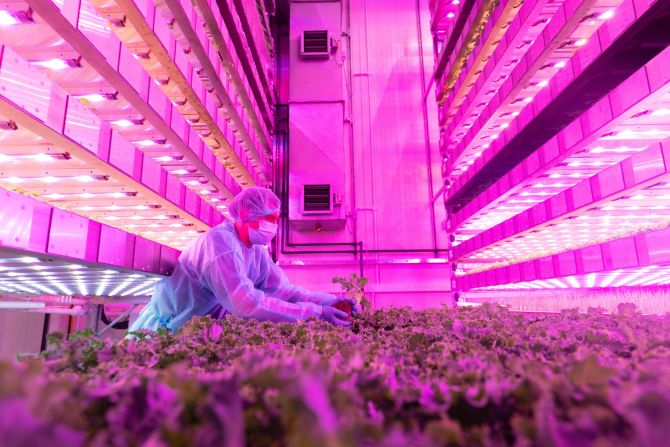
Dubai is already home to the world's biggest vertical farm — and it's set to beat its own record with GigaFarm, a 900,000 square foot facility that could replace up to 1% of food imports. Using growth towers supplied by Intelligent Growth Solutions (pictured), it will grow up to 3 million kilograms of fresh produce annually. Scroll through the gallery to see more innovations to help feed the world.
Intelligent Growth Solutions (IGS)
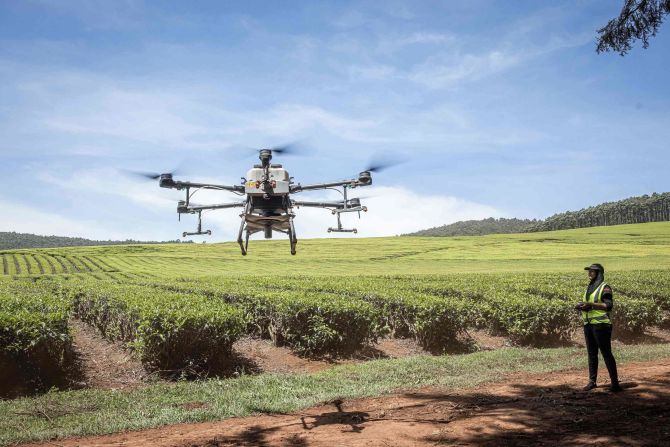
Amid a worsening climate crisis, technology has a vital role to play in ensuring we can produce enough food for a rapidly growing population. Pictured, a Kenya Airways unmanned aerial vehicle (UAV) spreads fertilizer at a farm in Musereita, Kenya.
Patrick Meinhardt/AFP/Getty Images
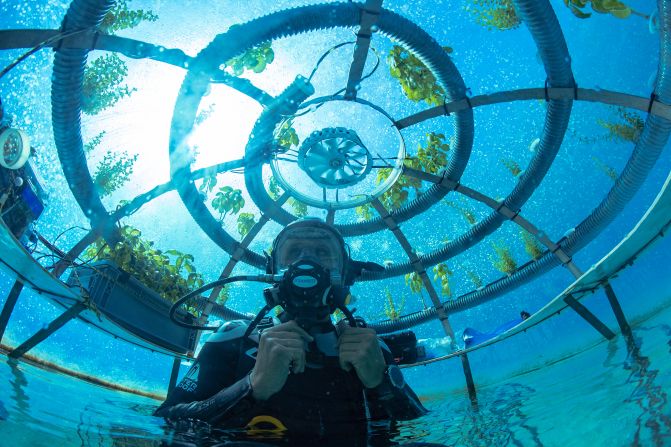
Located off the coast of Noli, Italy, Nemo's Garden is the world's first underwater cultivation system for terrestrial plants. It consists of an array of floating dome-shaped greenhouses, which are anchored to the sea floor.
Courtesy OceanReefGroup
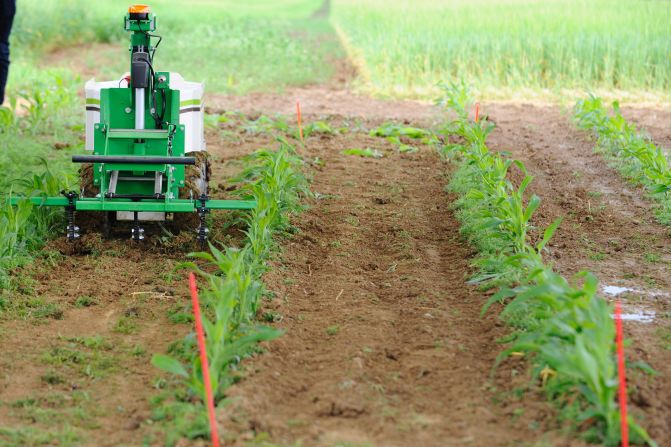
Weeding robots could reduce the need for farm workers, and allow precision protection of crops. Pictured, a weeding robot at an agricultural research farm in eastern France.
Jean-Christophe Verhaegen/AFP/Getty Images
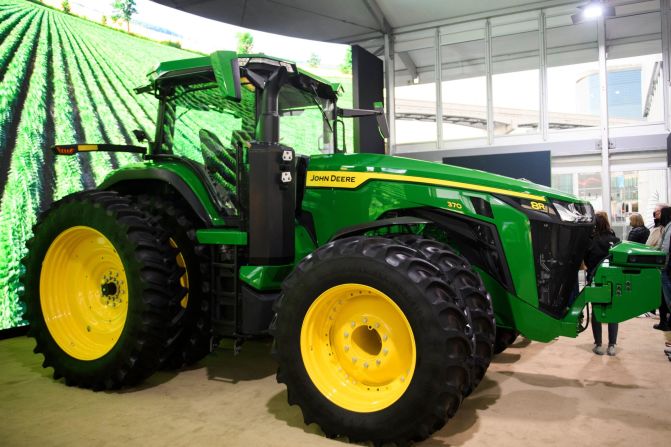
Autonomous tractors are being-touted as a labor-saving innovation. The John Deere 8R fully autonomous tractor is pictured ahead of the Consumer Electronics Show (CES) in Las Vegas, 2022. It features GPS and 360-degree cameras that allow it to be controlled from a smartphone.
Patrick T. Fallon/AFP/Getty Images
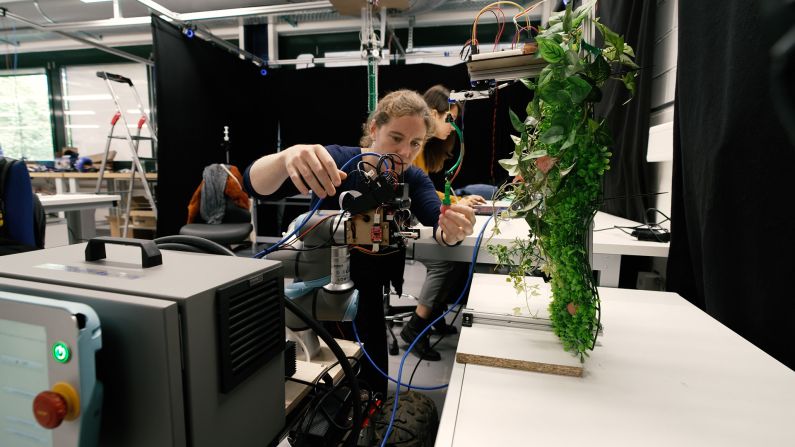
Robotics has huge potential when it comes to food production. At the Swiss Federal Institute of Technology Lausanne, Josie Hughes (pictured) is developing a raspberry-picking robot powered by artificial intelligence.
CNN
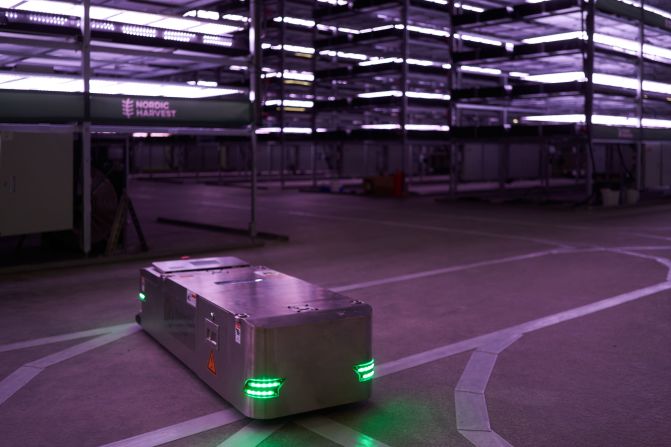
This robot is used to plant seeds and check on plants at the Nordic Harvest vertical farm near Copenhagen, Denmark.
Thibault Savary/AFP/Getty Images
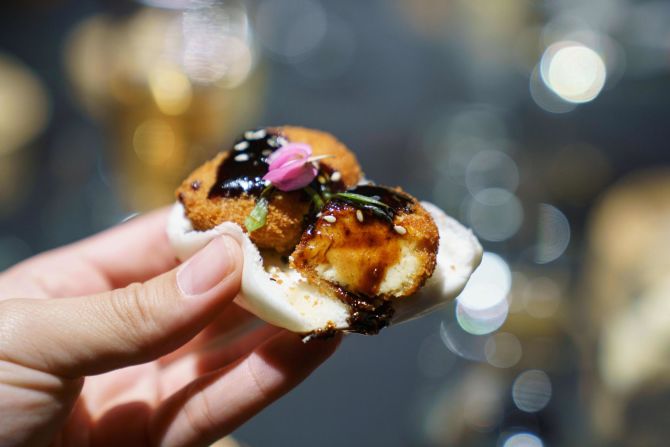
The food system is responsible for about a quarter of global greenhouse gas emissions, most of which are from animal agriculture. By reducing the need for livestock, lab-grown meant could help slow climate change. These nuggets were made from chicken cells cultured in a laboratory.
Microalgae have health benefits, but they aren't to everybody's taste. To make microalgae appeal to the masses, German designer Malu Lücking developed a process for growing concentrated microalgae solution on edible agar jelly. The microalgae can be scraped off and eaten alone, or consumed with the jelly to function like a stock cube.
Paul Cochrane
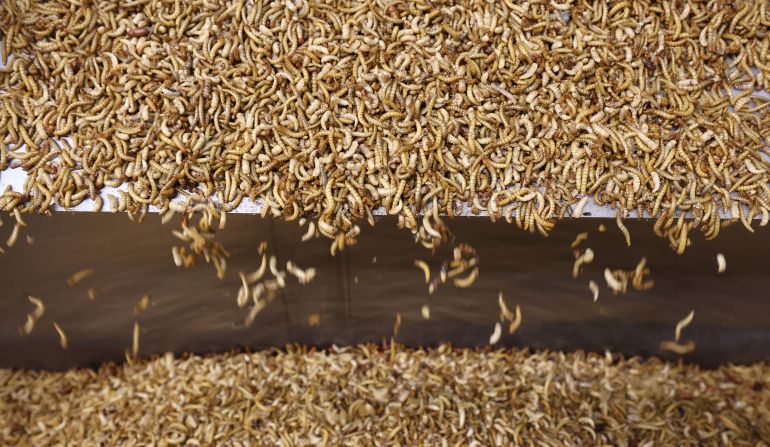
Insects are increasingly being cultivated as a source of protein. German company Inova Protein farms mealworms, which are processed into animal feed and for human consumption.
Bernd Wüstneck/picture alliance/Getty Images
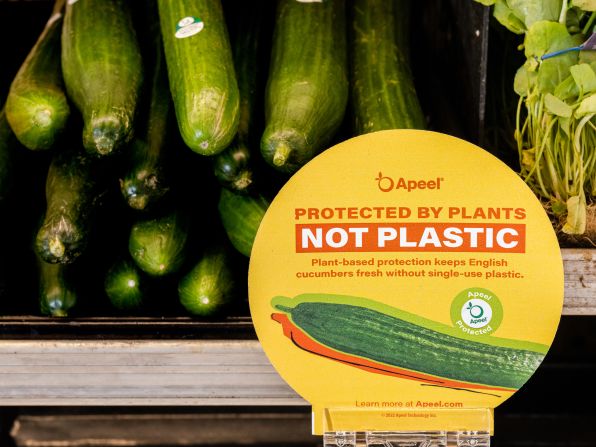
Apeel's plant-based food coating can extend the shelf-life of fresh produce.
Nick Presniakov/Apeel
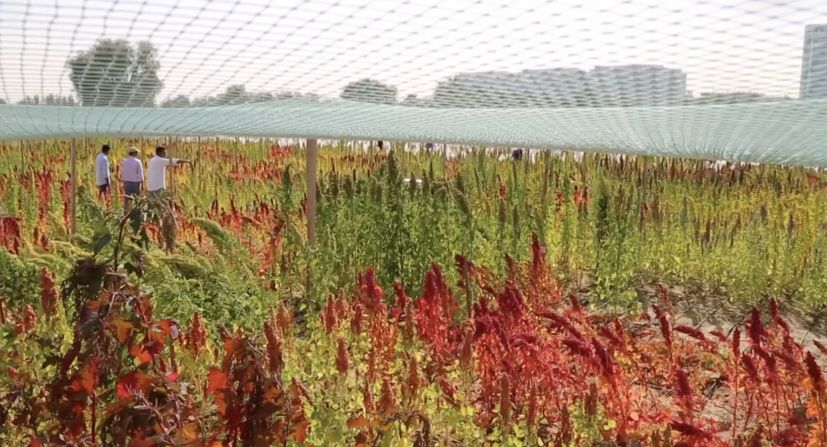
In many parts of the world, farmers must contend with intense heat, limited freshwater and sandy soil. In Dubai, the International Center for Biosaline Agriculture (ICBA) is growing salt-loving superfoods in an effort to expand food diversity in the region.
CNN
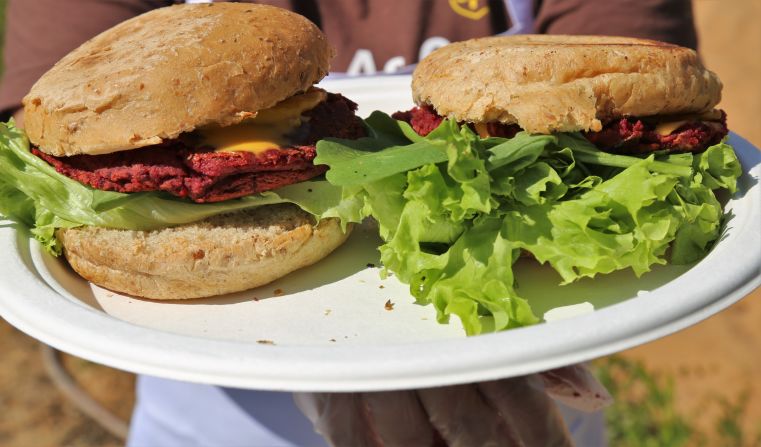
ICBA has had success with Salicornia, a plant that thrives with saline water. It has potential as a fuel and as a food source, like this Salicornia burger.