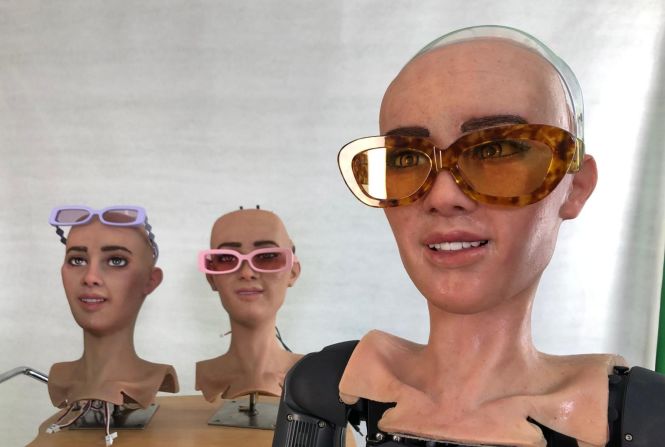
Sophia the robot was created by Hanson Robotics and activated in 2016. She was the first non-human to be given a UN title and was also granted citizenship by Saudi Arabia. It's hoped that humanoid robots like Sophia can help familiarize people with the idea of artificial intelligence (AI).
Hanson Robotics
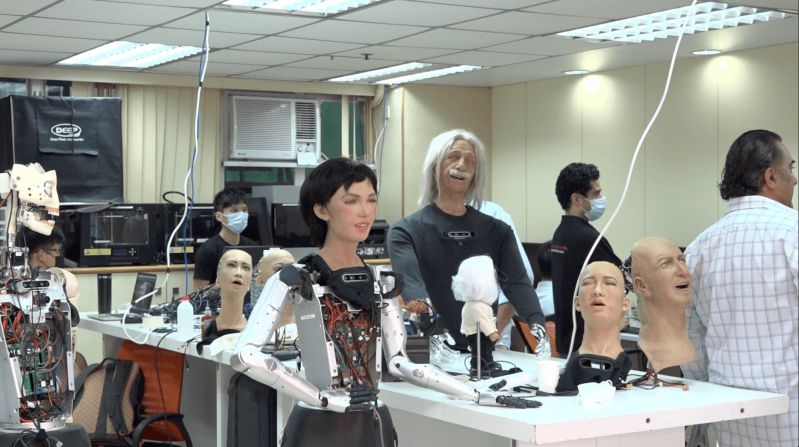
Sophia's "sister" robot Grace has been designed to operate in the healthcare sector. Grace is currently being trialled to support elderly people in the early stages of degenerative brain diseases, such as dementia. Pictured, Grace in the center of the Hanson Robotics lab.
Hanson Robotics
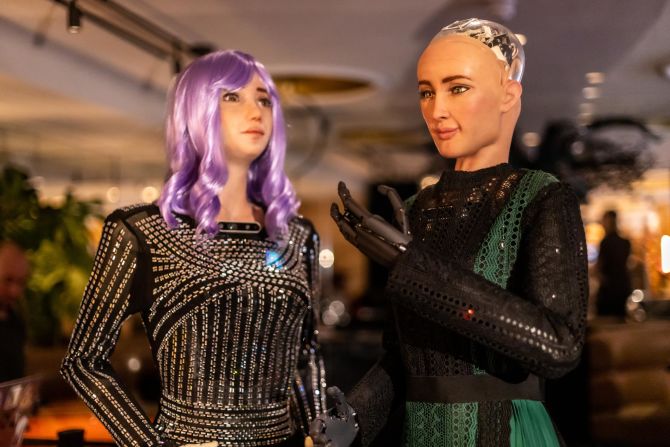
Desdemona, a robot that improvises spoken word poetry, is the latest passion project of Ben Goertzel, former chief scientist at Hanson Robotics. Desdemona was also built by Hanson but programmed by Goertzel for his company SingularityNET. Pictured here, Desdemona fronting the band "The Jam Galaxy."
Hanson Robotics
Hanson Robotics produces humanoid robots in a variety of shapes and sizes. According to Goertzel, the robots that have the likeness of a young woman are the most popular as they put people most at ease. Pictured, Desdemona and Sophia posing together.
Hanson Robotics
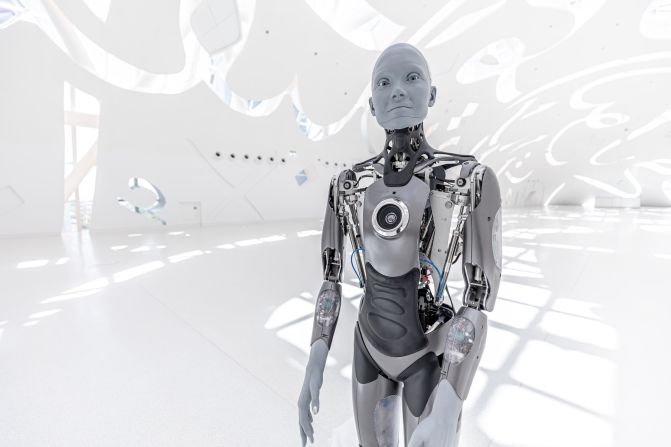
Hanson Robotics isn't the only company producing sophistication humanoid robots. In 2022, Dubai's Museum of the Future introduced an AI robot guide, Ameca, to its "Tomorrow Today" exhibition. The robot was built by UK-based company Engineered Arts and demonstrates the complexity of facial expressions robotics engineers can achieve.
Museum of the Future
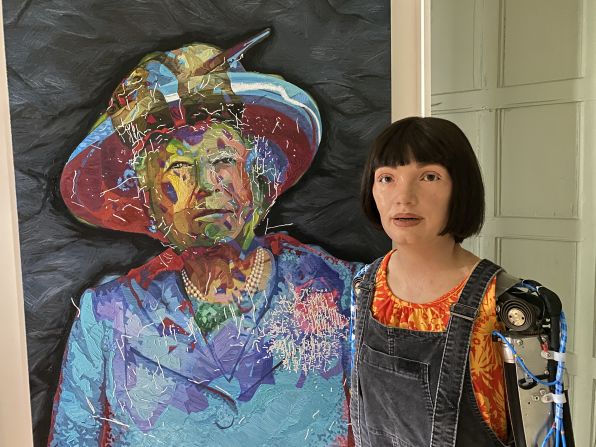
In 2019, scientists at the University of Oxford introduced Ai-Da, a humanoid robot that uses AI to write poetry and create paintings and sculptures. Pictured, Ai-Da poses with a portrait it made of Queen Elizabeth II.
Aidan Meller
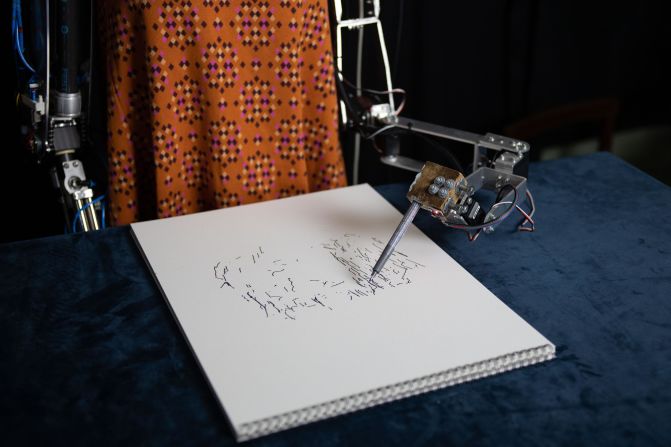
Ai-Da sparked a conversation in the UK about how AI may impact the arts. The robot also spoke at a UK parliamentary inquiry into how new technologies will affect the creative industries. Pictured, Ai-Da sketching.
Aidan Meller
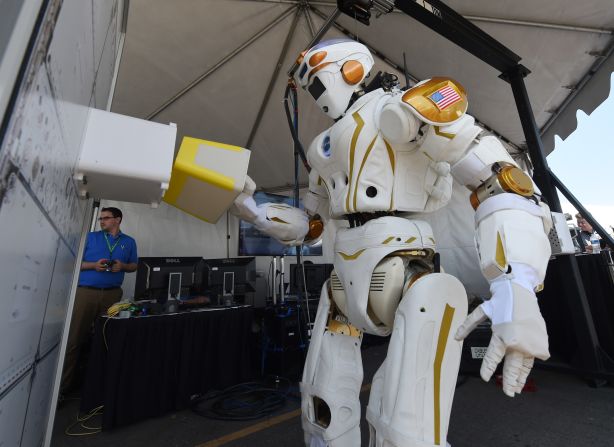
Though robots equipped with AI are still relatively uncommon, sophisticated humanoid robots have been around for a number of years. Pictured is Valkyrie, designed by NASA as a rugged robot "capable of operating in degraded or damaged human-engineered environments."
Mark Ralston/AFP/Getty Images
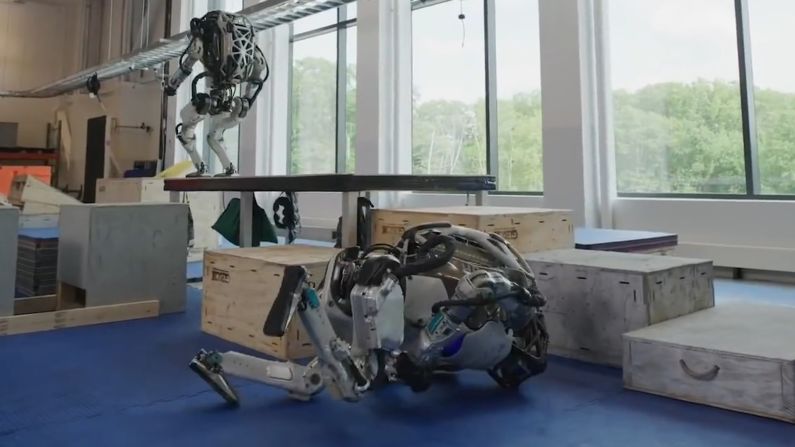
Boston Dynamics is one of the leading names in robotics. Its humanoid robot Atlas is able to run, jump and climb.
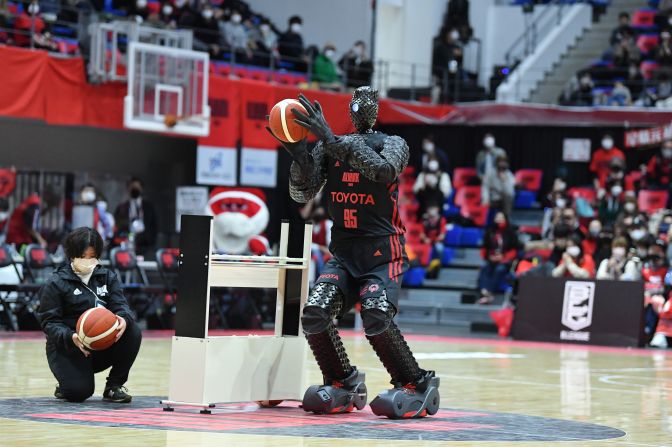
At nearly seven feet tall and weighing 240 pounds, CUE5 is a basketball-playing AI-powered robot. It appeared at the Tokyo 2020 Olympics for a half-time demonstration, where it wowed spectators by shooting hoops from the half-court line.