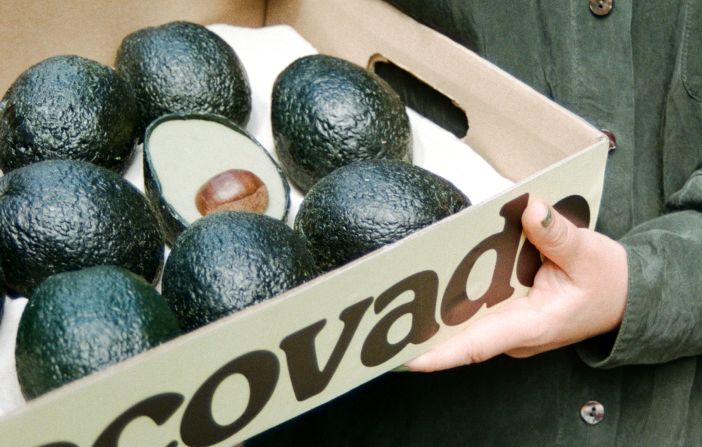
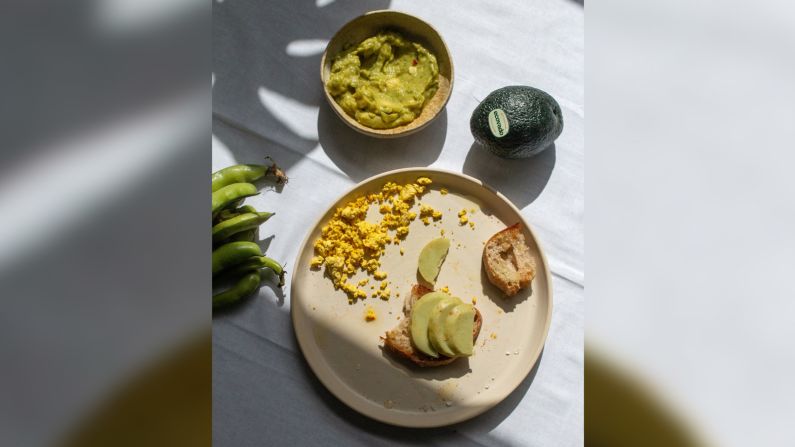
As the climate warms, eating sustainable foods and a plant-based diet are ways to curb carbon emissions. Innovative food alternatives can help consumers to do their part for the planet while still enjoying the tastes and textures of the food they love -- like the "Ecovado" (pictured), an eco-friendly avocado alternative created by UK-based designer and researcher Arina Shokouhi. Look through the gallery to learn more.
Arina Shokouhi
Made from four simple ingredients grown locally in the UK, Ecovado was created as a low-impact alternative to the resource-intensive avocado -- around 2,000 liters of water are used to grow one kilogram of the fruit.
Arina Shokouhi
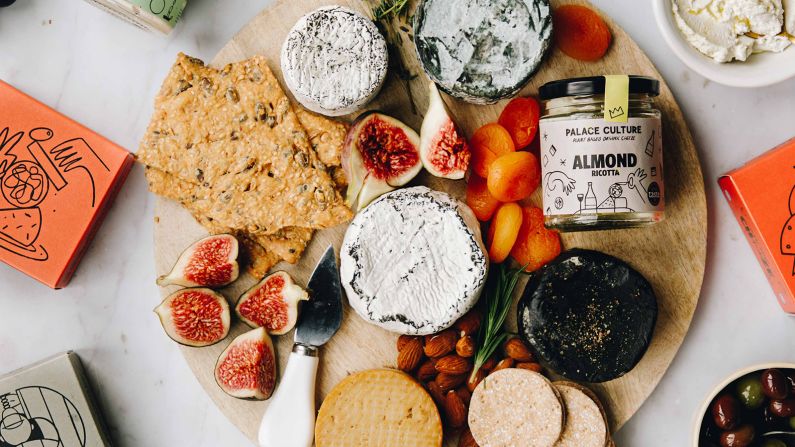
Being plant-based means no dairy. But Palace Culture has created a variety of vegan, dairy-free cheeses (pictured) from cashew and almond milk that are sold across the UK. Closely mimicking real cheeses, the selection ranges from brie wheels to feta chunks and even a Roquefort-style moldy cheese.
Milly Fletcher
For those looking for an egg replacement, OGGS has found a solution in a unique liquid: aquafaba, also known as chickpea water. When the aquafaba is whisked, the texture is likened to egg whites and can be used for baking and other recipes like pancakes (pictured). While eggs produce the lowest amount of carbon emissions amongst animal produce, it still takes around 3,265 liters of water to produce 1 kilogram of eggs.
OGGS
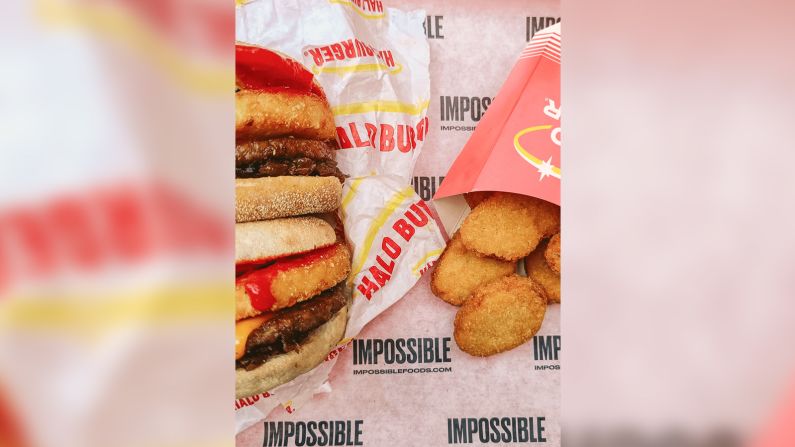
In recent years, there have been more plant-based meat alternatives for those who crave the taste and texture. Popular brand Impossible Foods is known for its plant-based "minced beef" and can be found on the menus of many restaurants and chains such as Burger King.
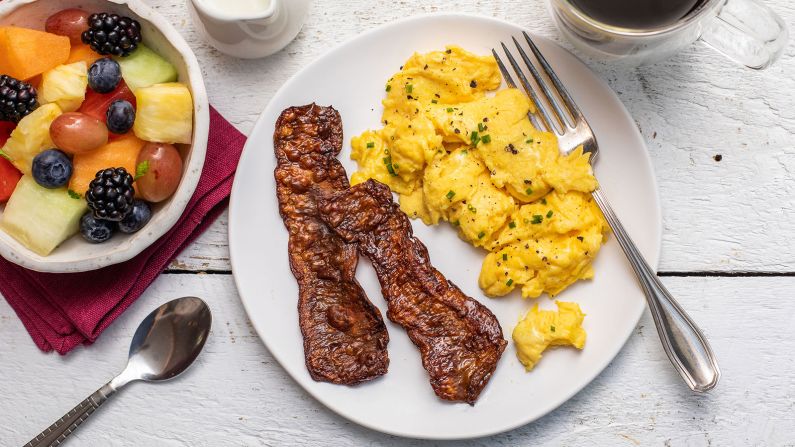
There are many plant-based bacon options on supermarket shelves these days. MyForest Foods makes their plant-based bacon, MyBacon, with mycelium, the root-like structure of mushrooms. Each "bacon" streak contains a whole cut of a mushroom and five other ingredients. Earlier this year, MyBacon received a Mindful Award.
MyForest Foods
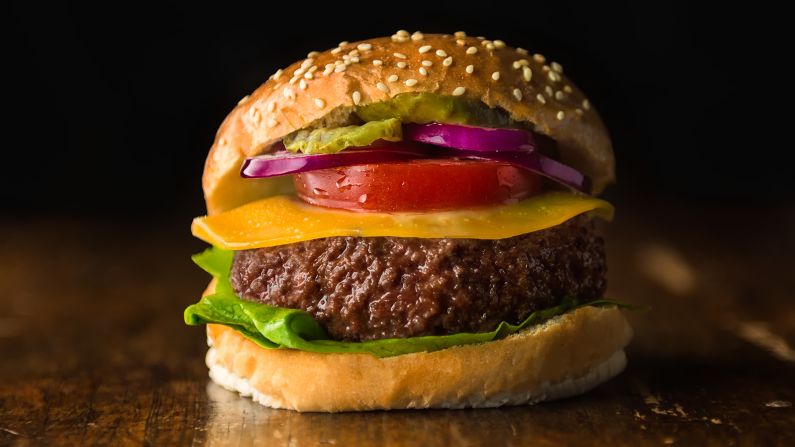
Some scientists have opted for a different approach to producing animal-free meat. "Lab-grown" meat, like this burger patty made by Mosa Meat, is cultivated by growing animal cells and the texture can be tweaked to desire. According to a report by research consultants CE Delft, cultivated meat technology produces much less greenhouse gas emissions and uses less land and water than traditional meat.
Redwan Farooq
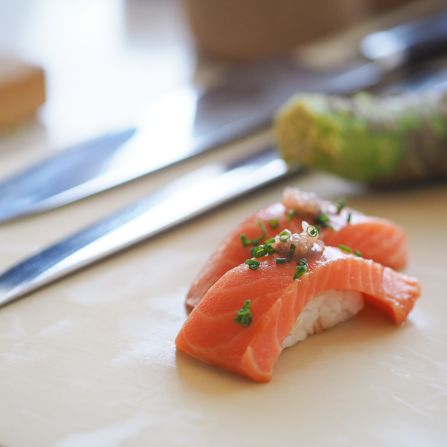
"Lab-grown" meat doesn't just stop at beef or chicken. California-based Wildtype creates cultivated seafood such as salmon (pictured). Hoping to be the first company to take a cultivated fish to market, the product could help to combat overfishing and while remaining free of microplastics.
Wildtype
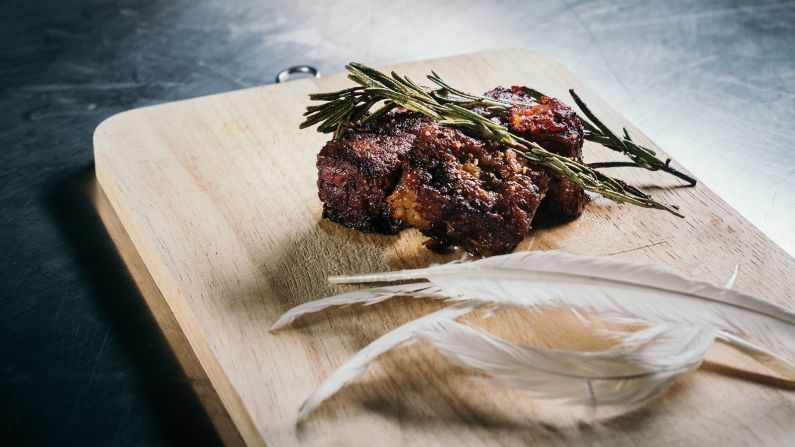
Food waste accounts for around 8% to 10% of the world's greenhouse gas emissions and designer Sorawut Kittibanthorn has taken the "using the whole animal" concept to new heights with his chicken feather protein, which he has used to create carb-free pasta, wraps and feather nuggets (pictured). Chicken feathers are often a waste product of slaughterhouses, but they are 90% keratin, a protein found in our hair and nails.