Why New Guinea warriors favored human bone daggers
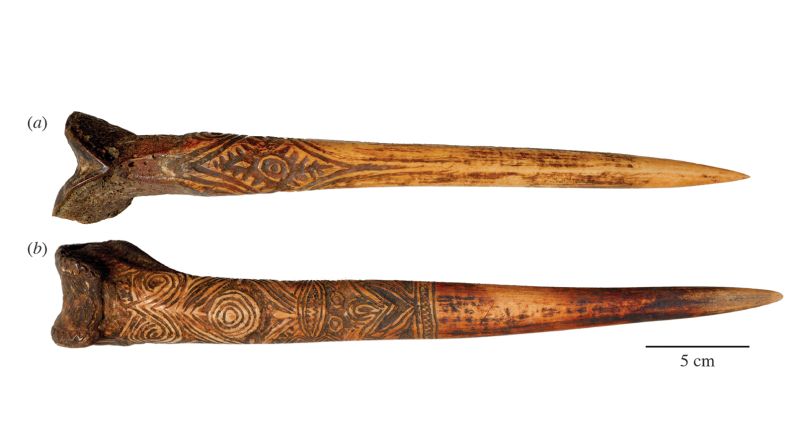
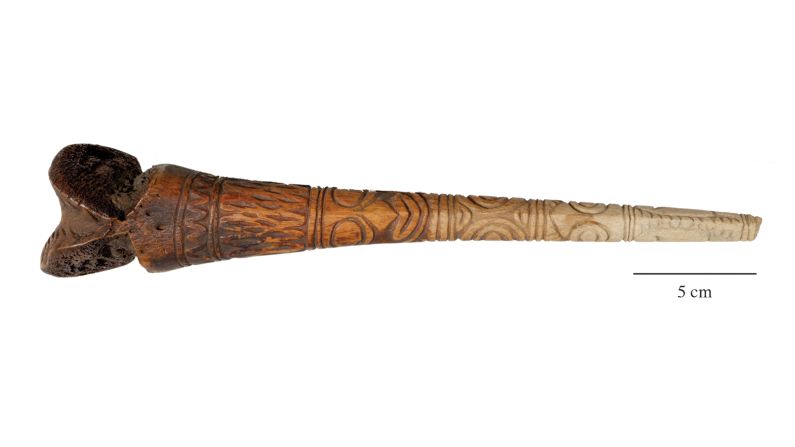
At one time, warriors in New Guinea used bone daggers in battle. While some daggers were made using the thigh bone of a large flightless bird called a cassowary (b) others were made from a human thigh bone (a).
Hood Museum of Art, Dartmouth College
Bone daggers were primarily used in close combat, but they also served an ornamental role and were proudly worn on the arm.
Photos a and b were taken when anthropologist Albert Buell Lewis visited northern New Guinea in September 1909. Photos c and d show a cassowary bone dagger attached to the arm of an Asmat man.
A.B. Lewis courtesy of Robert Welsch (a, b) and Bruno Zanzottera (c, d)
Anthropologist Nathaniel Dominy and his colleagues took CT scans of daggers made from human and cassowary bones and exposed them to virtual loads to see how they responded.
Dominy et al
While both types of daggers were believed to be "imbued with power and strength," the study found cassowary bone daggers were deliberately crafted to be weaker weapons.
Holger Ehlers and Christian Hütter
On the other hand, human bone daggers were engineered to be stronger as they retained a lot of the round curvature of the thigh bone.
"A human bone dagger is practically irreplaceable, so you're going to shape it in such a way as to maximize the longevity of the dagger to prevent it from being broken," said Dominy.