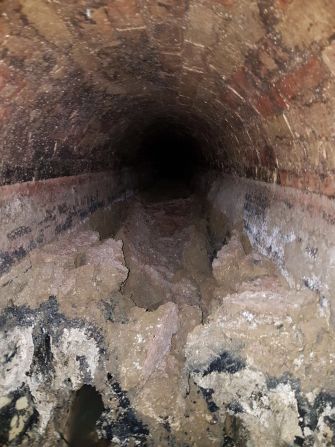
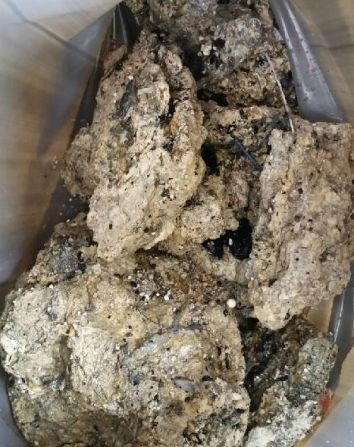
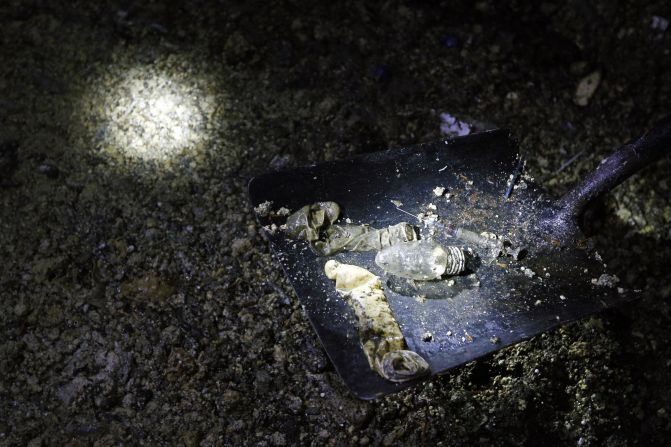
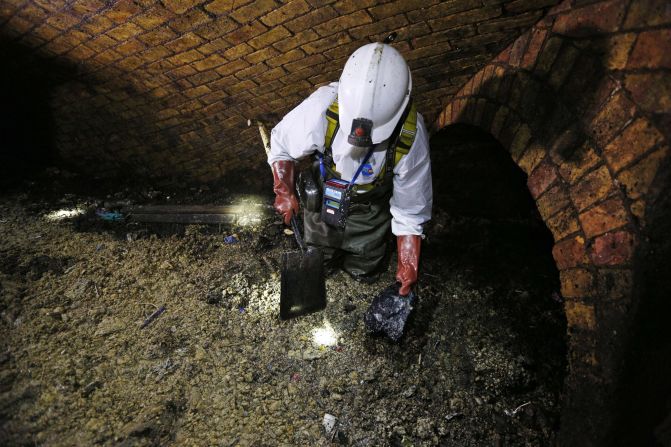
A giant "fatberg" was removed from these London sewers in late 2017. Most of it was converted to biofuel, but a few fragments will soon be exhibited at the Museum of London.
Museum of London
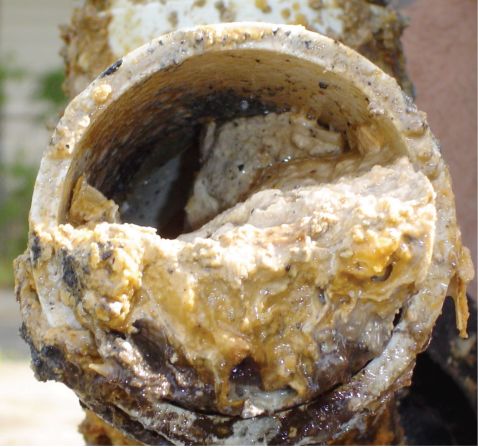
The fatberg, a congealed lump of grease, fat and non-flushable items such as wet wipes and condoms, sticks to sewer walls and can become as hard as concrete.
Museum of London
Thames Water, the municipal utility which performed the removal, says it took nine weeks and that it spends $1.4 million a month to clear blockages in London sewers.
Museum of London
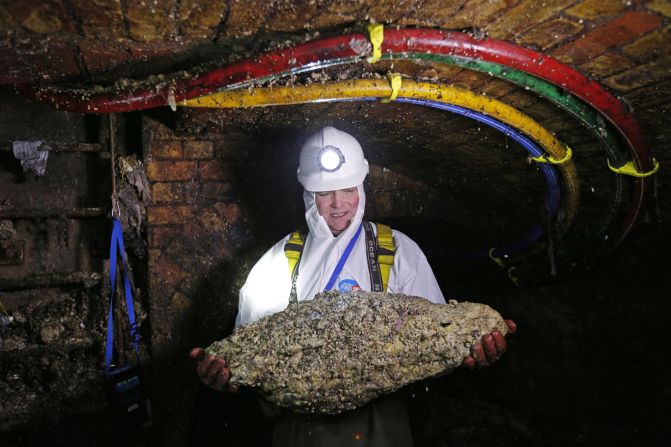
A sewer technician holds a fatberg in a London sewer in 2014.
ADRIAN DENNIS/AFP/AFP/Getty Images
Among the components of fatbergs are grease, cooking fats, nappies, wet wipes, but also dangerous materials such as lights bulbs and hypodermic needles.
ADRIAN DENNIS/AFP/AFP/Getty Images
Fatbergs form because the fat, cooling down, becomes a solid and lumps around items such as nappies and wet wipes. The mixture then sticks to sewer walls and hardens, which makes removal a tough job.
ADRIAN DENNIS/AFP/AFP/Getty Images
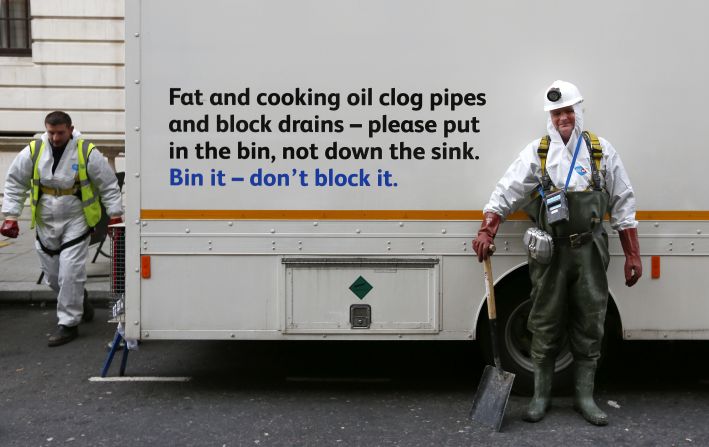
Thames Water has launched a campaign to educate the public about items which can't be flushed.