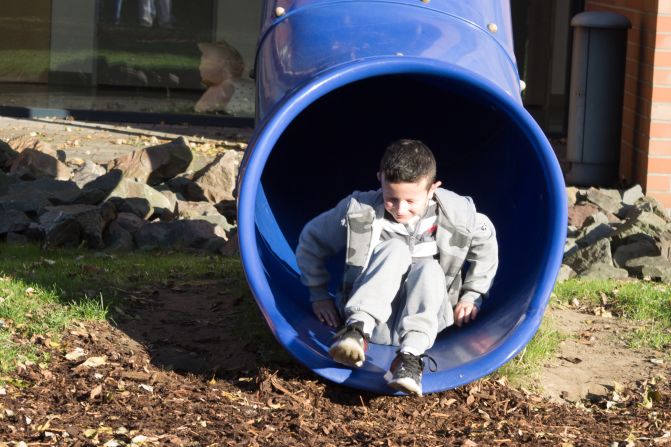
Nine-year-old Hassan can now enjoy a normal life after undergoing a first-of-its-kind surgery to replace most of the skin on his body. He has epidermolysis bullosa, a rare genetic skin disease that causes blisters and skin erosion.
Jürgen/RUB
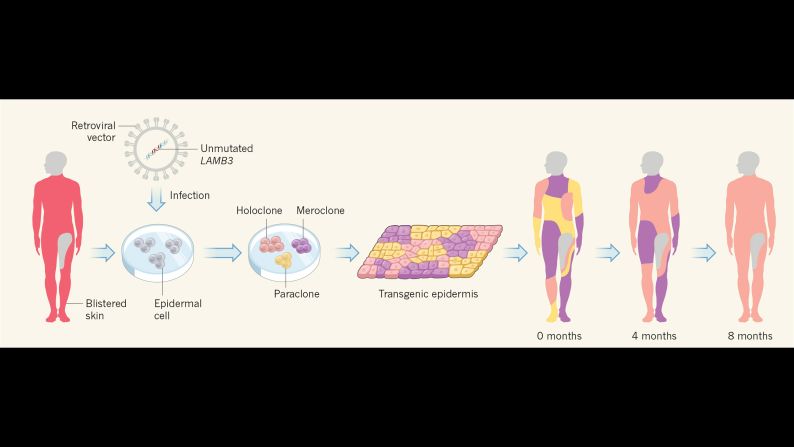
By age 7, most of Hassan's body was raw with blisters, and he had lost most of his skin. This graphic shows how researchers decided on experimental gene therapy to treat his skin disease.
Nature News & Views
Using the boy's stem cells and transferring a healthy version of the gene that is normally defective in epidermolysis bullosa patients, the researchers were able to "grow" sheets of skin that could be transplanted onto his body.
Frank Jacobsen/RUB
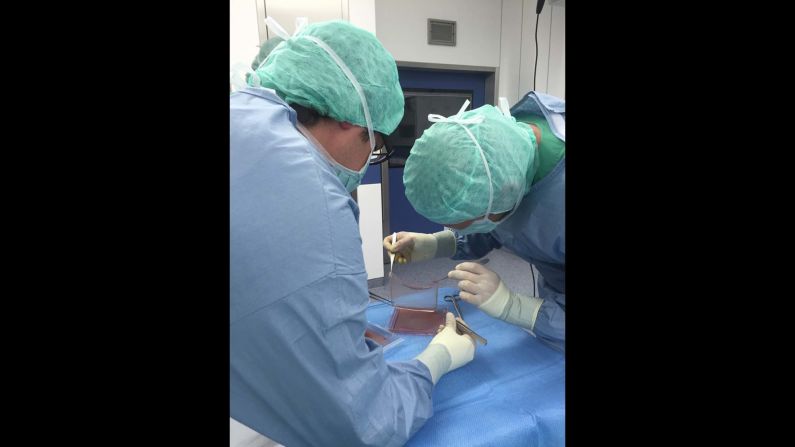
The entire procedure involved doctors, researchers, pediatricians and plastic surgeons at hospitals and research facilities in Germany and Italy. The skin was prepared in Italy and transplanted in Germany.
Frank Jacobsen/RUB
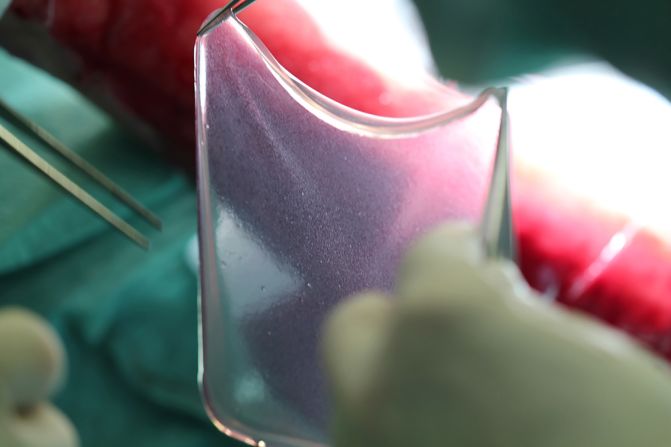
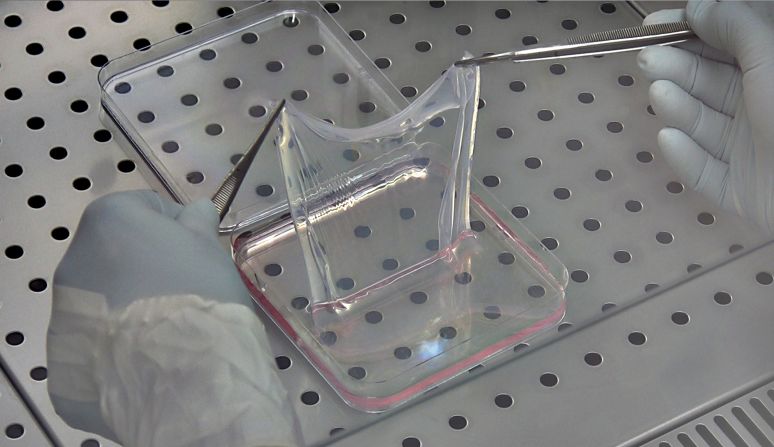
Here is the grown skin: fibrin-cultured epidermal sheets. Fibrin substrate is used for burn victims.
CMR Unimore
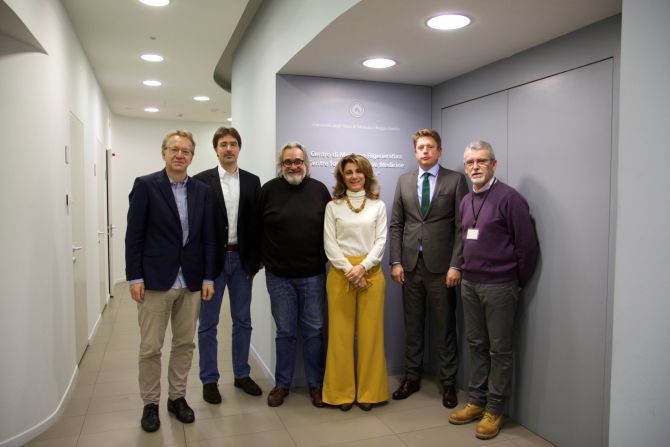
Hassan's core medical team from the Bochum University Hospitals in Germany and University of Modena in Italy that made the treatment possible, from left: Dr. Norbert Teig, Dr. Tobias Rothoeft, Dr. Michele de Luca, Graziella Pellegrini, Dr. Tobias Hirsch and Sergio Bandanza.
Stefania Bettinelli/CMR Unimore
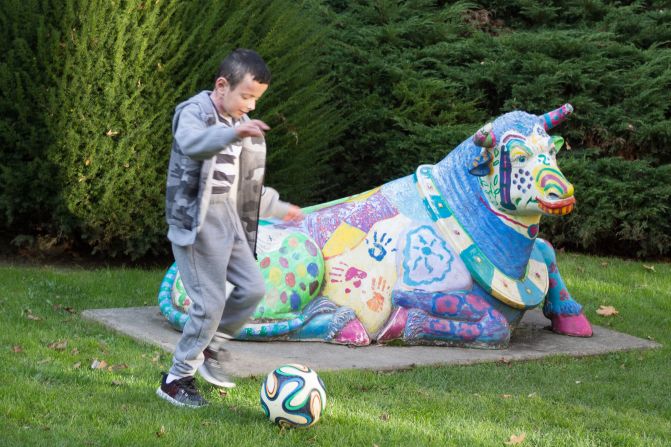
Now, Hassan can go to school and play sports like a regular kid. He receives routine followups at the hospital to make sure that the treatment he received two years ago remains stable.