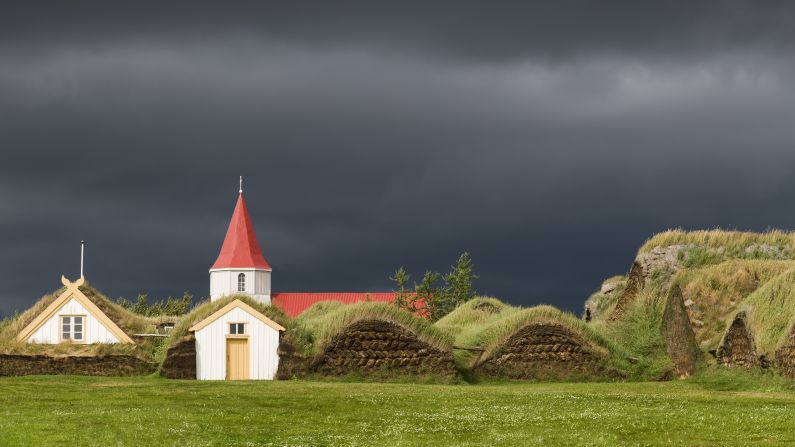
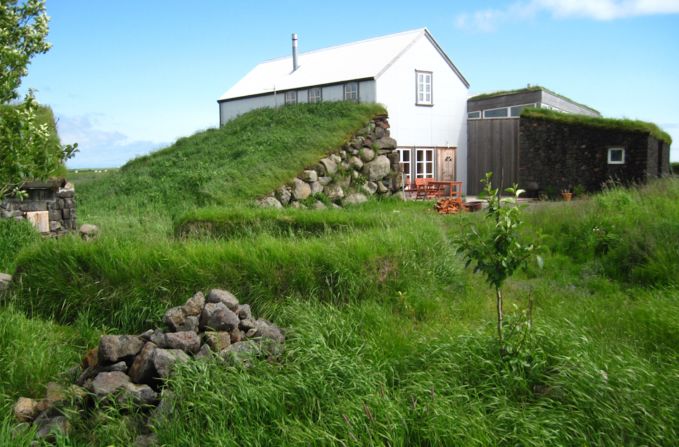
An example of the traditional turf architecture found in Iceland. Expert Hannes Lárusson believes the style can influence modern green architecture.
jpique/Vetta/Getty Images
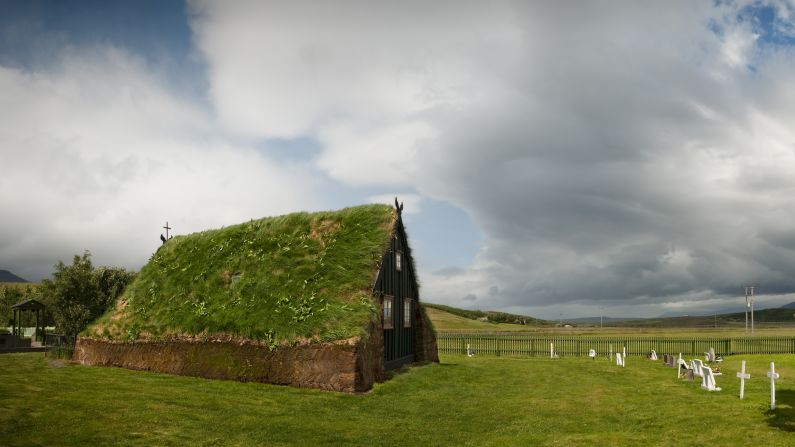
Skagafjordur church —
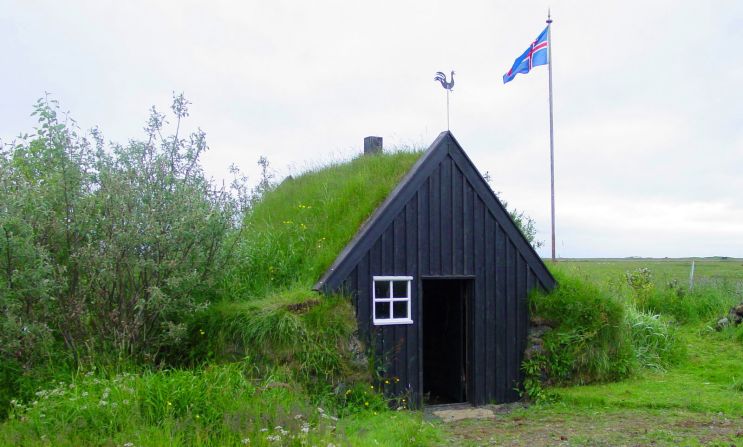
The church at Skagafjordur is one of the last few preserved turf churches, and is a National Icelandic Landmark.
jpique/iStockphoto/Getty Images
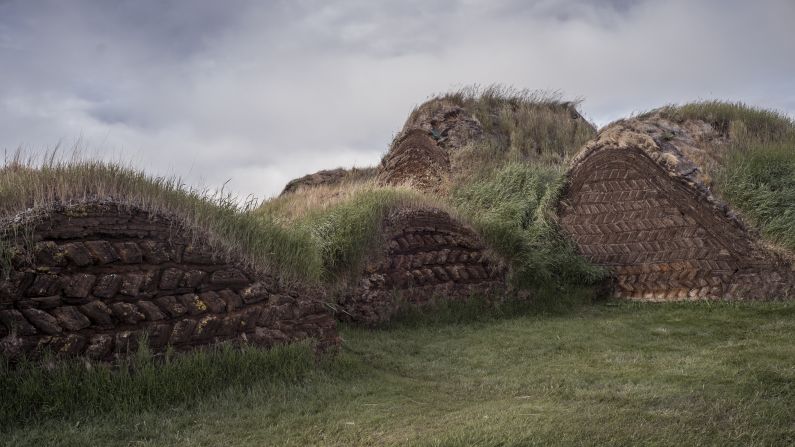
Traditional turf houses —
The structures were able to withstand extreme weather and relatively easy to maintain.
Bill Marr/National Geographic Creative/Getty Images
Traditional turf houses —
Traditional turf houses at the Skogar Folk Museum in southern Iceland.
Wolfgang Kaehler/LightRocket/Getty Images
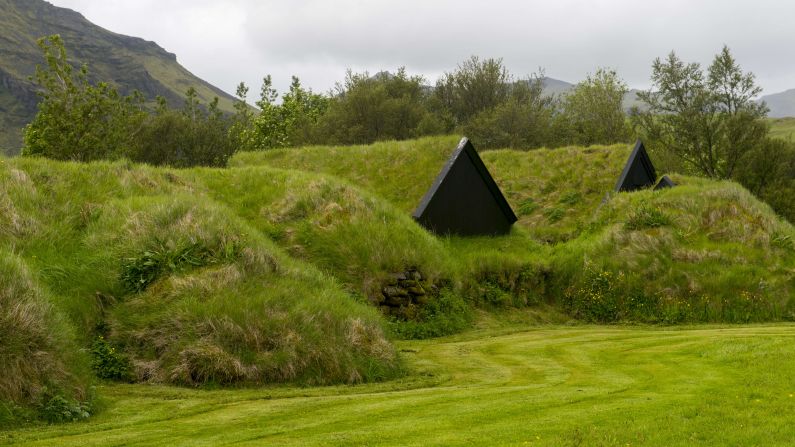
Traditional turf houses —
As Iceland urbanized, turf structures became less common. Pictured is a turf house that has survived modernization in Iceland.
Islenski Baerinn
BHM vacation cottages by PKdM Arkitektar —
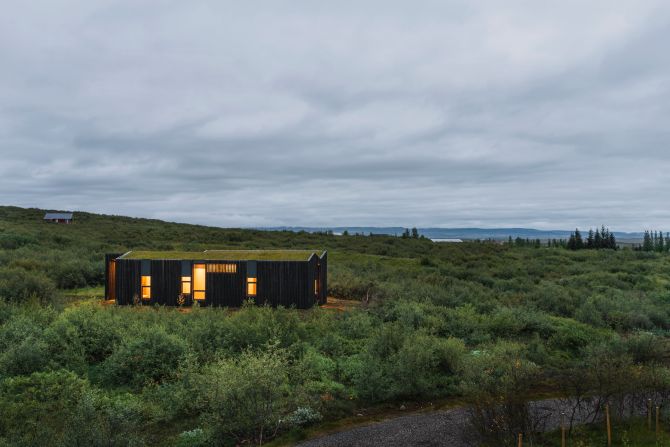
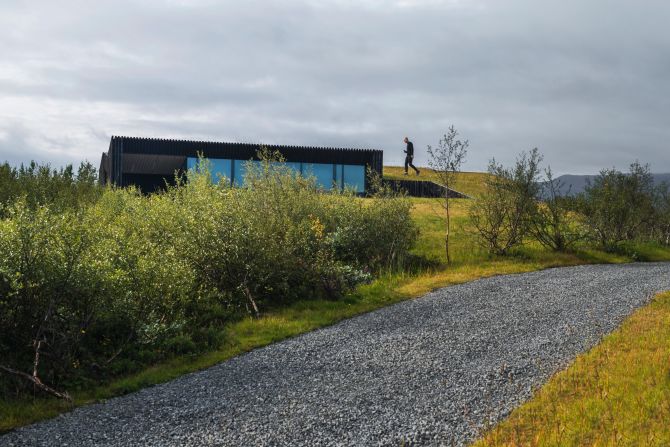
Today many architects are putting contemporary touches on the traditional turf home. Icelandic vacation houses by PKdM Arkitektar present a modern version.
Rafael Pinho/PKdM
BHM vacation cottages by PKdM Arkitektar —
They're built with environmentally friendly methods and withstand extreme temperatures.
Rafael Pinho/PKdM
The Nordic House —
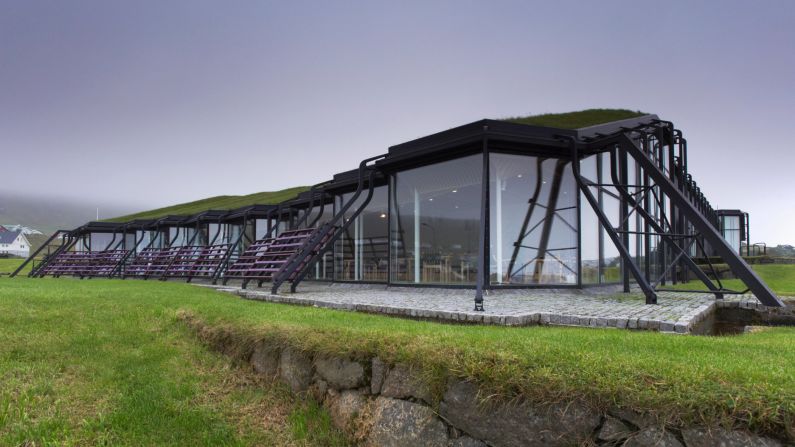
The Nordic House in Faroese Nordurlandahusid is the most important cultural institution in the Faroe Islands. Its aim is to support and promote Nordic and Faroese culture, locally and in the Nordic region.
Patrick Dieudonne/Robert Harding World Imagery/Getty Images
Islenski Baerinn Turf House —
Surviving turf structures provide a glimpse into how Icelanders use to live.
Islenski Baerinn
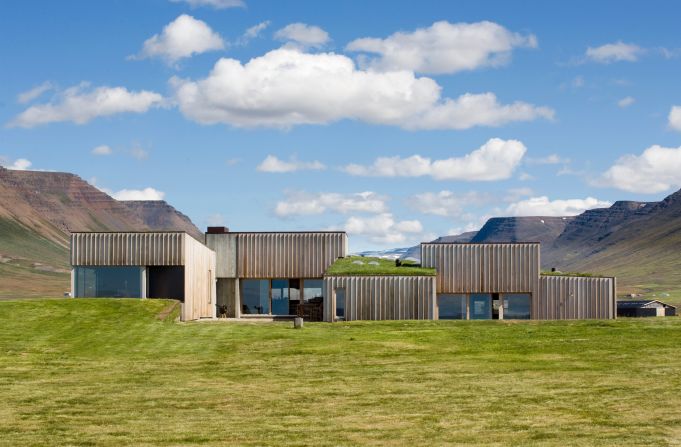
The Hof by Studio Granda —
The walls of these cottages are made from cedar and concrete, while the roofs feature grass from the fields.
Sigurgeir Sigurjónsson
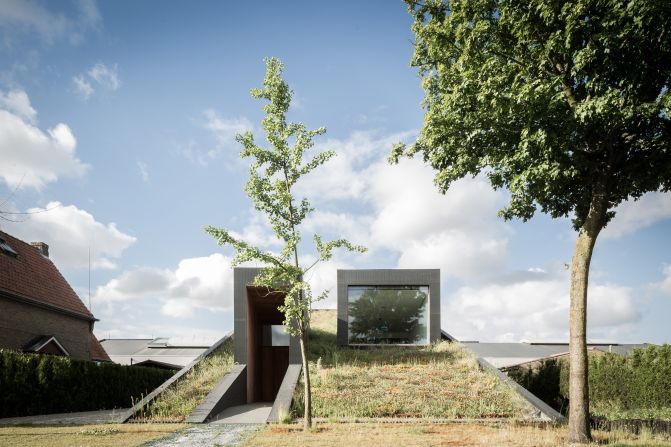
House Pibo by OYO —
This semi-underground house in Belgium by OYO Architect was designed with a Scandinavian-like ambience, featuring a green roof and bedrooms underground.
Cafeine/OYO Architects
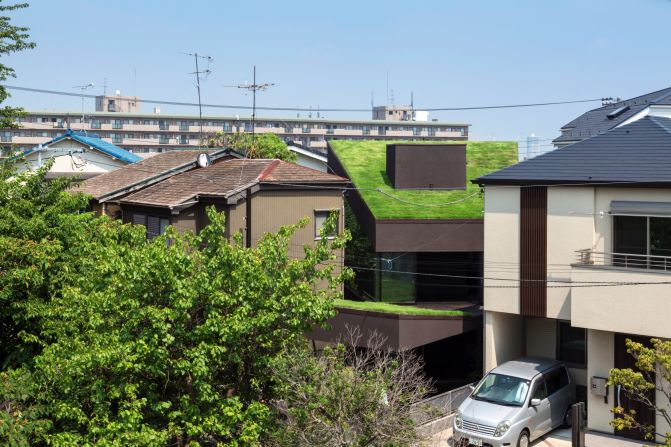
Grass Cave House by Makiko Tsukada Architects —
The Grass Cave House by Tokyo-based Makiko Tsukada Architects is a wooden structure, featuring "hat-like" roofs that absorb solar radiation in summer, and function as insulation in the winter.