Your effort and contribution in providing this feedback is much
appreciated.
Close
Ad Feedback
Ad Feedback
People watching eclipses through the years
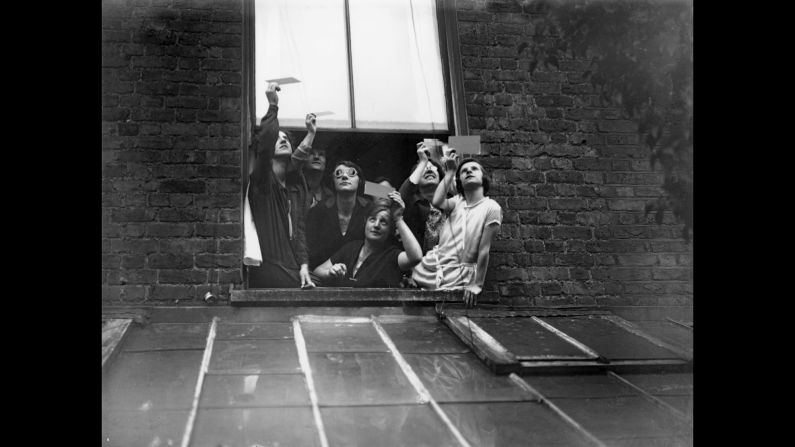
There's no sense of wonder or excitement here. Even as recently as the 1920s, eclipses were still regarded with fear. This group gathered in a window to view the total solar eclipse over London through smoked glass -- touted as a safe method at the time -- in June 1927.
H. F. Davis/Hulton Archive/Getty Images
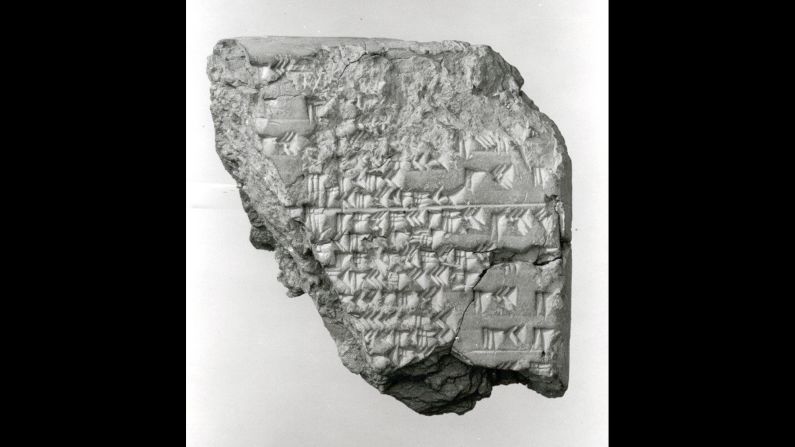
Clay cuneiform tablets are the first records of eclipses that we have. This one, dated from 177 to 199 B.C., was found in Mesopotamia, probably from Babylon.
Metropolitan Museum of Art
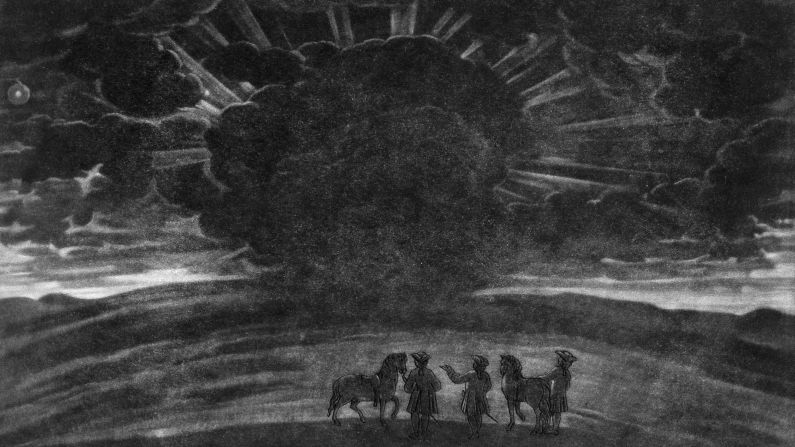
In 1724, a group of riders dismount to observe a total solar eclipse on Haradon Hill near Salisbury, England. Notice the cloudy and threatening sky.
Science & Society Picture Library/SSPL/Getty Images
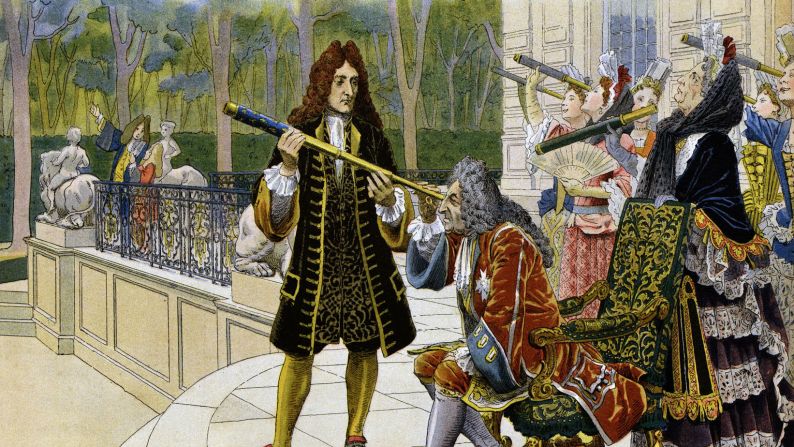
King Louis XIV and the ladies of the court on the terrace of Marly castle, watching the total solar eclipse of 1706.
Christophel Fine Art/Universal Images Group Editorial/Getty Images
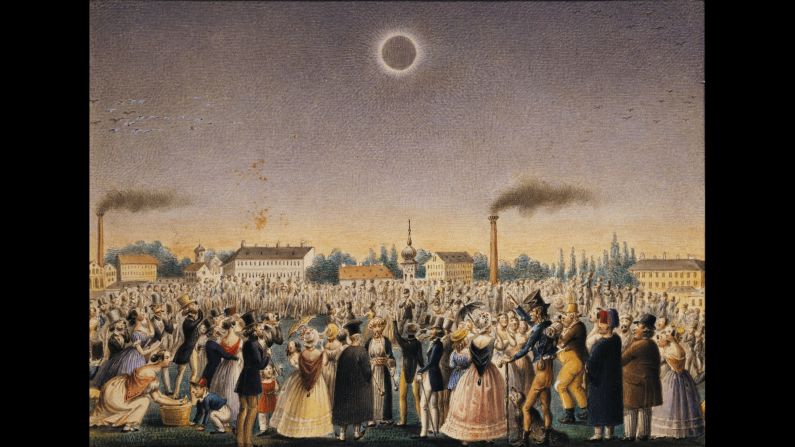
Artist Johann Christian Schoeller depicted a crowd watching a total solar eclipse July 8, 1842. It occurred across China, Russia and parts of Eastern Europe.
A. DAGLI ORTI/De Agostini/Getty Images
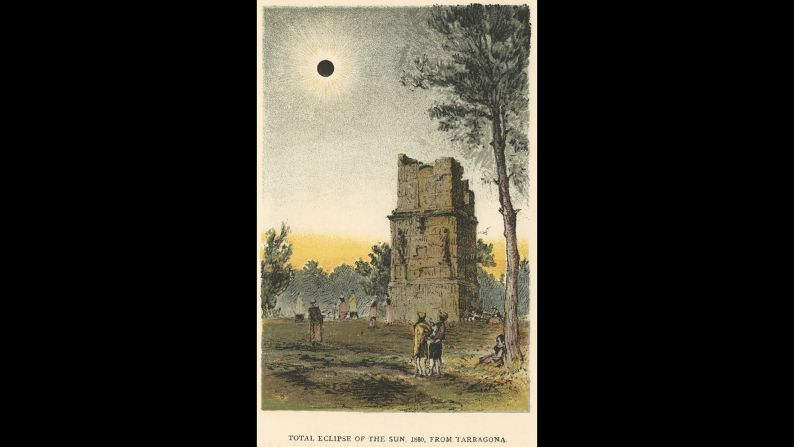
This chromolithograph depicts people watching the total solar eclipse in Tarragona, Spain, in 1860.
UniversalImagesGroup/Getty Images
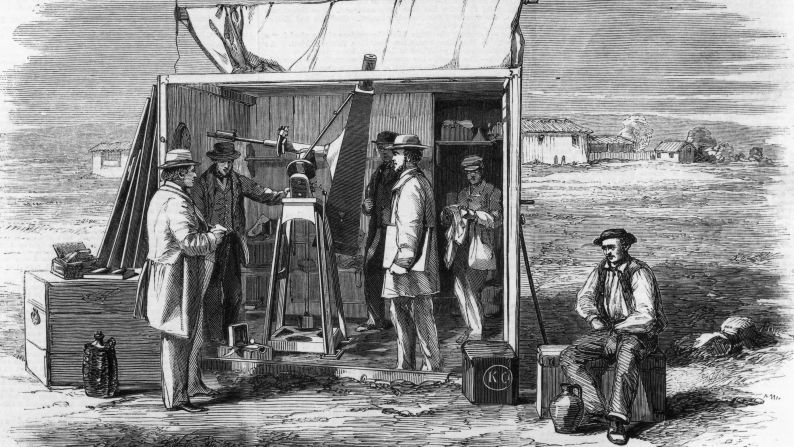
The Kew photoheliograph, the first astronomical instrument specifically designed for photographing celestial objects, was conceived by British astronomer and physicist Warren de La Rue in 1857. It was built for the Royal Society by Andrew Ross. In 1860, it was taken to Rivabellosa, in northern Spain, where it was used to photograph a total solar eclipse.
Science & Society Picture Library/SSPL/Getty Images
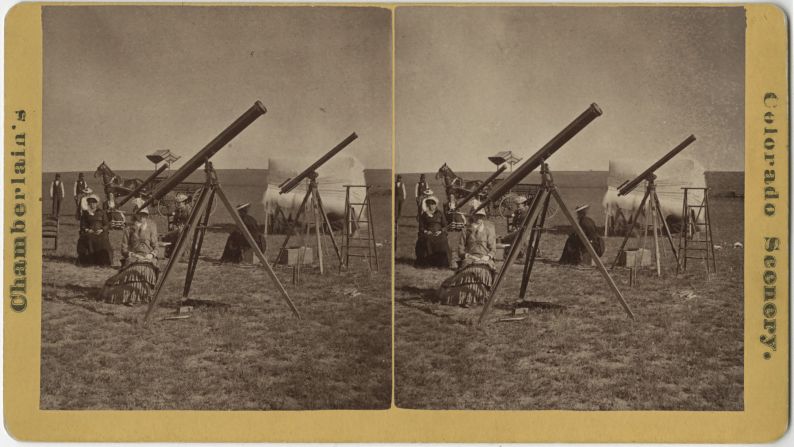
Astronomers Maria Mitchell, left, Cora Harrison, center, and Maria's sister Phebe traveled to Denver to watch the total solar eclipse of 1878. Their telescopes are pointing toward the center of the solar system. The "eclipse party" from Vassar College was featured in newspapers, and Maria Mitchell was highly regarded in her day as a pioneering female scientist.
Archives and Special Collections, Vassar College Library
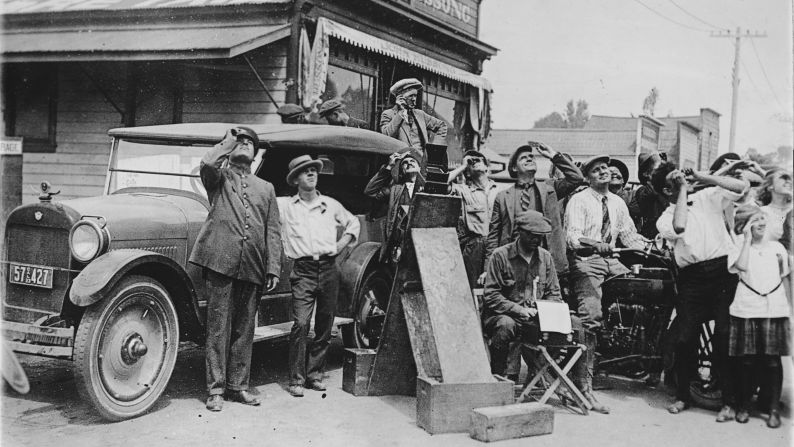
A crowd in a California town observes the total eclipse of the sun in September 1923.
Hulton Deutsch/Corbis Historical/Getty Images
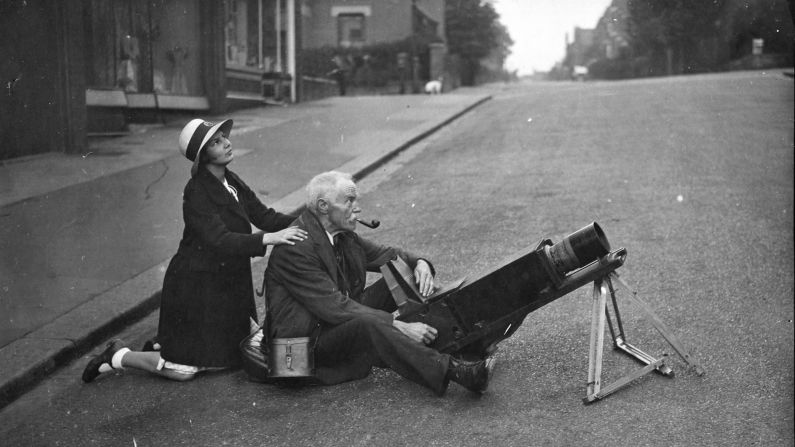
Amateur astronomers and spectators got up early to witness and photograph a total eclipse of the sun in London in 1936.
Hulton Deutsch/Corbis Historical/Getty Images
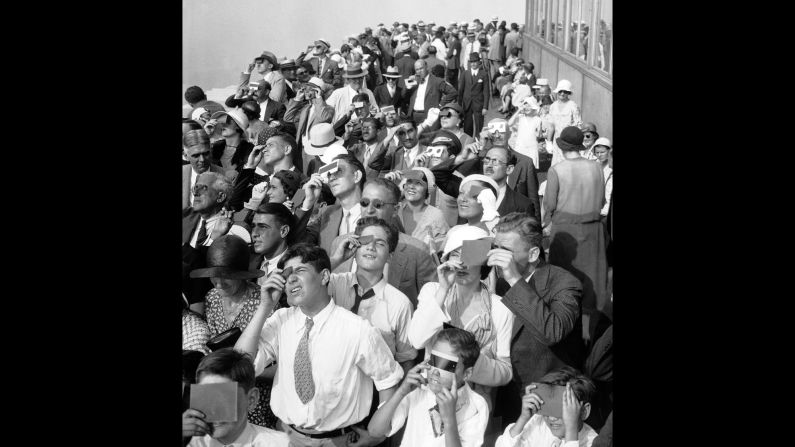
On August 31, 1932, people squinted through protective film to see a partial eclipse of the sun from the top deck of New York's Empire State Building.
Eric Marrapodi/CNN
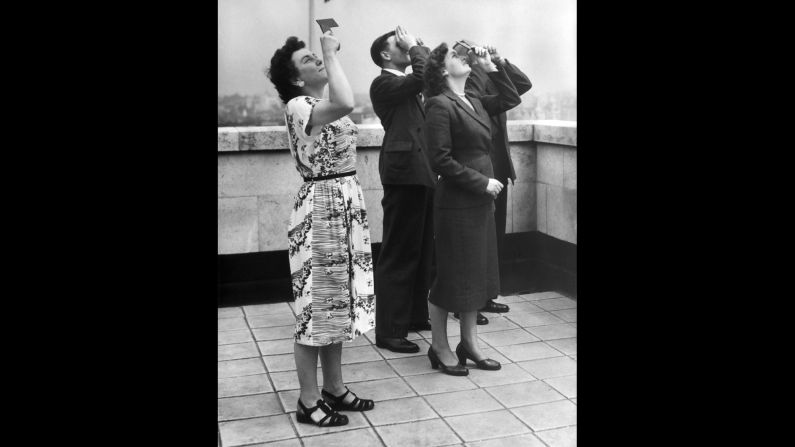
Office workers view the eclipse of the sun from the roof of Shell Mex House in London in June 1954.
Ron Stone/Hulton Archive/Getty Images
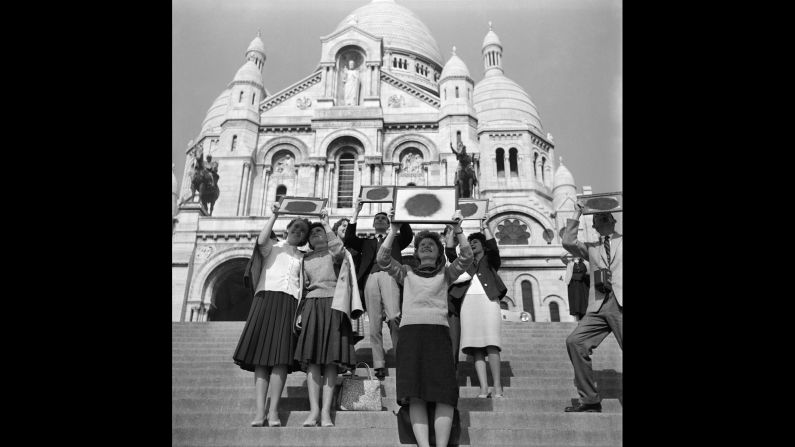
Parisians watching the solar eclipse with the help of smoked glass on the steps of Sacre-Coeur, Paris, France, in October 1959.
Keystone-France/Gamma-Keystone/Getty Images
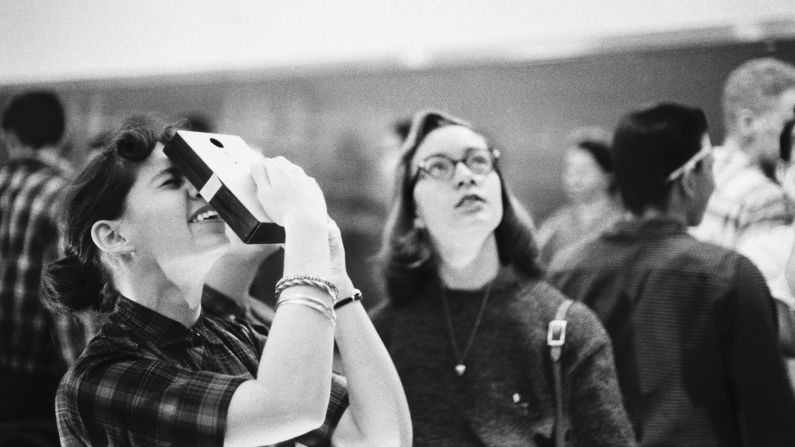
Students using the pinhole technique to view the solar eclipse on February 27, 1958.
Wally McNamee/Corbis Historical/Getty Images
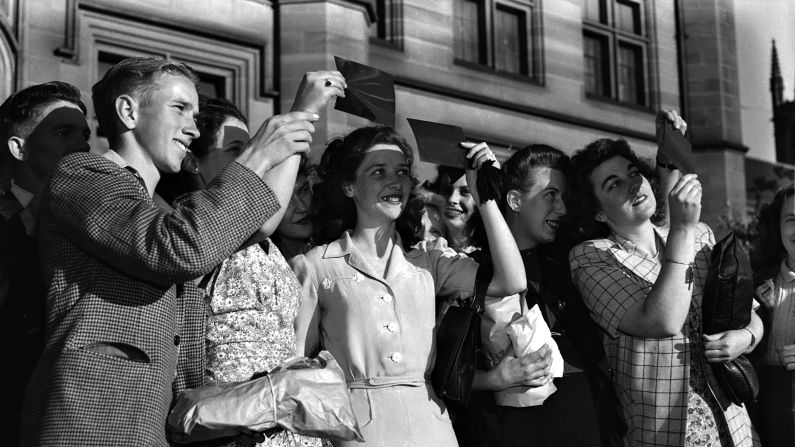
Students at Sydney University protect their eyes from the total solar eclipse by looking through pieces of cardboard and film.
The Sydney Morning Herald/Fairfax Media/Getty Images
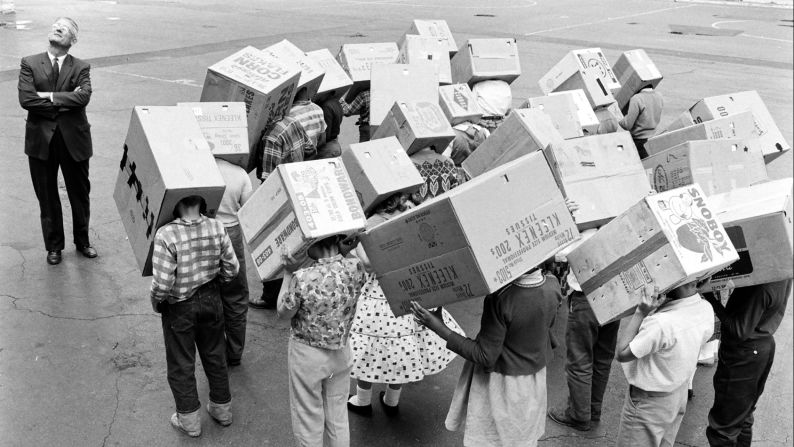
5th grade students from Emerson Elementary School with "sunscopes" (cardboard boxes) over their heads, used to view a solar eclipse without harming their eyes in Maywood, Illinois, 1963.
Francis Miller/The LIFE Picture Collection/Getty Images
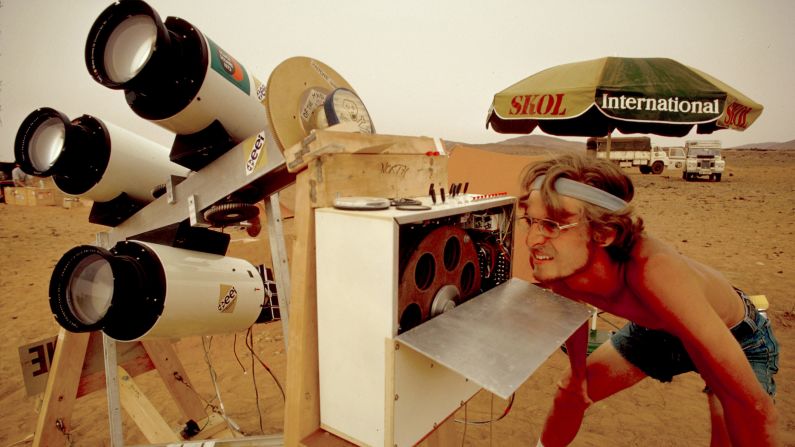
An astronomer with Educational Expedition International in Mauritania's desert uses astronomical equipment to view a total solar eclipse in 1973.
Jonathan Blair/Corbis Historical/Getty Images
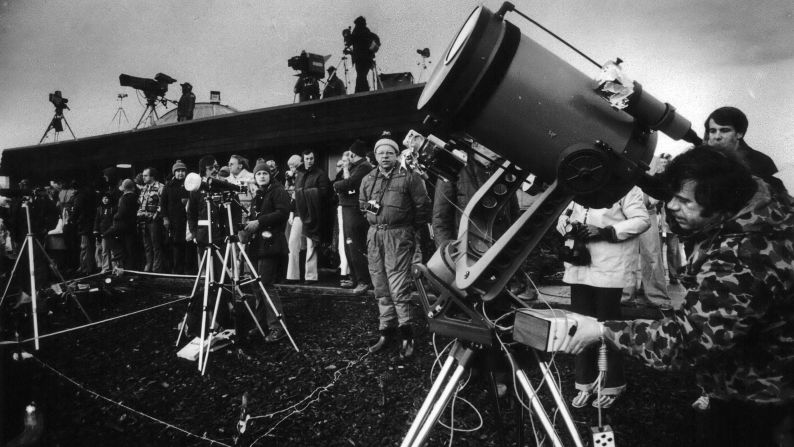
On February 26, 1979, eclipse enthusiasts, photographers and television crews gather to watch the solar eclipse in Goldendale, Washington.
Randy Wood/AP
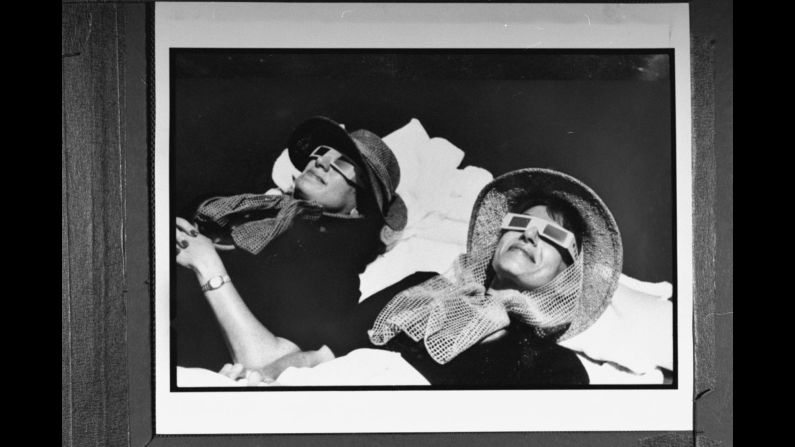
Author Diane Ackerman (left) with friend Dava Sobel watching the solar eclipse in Baja, California in 1991.
Marianne Barcellona/The LIFE Images Collection/Getty Images
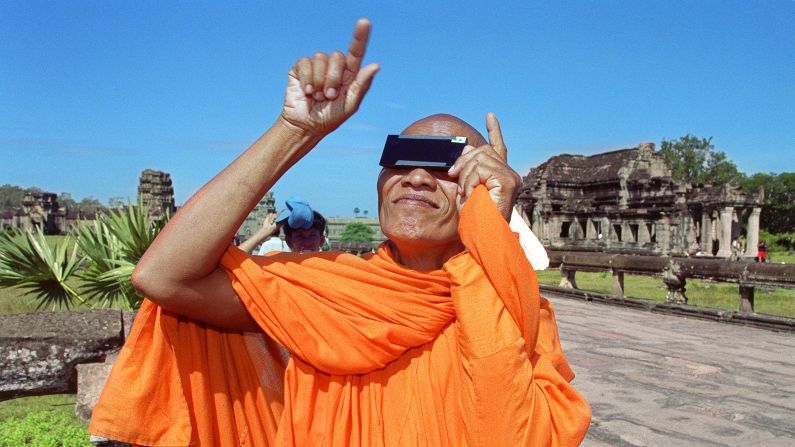
A Cambodian monk watches the beginning of a full solar eclipse with safety glasses in October 1995, during a total eclipse at Angkor Wat. Thousands of tourists and locals witnessed the eclipse at the 12th century monument.
DOUG NIVEN/AF/Getty Images
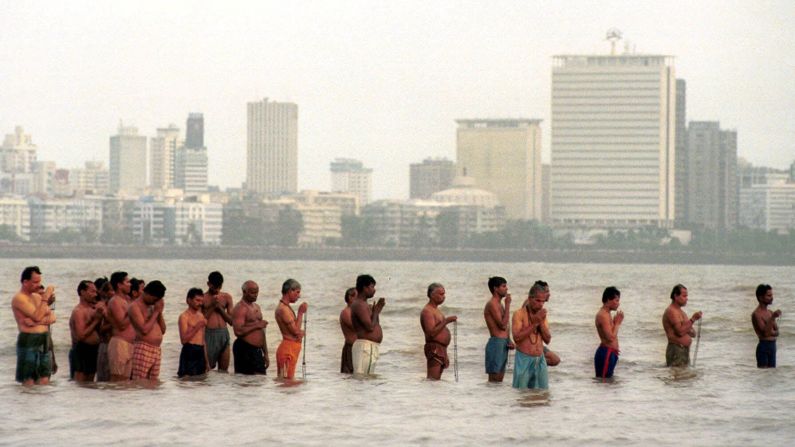
Hindus pray in the Arabian Sea during the last total solar eclipse of the millennium in Bombay, India on August 11, 1999. Millions of viewers enjoyed the millennium's last celestial show in the city.
STR/ASSOCIATED PRESS
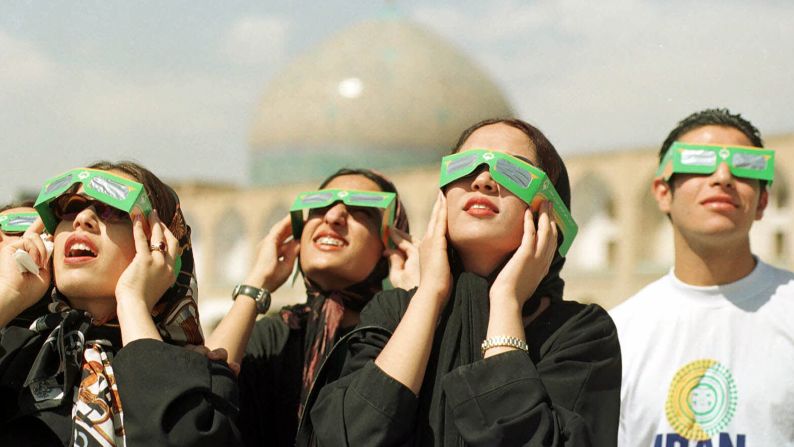
Iranian teenagers observed the solar eclipse in front of Sheikh Lotfollah Mosque in Naghsh-e Jahan Square, in Isfahan, Iran on August 11, 1999.
KAMRAN JEBREILI/ASSOCIATED PRESS
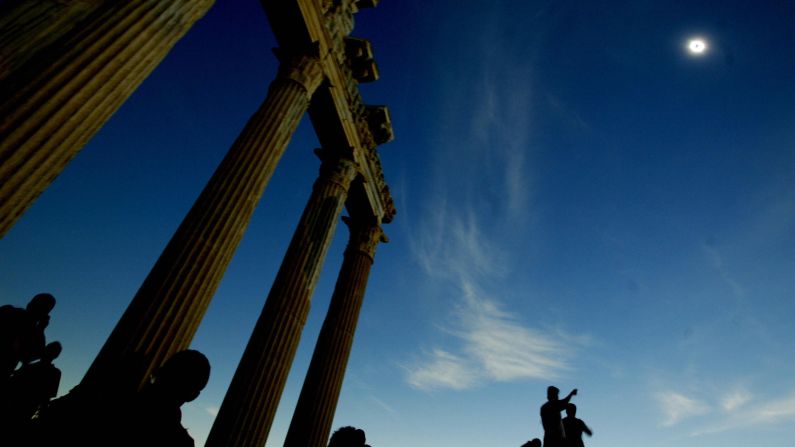
Tourists watch the full solar eclipse in the second century Greek Temple of Apollo in Side, Antalya, on the southern coast of Turkey in March 2006.
CEM TURKEL/AFP/Getty Images
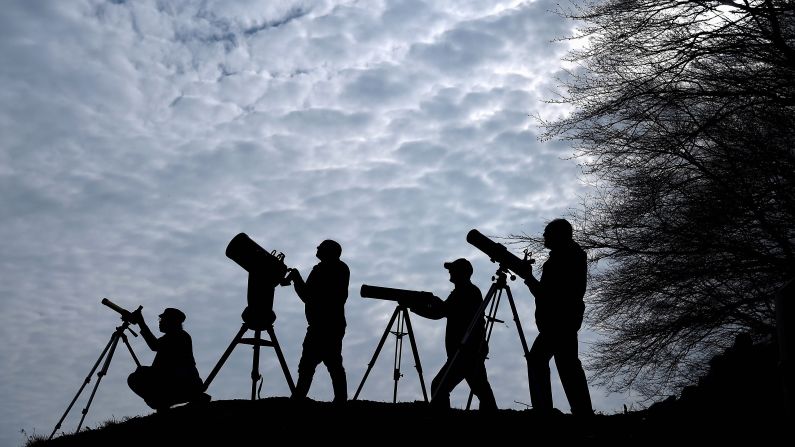
Members of the Galloway Forest Astronomical Society prepare their equipment ahead of the solar eclipse on March 19, 2015 in Newton Stewart, Scotland.
Jeff J Mitchell/Getty Images Europe/Getty Images
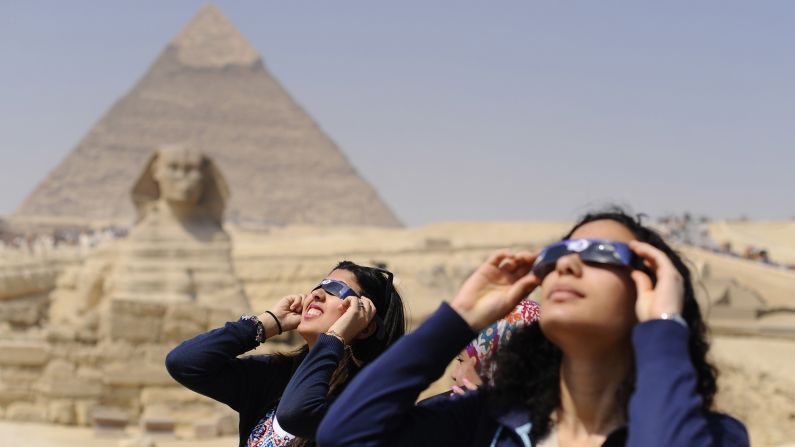
People use protective glasses to catch a glimpse of a solar eclipse in front of Pyramids of Giza and the Sphinx on March 20, 2015 in Giza, Egypt.
Anadolu/Getty Images
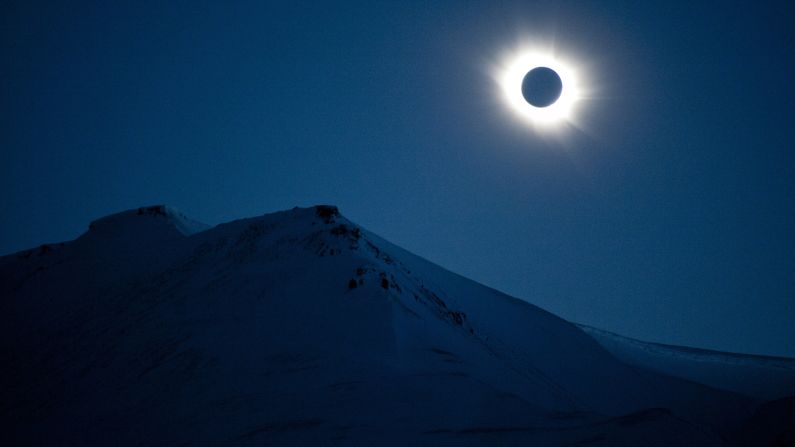
A total solar eclipse can be seen in Svalbard, Longyearbyen, Norway, on March 20, 2015. A partial eclipse of varying degrees was visible across most of Europe, northern Africa, northwest Asia and the Middle East, before finishing its show close to the North Pole.
Jon Olav Nesvolda/AFP/Getty Images
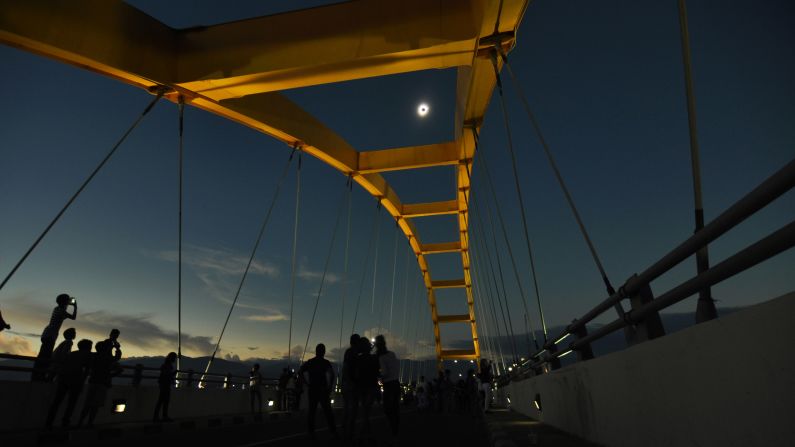
People watch a total solar eclipse in Palu, Central Sulawesi on March 9, 2016. A total solar eclipse swept across the vast Indonesian archipelago on March 9, witnessed by tens of thousands of sky gazers and marked by parties, Muslim prayers and tribal rituals.
NANANG/AFP/Getty Images
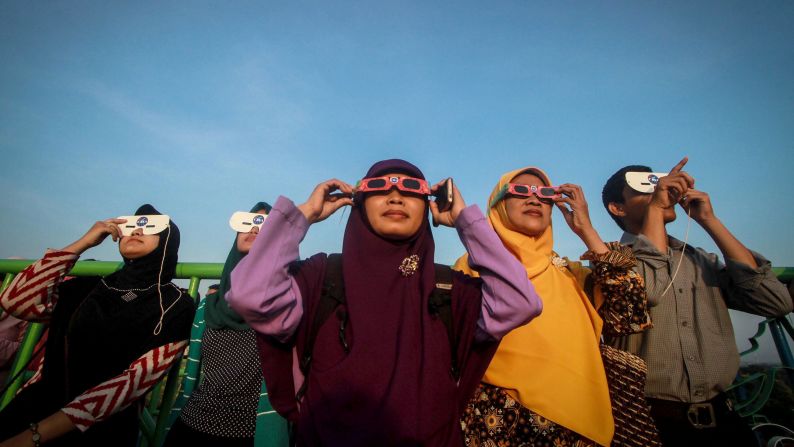
Indonesians use special glasses to observe the solar eclipse on March 09, 2016 in Surakarta, Indonesia.